

Granville: A Vision for the former Northridge site
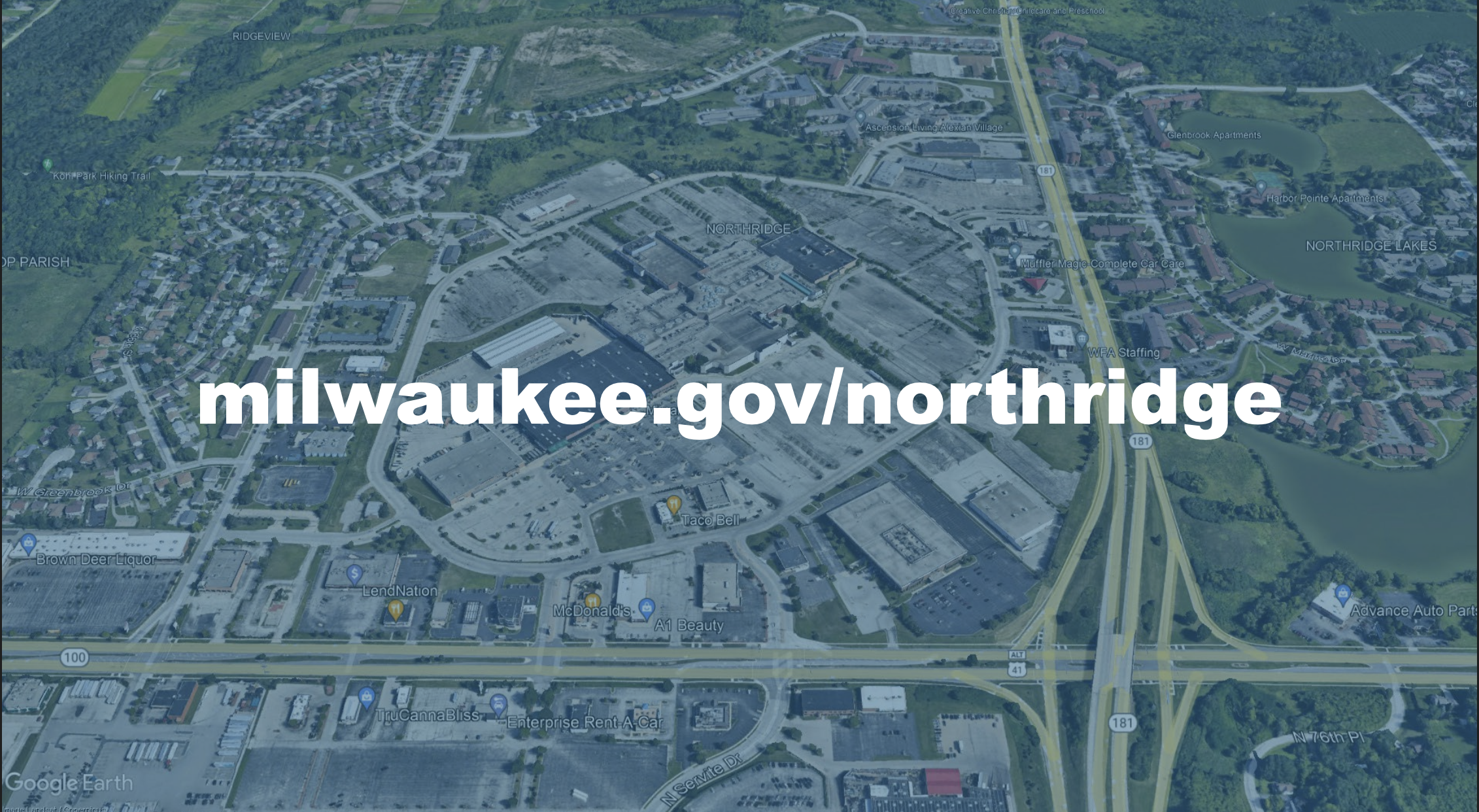
The former Northridge Mall site has officially received a roadmap for its future.
Released this December by Mayor Cavalier Johnson's Department of City Development, the Granville 2.0 Vision Report represents far more than a simple real estate plan. It's an ambitious blueprint for transforming one of the largest development sites in the entire city into a regional destination that could reshape the Northwest Side.
A Brief History of an Icon
Before we talk about what comes next, it's worth remembering what came before. The Northridge Mall, which opened in 1972, was a defining destination for generations of Milwaukee families. For more than three decades, it served as a community anchor and catalyst for suburban-style development. But like so many traditional enclosed shopping malls across America, Northridge closed its doors in 2003, and the site gradually deteriorated over the following two decades.
What followed was a long journey. The city acquired the former Boston Store property in 2017, issued a raze order in 2019, received $15 million in state funding from Governor Evers in 2023, took ownership of the main mall through tax foreclosure in early 2024, and finally completed demolition in late 2025.
Now, with the site cleared and ready, the real planning work can begin.
The Site That Demands Big Ideas
Located just north of West Brown Deer Road and west of North 76th Street, the 59-acre Granville Station site is impossible to ignore. It's positioned at a critical intersection in Milwaukee's geography—close enough to the North Shore communities of Shorewood, Whitefish Bay, Fox Point, and Bayside to serve them, yet accessible to the broader region via Interstate 41 and other major corridors. The site's sheer scale and prominence have long suggested it could be something transformational.
This is where the Granville 2.0 Vision Report comes in. Prepared by the Department of City Development in partnership with Wisconsin Economic Development, GRAEF (a design firm), and Baker Tilly (economic consultants), the report explores what's actually feasible—and what's truly possible—for this generational opportunity.
Understanding the Scenarios
The report presents three main development approaches, each with distinct advantages and challenges.
The first scenario focuses on jobs: a modern business park designed around employment creation and industrial uses. The market analysis found strong demand for industrial space in the area, and the site could potentially accommodate up to 700,000 square feet of new industrial development. This scenario aligns with the city's existing comprehensive plans and would build on the success of nearby business parks. However, modern manufacturing requires fewer employees per acre than it once did, and industrial development generates lower tax revenue than residential or mixed-use alternatives.
The second scenario pivots toward housing: a mixed-use neighborhood environment with hundreds of new housing units, ground-floor retail, restaurants, and the kind of walkable streets that create community identity. This scenario appeals to those who want to see Granville become a vibrant urban village with a strong sense of place. The downside is that the residential market around Northridge has been largely dormant for three decades, and bringing it back would require significant public infrastructure investment. There are also legitimate concerns about concentrating too many subsidized units in an area that already has a high proportion of assisted housing.
The third scenario focuses on recruiting a catalytic anchor user—a major institution, employer, or entertainment destination that could single-handedly transform the area and attract complementary development. This is perhaps the most intriguing approach, and it's where public creativity and ambition come into play.
The Big Ideas: Five Potential Anchors
Rather than assuming the site must follow conventional development patterns, the vision report identifies five categories of potential anchor uses that emerged from public engagement and market analysis. Each represents a different vision for what Granville could become.
Sports, Recreation & Entertainment Hub would position the site as a regional destination. Think a major indoor youth sports complex, an entertainment venue, or even a film production studio. The public strongly supported this concept, with over 40% of online engagement comments mentioning sports and recreation opportunities. This type of anchor could generate daily activity and draw visitors from across the region.
Healthcare, Wellness & Life Sciences Campus would capitalize on the region's existing medical and research strengths. A hospital, healthcare job training center, medical research facility, or medical technology company could create hundreds of family-supporting jobs while adding to the city's tax base. Wisconsin's life sciences sector is growing, and a campus like this could attract significant investment.
Advanced Manufacturing & Innovation Campus would build on the Northwest Side's established industrial presence. This could include a manufacturing research facility, a tech company, or a partnership between educational institutions and industry partners to train workers in advanced manufacturing skills. It's an approach that honors the area's industrial heritage while positioning it for future economic growth.
Workforce Training, Trades & Employment Center would directly address workforce development needs. A trade school, construction company headquarters, or even a modular home production facility could serve both immediate employment needs and the construction industry's ongoing labor shortage. This scenario resonates with those focused on practical job creation and community self-sufficiency.
Food & Culture Hub emerged from public input and would celebrate Milwaukee's diverse communities. A fresh food market or distribution center, particularly one serving immigrant communities (like the Hmongtown Market model in St. Paul), could create employment while addressing food access. This concept also connects to existing local businesses and cultural institutions in the area.
What the Market Is Actually Telling Us
The economic positioning study revealed some important realities. The retail market in the area has stagnated for years, with high vacancy rates that suggest traditional retail isn't a viable primary use. Several large vacant retail spaces have been successfully converted to industrial uses in recent years, which is telling. Meanwhile, rental housing rates around Northridge are 15% higher than the city average, with persistent rent inflation and most households cost-burdened by housing costs.
Perhaps most importantly, the study confirms that a "catalyst" is needed—something significant enough to change market dynamics and generate confidence in the area. Without it, even the most well-designed development might struggle to reach its potential.
What People Actually Want
Over the past year, the city conducted extensive public engagement. An online platform asked residents, "What's your big idea for the former Northridge Mall site?" More than 200 unique ideas were submitted. A public meeting in early 2025 drew over 100 attendees. Throughout this process, certain themes emerged consistently: the desire for sports and recreation opportunities, walkable neighborhoods with gathering spaces, education and workforce training, healthcare access, and cultural celebrations of the area's communities.
What's striking is that people weren't thinking small. They were imagining something that would reshape the entire Granville area, not just fill a vacant lot.
The Path Forward
The vision report makes clear recommendations. First, the city should focus early recruitment efforts on finding a catalytic anchor user—something that can generate regular activity, attract investment, and redefine the area's identity. This isn't about settling for the first offer; it's about being strategic and ambitious.
Second, the city plans to continue developing and refining urban design concepts for various scenarios, evaluating infrastructure needs, analyzing economic viability, and engaging stakeholders. Third, there will be a national recruitment campaign for major users, coordinated with the Wisconsin Economic Development Corporation and local partners.
Why This Matters
The former Northridge Mall site’s success or failure will inevitably affect the broader area. A vibrant Granville Station could drive traffic and investment northward along the Brown Deer Road corridor. It could provide employment and services for North Shore residents while complementing rather than competing with existing North Shore businesses and institutions. Conversely, continued vacancy would remain a visual and economic drag on the entire region.
The city's willingness to think ambitiously—to consider sports complexes, healthcare campuses, and cultural hubs rather than simply hoping a developer will build another strip mall—suggests serious commitment to getting this right.
What Comes Next
The report is not final; it's explicitly positioned as a framework that may be revised as planning continues. The next steps involve refining anchor concepts, engaging potential future users and development partners, marketing the site nationally, and developing a funding strategy. This is the beginning of a conversation, not the end of one.
For residents of the North Shore and Milwaukee more broadly, Granville 2.0 represents something rare: a genuine opportunity to shape the future of a major piece of the city's geography. The ideas are out there. The site is ready. Now comes the work of making it real.
Want to get involved or learn more? Visit milwaukee.gov/northridge to stay updated on the Granville Station redevelopment project. The city continues to welcome community input as planning moves forward.


A possible youth sports facility has surfaced in Brown Deer’s planning documents.