

Badlands & Black Hills: A Guide to South Dakota
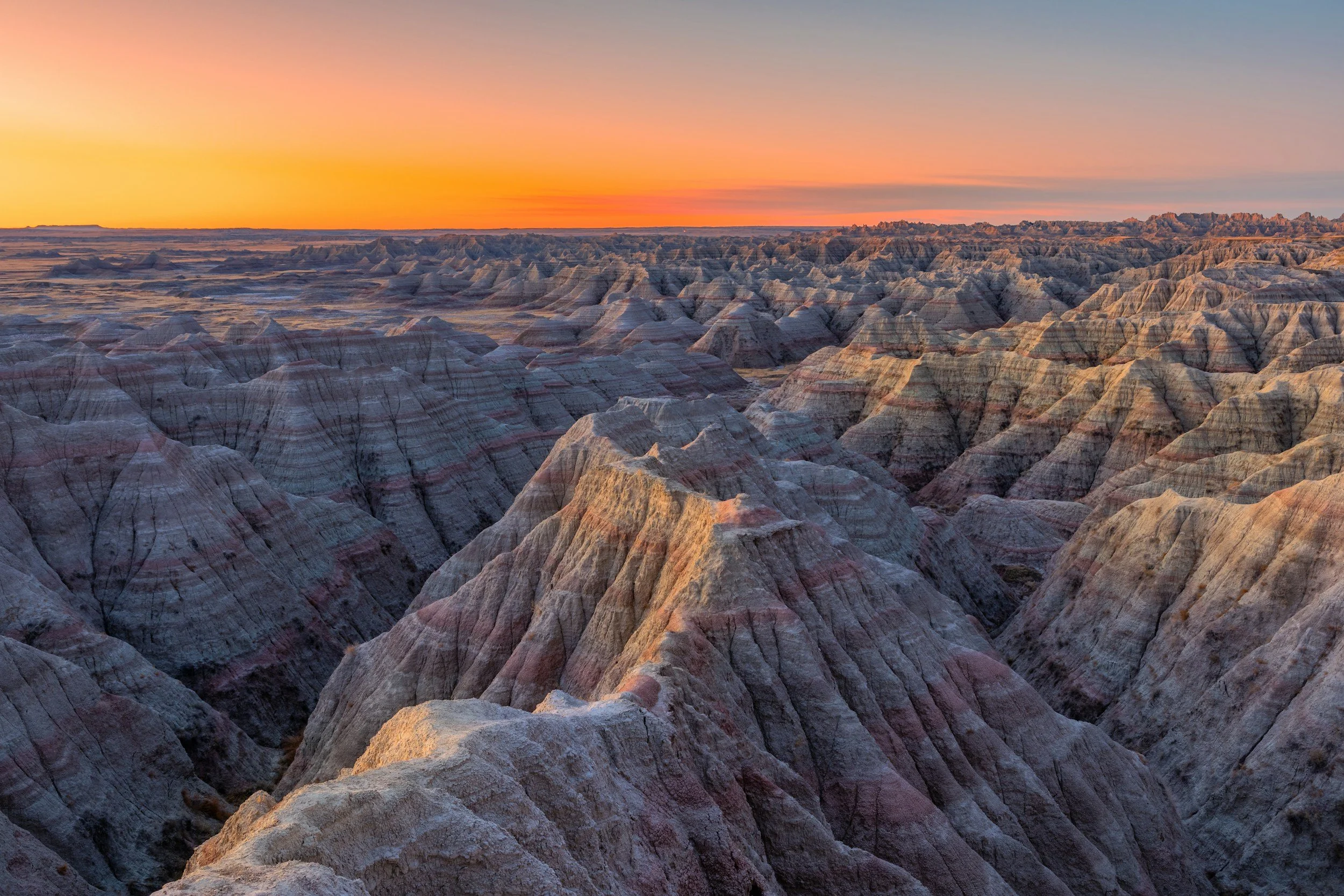
Somewhere west of the Missouri River, the prairie cracks open and the earth turns into something that looks borrowed from another planet. Striped spires, jagged canyons, and the kind of horizon that makes you pull over just to stare. That's the Badlands, and it's about eleven hours from our corner of the Milwaukee North Shore—close enough to reach in a weekend's drive, wild enough to feel like you crossed into a different world.
We mapped this trip as a full summer week, the way most Milwaukee-area families would want to do it: two travel days each direction, four or five days in the parks, and enough flexibility to chase bison at dawn and ice cream at noon. We also planned it around an electric vehicle, because charging across rural South Dakota takes real homework. If you're driving a Rivian, a Mustang Mach-E, or anything that plugs in, the charging section below will save you a lot of range anxiety. And if you're driving a gas car, just skip those parts and enjoy the rest.
Here's everything you need to turn the long haul across I-90 into the kind of trip your kids will still talk about in ten years.
The Drive: Milwaukee to the Badlands on I-90
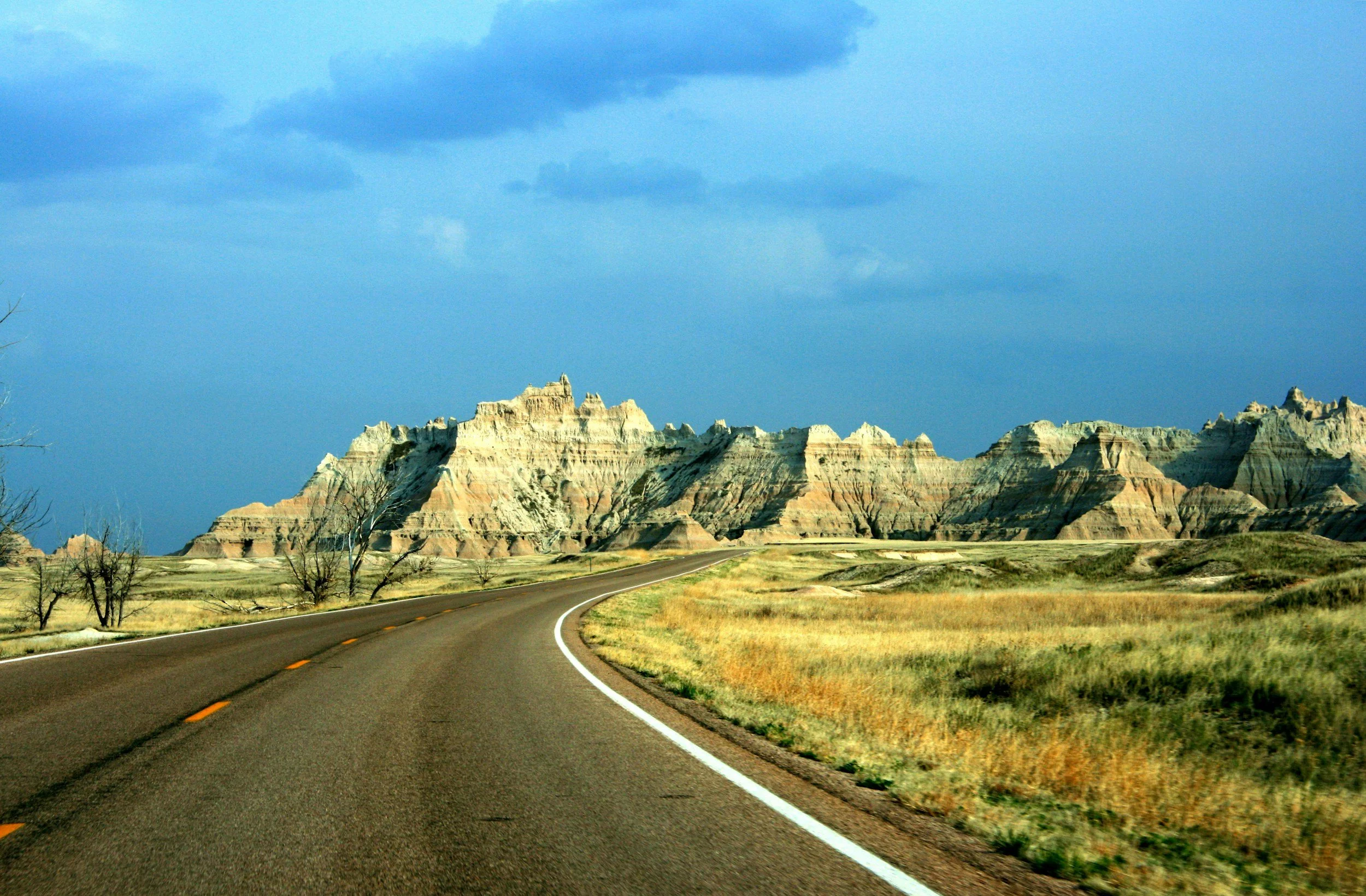
The route could not be simpler. You take I-94 west out of the Milwaukee area to Madison, merge onto I-90, and stay on it across Wisconsin, Minnesota, and South Dakota until the Badlands appear off Exit 131. The whole drive runs roughly 775 to 805 miles and about eleven and a half hours of pure driving, which is too much to swallow in a single day with kids in the back seat.
Split it instead. A comfortable plan puts your overnight near the Minnesota–South Dakota border or in Sioux Falls, which turns the trip into a six-hour first day and a five-and-a-half-hour second day. Sioux Falls makes the best stopping point of all. Falls Park sits right in town, free to visit, where the Big Sioux River tumbles over pink quartzite ledges and the kids can burn off a full day of car energy before bed. The city has plenty of family hotels and the best overnight charging on the route.
One thing to mark on your mental map: South Dakota straddles two time zones. Right around Chamberlain and the Missouri River, you cross from Central into Mountain Time and gain an hour heading west. It's a small thing until you're trying to make a dinner reservation or catch the Mount Rushmore lighting ceremony, so keep it in mind.
Roadside Attractions Worth the Stop
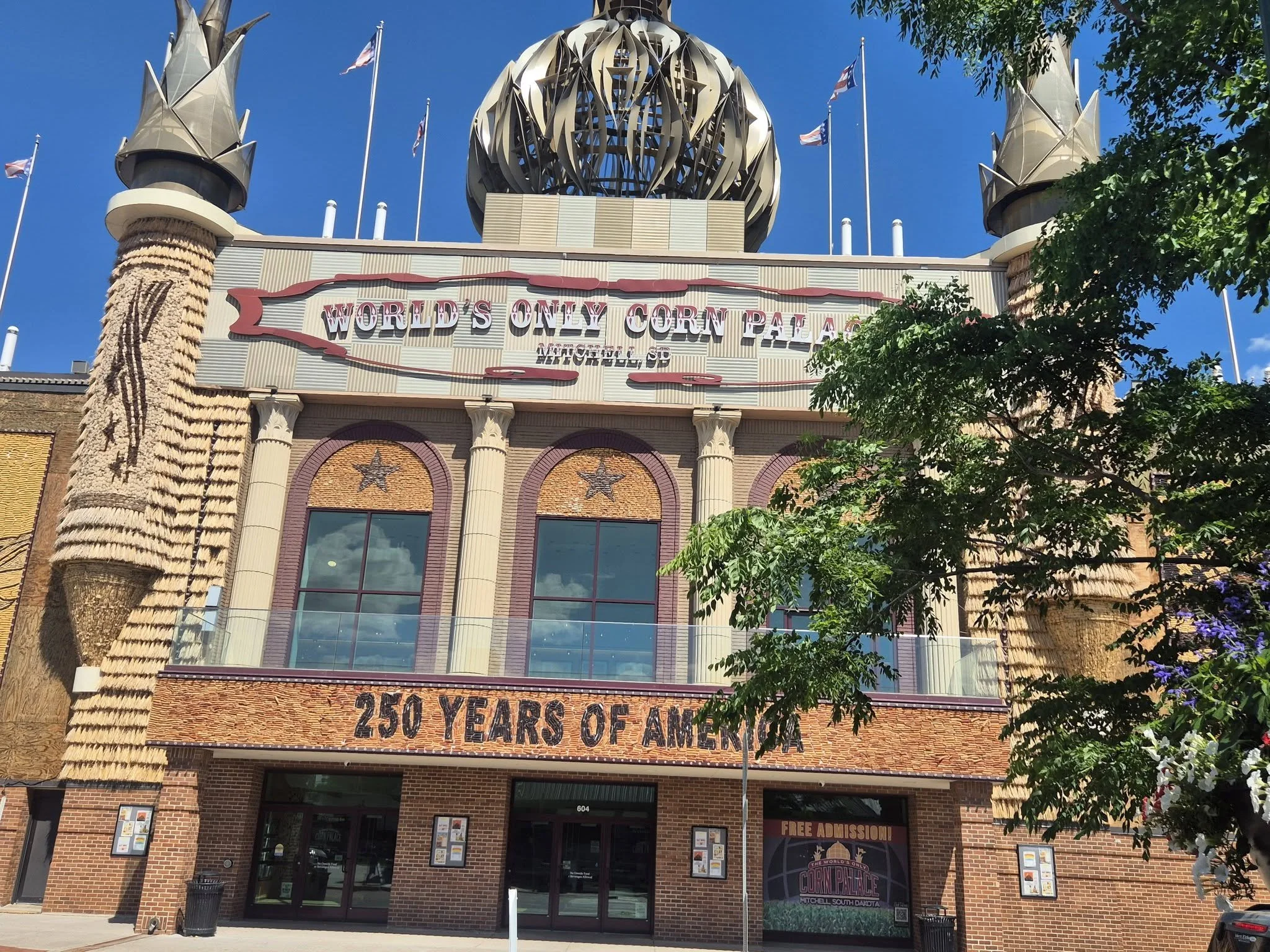
World's Only Corn Palace
The stretch of I-90 across South Dakota is one of the great roadside-attraction corridors in America, and breaking up the drive with a few of them keeps everyone sane.
The Corn Palace in Mitchell is the obvious first stop, billed as the world's only, with exterior murals made entirely of corn and other grains that get redesigned every year. It's free, it takes about an hour, and it's genuinely strange in the best way. Mitchell also has a cluster of family hotels, several with indoor water parks, if you'd rather overnight here than Sioux Falls.
Near Chamberlain, watch for Dignity: Of Earth & Sky, a fifty-foot stainless-steel sculpture of a Native woman standing on a bluff above the Missouri River. She's at the Lewis & Clark Welcome Center between Exits 263 and 265, the views are sweeping, and it's a quick, free, genuinely moving stop. Further west near Murdo, 1880 Town gathers more than thirty furnished pioneer buildings along with props from Dances with Wolves, good for a leg-stretch with a side of Old West history.
And then there's Wall Drug, which deserves its own paragraph.
Wall Drug: The Stop You Can't Skip
Wall Drug grew from a Depression-era pharmacy that lured travelers off the highway with free ice water, and three generations later it sprawls across 76,000 square feet at the edge of the Badlands. The ice water is still free, and the coffee still costs five cents.
For families, the draw is the Backyard, a free play zone with splashing water jets, a giant jackalope to climb on, an eighty-foot dinosaur, and an animatronic T. rex that roars on a timer and reliably startles everyone. You can pan for gems, wander the shops, and grab the famous cake donuts at the Soda Fountain. Plan an hour or two, eat lunch here if the timing works, and let the kids ride the jackalope. Wall sits about eight miles from the Badlands' northeast entrance, making it the closest town with real services to the park.
Milwaukee to the Badlands & Black Hills Road Trip Map
Follow the I-90 route west from the Milwaukee area, with family-friendly roadside stops, EV charging anchors, Badlands hikes, and Black Hills day-trip ideas.
Map is meant for trip planning, not turn-by-turn navigation. Always verify hours, road closures, cave tour availability, and EV charger status before you go.
Badlands National Park
You enter the Badlands off Exit 131 from the northeast, or Exit 110 if you're coming from Rapid City, and the park runs on a card-only system, so bring a card or a digital pass. The park no longer accepts cash for entrance fees. Entry costs thirty dollars per vehicle for a week, or nothing at all if you carry the America the Beautiful pass, which I'll come back to at the end.
The spine of the park is the Badlands Loop Road, a 39-mile scenic byway lined with overlooks. You can drive it in an hour without stopping, but you won't, so give it half a day. The Big Badlands Overlook hits you first from the east, then Panorama Point, the colorful ancient soils at Yellow Mounds, and the Pinnacles Overlook, which is the spot to catch sunset.
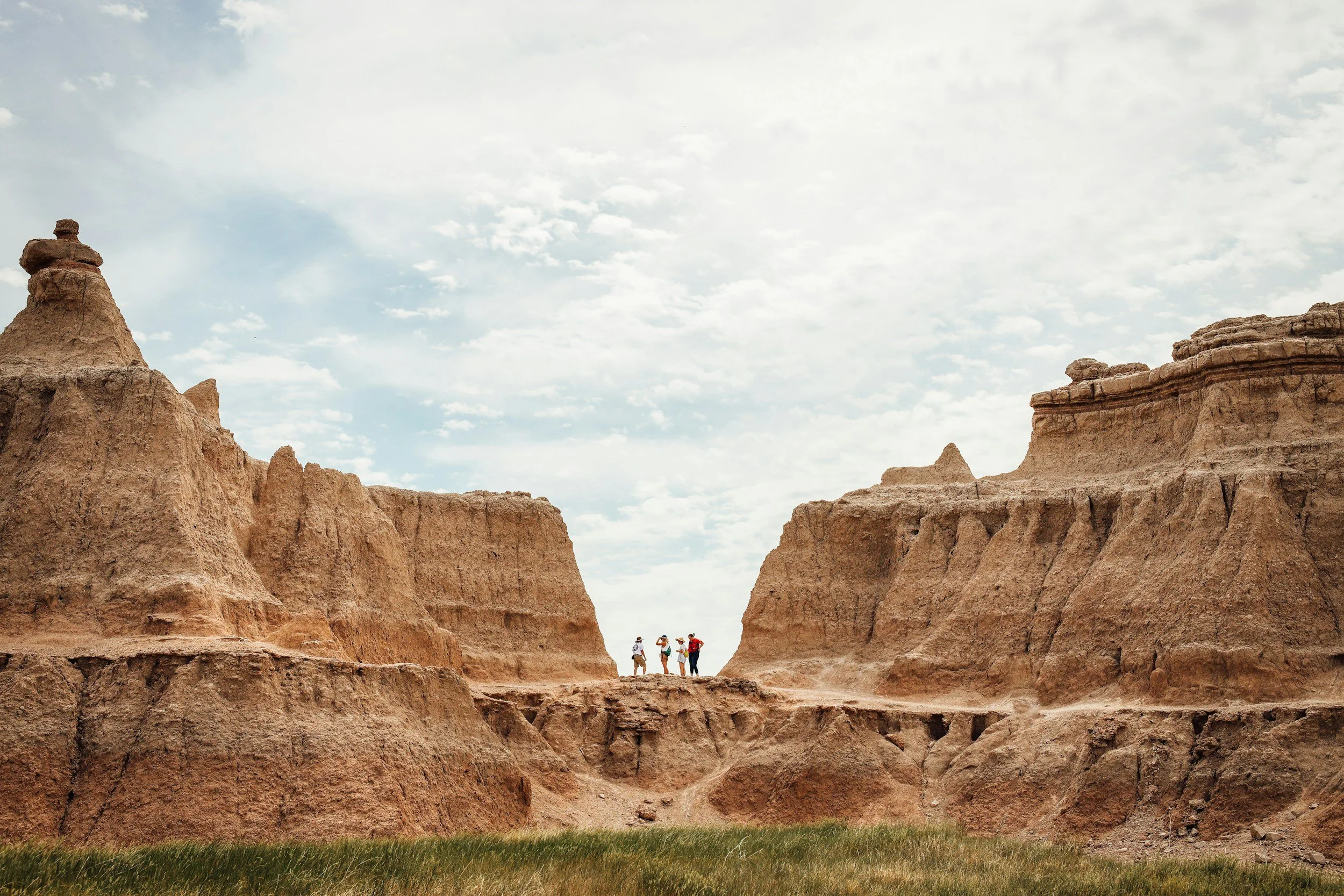
What makes the Badlands special for families is that the best hikes cluster together in one parking area a couple of miles north of the Ben Reifel Visitor Center, so you can do several in a morning. The Window Trail is a quarter-mile boardwalk to a natural opening in the rock, easy enough for the youngest kids and strollers. The Door Trail runs about three-quarters of a mile, starting on boardwalk and then following yellow posts out into the formations like a treasure hunt. The Notch Trail is the one everyone remembers—about a mile and a half round trip that climbs a log ladder and traces a ledge to a notch with views down the White River Valley. It's a genuine adventure and not for anyone afraid of heights. For the littlest hikers, the Fossil Exhibit Trail is a fully accessible quarter-mile boardwalk with tactile fossil replicas. Whatever you hike, carry far more water than feels necessary, because there's no shade and the summer sun is relentless.
For wildlife, drive the unpaved Sage Creek Rim Road for bison, pronghorn, and raptors, and stop at Roberts Prairie Dog Town, where entire colonies of prairie dogs pop up and chirp. Bighorn sheep hang around the Pinnacles entrance. The rule with all of it, especially the bison, is to keep at least a hundred feet of distance—they look slow and they are not.
Kids can pick up a Junior Ranger workbook at the visitor center, and in summer the park runs a nightly evening program at the Cedar Pass Amphitheater followed by ranger-led stargazing with telescopes. The Badlands is a certified Dark Sky Park, and on a clear night you can see thousands of stars. On a moonless night, visitors can see an astonishing number of stars and the full sweep of the Milky Way. If your dates line up, the Badlands Astronomy Festival usually lands in July.
Where to Stay and Eat in the Badlands
The in-park option is Cedar Pass Lodge, a set of comfortable cabins near the visitor center with air conditioning, mini-fridges, and porches, and you'll want to reserve several months ahead for summer. The adjacent Cedar Pass Campground holds about ninety-six sites, some with electric hookups, and books through Recreation.gov starting in early March. For a free, primitive, gloriously dark alternative, Sage Creek Campground offers first-come tent sites among the bison with no water and no fee. Outside the park, Wall has hotels and an RV park, and the town of Interior has a KOA.
Dining inside the park means the Cedar Pass Lodge Restaurant, where the White River taco is the thing to order, but the menu is limited, so most families stock a cooler and picnic, or drive into Wall and eat at Wall Drug. The Wall Drug restaurant is known for its donuts, hot beef sandwiches, and buffalo burgers.
Whatever you do, hike early. Summer afternoons routinely climb into the nineties and beyond with no shade and a real chance of afternoon thunderstorms, so the smart rhythm is sunrise hikes, a midday rest, and evening wildlife and stars.
Rapid City: Your Black Hills Home Base
About an hour and a half west of the Badlands, Rapid City makes the natural hub for the rest of the trip. It has the lodging, the dining, the region's only dependable fast charger, and a surprising amount of free family fun.
Downtown, the City of Presidents puts life-size bronze statues of U.S. presidents on the street corners, and you can grab a free scavenger-hunt sheet to turn it into a game. The downtown statues make for a fun, free walking activity with kids. Dinosaur Park, a hilltop landmark built in the 1930s, shows off seven big green dinosaurs and hundred-mile views, also free. Storybook Island is an eight-and-a-half-acre storybook-themed playground that runs on donations, magical for younger kids, with a small-fee train and carousel. Add the free Museum of Geology and the WaTiki indoor water park for a rainy afternoon, and Rapid City easily fills a day on either end of your park time.
Mount Rushmore With Kids
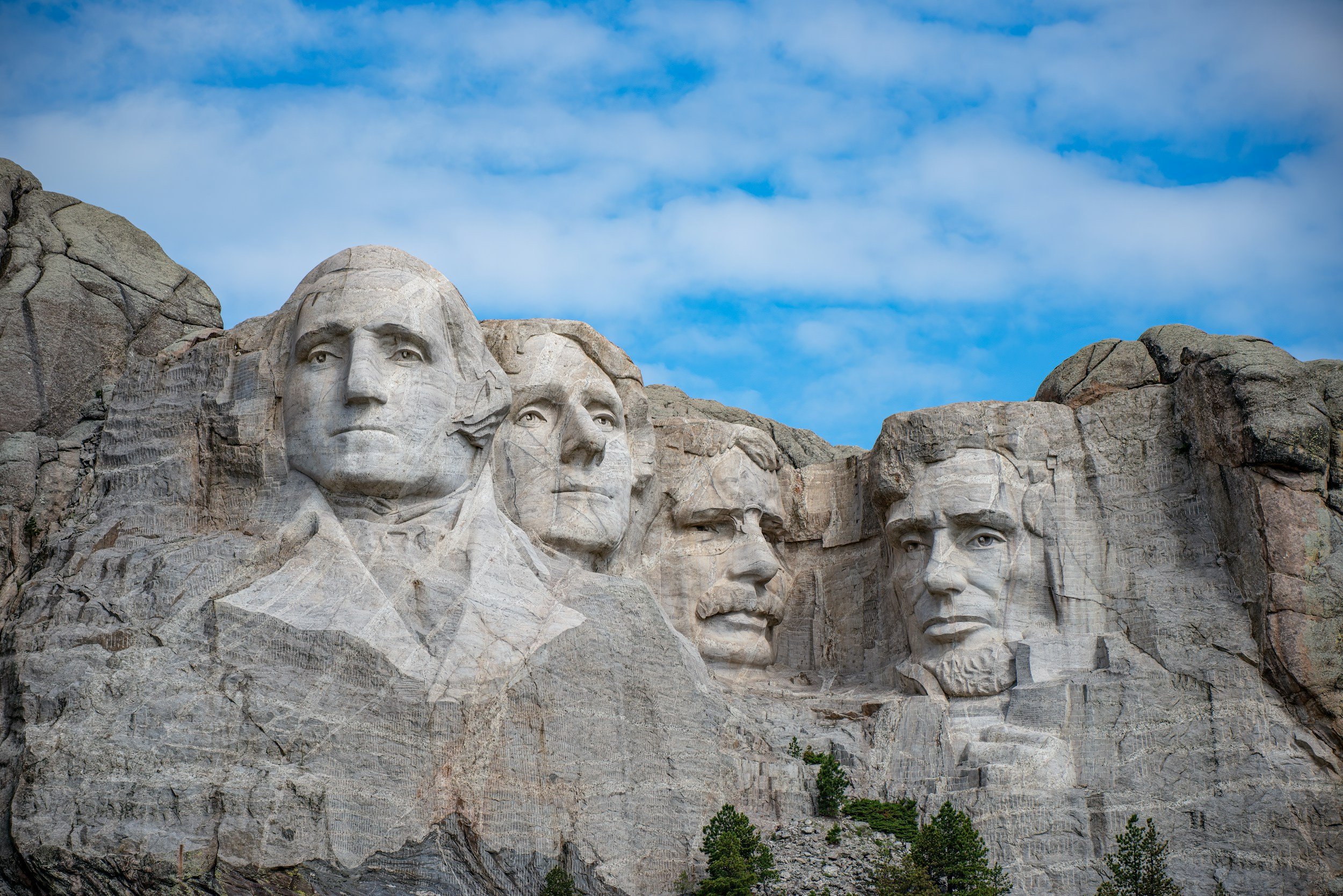
Mount Rushmore charges no entrance fee, but parking runs ten dollars per vehicle—and here's the trick, that fee is waived with the America the Beautiful pass, which covers parking. It's about thirty minutes from Rapid City, and you'll want two to four hours.
Walk the Avenue of Flags to the Grand View Terrace, then take the Presidential Trail, a roughly half-mile paved loop and boardwalk that brings you right to the base of the carving with the best views and a good number of stairs. The Lincoln Borglum Visitor Center runs a film and exhibits, and the Sculptor's Studio shows the original models and tools. Kids can earn a Junior Ranger badge here too. And you have to get the ice cream—the vanilla made from Thomas Jefferson's own recipe, sold at Carver's Marketplace.
The evening lighting ceremony is the moment that stays with people. It runs nightly from late May through the end of September, an unhurried program of a ranger talk, a film, the honoring of veterans in the audience, and finally the dramatic illumination of the four faces. Start time shifts from nine o'clock in high summer to eight o'clock once mid-August arrives, so check the date. Arrive at least thirty minutes early for amphitheater seating and bring a light jacket, because the Black Hills cool off fast after dark. One parking payment covers the whole day, so you can visit by daylight and come back for the ceremony.
One heads-up for 2026: a major commemoration of America's 250th anniversary, with fireworks, is planned at Mount Rushmore for July 3, 2026. If your week overlaps that date, expect serious crowds and traffic, and watch the official site for ticketing details.
Custer State Park
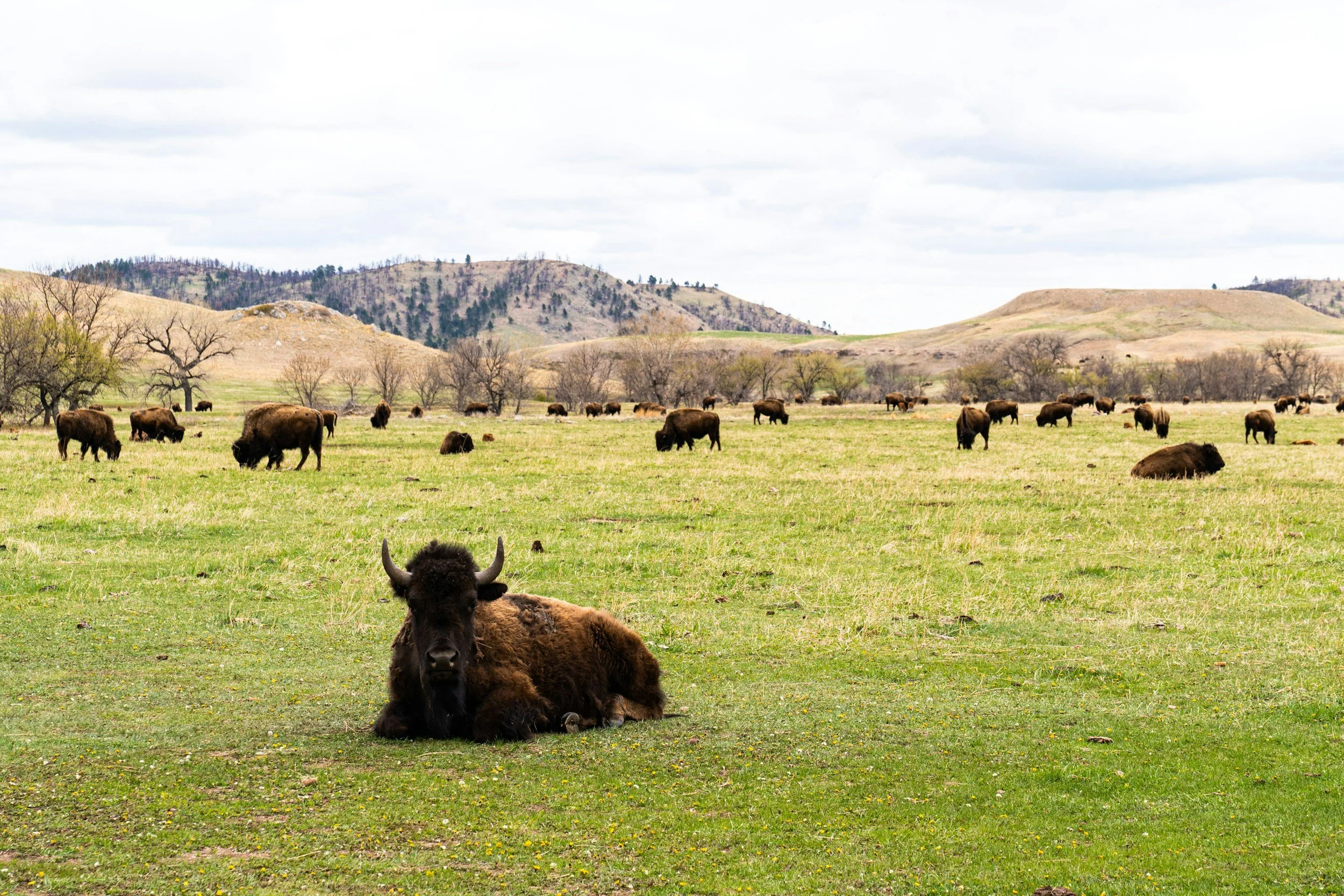
Custer State Park sprawls across seventy-one thousand acres and is home to a famous bison herd well over a thousand strong. The park is known for its bison herd, scenic drives, and the granite spires of the Needles Highway. Entry runs a temporary seven-day vehicle license, and the scenic drives alone justify it.
The Wildlife Loop Road is the headliner, an eighteen-mile circuit through grassland and pine where you'll hit bison jams, spot pronghorn and prairie dogs, and meet the park's celebrity "begging burros," wild donkeys that walk right up to car windows. Drive it at dawn or dusk for the most activity. The Needles Highway threads fourteen miles of granite spires and squeezes through one-lane tunnels, including the famous Needle's Eye, and it passes the crown jewel of the park, Sylvan Lake. Iron Mountain Road connects toward Mount Rushmore on a winding course of pigtail bridges and tunnels that frame the monument as you drive through them—spectacular, though the curves can turn a queasy stomach, so go easy on the snacks beforehand.
Sylvan Lake itself is the postcard: a granite-ringed lake where families swim, paddle kayaks, and walk the easy mile-long shore trail. For something more ambitious, the trail to Black Elk Peak climbs to a stone fire tower at the highest point east of the Rockies, a roughly seven-and-a-half-mile round trip for families with older, hardy kids. Lodging inside the park, from the historic State Game Lodge to Sylvan Lake Lodge and the Blue Bell cabins, books months in advance for summer, as do the campgrounds.
More Black Hills Adventures
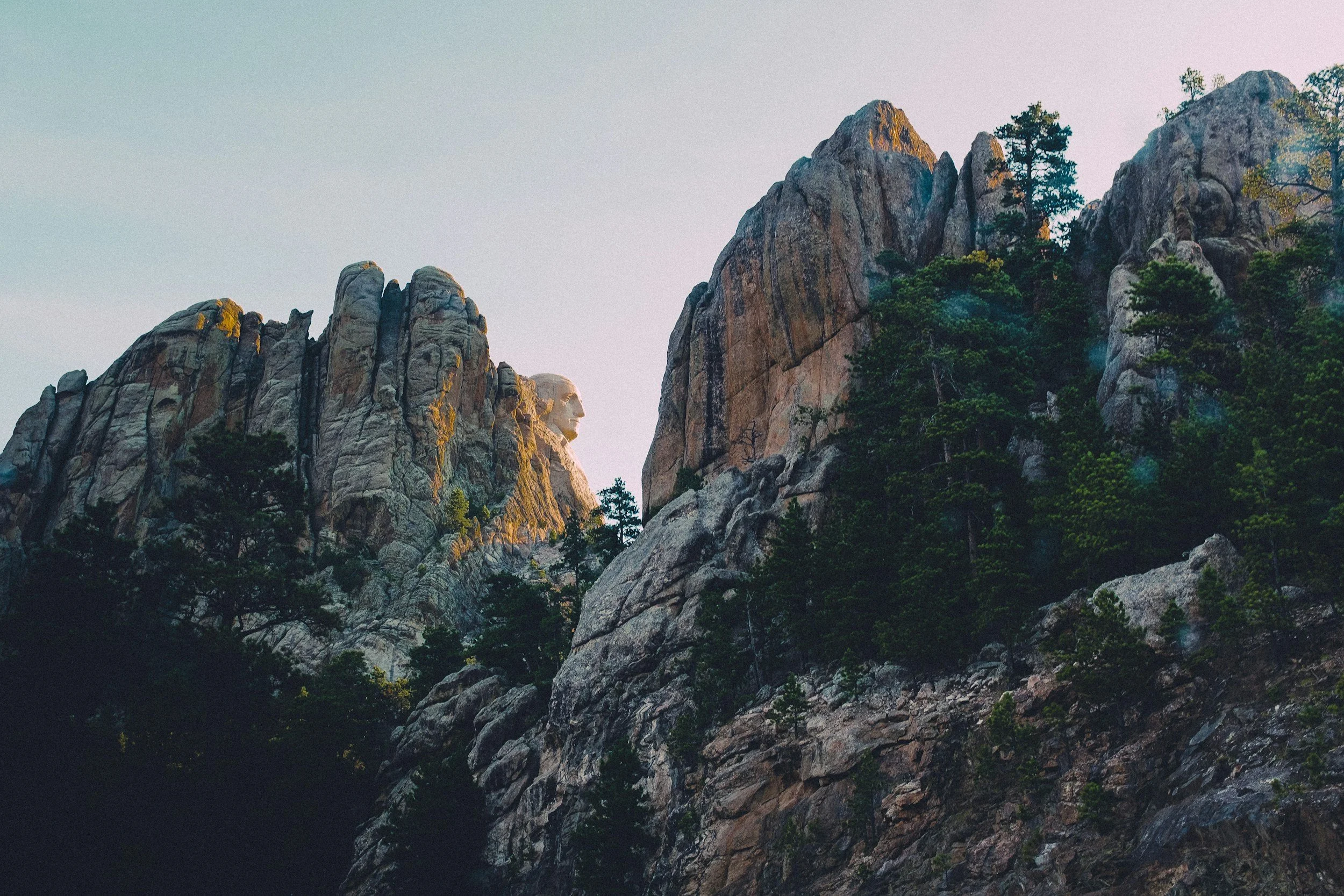
You won't run out of things to do. Crazy Horse Memorial, the largest mountain carving in progress anywhere, sits between Custer and Hill City with a strong Native American cultural center and a restaurant worth a stop. Two cave parks anchor the underground options: Wind Cave, with ranger-led tours that families with young kids often prefer for their gentler routes, and Jewel Cave, longer and lined with calcite crystals. Reptile Gardens, between Rapid City and Keystone, holds a record-setting reptile collection with giant tortoises and animal shows, and it's shady and stroller-friendly. Bear Country USA lets you drive through a park full of black bears, bison, and wolves before walking through an area with bear cubs.
The 1880 Train chugs between Hill City and Keystone behind a historic steam engine, an easy win for all ages. Up north, the Spearfish Canyon Scenic Byway winds twenty-two miles past limestone walls and a string of waterfalls—Bridal Veil, Roughlock, and Spearfish Falls—each a short, easy walk from the road, and it pairs naturally with a stop in the Old West gold-rush town of Deadwood. If you've got an extra day, Devils Tower rises just over the Wyoming border, about an hour and a half from Rapid City and doable as a long day trip, often combined with Spearfish Canyon and Deadwood. And for a rainy-day or history-loving family, the Mammoth Site in Hot Springs is an indoor active dig with more than sixty mammoth skeletons right where they were found.
A Sample 7-Day Itinerary
Day 1 – Drive west. Leave the Milwaukee area and aim for Sioux Falls, about six and a half hours. Stretch at Wisconsin Dells, charge and grab lunch in Tomah, and spend the evening at Falls Park before an overnight in Sioux Falls. If you're electric, charge to full overnight.
Day 2 – Finish the drive and arrive. Push from Sioux Falls to the Badlands, roughly four hours. Hit the Corn Palace in Mitchell, see the Dignity statue at Chamberlain, charge at Wall, and tour Wall Drug. Enter the park, drive the Loop Road, and catch the evening program and stargazing. Stay at Cedar Pass Lodge or in Wall.
Day 3 – Badlands morning, Rapid City evening. Hike the Notch, Door, and Window trails at sunrise, earn a Junior Ranger badge, and drive Sage Creek Rim Road for wildlife. In the afternoon, head to Rapid City, charge up, and explore downtown and the City of Presidents. Base in Rapid City for the next three nights.
Day 4 – Rushmore and Custer. See Mount Rushmore in the morning, drive Iron Mountain Road into Custer State Park for the Wildlife Loop and Sylvan Lake, then return to Mount Rushmore for the evening lighting ceremony.
Day 5 – Crazy Horse and caves. Visit Crazy Horse Memorial, drive the Needles Highway, and tour Wind Cave or Jewel Cave. Families with younger kids can swap in Reptile Gardens or Bear Country USA.
Day 6 – Northern Hills and head east. Loop through Spearfish Canyon's waterfalls and Deadwood—or take the Devils Tower day trip—then begin the drive home with an overnight in Sioux Falls or Mitchell.
Day 7 – Drive home to the Milwaukee area.
EV Charging Across South Dakota
If you're driving electric, this is the single most important section of the trip, so take it seriously. South Dakota's charging picture has improved a lot, but it still demands planning, and the biggest trap is assuming Tesla Superchargers will bail you out. Across most of the state, those are older Tesla-only units that a Rivian or other non-Tesla simply cannot use. Your reliable backbone is the Electrify America network strung along I-90, plus a couple of independent CCS chargers filling the gaps.
Coming out of Wisconsin and Minnesota, you'll find dependable Electrify America fast chargers in Madison, Tomah, Albert Lea, and Worthington, most of them at Walmart or highway-adjacent locations and capable of high-speed charging. Once you cross into South Dakota, Electrify America forms a continuous chain through Sioux Falls, Mitchell, Chamberlain, Wall, and Rapid City. The long-dreaded gap around Chamberlain has finally closed, with a bank of fast chargers just off I-90 shared with a convenience store and a Dairy Queen, though reviewers report the occasional frozen screen or down stall, so keep a backup in mind.
The weakest link runs between Chamberlain and Wall, about 110 miles with only a single independent FreeWire charger in Murdo in between. That Murdo charger is reliable when it's working but it's just one unit that has seen downtime, so don't gamble your whole crossing on it. Charge to a comfortable margin at Chamberlain, especially because South Dakota's westerly headwinds and the climb west of the Missouri River eat range faster than you'd expect.
The Black Hills interior is where electric drivers need the most discipline. Rapid City's Electrify America station near Target is the anchor for the entire region, and a second independent charger sits up in Spearfish for the northern loop. Beyond that, the scenic heart of the trip—Mount Rushmore, Custer State Park, the Needles Highway, Iron Mountain Road, Crazy Horse—has essentially no fast charging at all. The move is to base yourself in Rapid City, charge to full there before each day's loop, and use your hotel's Level 2 charger overnight to top off. Treat every scenic drive as a range-burning side trip you start on a full battery.
A practical tip: use your car's built-in navigation with the NACS adapter setting enabled so it only routes you to stations you can actually use, and download your charging maps before you go, because cell service vanishes in the parks.
Passes, Fees, and Practical Tips
Buy the America the Beautiful pass before you leave. At eighty dollars for the year for U.S. residents, it covers Badlands entry, Wind Cave and Jewel Cave entry, and Mount Rushmore parking, and it pays for itself on this single trip. Badlands entry is thirty dollars per vehicle if you don't have the pass and is card-only. Mount Rushmore has no entry fee but ten-dollar parking, waived by the pass. Custer State Park requires its own vehicle license. Cave tours at Wind Cave and Jewel Cave are ticketed separately even with the pass, and they sell out in summer, so book ahead.
Pack for heat and sun above all—lots of water, hats, and sunscreen for the shadeless Badlands—but throw in layers and rain gear too, because Black Hills evenings cool quickly and afternoon thunderstorms roll through fast. Wear sturdy shoes for loose rock and the occasional cactus, keep your distance from every animal, and fuel or charge before you enter the parks, because there's nothing inside the Badlands or the Black Hills interior. Most of all, lean into the rhythm of the place: early mornings, slow middays, and long golden evenings when the light turns the rock to fire and the bison drift across the road like they own it. Out there, they kind of do.
A two-story general store at 10674 N. Bay Shore Drive is moving through the Village of Sister Bay review process