

Potawatomi State Park: Door County's hidden gem
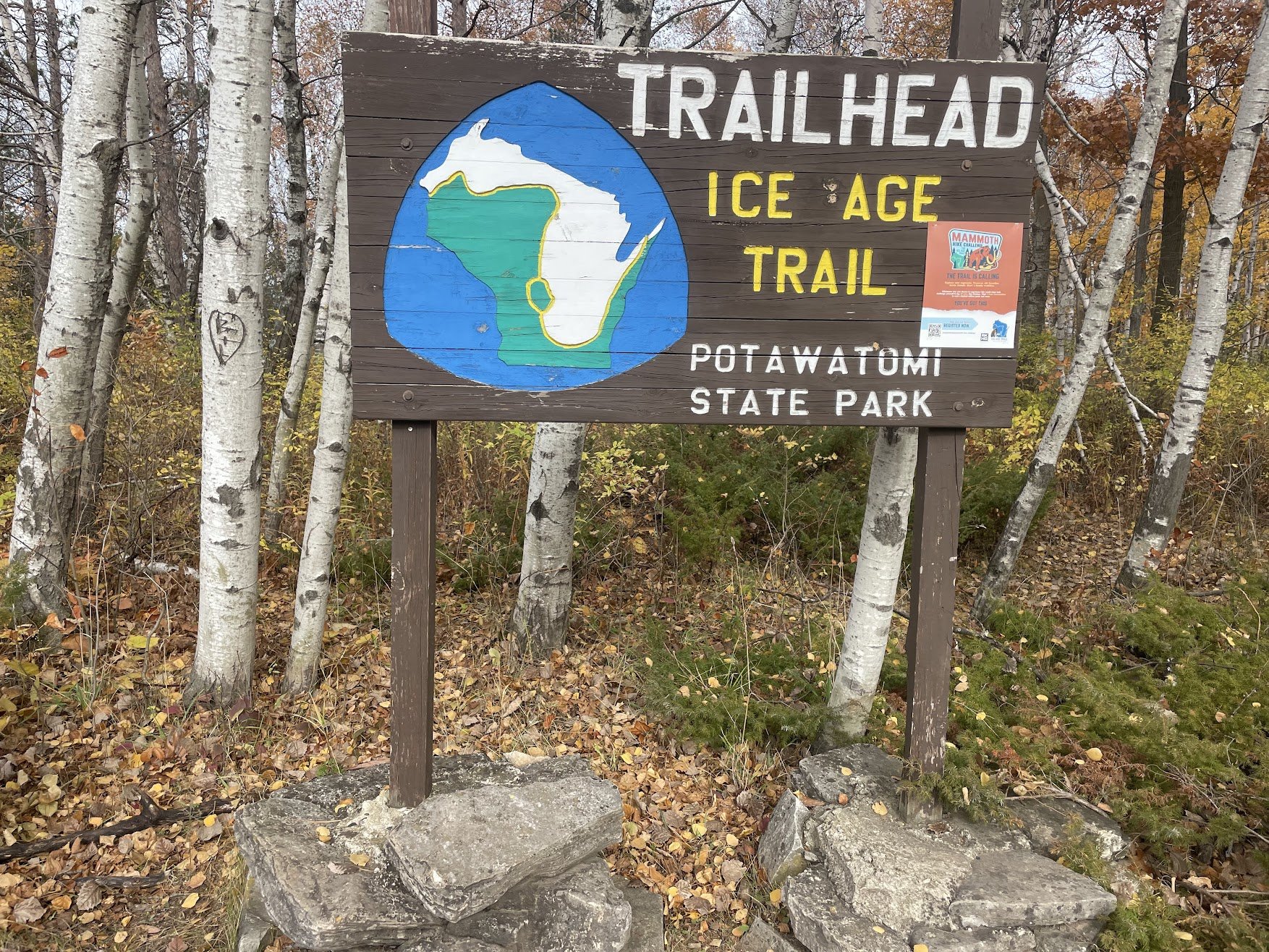
Potawatomi State Park packs 1,225 acres of dolomite bluffs, sheltered harbors, and the eastern terminus of the 1,000-mile Ice Age Trail into one of Door County's most underrated family destinations.
While Peninsula State Park draws the crowds, Potawatomi delivers the same dramatic Niagara Escarpment scenery with far fewer people — plus a newly restored 75-foot observation tower, kayak-friendly shoreline, and year-round camping just minutes from downtown Sturgeon Bay. Whether you're planning a summer camping trip, a fall foliage hike, or a winter cross-country ski outing, this guide covers everything your family needs to know.
The basics
Potawatomi State Park sits at 3740 County Highway PD, Sturgeon Bay, WI 54235, roughly a 10-minute drive northwest of downtown Sturgeon Bay. The park is open 6:00 a.m. to 11:00 p.m. year-round, though many facilities operate seasonally.
Every vehicle entering the park requires a Wisconsin State Park vehicle admission sticker. Since 2025, Wisconsin uses 12-month passes valid from the month of purchase rather than the old calendar-year system. Here's the current pricing:
Pass type Wisconsin plates Out-of-state plates 12-month annual $28 $38 Daily $13 $16 Senior annual (WI residents 65+) $13 N/A
Your vehicle's registration — not your home address — determines your rate. A Wisconsin-plated car qualifies for the resident rate regardless of where the driver lives. Passes can be purchased online, at the park office, or at the electronic pay station outside the office when staff aren't present.
Contact information: Phone (920) 746-2890, email Erin.BrownStender@wisconsin.gov, official site at dnr.wisconsin.gov/topic/parks/potawatomi. For camping reservations, use wisconsin.goingtocamp.com or call 1-888-947-2757.
⚠️ Critical 2026 notice: A major road construction and water line replacement project has tentatively closed all campsites from January through June 2026. The accessible cabin is closed May–June 2026, and the picnic shelter and amphitheater are closed through June as well. Check the DNR conditions page before planning a spring 2026 visit.
The observation tower is back
The 75-foot Potawatomi Tower is the park's crown jewel, and after a dramatic seven-year closure for emergency restoration, it reopened to the public in spring 2025. Built in 1931 and financed by the Sawyer Commercial Club, the tower was the first purpose-built recreational observation tower in any Wisconsin state park. It's listed on both the Wisconsin and National Registers of Historic Places.
From the top — roughly 225 feet above bay level after climbing approximately 100 steps — visitors see panoramic views stretching over 16 miles across Green Bay. On clear days you can spot the Michigan shoreline, Sawyer Harbor below, the city of Sturgeon Bay, and bald eagles soaring at eye level. In autumn, the tower becomes one of Door County's premier fall color viewpoints.
Now for the question families most want answered: can you drive directly to the tower? The answer is yes, but only seasonally. A road (North Norway Road, the park's main loop) leads to a small parking lot right at the tower site. During the open season — roughly mid-April through late November — you can park, walk a short distance, and climb. No hiking required.
However, the road is closed in winter (approximately December through mid-April) as part of the park's standard winter road closure policy, and the tower itself closes for the season as well. The exact opening date varies by weather; the DNR says the tower traditionally opens "mid to late April" once roads are clear of snow and ice.
The parking lot at the tower is small — estimated at roughly 15 cars — and the DNR has proposed improved parking as part of a $5.56 million capital budget project that would also add a fully accessible viewing platform nearby for visitors who cannot climb the stairs.
Nine miles of trails
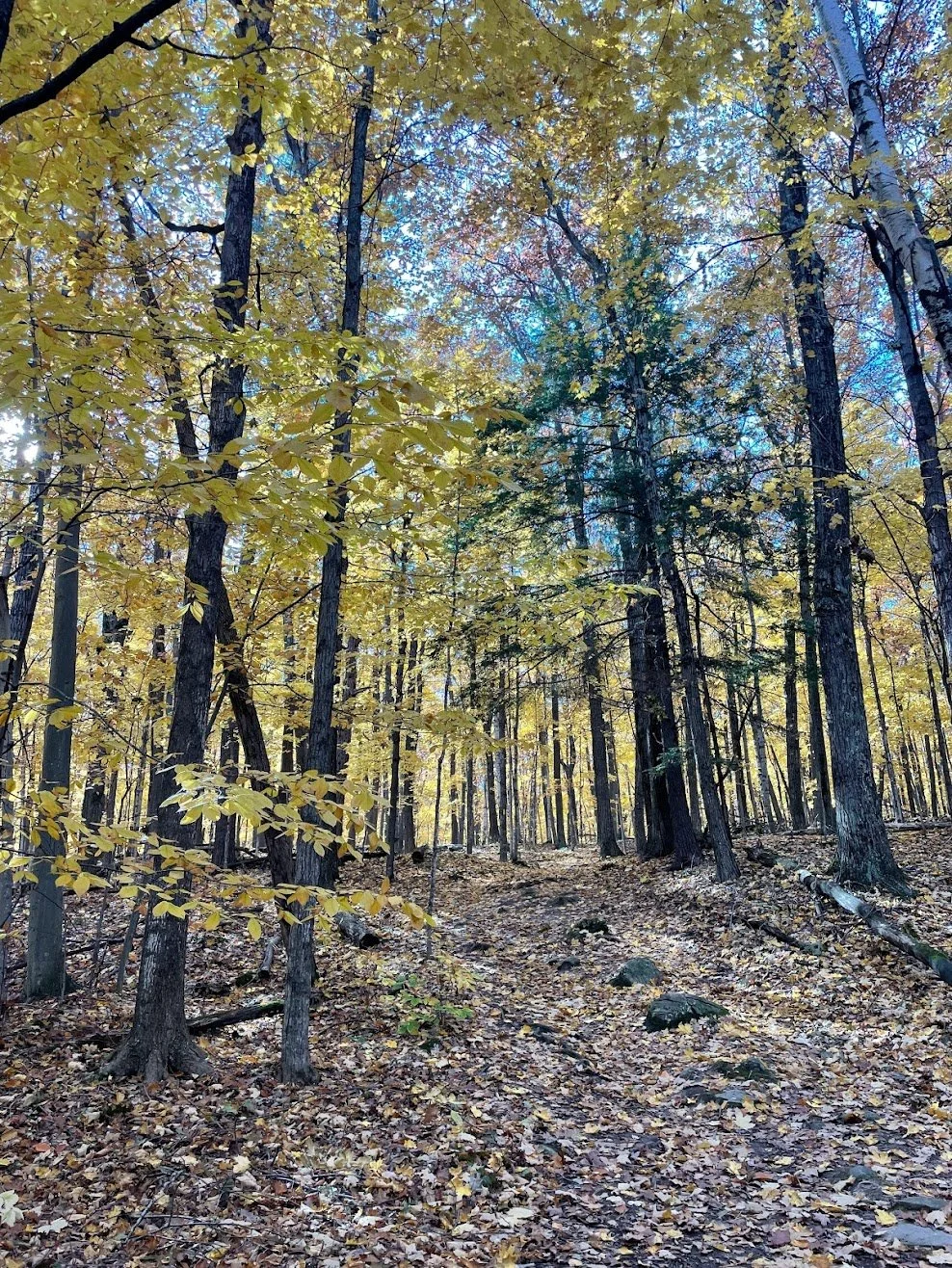
Hiking trails
Potawatomi's trail system offers something for every fitness level. Four named trails total about 9 miles of hiking, with the park's biggest bragging right being its status as the eastern terminus of the 1,000-mile Ice Age National Scenic Trail.
Ancient Shores Nature Trail is the go-to for families with young children. This 0.5-mile easy loop starts at the nature center and park store, with interpretive signs explaining three ancient shorelines and local plant and animal life. It's the most manageable trail for little legs, though like all park trails, the natural surface means it's not truly stroller-friendly.
Hemlock Trail covers 2.6 miles at an easy-to-moderate difficulty, beginning at Parking Lot 2 near the picnic area. It passes along the Green Bay shoreline, through the campground, and into the park's wooded interior — a solid option for families wanting more distance without serious elevation.
Tower Trail is the park's signature hike: a 3.6-mile loop rated easy to moderate with about 167 feet of elevation gain. The trail winds through forest and along the shoreline before climbing to the observation tower on the park's highest bluff. AllTrails reviewers rate it 4.6 stars and estimate 1–1.5 hours. When the tower road is open, you can also start from the tower parking lot and hike the loop downhill first.
Ice Age National Scenic Trail runs 2.8 miles within the park, tracing the edge of the Niagara Escarpment with views of Sturgeon Bay. Volunteers built a 35-step dolomite limestone staircase along one section. The eastern terminus marker sits near the old ski hill overlook — a meaningful spot for anyone who's hiked any portion of this epic trail. Combining the Ice Age Trail with the Tower Trail creates a satisfying 6-mile moderate route with 318 feet of elevation gain.
Pro tip: Pick up a free paper trail map at the park office. Multiple reviewers warn that trailhead markers can be sparse, and some trail junctions are confusing without one. Download offline maps to your phone as well, since cell reception is spotty in the park's interior.
Water, wheels, and wildlife
On the water. The park has no swimming beach — the shoreline is rocky dolomite, beautiful but not suited for splashing. What it does have is a sheltered boat launch on Sawyer Harbor with an accessible boarding pier, plus canoe, kayak, paddleboard, and rowboat rentals from the park store (available Memorial Day through Labor Day). A universal kayak launch installed in 2025 features an accessible transfer bench, handrails, and an adaptive kayak for rental — a standout accessibility feature. Paddling the shoreline reveals limestone cliffs, views of Sherwood Point Lighthouse, and underwater shipwrecks popular with SCUBA divers.
Fishing is excellent. Sturgeon Bay is considered one of the best bass fishing waters in the state and hosted the 2015 ESPN bass-fishing world championship. Species include walleye, northern pike, smallmouth bass, perch, whitefish, and rainbow trout. The park has an accessible fishing pier on the south shoreline, a fish cleaning station at the boat launch, and — a detail many visitors miss — free loaner fishing equipment available at the park office through the Tackle Loaner Program. A Wisconsin fishing license is required for anglers 16 and older.
On two wheels. Roughly 8 miles of off-road bike trails wind through the park, with terrain ranging from smooth forest paths to steeper inclines reaching 120 feet above bay level. The park store rents hybrid and mountain bikes. For road cyclists, 6-plus miles of paved park roads (Shoreline Road, North Norway Road, and South Norway Road) form a scenic loop with light vehicle traffic. No separate trail pass is needed beyond the vehicle admission sticker.
Winter transforms the park into a cross-country skiing destination with 8.5 miles of groomed trails across four one-way loops: Green (1.5 mi, classic only), Blue (2.3 mi), Black (4.2 mi), and Red (5.5 mi, classic and skate). A warming shelter sits at the trailhead near the group camp. Three designated winter hiking and snowshoeing trails total about 2.5 miles. The park also offers 8 miles of snowmobile trails connecting to the Door County system, ice fishing access via the boat landing, and a small sledding hill near the campground shelter. Twenty-seven campsites in the south loop remain open year-round for hardy winter campers.
Wildlife viewing rewards the patient. The park's dense forests of maple, basswood, white pine, birch, and cedar — plus rare beech trees found in Wisconsin only within a few miles of Lake Michigan — support over 200 recorded bird species, with at least 50 nesting in or near the park. White-tailed deer, foxes, raccoons, and chipmunks are regular sightings along trails and park roads.
Door County camping
The Daisy Field Campground spreads across two loops (north and south) with 123 family campsites — 40 with electricity, 83 without — plus 4 group sites accommodating up to 30 people each. Sites are wooded, offering shade and privacy, with fire rings, picnic tables, and benches. Showers and flush toilets operate seasonally (roughly May through mid-October), while vault toilets are available year-round.
The standout is the "Cabin by the Bay," a fully ADA-accessible indoor camping option in the south campground. Designed with input from a committee of people with disabilities, it features two hospital beds, a full-size sofa sleeper, two cots (sleeps six), a wheel-in shower, heating, air conditioning, a screened porch, and a full kitchen with low counters. It's one of the most thoughtfully designed accessible camping facilities in the Wisconsin state park system.
Reservations are essential. All campsites are reservable (no first-come, first-served) up to 11 months in advance at 9:00 a.m. Central time. Electric sites and summer weekends fill fast. Holiday weekends (Memorial Day, July 4th, Labor Day) require a 3-night minimum. Rates vary by residency, electricity, season, and day of week, with non-residents paying an additional $15/night surcharge. Potawatomi also charges an extra $3/night park-specific surcharge.
The Potawatomi Park Store, located near the nature center, is a campground lifesaver: firewood (Wisconsin prohibits bringing outside firewood), ice, ice cream, locally roasted Door County coffee, groceries, camping supplies, and equipment rentals. It opens weekends in mid-May, then daily Memorial Day through Labor Day. Phone: (920) 746-8663.
When to visit: each season tells a different story
Summer (June–August) unlocks every activity — paddling, fishing, biking, naturalist programs, and the full park store — but brings the biggest crowds and the most aggressive mosquitoes. Bug spray is non-negotiable, especially in late July. Book campsites as early as possible.
Fall (September–October) is arguably the best season. Spectacular foliage from maples, oaks, and birches peaks in mid-to-late October, and the observation tower provides one of Door County's finest fall color vantage points. Fewer visitors, cooler hiking temperatures, and the campground remains open.
Winter (December–March) reveals a quieter park with groomed ski trails, snowshoeing, snowmobiling, ice fishing, and a small sledding hill. The south campground loop stays open for year-round camping. Note that the observation tower and its road close for the season.
Spring (April–May) is the quietest time, with wildflowers emerging and migrating birds returning. Trails can be muddy in early spring, and some facilities won't open until May. The tower typically reopens in mid-to-late April.
Door County beyond the park gates
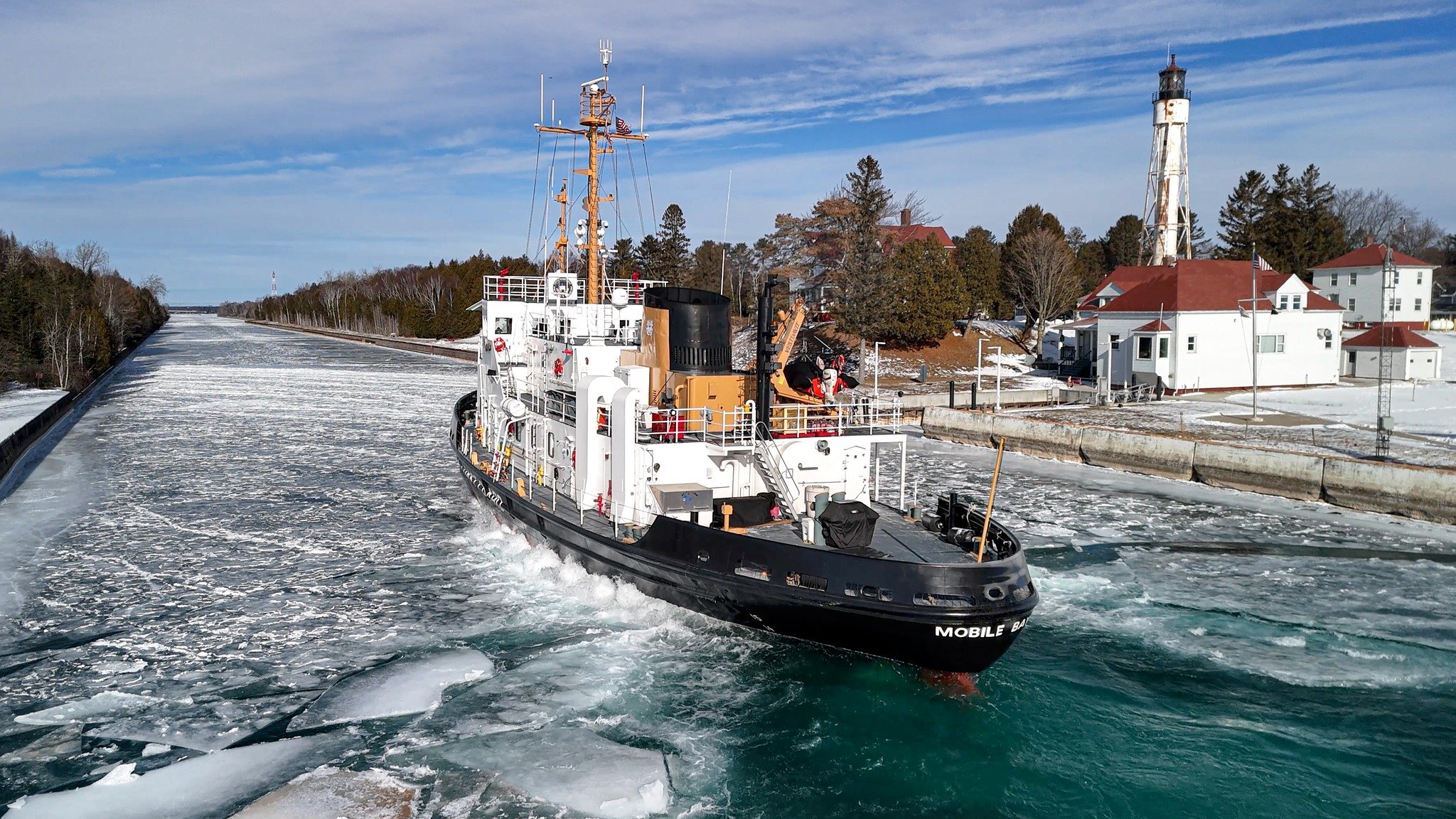
USCGC Mobile Bay entered the Sturgeon Bay Ship Canal
Potawatomi's location near Sturgeon Bay — the "gateway to Door County" — puts dozens of family attractions within easy reach. The Door County Maritime Museum in Sturgeon Bay showcases shipwreck history and features the Jim Kress Lighthouse Tower with sweeping bay views. Cave Point County Park, about 20 minutes northeast, delivers dramatic sea caves and crashing waves against limestone cliffs that mesmerize kids and adults alike.
Cherry picking is a Door County rite of passage, with peak season running mid-July through mid-August. Meleddy Cherry Orchard is just 10 minutes away, while Lautenbach's Orchard Country in Fish Creek offers a winery, bakery, market, and playground in one stop. The Door Peninsula Winery in Sturgeon Bay pours free tastings of its famous cherry wines.
For meals, Scaturo's in Sturgeon Bay is an award-winning breakfast spot (arrive early), while The Gnoshery pairs comfort food with board games that keep kids entertained. Al Johnson's Swedish Restaurant in Sister Bay — with live goats grazing on the grass roof — is the quintessential Door County family experience. And no visit is complete without attending a traditional Door County fish boil, an outdoor culinary spectacle offered at restaurants throughout the peninsula.
Four other state parks dot the Door County peninsula: Peninsula State Park (the most popular, with Eagle Tower and a golf course), Whitefish Dunes (Wisconsin's tallest sand dunes and an actual beach), Newport State Park (an International Dark Sky Park), and Rock Island (a vehicle-free island with Wisconsin's oldest lighthouse).
First-timer tips that will save your trip
Bring serious bug spray. This is the single most common piece of advice across dozens of reviews. Mosquitoes in the wooded trails can be fierce, especially June through August. Treat clothing with permethrin and carry DEET or picaridin spray.
Wear sturdy footwear. Even the "easy" trails have exposed tree roots, rocky dolomite sections, and slippery spots near the shoreline. Trail runners are fine; sandals are not.
Don't skip the free fishing gear. The park office loans basic fishing equipment at no charge — a perfect low-commitment way to try fishing from the accessible pier with kids.
Layer up in every season. Door County's weather shifts rapidly, especially in spring and fall. Mornings can be 20 degrees cooler than afternoons near the water.
Arrive with your vehicle sticker. Purchase online before you go to avoid the line at the park office. The electronic pay station works when the office is closed, but having your sticker already on the windshield saves time.
Download offline maps. Cell reception is unreliable in the park's interior, and reviewers consistently note that trail junctions can be confusing. The DNR website offers downloadable summer and winter trail maps.
Budget your tower visit wisely. The small parking lot at the tower fills quickly on busy weekends. For the best experience, go early morning or late afternoon — you'll have smaller crowds and better light for photos of the bay.
Conclusion
Potawatomi State Park occupies a sweet spot that few Door County destinations match: historic significance (the 1931 observation tower, the Ice Age Trail's eastern terminus), genuine natural beauty (Niagara Escarpment cliffs, 200-plus bird species), and practical family amenities (accessible cabin, free fishing gear, on-site rentals) — all without the summer crush of Peninsula State Park 30 minutes north. The tower's 2025 reopening after seven years of restoration makes this an especially compelling time to visit. The key planning insight is seasonality: the tower road and many facilities operate roughly mid-April through late November, so summer and fall deliver the fullest experience. But winter's groomed ski trails and the south campground's year-round sites make Potawatomi a genuine four-season park — one that rewards families who return in every season with a different Door County entirely.
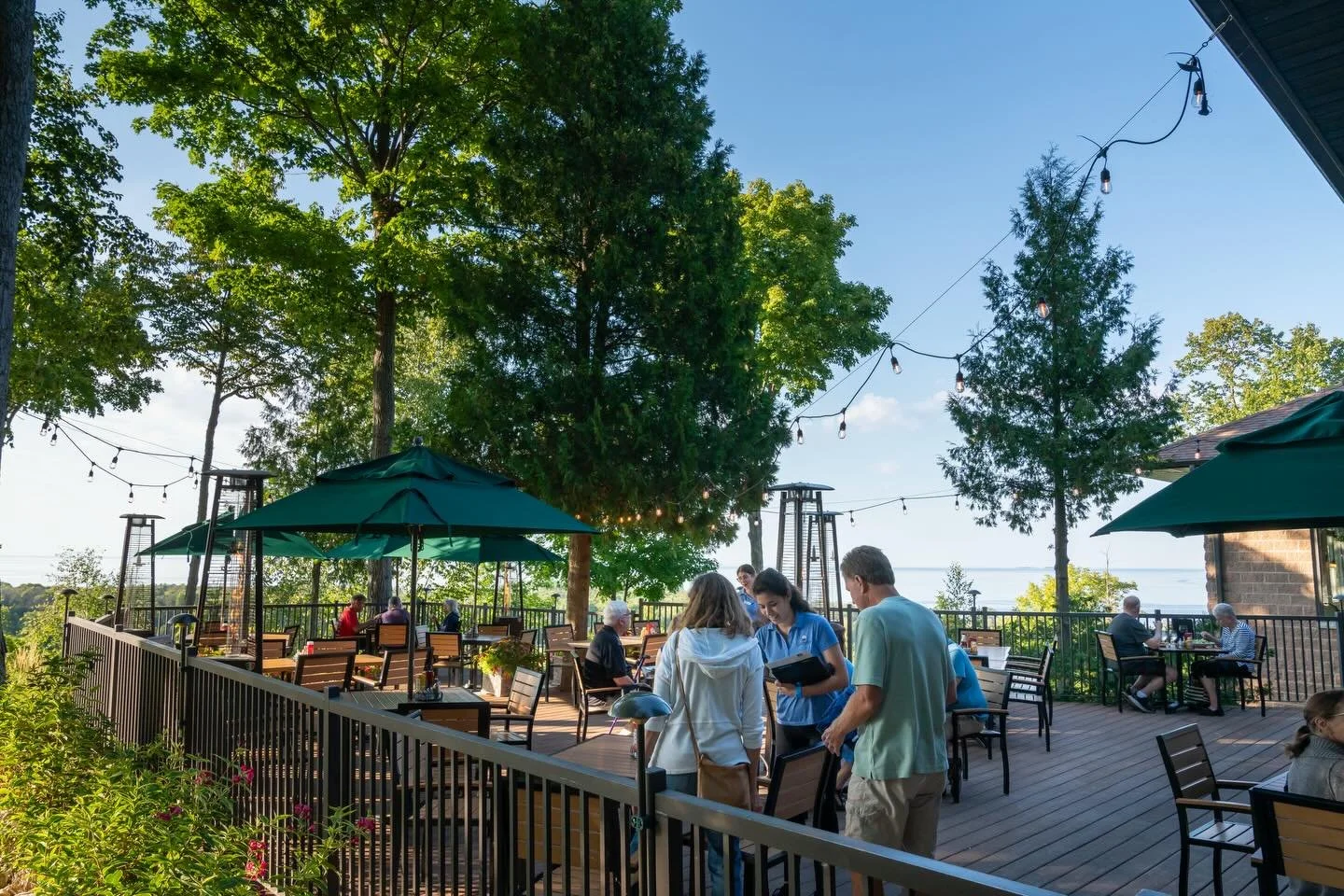
Planning an Egg Harbor, Door County trip with kids? Our Milwaukee family guide covers the beach, the Fun Park, Plum Loco, dining, parks and where to stay.