

Fantastic Flushing! Best Bathrooms around Milwaukee
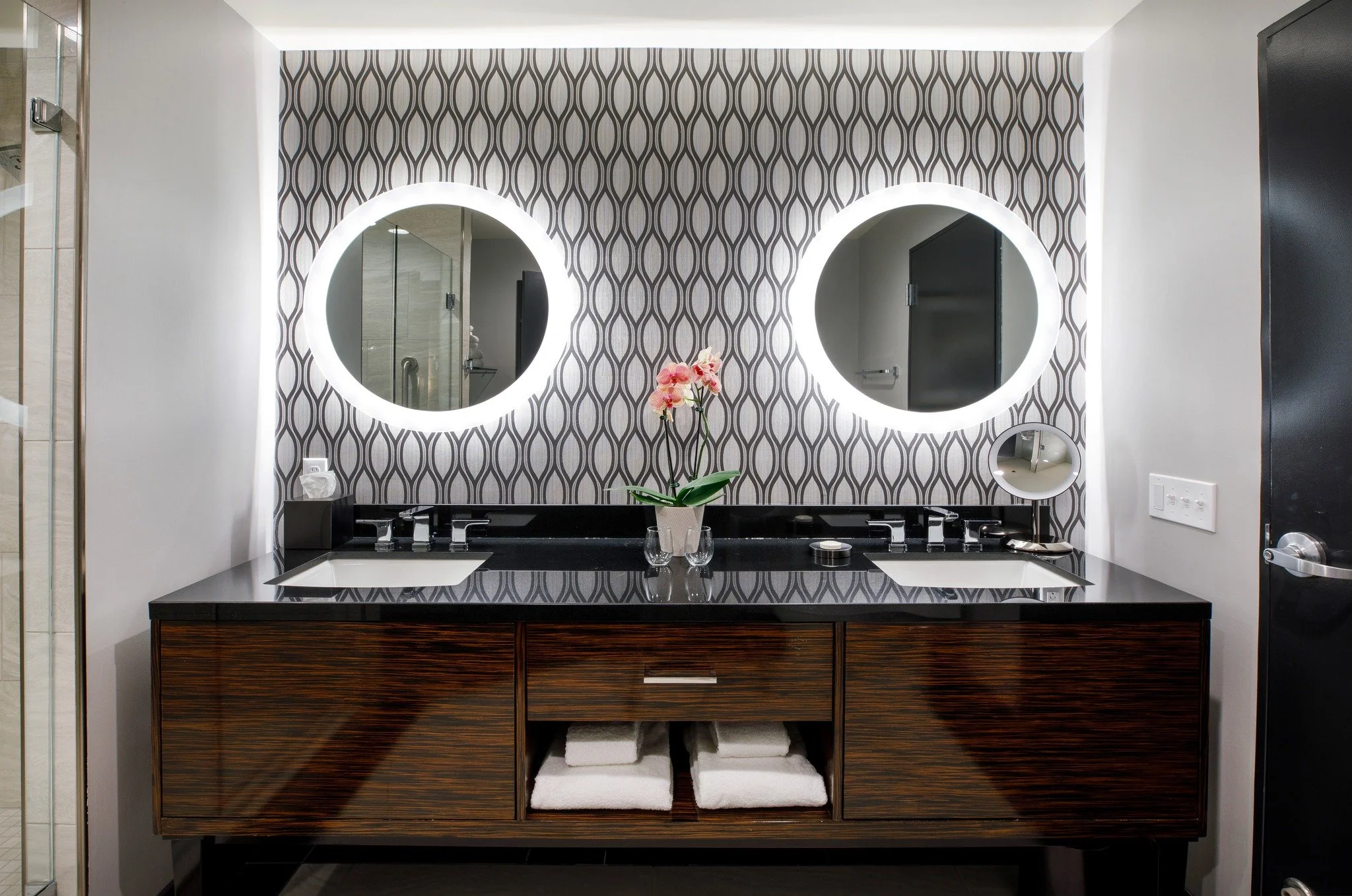
Hotel Metro bathrooms
Milwaukee hides some of its best architecture, sustainability stories, and weirdest local character behind the restroom door — and knowing where the clean, clever, and kid-ready ones live is a genuine family superpower.
Below is a curated guide of 25+ notable greater-Milwaukee restrooms across nine categories, built for a family who wants the Calatrava-white wings on one trip, the spy-themed siren on the next, and a reliable changing table any day of the week.
Every entry notes access, age-appropriateness, and the standout feature so you can plug it into a real outing. Where a detail couldn't be verified in public sources, it's flagged — call ahead for anything mission-critical.
Eco-friendly bathrooms
The Urban Ecology Center — Riverside Park (1500 E. Park Place) is the headline act. Its award-winning green building, once home to Wisconsin's largest solar array, uses recycled and renewable materials throughout, and its water-saving restrooms were profiled in a 2008 Milwaukee Journal Sentinel feature titled "Nature's Calling." One caveat for accuracy: widely repeated claims about composting toilets at this location couldn't be verified — the building is broadly eco-designed, but confirm the composting detail with staff before publishing. Free, public, very kid-friendly.
Hotel Metro (411 E. Mason St.) was Milwaukee's first Travel Green Wisconsin–certified hotel, and it shows from the floor up: tile and carpet made from recycled glass and plastics, bamboo and cork flooring, organic-cotton textiles, and Aveda amenities. Hypoallergenic PURE rooms go a step further with chemical-free bathrooms. Public restrooms are easy to visit via the Pastiche restaurant or lobby bar.
Milwaukee Central Library (814 W. Wisconsin Ave.) pairs its 1898 Beaux-Arts restrooms with a 2009 green roof featuring native plants, solar panels, and stormwater infrastructure — a living sustainability lesson under the same roof as the state's largest children's book collection.
Historic restrooms
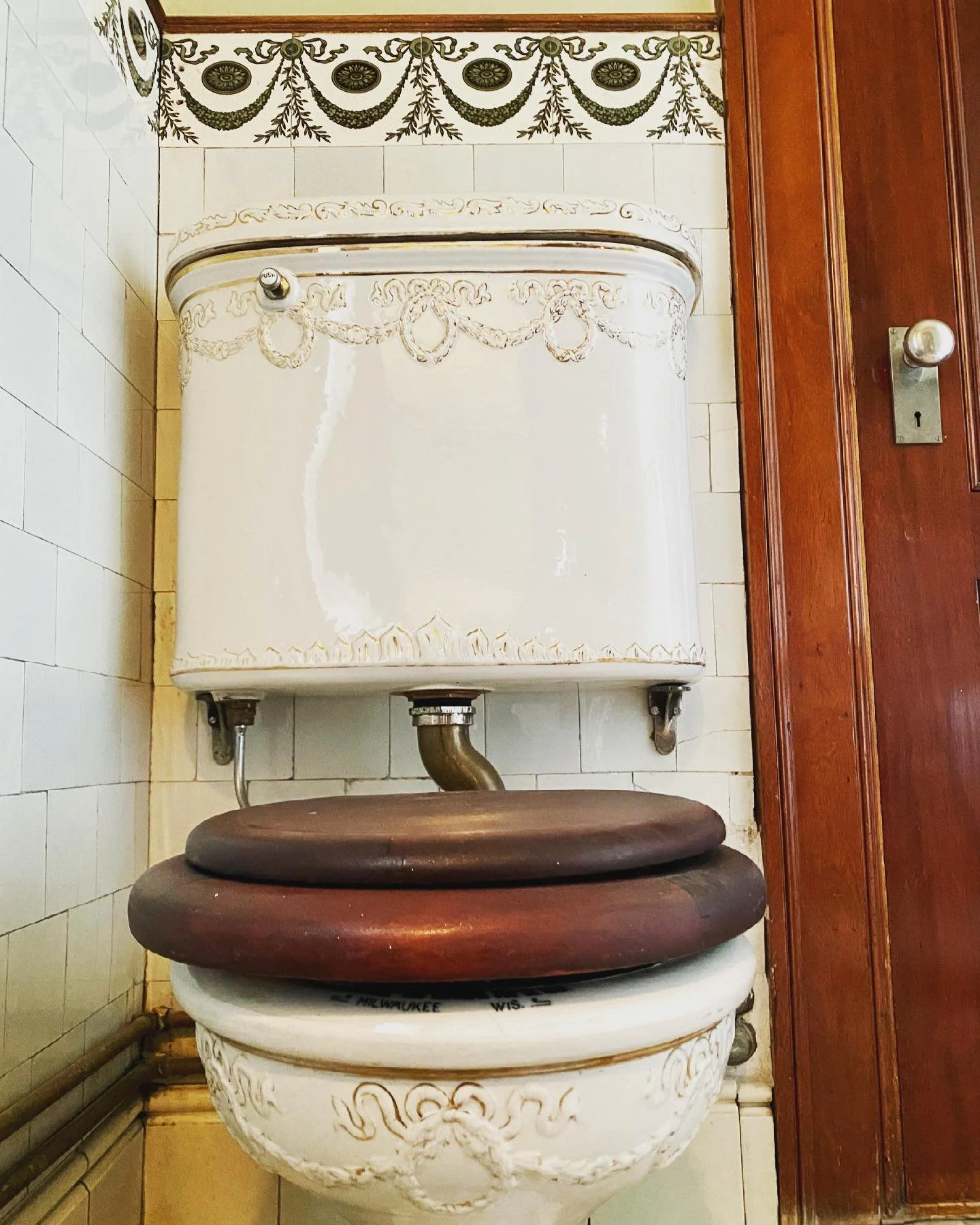
Not original to the Mansion, but a perfect design fit for Emma Pabst’s Regency suite, this late 19th century toilet was made by Rundle-Spence Mfg Co in Milwaukee. A relatively new amenity at the time the Mansion was built, the flush toilet certainly made a splash at the Pabst’s modern Victorian home.
Milwaukee City Hall (200 E. Wells St.), a 1895 Flemish Renaissance Revival National Historic Landmark, added gender-inclusive single-occupancy restrooms in 2019 specifically citing "parents with children" as beneficiaries. The 47,000 square feet of restored mosaic and marble flooring make the walk to the restroom its own architectural tour.
The Pabst Theater (144 E. Wells St.), opened 1895 and the fourth-oldest continuously operating theater in America, quietly modernized its lobby restrooms during a 2000–2002 renovation without touching the gold-leaf and marble opulence. Go for a family holiday show and duck out at intermission to admire.
Oriental Theatre (2230 N. Farwell Ave.) is a 1927 East Indian movie palace whose restroom tile is, no exaggeration, a destination in itself. A 2021 renovation won an ASID Wisconsin Bronze Award for adding ADA-compliant facilities and a new unisex restroom using tiles that match the historic ones in color and size but rotate orientation so preservationists can tell old from new. Landmark Lanes next door shares the same tile pedigree — urban-spelunking reporters call it "the most beautiful space in the building."
Best Place at the Historic Pabst Brewery (901 W. Juneau Ave.) tucks its bathrooms into the former VIP reception hall, where leaded-glass windows, hand-carved dark wood, and facing mirrors create an "infinity of your image" — OnMilwaukee's phrase, and it's accurate. Day tours are kid-welcome, though the tavern itself is beer-forward.
Pabst Mansion (2000 W. Wisconsin Ave.) holds roughly a dozen original 1892 bathrooms, preserved as part of the tour and reflecting cutting-edge Gilded Age plumbing; modern visitor restrooms are in the welcome center. A 30-minute kid-friendly tour option makes it workable for short attention spans.
Historic Turner Hall (1034 N. Vel R. Phillips Ave.), an 1882 German Turnverein National Historic Landmark, is in the middle of a multimillion-dollar restoration that includes ADA access and updated restrooms — reviewers already praise them as clean with short waits. Stop in for first-floor dining or all-ages shows.
Luxury bathrooms worth dressing up for
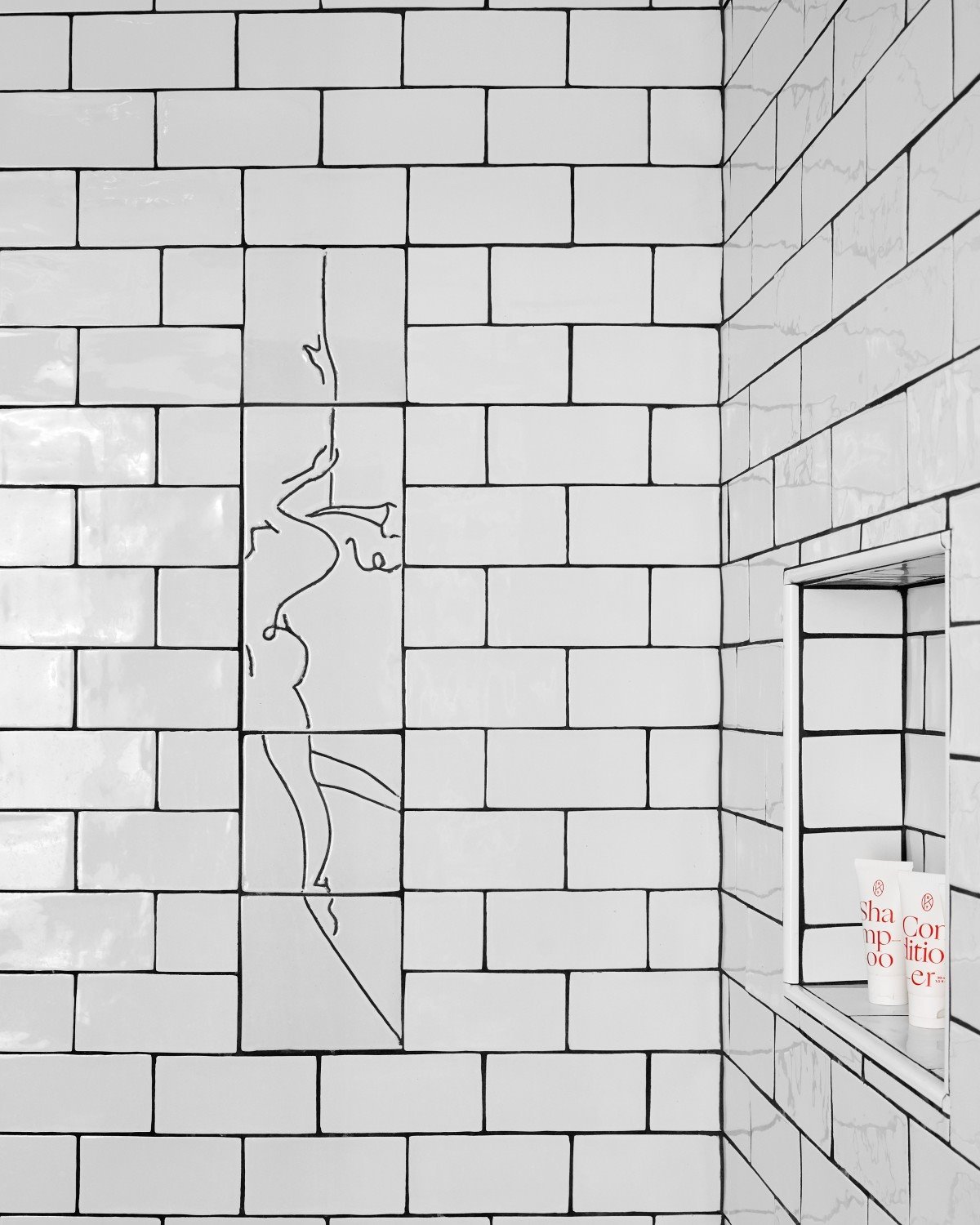
Local artist Lin Linder's tile work can be found in each Saint Kate bathroom. The installation focuses on the lines of energy of a dancer's body in motion.
The Pfister Hotel (424 E. Wisconsin Ave.) is the grande dame since 1893. Its lobby-adjacent public restrooms — rebuilt during a $20M renovation — feature marble countertops, custom brass Kohler fixtures, and mirrors with built-in lighting that echo the painted domed ceiling overhead. Access is simple: dine at Mason Street Grill, visit Blu on the 23rd floor for skyline views, or just admire the lobby art collection.
Saint Kate — The Arts Hotel (139 E. Kilbourn Ave.) treats the sink itself as a canvas. Guest bathrooms feature custom Kohler Artist Editions "Veil" sinks hand-decorated with black-and-white ribbon or flower designs via ceramic ink transfer — reportedly the only installation of their kind in the U.S. — paired with matte-black Purist faucets. Ground-floor public restrooms near the MOWA:DTN Gallery are accessible to gallery and restaurant patrons.
Iron Horse Hotel (500 W. Florida St.), a converted 1907 mattress factory in Walker's Point, pairs Cream City brick and timber beams with oversized double vanities and rainfall-shower bathrooms one reviewer called bigger than a dorm room. Smyth restaurant and The Yard patio put the design within reach of non-guests, and Harley-Davidson Museum is a five-minute walk.
Ambassador Hotel (2308 W. Wisconsin Ave.), a 1928 Art Deco landmark, greets you with a marble checkerboard lobby, bronze elevator doors, and ornate plasterwork. A real-talk warning for families: standard-room bathrooms are notably small — book a Whirlpool Suite or the King Accessible (roll-in shower, grab bars, lowered sink) for comfort. Public-area restrooms near Gin Rickey lounge keep the period feel.
Museum bathrooms built for actual kids
Milwaukee Art Museum (700 N. Art Museum Dr.) puts gender-neutral and family restrooms on both the Café Level and the Entrance Level, surrounded by the gleaming white surfaces of Santiago Calatrava's Quadracci Pavilion — the restrooms echo the Burke Brise Soleil "wings" overhead. Kids 12 and under are free, strollers are welcome, and wheelchairs are available at admission.
Betty Brinn Children's Museum (929 E. Wisconsin Ave.) is the gold standard. Changing tables live in both men's and women's rooms, a semi-private Nursing Nook sits inside the Pocket Park exhibit with a nursing chair and changing table, and a fully private nursing room is available on request at the Information Desk. A separate Quiet Room near the Be A Maker space offers adjustable lighting and fidget toys.
Discovery World (500 N. Harbor Dr.) wins on accessibility: the all-gender Family/Companion Restroom on the 1st floor near Admissions has an adult-weight lift table and a height-adjusting sink — rare features that matter enormously to families of kids and adults with disabilities. A dedicated Parent's Room for nursing is available by asking Admissions.
Milwaukee Public Museum (800 W. Wells St.) places a Sensory Room on the first floor right next to the women's restroom, stocked with adjustable lights, tactile panels, and weighted lap mats; sensory bags, compression vests, and communication sheets are available at ticket windows.
Mitchell Park Domes (524 S. Layton Blvd.) offers accessible restrooms just past the admission desk alongside the gift shop, plus a dedicated nursing station in the main atrium. All three midcentury-modern domes are ADA-accessible via ramps. Note a long-term 27th St. bridge closure beginning February 2026 — use Layton Blvd. or 35th St.
Milwaukee County Zoo (10001 W. Bluemound Rd.) was the nation's first zoo to install Mamava lactation suites, with three pods at the U.S. Bank Gathering Place, the Aquatic & Reptile Center, and the Family Farm Dairy Complex (call the number on the door for access). Family restrooms with changing areas flank the Gift Shop and West Entrance, and a Universal Changing Station with 300+ lb capacity is available via key from the Administration Office — the zoo is sensory-inclusive certified.
Grohmann Museum (1000 N. Broadway) is the sleeper pick: free admission, gender-neutral restrooms, elevator access to all three floors, and a rooftop sculpture garden with Lake Michigan views that happens to be a Green Roof. Kids under 12 free.
Quirky and themed bathrooms with a story
SafeHouse (779 N. Front St.) is the OnMilwaukee reader-poll bathroom champion. The women's room features a naked poster of young Burt Reynolds with a movable red metal heart — move the heart and a siren alerts the whole bar. The spy theme runs throughout: password entry, disappearing booth, secret doors, and a Junior Spy scavenger hunt for kids 12 and under. Family-friendly before 9 p.m.; 21+ after that on Thursday through Saturday per current policy, though sources disagree on exact time — call to confirm.
Landmark Lanes (2220 N. Farwell Ave.), open since 1927 and attached to the Oriental Theatre, features ornate period tilework in both men's and women's rooms that matches the Oriental's famous tile upstairs. Sunday afternoons are the family window — bowling, arcade, three bars — before the college crowd arrives at night.
Von Trier (2235 N. Farwell Ave.), a 1978 East Side German bar, houses a Cyril Colnik wrought-iron-and-antler chandelier salvaged from the Pabst Mansion, a restored Mike March mural above the bar, and imported roebuck antlers throughout. A hidden earlier Rieder's mural was uncovered during 2017 restoration. Kids are welcome during dinner hours; otherwise it reads as a classic adult lounge.
Café Benelux (346 N. Broadway) earned an OnMilwaukee nod for its ladies' room with Euro wall murals, distinctive floor tiles, and fresh flowers. The Belgian rooftop-patio restaurant is family-friendly for brunch and lunch.
Park, beach, and free public restrooms
Bradford Beach (2400 N. Lincoln Memorial Dr.) centers on a historic 1949 bathhouse with restrooms, showers, and changing facilities directly across from the main parking lot, with additional washrooms at MooSa's and the Bradford Beach House. Crowded on peak summer days — porta-potties supplement during big events.
Atwater Beach (4000 N. Lake Dr., Shorewood) pairs gender-neutral restrooms and changing rooms near the sand with two playgrounds (one up the bluff, one at beach level). Heads-up: some recent seasons have operated with porta-potties only, so bring supplies.
Milwaukee Public Market (400 N. Water St.) hides clean, climate-controlled restrooms on the second level near the Palm Garden seating — reachable by stairs or elevator, and the single most reliable Riverwalk and Summerfest pit stop.
Hart Park (7300 W. Chestnut St., Wauwatosa) has a new Pavilion building near the playground with a dedicated family restroom, plus additional facilities by the Parks Administration building on the west side. The playground honoring the Schoonmaker Reef has distinct toddler and older-kid zones.
South Shore Park (2900 S. Shore Dr.) puts restrooms in the 1930s bathhouse — now home to South Shore Terrace beer garden — and near the newly redesigned 2024–2025 playground with farmers-market and ship-themed structures on ADA rubberized surface.
Schlitz Audubon Nature Center (1111 E. Brown Deer Rd., Bayside) runs its Gold LEED–certified Education Center with restrooms at the main building alongside a gift shop and art gallery. Six miles of trails include wheelchair-accessible routes, and the raptor programs are the family draw — plan your loop around the single restroom hub.
Red Arrow Park (920 N. Water St.) keeps its public restrooms inside the Slice of Ice warming house, which also hosts skate rentals and a Biggby Coffee. Year-round utility for downtown exploring, though access narrows outside skating season.
Key takeaways
The real Milwaukee bathroom map clusters around a few practical truths.
Museums dominate the family-infrastructure rankings — Betty Brinn, Discovery World, the Zoo, and the Art Museum collectively offer every feature a family might need (adult changing tables, Mamava pods, sensory rooms, nursing nooks). Historic preservation hides in plain sight — the Oriental Theatre's rotated-orientation tile trick is the single most charming detail in this guide, and Best Place's mirrored "infinity" bathroom runs a close second.
Age-appropriateness varies by time of day more than by venue — SafeHouse and Landmark Lanes flip from kid-welcome to 21+ on a schedule, so daytime is your family window. Finally, the Urban Ecology Center's composting-toilet reputation deserves verification before you anchor a post on it; the building's sustainability story is solid either way, but specifics on the fixtures should be confirmed by phone.
For a North Shore family, an ideal route might pair Sprecher (Glendale) with Schlitz Audubon (Bayside) and Atwater Beach (Shorewood) on one day; or thread downtown with Milwaukee Public Market, the Calatrava wing at MAM, Betty Brinn, and a SafeHouse lunch on another. The bathrooms are the punctuation — but as this guide shows, they're doing real narrative work.
Here’s how to plan your farewell visit—and why this indoor neighborhood became such a Milwaukee institution.