Old Buildings, New Lives: The North Shore and Historic Public Spaces
Across Milwaukee’s North Shore, three aging public buildings are approaching the future in three different ways.
At Doctors Park in Fox Point, a long-shuttered Depression-era beach house could become an open-air pavilion.
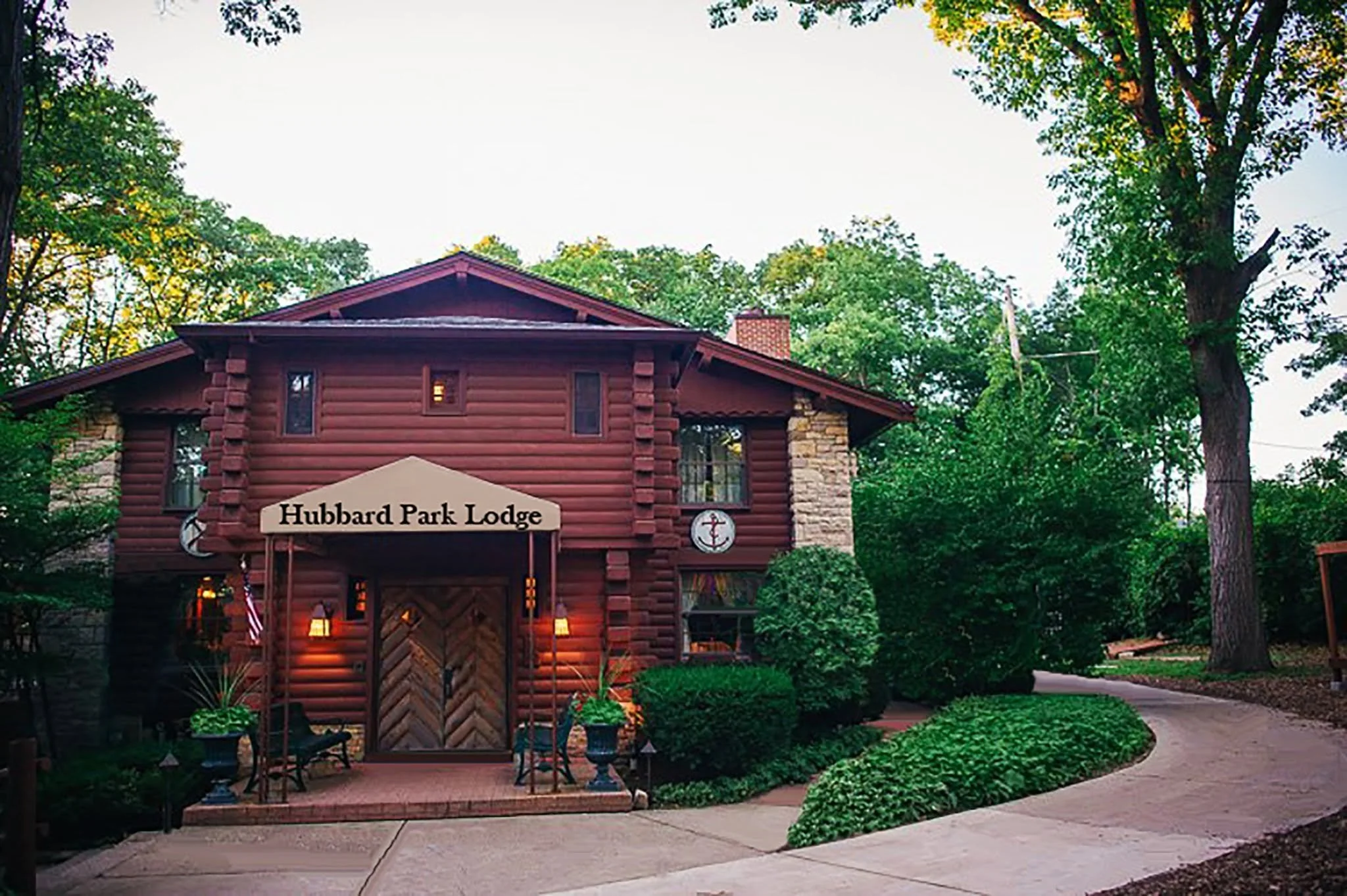
At Hubbard Park in Shorewood, a nearly 90-year-old lodge that remains one of the community’s most recognizable gathering places may require hundreds of thousands of dollars in repairs.
And in Whitefish Bay, plans for the Middle School would preserve and restore key portions of the community’s oldest school building while constructing a substantially new school around them — instead of moving the school across the street to Armory Park.
The buildings are different. So are the solutions.
The North Shore has an unusual concentration of public buildings and parks that have served residents for generations.
Some were created during the enormous wave of public investment that came with New Deal programs during the Great Depression. Others grew out of the rapid development of North Shore communities during the early 20th century.
They were schools, park shelters, recreation buildings and gathering spaces. Children grew up visiting them. Families returned. Weddings, dinners, school days, celebrations and community events accumulated inside their walls.
Eventually, the buildings themselves became part of the identity of their communities.
And now many are approaching or exceeding a century of use.
That turns what might look like a simple facilities decision into something considerably more complicated.
Together, they raise a larger question that established communities across the North Shore increasingly have to answer: What should we do with the public buildings that have become part of community identity when they are no longer capable of simply carrying on as they always have?
Sometimes the answer is to restore them.
Sometimes it is to find them a new purpose.
And sometimes it is to determine which pieces of the past are most worth saving — and design the future around them.
Doctors Park: Keep the building, change its purpose
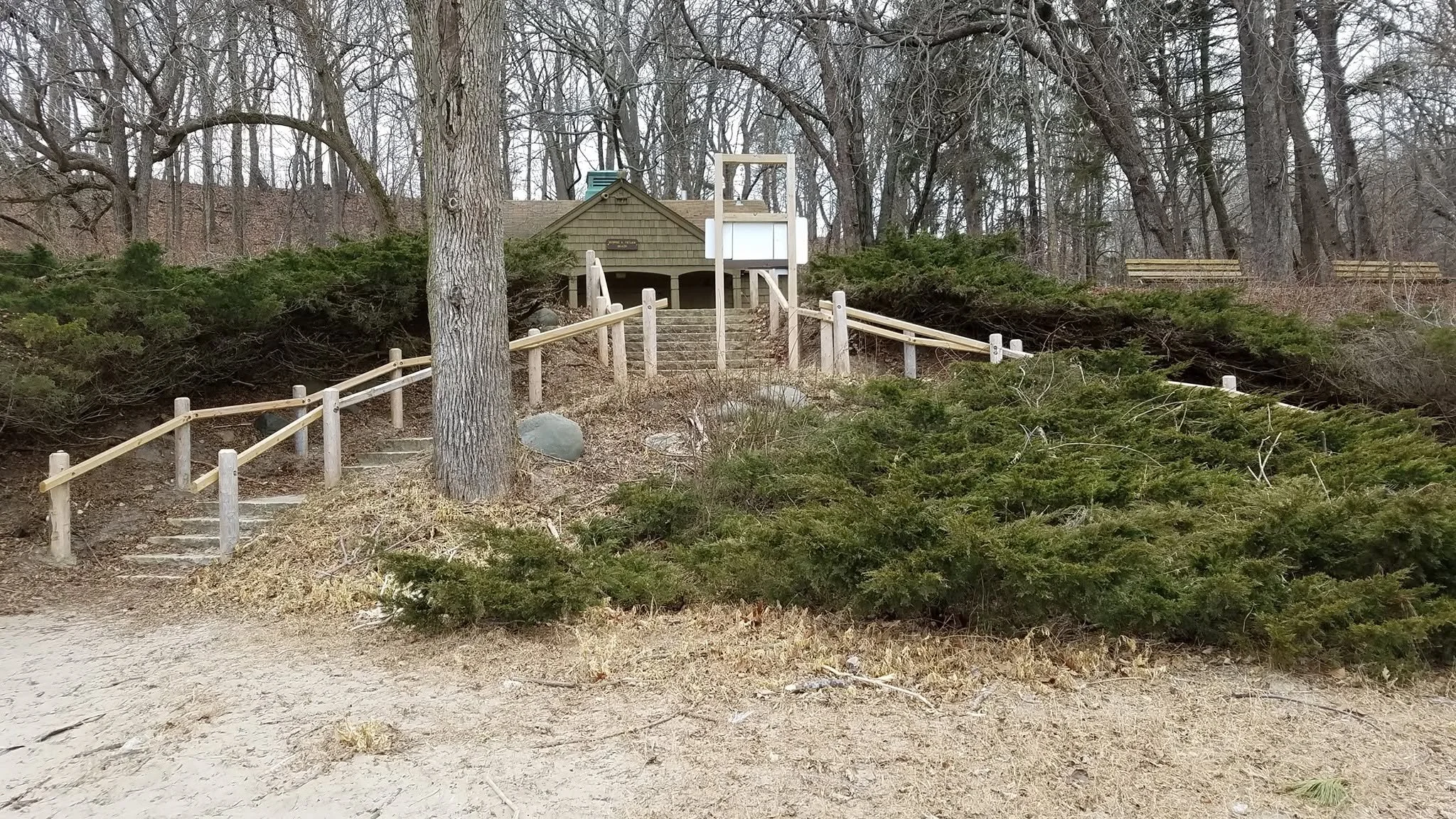
Hidden at the bottom of the bluff at Doctors Park is one of the North Shore’s most intriguing remnants of the New Deal era.
The beach house at Tietjen Beach was constructed during the Depression-era development of Doctors Park. Doctors Park Friends identifies the structure as part of the extensive WPA work carried out throughout the park, which also included trails, stairs and shoreline improvements.
Today, visitors hiking down through the wooded ravine still arrive at the old building overlooking Lake Michigan.
But it hasn’t functioned as a bathhouse in more than 20 years.
Instead of attempting to recreate a use the park no longer needs, Doctors Park Friends is trying to give the beach house an entirely new life.
The approximately $190,200 proposal would retain the structure’s support system and western wall while opening the other three sides to create an open-air pavilion.
A structural engineer has determined that the building itself remains sound, according to Doctors Park Friends. The new pavilion could provide shelter, picnic space, an outdoor classroom and another way for visitors with limited mobility to experience the lakefront without descending the final staircase to the beach.
As of September 2026, the organization says it has raised about 45% of its goal.
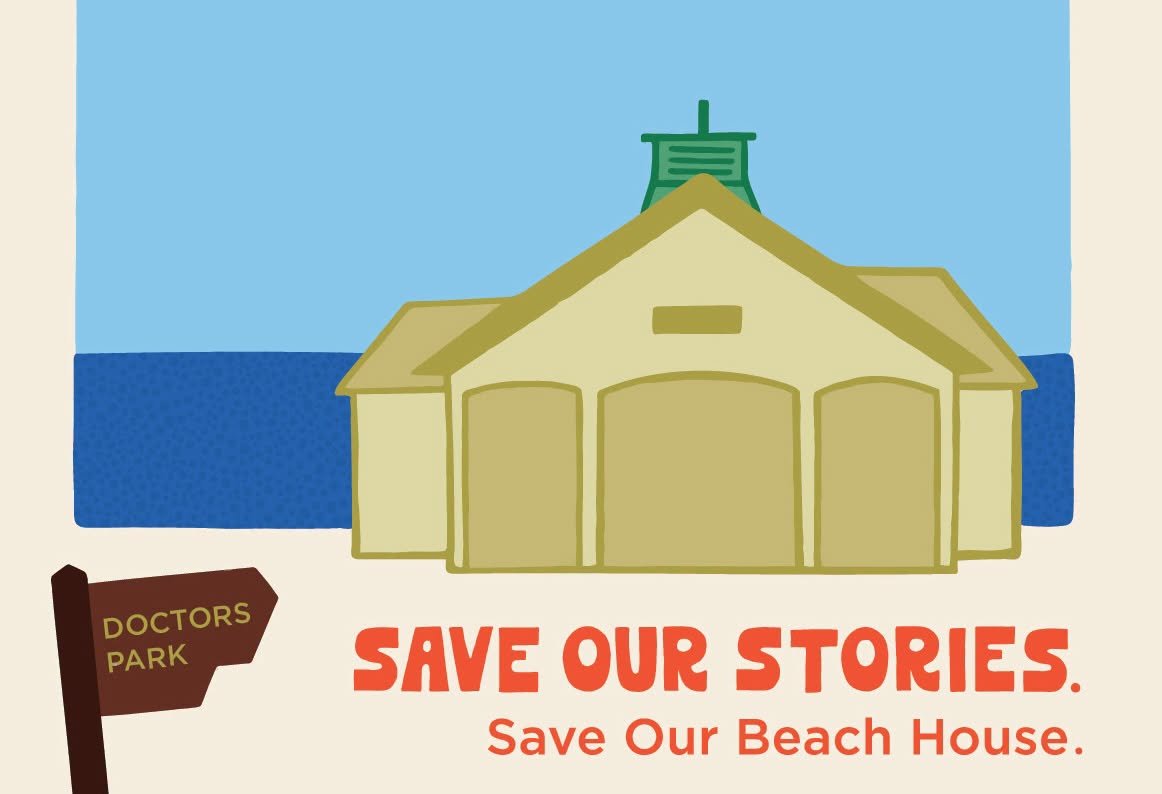
It is an example of adaptive reuse. Fox Point does not particularly need a Depression-era changing room. But the craftsmanship, location and history of the building still have value.
So the question becomes: What else could it become?
That approach preserves the recognizable building while allowing its purpose to evolve.
There is also a public-private element to the project. Doctors Park is located in Fox Point but belongs to the Milwaukee County Parks system. Doctors Park Friends has worked with Milwaukee County Parks since 2011 while raising private money for park improvements.
For more on the park itself, explore our guide to the best parks on Milwaukee’s North Shore, or read about the remarkable physician who gave the property to the public in our Fox Point history guide.
Doctors Park represents one possible future for an aging landmark: Save the structure. Find a new purpose for it. Build community support around keeping it alive.
Hubbard Park: Preserve a landmark still in use

A few miles south, Shorewood faces almost the opposite problem. Hubbard Park Lodge does not need a new purpose. People are already using it.
The rustic lodge was constructed as a Works Progress Administration project during the 1930s and remains one of the defining features of Hubbard Park. Shorewood describes the building as a WPA project, while the park’s collection of historic structures is considered an important part of its built environment.
Today, families still walk through the pedestrian tunnel and down into the wooded Milwaukee River valley for Friday fish fries, Sunday brunches, weddings, celebrations and visits to the beer garden.
You can read the full history and plan a visit in our complete guide to Hubbard Park Lodge.
But continued use does not stop a building from aging.
A new Village assessment has identified an extensive list of potential repairs at the lodge.
Inspectors found rot near the bottoms of several exterior wood columns and significant corrosion at steel connections securing columns to their concrete supports, among other structural and building-system concerns.
The Village’s preliminary planning estimates range from approximately $204,900 to more than $566,000, depending on how much work ultimately moves forward and how projects are phased.
Our recent report takes a closer look at the new Hubbard Park Lodge condition assessment and potential repairs. Shorewood’s Sept. 21 Village Board agenda provides the underlying municipal materials.
There is no proposal to abandon the lodge or simply replace it. Instead, the Village is identifying needs, prioritizing repairs and looking at how work might be spread over time while minimizing disruption to an actively used community building.
That is a different type of preservation challenge. Doctors Park is trying to bring a dormant building back to life. Hubbard Park has to figure out how to keep a historic building alive without stopping the life already happening inside it.
That creates a second path:
Keep using it. Repair it. Phase the investment. Preserve both the building and the traditions connected to it.
Whitefish Bay Middle School: Keep the historic heart, rebuild around it
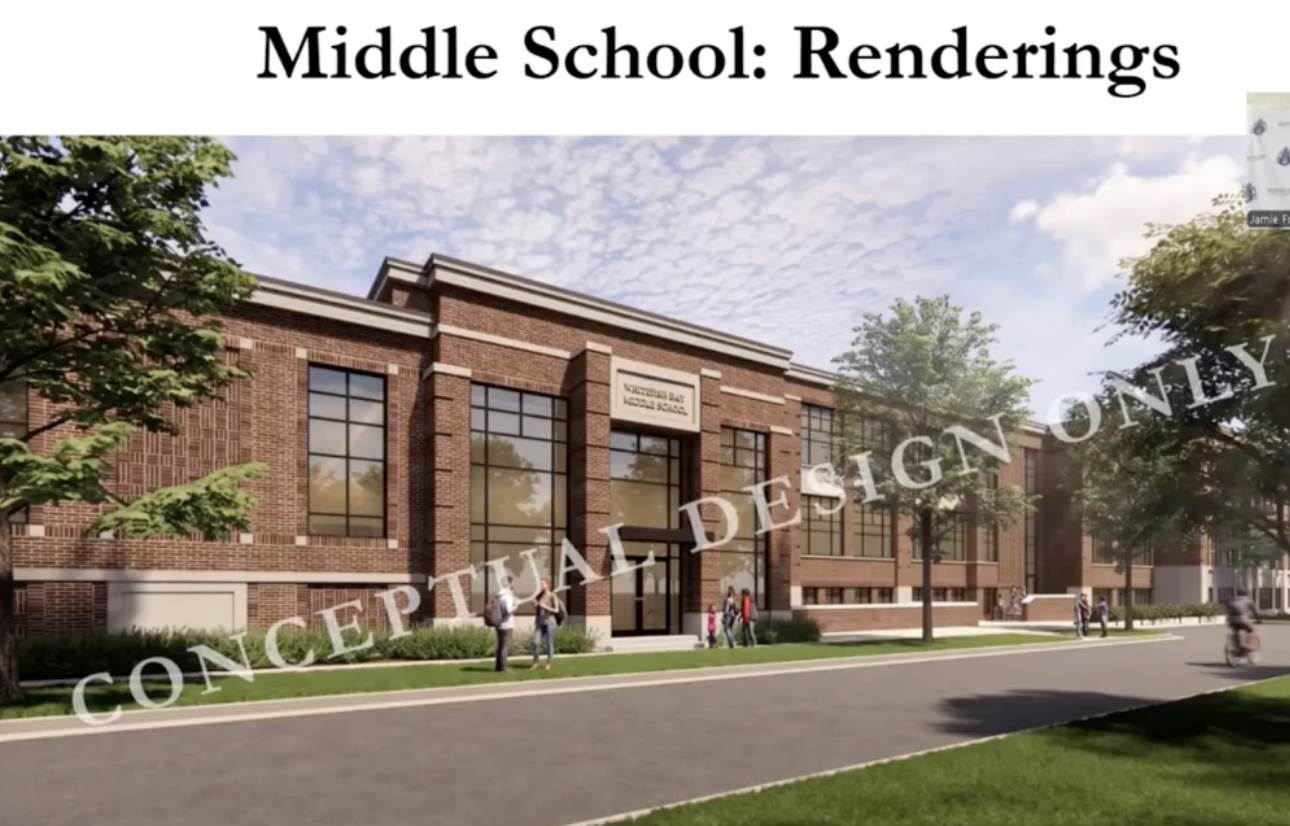
The situation in Whitefish Bay may be the most ambitious example of all.
Whitefish Bay Middle School has been altered and expanded repeatedly over generations, but its oldest core traces back to the original Henry Clay School.
The District now describes that original portion of the building as 108 years old.
Historical accounts place the construction of Henry Clay School around 1918–1920 after Whitefish Bay’s previous school was destroyed by fire. The building was expanded repeatedly as the village grew and eventually became Whitefish Bay Middle School.
Its history also connects to one of the architects who helped give Whitefish Bay much of its early civic character. Village historical materials identify the Tullgren firm with Henry Clay School, Whitefish Bay High School, Cumberland, Richards and Village Hall.
For much of the past year, however, the question was whether the Middle School would remain there at all.
An April 2026 referendum proposed constructing a new middle school across the street at Armory Park. Voters rejected that referendum.
After additional community engagement and planning, the School Board placed a different $90 million facilities referendum on the Nov. 3 ballot. The new proposal would rebuild and renovate the Middle School on its existing site rather than construct the school in Armory Park.
For background on why the park itself became such a significant part of the discussion, read our history of Armory Park.
What makes the current Middle School proposal particularly relevant to this discussion is how it mixes preservation and new construction.
If voters approve the November referendum, approximately 98,000 square feet would be new construction and 46,000 square feet would be extensively renovated, resulting in a roughly 144,000-square-foot school.
Nearly 70% of the completed building would therefore be new.
But instead of clearing the site and starting over completely, the plan would retain and extensively renovate the oldest core of the school.
Architect Nicholas Kent of Plunkett Raysich Architects described the finished product to the School Board as “functionally a new building.”
And he was even more direct about how extensive the work inside the retained structure would be: “Every system will be new. Virtually every finish in this building will be new. It will be a new building.”
That makes Whitefish Bay’s approach different from simply restoring an old school.
The project attempts to identify the portions with the greatest historical and architectural value, keep those pieces, and rebuild much of everything else around them.
The old gym could be reinvented
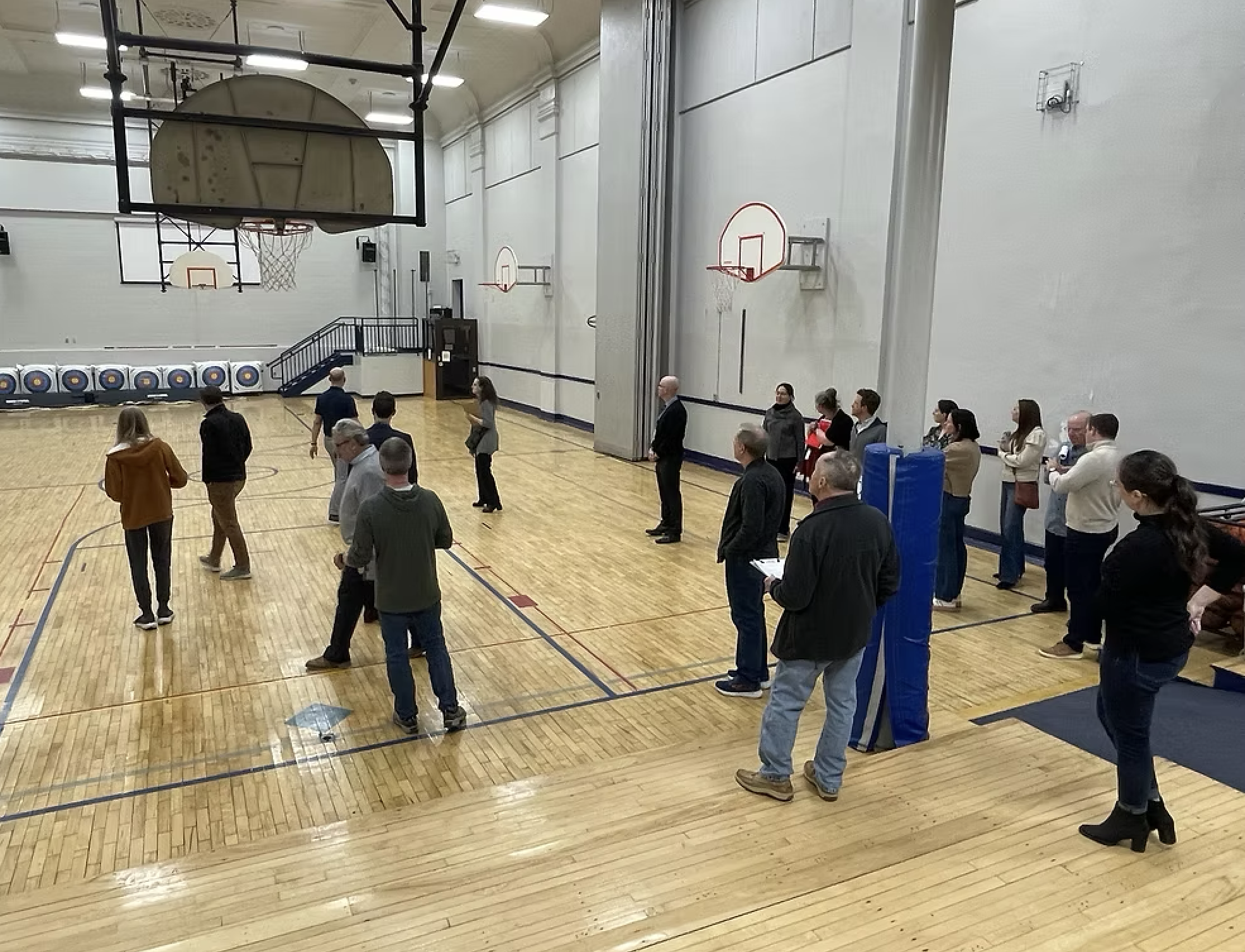
The middle school gym. Photo via Whitefish Bay School District
Perhaps the most interesting example is the original interior gymnasium.
Rather than demolish it, the current concept would transform the historic gym and stage into a central student commons and cafeteria.
The preliminary design envisions bringing natural light into the space while retaining architectural details and potentially restoring a small platform for performances and gatherings.
Kent described the concept this way: “This could be really quite a compelling story to tell about bringing new uses to the oldest remaining piece of infrastructure in the school district over a century later.”
That sentence could just as easily describe what is happening at Doctors Park. A room created for one purpose a century ago does not necessarily need to perform that same job forever to remain valuable.
Sometimes preservation means allowing a historic space to evolve.
The exterior would get a similar treatment.
The District’s project plan calls for later additions at the front of the school to be removed during the final phase, followed by construction of a new main entrance and restoration of the south elevation.
That has the potential to make portions of the original school architecture more visible again even as a much larger modern building takes shape around it.
In other words, this is not preservation in the sense of freezing a building in time. It is selective preservation. Some parts disappear. Some parts are restored. Some historic spaces get completely new functions.
And an enormous amount of new construction fills in everything the century-old building can no longer reasonably provide.
Three buildings, three different preservation strategies
Put the projects side by side and a useful pattern begins to emerge.
Doctors Park: Adaptive reuse. The historic building survives, but its original purpose does not. The proposed solution is to keep the structure and invent a new use for it.
Hubbard Park: Active preservation. The historic building and its current purpose both remain valuable.
The challenge is investing enough to keep a heavily used landmark functioning safely for another generation.
Whitefish Bay Middle School: Selective preservation. The project would retain meaningful pieces of the original building — particularly its historic core and gym — while replacing large portions with modern construction.
Three communities. Three buildings. Three very different answers to essentially the same question.
What exactly are we trying to save? That may be the most important question in any preservation discussion. It is tempting to reduce these debates to narrow choices. But these North Shore projects demonstrate how much exists between extremes.
Is the important thing the building’s exterior?
Its craftsmanship?
A particular room?
Its relationship to the landscape?
The activities that have happened there?
The memories attached to it?
Or simply the fact that generations of residents recognize it as part of home?
At Doctors Park, much of the value lies in the craftsmanship and extraordinary location of a small lakefront structure.
At Hubbard Park, the lodge itself creates an atmosphere that would be almost impossible to reproduce with a generic modern building.
At Whitefish Bay Middle School, the current proposal treats parts of the oldest building as something worth carrying forward while acknowledging that a school requires more than the original structure.
Preservation can also protect something beyond the building
The Middle School example adds another dimension to the discussion.
Keeping the school on its existing property also means Armory Park can remain parkland under the current proposal.
The park has its own history tied to Whitefish Bay’s former National Guard armory, the 32nd “Red Arrow” Division and the community’s Veterans Monument and Memorial Garden.
So the choice is not simply about whether to preserve an old school.
The proposed solution attempts to preserve important elements of two historic community places simultaneously: the oldest part of the school and the park across the street.
As an architectural approach, it illustrates something important. Sometimes preservation requires moving beyond the assumption that communities must choose one old thing at the expense of another.
The financial questions
Of course, architecture is only part of the equation. Doctors Park Friends needs approximately $190,200 and is relying heavily on private fundraising. Shorewood is staring at potentially hundreds of thousands of dollars in work at Hubbard Park Lodge. Whitefish Bay’s proposed Middle School project is approximately $68.4 million and is part of a broader $90 million borrowing question that requires voter approval.
Preservation costs money.
So does demolition.
So does replacement.
And sometimes the cheapest short-term answer may not produce the place a community wants 30, 50 or 100 years from now.
That is why these debates rarely stay confined to engineering reports.
They become conversations about values.
What will the North Shore leave behind?
There is something worth remembering about all three of these places. They were not originally built to become historic landmarks.
The Doctors Park beach house was somewhere to change clothes after swimming. Hubbard Park Lodge began as a Scout Craft Cabin. Henry Clay School was built because children needed classrooms after another school burned down.
They were infrastructure. People simply built useful thingsm and then generations of people used them. Over time, those buildings accumulated something impossible to add to a construction budget: meaning.
That may be the biggest lesson emerging from Doctors Park, Hubbard Park and Whitefish Bay Middle School.
Preservation does not always mean keeping every wall exactly where it is. Sometimes it means finding a new purpose. Sometimes it means doing the expensive work necessary to keep an old building functioning.
And sometimes it means deciding which pieces tell the story best, protecting them and building something new around them.
The decisions communities make today will determine which pieces of the North Shore’s past remain visible decades from now.
They may also determine which buildings we create today become the places another generation fights to save a century from now.