

Boerner Botanical Gardens: Milwaukee area hidden gem
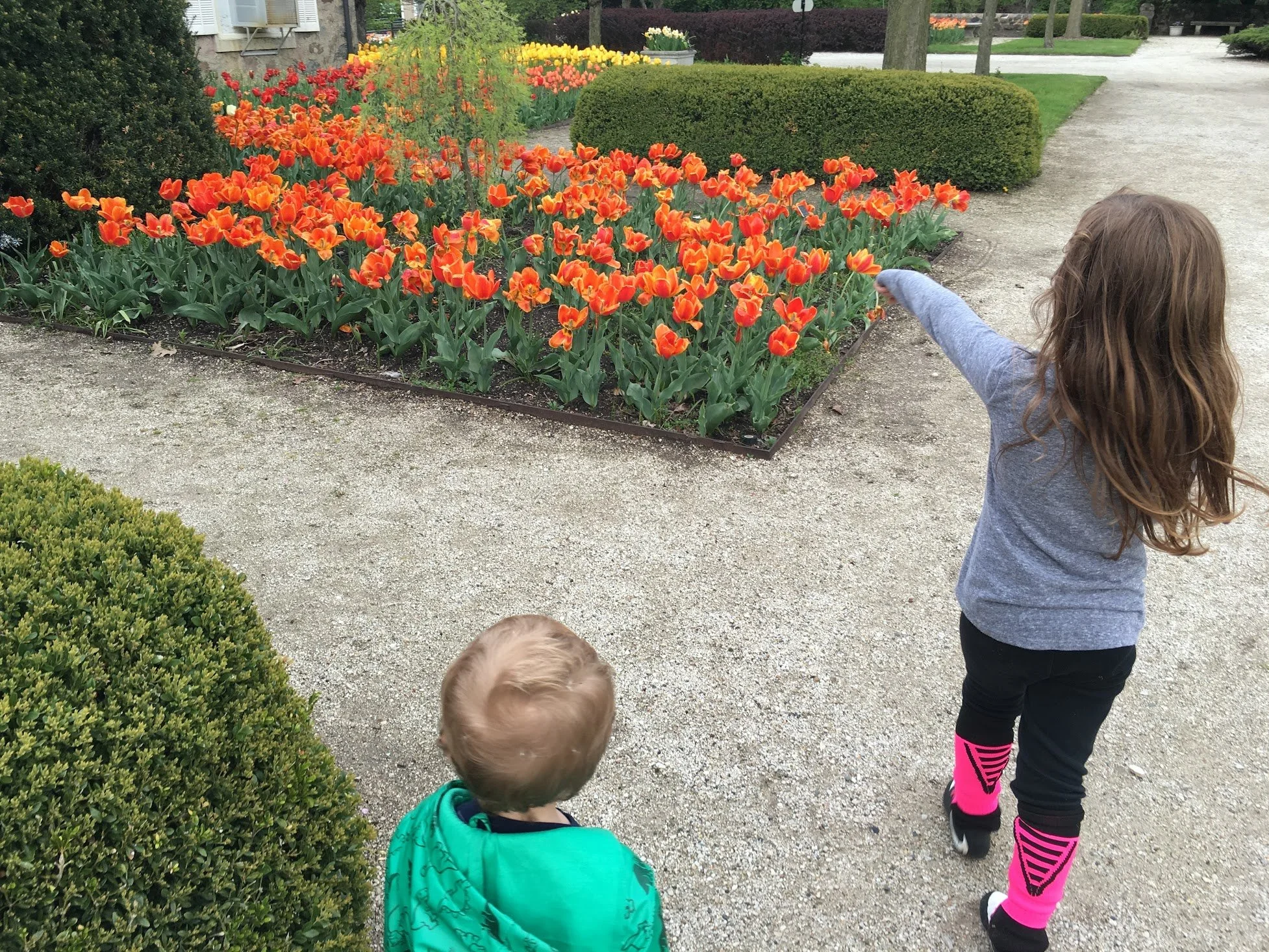
Boerner Botanical Gardens is one of the best family outings in the greater Milwaukee area — a stunning 40-acre botanical paradise tucked inside Whitnall Park in Hales Corners, just 15 minutes from downtown. What sets it apart from a typical garden visit is Margie's Children's Garden, a 3-acre wonderland of whimsical sculptures, troll bridges, slides, and dig-in-the-dirt stations that opened in 2022 and transformed Boerner into a true kids' destination. With free parking, smooth stroller-friendly paths, admission under $10, and enough variety to fill a full morning, it's the kind of place Milwaukee-area families return to season after season.
The gardens earned their reputation as the oldest nationally recognized public garden in the Great Lakes region, and they carry an unmistakable WPA-era charm — hand-carved woodwork, native fieldstone walls, and a gazebo straight out of a storybook.
Depression-era dream built by hand, still blooming 85 years later
Boerner Botanical Gardens exists because two visionaries believed Milwaukee deserved beauty alongside recreation. Charles B. Whitnall, a florist-turned-parks-champion who founded the Milwaukee County Park System, pushed to acquire the Hales Corners farmland in the late 1920s at just $376 per acre. He hired Alfred L. Boerner, a 26-year-old landscape architect from Cedarburg, to transform it into something extraordinary.
When the Depression hit, federal programs turned crisis into opportunity. Beginning in 1933, roughly 200 Civilian Conservation Corps workers dug lakes, built roads, and planted thousands of trees. By 1935, WPA artisans arrived — masons, sculptors, and craftsmen who built the iconic Garden House from native fieldstone, complete with hand-hewn oak beams and a fireplace mantel inscribed with Alexander Pope verse. The five original formal gardens — Annual, Perennial, Rock, Rose, and Peony — opened to the public in 1939.
Alfred Boerner died in 1955, and the county renamed the gardens in his honor two years later. His brother Eugene, a world-renowned rose breeder who developed over 60 Floribunda varieties at Jackson & Perkins, provided original roses that still grow in the Rose Garden today. The nonprofit Friends of Boerner Botanical Gardens (FBBG), founded in 1984, now operates year-round programming and funded the 2003 Education & Visitor Center that made the gardens a four-season destination.
Every garden area
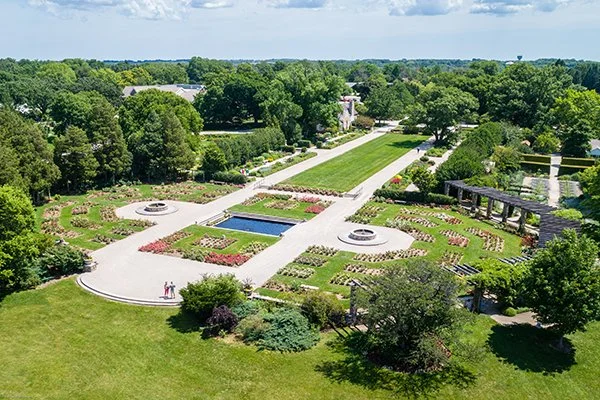
The gardens contain over a dozen distinct areas spread across 40 manicured acres, plus a 1,000-acre arboretum stretching into Whitnall Park. Here's what families should know about each:
Annual Garden. The visual showstopper, with 10,000+ blooming annuals lining grassy malls flanked by limestone statuary, native glacial stone walls, and a classic wedding gazebo. Kids love running along the wide pathways between color-blocked flower beds, and the gazebo makes an irresistible photo backdrop.
Rock Garden. Built from an old gravel pit using over 1,000 tons of weathered limestone hauled by CCC workers (one described it as "like building the pyramids"), this garden features waterfalls, quiet pools, stepping stones, birch trees, and Wisconsin wildflowers. Kids are fascinated by the waterfalls and stepping-stone paths, though toddlers need close supervision on the uneven terrain. Multiple parent bloggers recommend saving this for last — "kids usually want extra time here."
Rose Garden. Largely unchanged since the 1930s, this garden features a koi pond that consistently ranks as a top kid favorite in visitor reviews. Roses bloom from June through fall using environmentally-friendly cultivation methods.
Perennial Garden. A long grassy walkway lined with 900+ perennial varieties — irises, phlox, hostas, daylilies, and peonies. The wide, flat path is ideal for strollers and wagons.
Peony Garden. Home to 175+ peony varieties peaking mid-May through late June, centered around a Katsura tree transplanted in 1957 when it was already 38 years old.
Herb Garden. Over 300 varieties of medicinal and culinary herbs enclosed by a tall hedge. The tucked-away feeling makes older kids feel like they've discovered a secret room.
Shrub Mall. An English country-estate vibe with a sweeping central lawn. Features exotic Tree Peonies and Intermediate Bearded Iris blooming in mid-May. The wide-open space gives little ones room to stretch.
Bog Walk. A shaded, peaceful pathway filled with birdsong connecting the Rock Garden to the Herb Garden — a welcome cool-down stretch on hot summer days.
Trial Garden. Located near the parking lot, 500+ new plant varieties are tested here annually for Great Lakes climate suitability. One of only 31 All-America Selections display gardens nationwide.
Other areas include the Fragrance Garden (plants chosen for scent), Daylily Walk, Crabapple Walk (one of the nation's largest ornamental crabapple collections, blooming mid-April to mid-May), a Butterfly Garden, Rain Garden showcasing stormwater management, and a Magnolia Collection.
Margie's Children's Garden draws families
Opened in 2022 and named for Margaret "Margie" Kezman, a local teacher, this 3-acre garden-within-a-garden is the reason Boerner now regularly appears on Milwaukee family must-do lists. It's located west of the Visitor Center, deliberately separated from the formal gardens so kids can be loud and active without disturbing other visitors. Admission is included with your regular ticket — no extra fee.
Milwaukee Magazine described it perfectly: "Margie's Garden is nothing short of enchanting — too good to be kept a secret. Sparkly gravel paths wind through a rainbow carpet of seasonal flowers, punctuated with whimsical sculptures and play structures."
The specific features that kids go wild for include an Enchanted Village with a whimsical blue playhouse, fiddlehead path, twig hut, and mushroom-chair rings; a Sound Garden with interactive instruments; a Troll Bridge over a dry stream bed; slides and climbing structures including a giant caterpillar and bird's nest climber; a Bug Garden with larger-than-life insect sculptures; and a Growing Center where kids can actually dig in the dirt with tethered garden tools.
For quieter moments, there's an Alphabet Garden, a Numbers Garden, a Storybook Nook (little free library with wooden stump seating), a Secret Garden with benches for reading, and a "Flower Shop" offering complimentary postcards. Margie's Stage — a performance area with fabric shade and limestone terrace seating — hosts occasional programming.
Best ages are 2 through 10. Toddlers and preschoolers gravitate to the troll bridges, mushroom chairs, and child-scale features, while elementary-aged kids enjoy the scavenger-hunt quality of finding all the letters, numbers, and hidden nooks. One TripAdvisor reviewer called it "like a Willie Wonka-style garden filled with fun nooks and crannies." Multiple parents report spending over two hours in this section alone.
The Children's Garden is open May 1 through October 31 (8 AM–7 PM in summer, 8 AM–4 PM in fall) and is fully wheelchair- and stroller-accessible.
What's blooming each season
Spring: peak tulip season
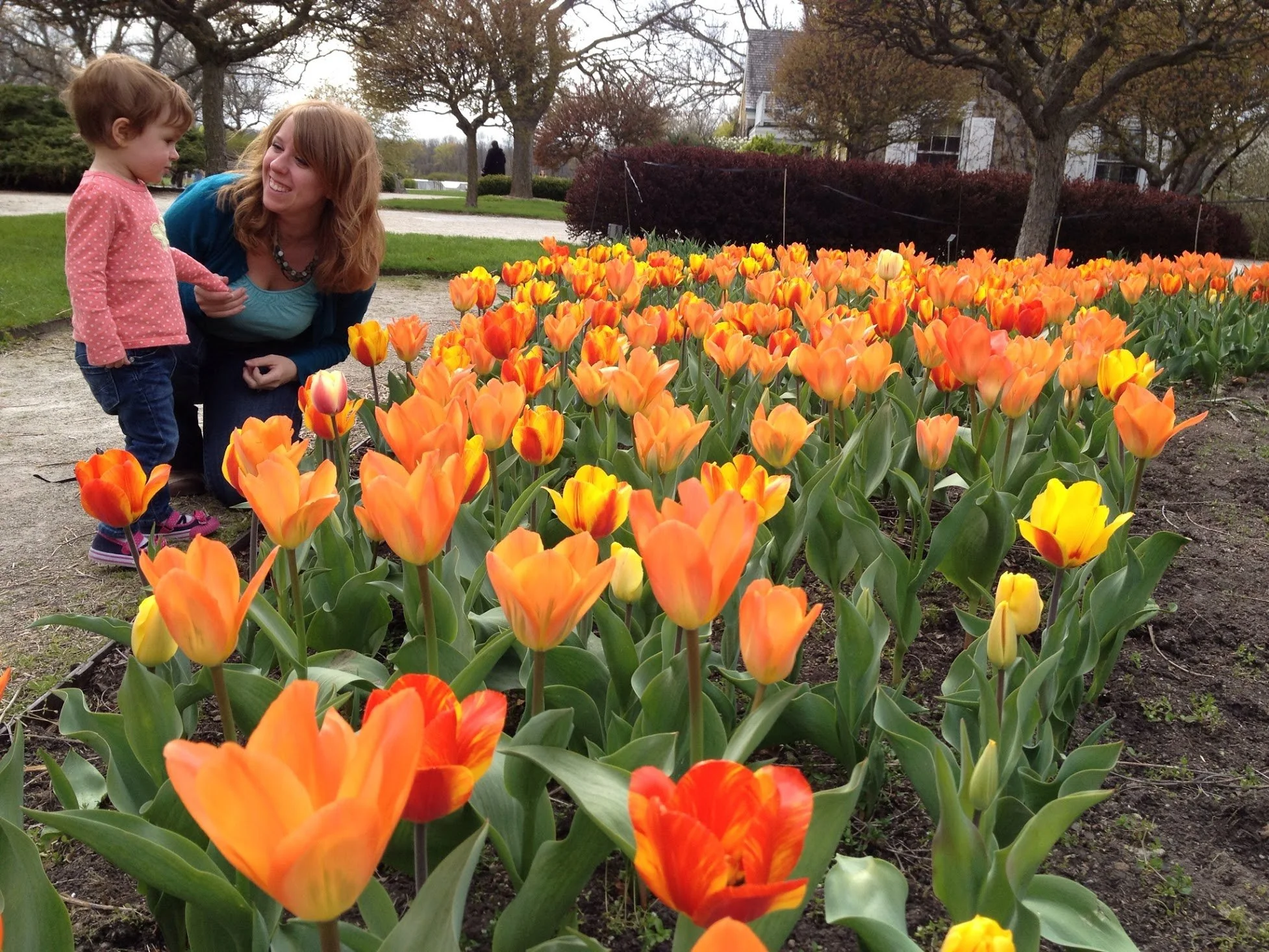
Spring (May opening through mid-June) is peak tulip and peony season. Tulips peak in early-to-mid May, right around opening day, filling coordinated beds in brilliant reds, purples, yellows, and pinks. The Rock Garden carpets itself with Wisconsin wildflowers and Asian/European bulbs. Crabapples and magnolias bloom through May. The 175+ peony varieties peak mid-May through late June, and 200+ iris cultivars follow in late May and early June. Spring mornings tend to be quieter and offer the freshest, lushest greenery — ideal for families wanting a calmer visit.
Summer (June through September) brings the gardens to full glory. Roses begin blooming in June and continue through fall — peak rose season is June through July. The Annual Garden hits its stride with 10,000+ flowers in full color. Perennials peak in June and July. Margie's Children's Garden is liveliest and most fully planted. Thursday evening Concerts in the Gardens (free admission after 6 PM) and Taco Truck Tuesdays offer relaxed summer evening options.
Fall (September through October) features gorgeous foliage across Whitnall Park's 600+ acres, late-season perennial blooms, and increasingly peaceful paths. The marquee fall event is China Lights, which transforms the gardens with 40+ illuminated lantern displays from September through early November.
Winter (November through April) brings the gardens into dormancy, but the grounds remain open (free, 8 AM–4 PM daily) and the Visitor Center operates year-round on weekdays. The Winter Wonders drive-through light show runs through Whitnall Park from late November through New Year's, and FBBG's Winterfest in January offers free family activities including guided winter walks and kids' indoor crafts.
Events and programs families should know
Concerts in the Gardens run every Thursday evening from late June through late August, 6:30–8:30 PM. They're free — no concert admission, and garden admission is waived after 6 PM. Food and beverages are available for purchase, or bring your own. The 2025 series runs June 26 through August 28.
China Lights is the signature fall event and a genuinely spectacular family outing. The 2025 edition ("Magical Forest" theme) runs September 12 through November 2, Tuesday through Sunday, 5:30–10 PM, with timed entry slots at 5:30, 7:00, and 8:30 PM. Expect 40+ sets of larger-than-life hand-painted illuminated lanterns along a ¾-mile walking route, live stage entertainment (hat juggling, face changing, acrobatics), interactive areas, and food vendors. Tickets are sold separately from garden admission — advance online purchase is strongly recommended as time slots sell out. Plan about two hours. Parking in the nearest lot costs $15; free parking with shuttle service is available in more distant lots.
Taco Truck Tuesdays bring Romero's Taco Truck into the gardens from 5–7 PM on Tuesday evenings (July 15–August 26, 2025), with extended garden hours until 8 PM.
Art in the Gardens (May — the 2026 date is Sunday, May 3) is a craft fair showcasing 40+ local artists. Free fair admission; regular garden admission applies.
Winter Wonders is a 1.4-mile drive-through holiday light show with 1+ million LED lights, 80+ displays, and themed weekends. Historically runs late November through January 1 at roughly $25 per carload. Perfect for all ages since you never leave your vehicle.
Winterfest (January 18, 2026) is a free family event at the Visitor Center with guided 45-minute winter walks, kids' indoor crafts, and activities co-hosted with Wehr Nature Center.
Free Admission Days fall on the last Thursday of each month, May through October (excluding China Lights). The 2025 dates are May 29, June 26, July 31, August 28, September 25, and October 30. Expect slightly larger crowds.
For ongoing programming, FBBG offers Stroller Rolls (guided walks for parents with babies/toddlers), children's summer camps, a Young Gardeners Program, family workshops, and gentle/family yoga sessions. K–12 school field trips can be arranged through FBBG, which considers children's environmental education "the centerpiece" of its mission. Docent-guided tours are available for groups of 12 or more.
Admission, hours, parking, and the practical details
Admission is charged May 1 through October 31 only. The rest of the year, grounds are free and open daily 8 AM–4 PM.
Category Milwaukee County resident Non-resident Adult (18–59) $8 $9 Senior (60+) $6 $9 Junior (3–12) $6 $6 Student (any age, with ID) $6 $6 Military/Veteran $6 $6 Person with disability $6 $6 Children under 3 Free Free FBBG or AHS member Free Free
Milwaukee County residents should bring a photo ID. FBBG membership pays for itself quickly if you visit more than once per season and includes reciprocal admission to 300+ gardens across North America.
Hours during garden season: May 1 through September 10, open 8 AM–7 PM daily. September 11 through October 31, open 8 AM–4 PM daily. The Visitor Center operates 9 AM–4 PM daily (weekdays only in winter). The FBBG Gift Shop is open Wednesday through Sunday, 10 AM–3 PM during garden season.
Parking is free year-round, with designated accessible spaces near the entrance. During China Lights, the closest lot charges $15, but free shuttle-served lots are available.
On-site food: Nell's Garden Café in the Visitor Center offers light lunch with an outside terrace. Taco Truck Tuesdays and concert evenings have additional food vendors. Bringing your own snacks is encouraged — there are plenty of benches throughout the gardens. The Garden Room hosts special brunches on Easter, Mother's Day, Father's Day, and Christmas catered by Zilli Hospitality Group.
Restrooms are located in the Visitor Center (which also has an elevator) and at multiple points throughout the gardens. A lactation pod is available and marked on the official garden map. The Visitor Center also houses a library, classrooms, and the gift shop.
Strollers, wheelchairs, and getting around with little legs
Most garden paths are smooth, paved, and fully stroller-friendly. The 2015 Rotary Circle ADA pathway specifically connected three previously inaccessible historic garden areas using permeable pavers, and safety rails were added to the Rock Garden. The Visitor Center has an elevator, and accessible parking is located near the main entrance.
The main accessibility caveat: the Rock Garden features stepping stones, uneven terrain, and narrower paths that can challenge wheelchairs, walkers, and wide strollers. The Bog Walk is boardwalk-style and generally manageable. Margie's Children's Garden is fully accessible with natural but navigable paths.
A typical family visit takes 2 to 3 hours, which covers the highlights including Margie's Garden. Families who add the Rock Garden, Bog Walk, and a snack break at Nell's Café may stretch to a full morning. Multiple parent bloggers describe "a full morning wandering through Boerner" as the sweet spot.
A photographer's paradise (with one important rule)
Boerner is one of the Milwaukee area's most popular locations for family portraits, engagement sessions, senior photos, and prom pictures. The visual variety — from the Annual Garden gazebo to the Rock Garden waterfalls to Margie's whimsical sculptures — provides backdrops for every aesthetic.
Important: a photography permit is required for all posed or professional sessions. Family, engagement, prom, or school photo permits cost $37.07 per hour (admission not included). Wedding photography permits run $80–$160 plus tax and include admission for up to 20 people. Casual, handheld-camera and phone photography is freely permitted and encouraged.
The best spots for family photos include the Annual Garden gazebo (the classic shot), the Rock Garden's waterfalls and limestone backdrop, the Rose Garden's arched structures and koi pond, and the troll bridge and giant flower sculptures in Margie's Garden. For the best light and fewest photobombers, weekday mornings before 11 AM are ideal. Late spring and summer offer peak color.
Smart tips for making the most of your visit with kids
Go on a weekday morning. Monday through Wednesday mornings between 9 and 11:30 AM offer the quietest paths and best photo opportunities. One Milwaukee Magazine writer described having the gardens "all to ourselves" on a Monday morning. Avoid Mother's Day (long lines and crowds), Saturday afternoons (wedding photo traffic), and Free Thursdays if you're crowd-averse.
Start with Margie's Garden if you have toddlers — harness that early energy for the most active play area, then wind through the formal gardens as the pace naturally slows. Save the Rock Garden for last, as multiple parents note kids want the most time there.
Bring sunscreen, hats, water, and snacks. Much of Margie's Garden and the main paths have limited shade during peak afternoon hours. While Nell's Garden Café is available, packing your own ensures flexibility. Bringing a stroller or wagon is strongly recommended — the gardens are more expansive than they first appear.
Grab a map from the Visitor Center before heading out. Several parents recommend framing it as a treasure hunt or explorer mission to keep kids engaged through the formal garden sections.
Rules to know: stay on pathways, don't pick or touch plants (except in Margie's Growing Center, where digging is the whole point), and nothing can be placed in planted areas. These are working display gardens, not a park lawn.
Pair your visit with Wehr Nature Center, the beer garden, or Blüm Coffee
Boerner sits inside Whitnall Park, Milwaukee County's largest park at 600+ acres, which means a full day of family adventure is easy to build.
Wehr Nature Center is immediately adjacent (separate entrance off College Avenue) — a 220-acre nature preserve with a visitor center featuring live animals, an indoor beehive, and educational exhibits. Its 5+ miles of trails pass through woodland, wetland, prairie, oak savanna, and circle 16-acre Mallard Lake. The All Abilities Loop is stroller-friendly, and a Nature Play Area with log stumps and a mini cabin overlooks the lake. Parking is $5 all day; no additional admission. Rated 4.8 stars on Google.
The Whitnall Beer Garden (technically in adjacent Root River Parkway) opens May through October with roughly 20 beers on tap and food available in a family-friendly atmosphere. Multiple reviewers describe it as "a mellow blending of families with young children all the way to seniors."
Blüm Coffee Garden in Greenfield (about 11 minutes away) is a charming café inside Bluemel's Garden & Landscape Center with a fenced playground, Colectivo coffee, sandwiches, and beer on tap. Milwaukee Magazine specifically recommends it as a post-Boerner stop. Historic Greendale is a 5-minute drive and offers a walkable village with shops and restaurants.
Whitnall Park itself has playgrounds, reservable picnic areas, Oak Leaf Trail access for biking, and excellent birding during warbler migration season.
Conclusion
Boerner Botanical Gardens delivers an unusual combination for a family outing: genuine horticultural beauty that satisfies adult visitors paired with a children's garden specifically designed to let kids touch, climb, dig, and explore. At $6–$9 per person with free parking, it's one of the best-value family experiences in the Milwaukee metro area. The strongest strategy is a weekday morning visit in June or July (peak blooms across all gardens), starting at Margie's Garden before energy wanes, then winding through the formal gardens at a toddler's pace. Pair it with Wehr Nature Center trails or the Whitnall Beer Garden for a full-day itinerary, or hit a Free Thursday for a no-cost introduction. The gardens reward repeat visits across seasons — May tulips, June peonies and roses, fall China Lights, and winter's drive-through Winter Wonders each offer a fundamentally different experience within the same beautiful grounds.


Commodo cursus magna, vel scelerisque nisl consectetur et. Donec id elit non mi porta gravida at eget metus.