

Whitefish Dunes State Park: Trails and Natural Beauty
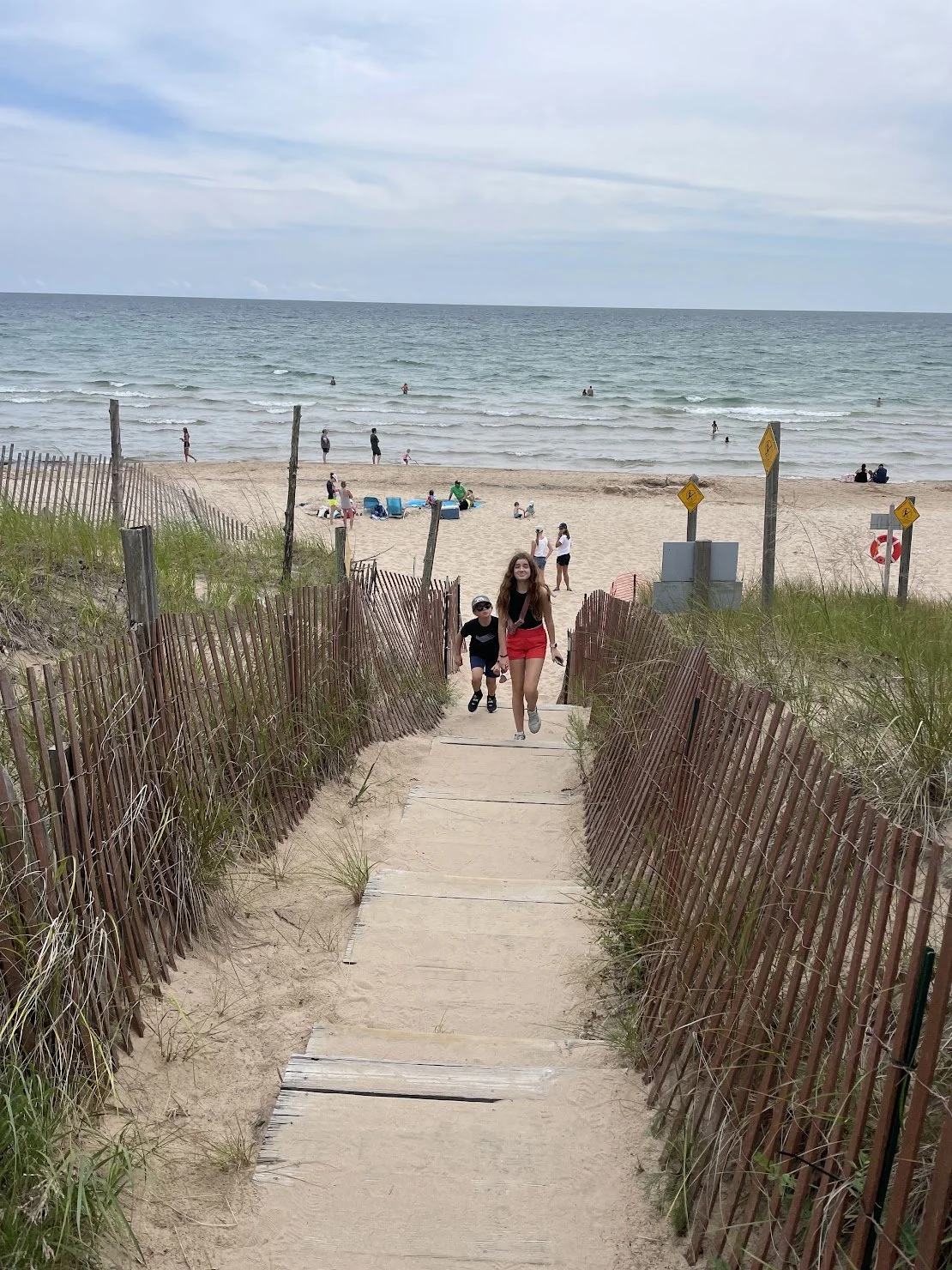
Whitefish Dunes State Park protects Wisconsin's tallest sand dune, eight layered prehistoric villages, and the wildest stretch of Lake Michigan shoreline in Door County — and it sits just 2.5 to 3 hours north of Milwaukee.
The 867-acre day-use park is built around Old Baldy, a 93-foot dune that's the highest on Lake Michigan's western shore, plus 14.5 miles of trails, a year-round nature center, and a 1.5-mile sand beach. For Milwaukee families, it pairs naturally with adjacent Cave Point County Park (free) and the small lakeside town of Jacksonport, making a single visit feel like three destinations.
This guide covers exactly when to go, what to pack, what's changed for the 2025–2026 season, and how to build a trip that works for kids of every age.
What makes Whitefish Dunes unique
The park sits on a bay-mouth sandbar that closed off Clark Lake from Lake Michigan roughly 4,000 years ago, leaving behind a complete sequence of dune ecosystems stacked from beach to forest. The dunes themselves rest on the dolomitic limestone of the Niagara Escarpment, the same 400-million-year-old bedrock that forms the dramatic sea cliffs at neighboring Cave Point. Because Lake Michigan moves through roughly 11-year water-level cycles, storm waves repeatedly cut sand from the foreshore while low-water years let the wind rebuild the dunes — a rare living example of coastal geology that visitors can walk in real time.
The cultural layering is just as remarkable. Archaeologists have identified eight successive Native American villages dating from roughly 100 B.C. to the late 1800s, including the North Bay people, Heins Creek occupants, Late Woodland groups, and Oneota — all preserved as the Whitefish Dunes-Bay View Site on the National Register of Historic Places. A reconstructed wigwam (Ciporoke) village stands near the nature center, giving kids something concrete to connect to the story. Landscape architect Jens Jensen first nominated the area for park status in 1937, the National Park Service later named it the best park site on Wisconsin's Lake Michigan shore, and Door County voters approved its creation in 1967.
14.5 miles of trail, from boardwalks to fossil beds
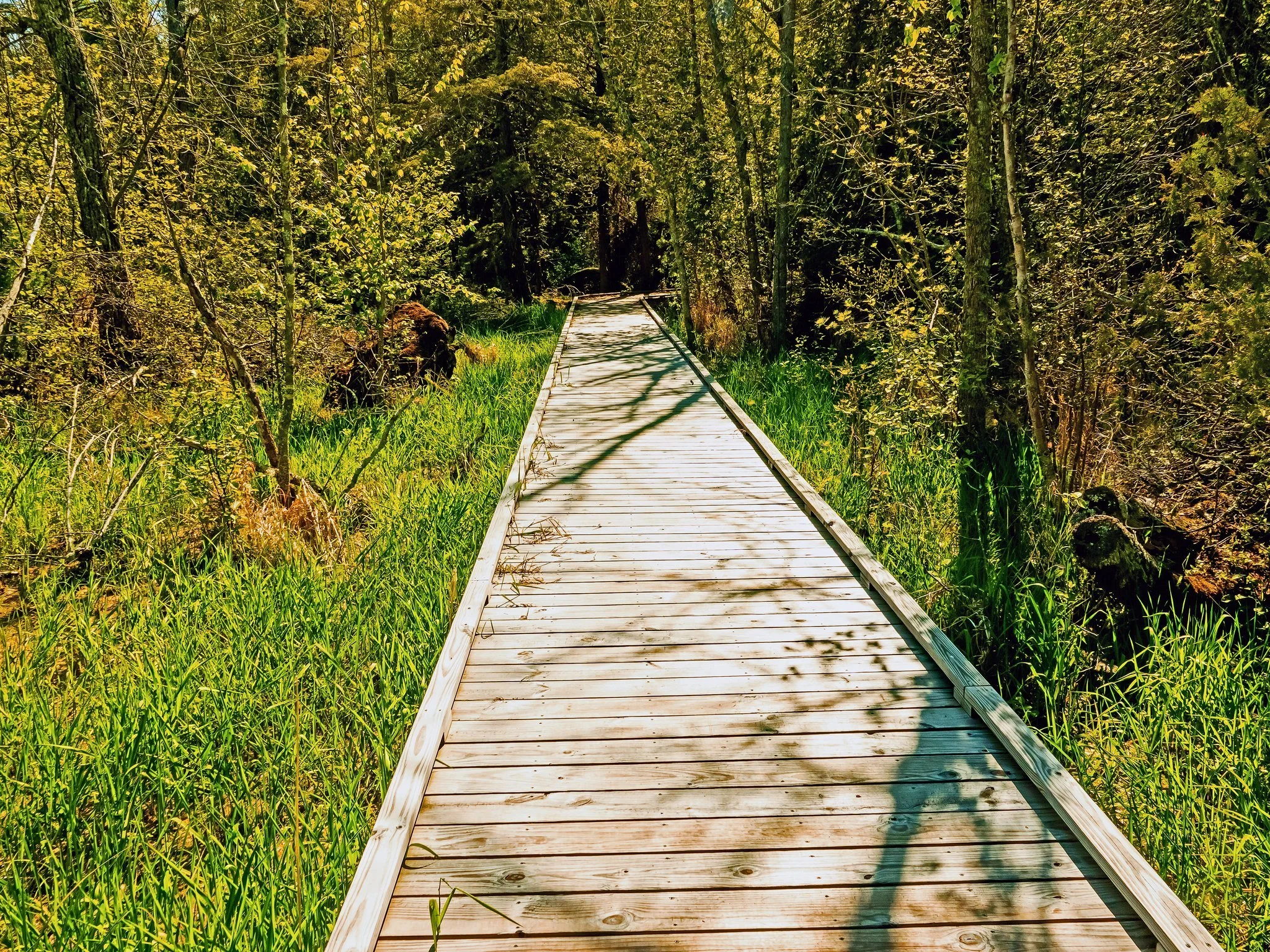
The park's trail network fans out from the nature center in color-coded loops, each highlighting a different dune zone or forest type. Climbing on the open dunes is strictly prohibited — the marram grass and rare plants underfoot are too fragile — so all elevation comes via wooden stairs and boardwalks.
Trail Distance Difficulty What you'll see Red Trail (to Old Baldy) 1.2 mi out-and-back (loop variations to ~2.8 mi) Moderate; stairs to summit Boardwalk and stairs to the 93-ft observation deck atop Wisconsin's tallest dune; views of Lake Michigan east and Clark Lake west Brachiopod Trail 1.5 mi self-guided loop Easy, mostly accessible Boardwalks past brachiopod fossil beds, songbird habitat, Leopold benches, rock-shelf shoreline Green Trail 1.8 mi loop Easy to moderate Forested old dune, white pine and hemlock lowland, beech-maple uplands Yellow Trail 3.7 mi loop Moderate Red pine plantation and wooded back-dunes; longest interior loop Black Trail 2.1 mi loop (1.2-mi short option) Easy to moderate, rocky Niagara Escarpment outcrops; foot connection to Cave Point Red Pine, Yellow Spur, Clark Lake Spur, Whitefish Creek Spur 0.25–0.6 mi each Easy Short connectors and lakeshore access
For a family with elementary-age kids, the Old Baldy out-and-back is the signature hike — about an hour, with a payoff view that justifies every step. Tweens and teens should add the Black Trail to walk along the cliff edge into Cave Point, the most photogenic stretch in the park. AllTrails users typically combine Red, Yellow, and Green into a 4.7-mile loop that samples every ecosystem.
A wild Lake Michigan beach
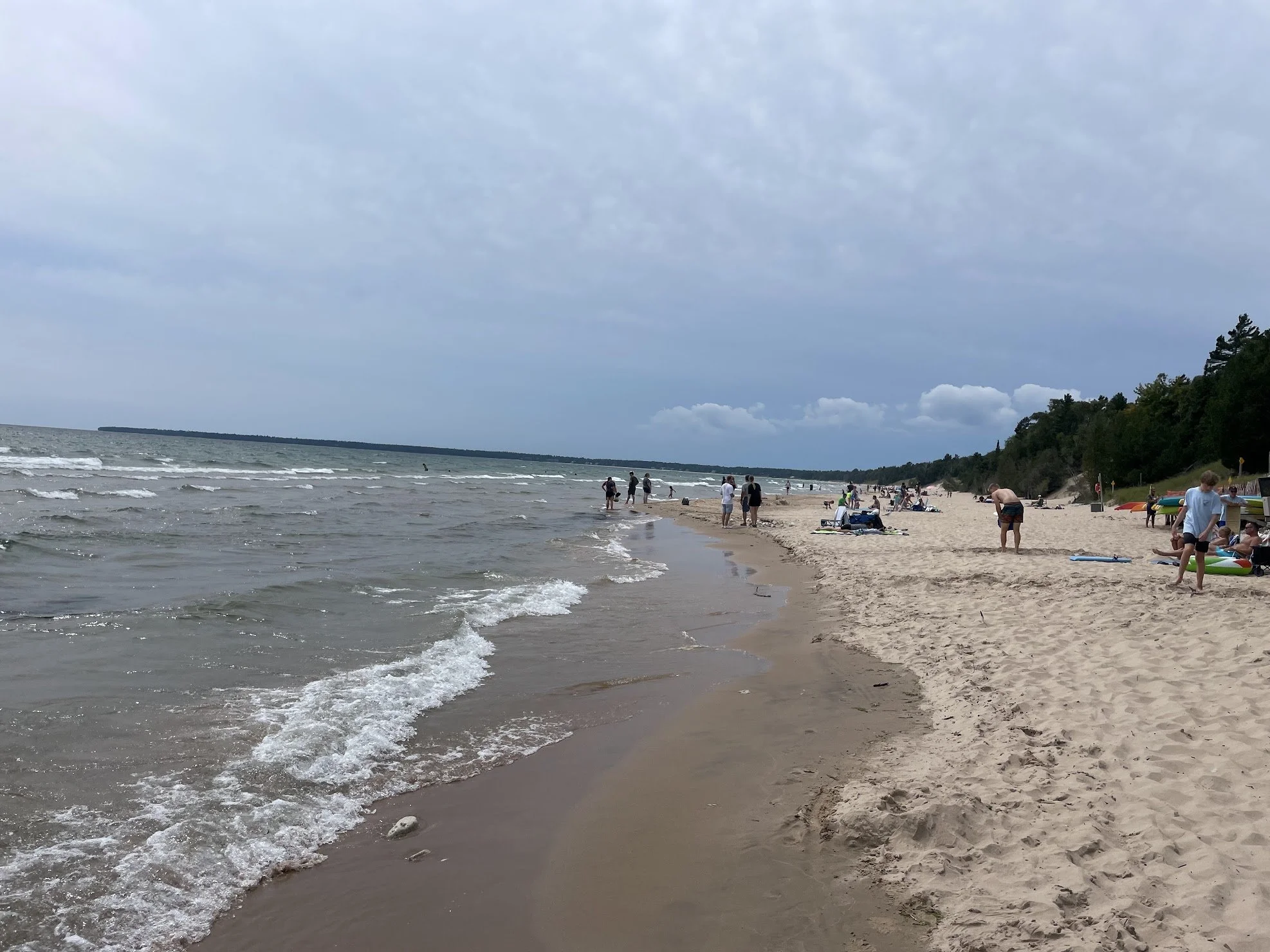
The park's 1.5 miles of sand beach is the day-trip centerpiece, but it operates differently than most state-park beaches. There are no lifeguards, no concessions, and no rentals, and rip currents are a documented hazard. After a child rescue near the main access ramp on Labor Day weekend, the Friends of Whitefish Dunes installed an upgraded flag-and-sign warning system that's now the standard year-round; visitors should obey posted no-swim zones and remember the DNR's rule for rip currents: swim parallel to shore, never against the pull.
Realistically, Lake Michigan along Whitefish Bay is only comfortable for swimming from mid-July through mid-August, when surface temperatures climb into the upper 60s to low 70s. Before then, families typically hike, beachcomb, or drive to warmer Green Bay-side beaches like Nicolet Bay in Peninsula State Park. Amenities at Whitefish Dunes include flush toilets and changing rooms in the bathhouse, pit toilets after the nature center closes, picnic tables with charcoal grills, a reservable shelter overlooking the lake, drinking fountains, and a free beach wheelchair available at the park office. High lake levels in recent years have drastically reshaped the shoreline — the first beach access lost its ADA-accessible ramp and is now a rugged gravel path, with construction continuing through 2025. Call (920) 823-2400 the morning of your visit if beach conditions matter.
The day-use rule and where to camp instead
Whitefish Dunes does not allow camping anywhere in the park. The closest state-park campground is Potawatomi State Park, about 14 miles west in Sturgeon Bay, with 123 sites (40 electric), showers, a dump station, and a recently restored 1931 observation tower that reopened to the public on April 21, 2025 after a seven-year structural closure. Peninsula State Park in Fish Creek (about 25 miles north) offers 460+ sites and books up to 11 months in advance. Newport State Park near Ellison Bay (~30 miles north) is Wisconsin's only designated wilderness park, with about 16 hike-in primitive sites for backpackers. Private options like Harbor Village in Sturgeon Bay handle RVs and offer a less-rustic alternative.
Inside the year-round nature center
The nature center is open daily, generally during daylight hours through about 4 p.m., and stays staffed by a naturalist year-round. Exhibits inside cover dune geology, Lake Michigan shipwrecks, and the archaeology of those eight Native American villages, anchored by a 20-minute film called "People of the Dunes." A Friends-run park store sells field guides, patches, and Wisconsin Explorer activity books, with proceeds funding park improvements. The park office loans fishing equipment for free, hands out the Wisconsin Explorer junior naturalist booklets (kids earn a state patch for each completed book, with separate editions for ages 3–5, 6–8, and 9-plus), and serves as the warming center on cold days.
Wildlife, rare plants, and a state-endangered iris
Whitefish Dunes contains a 230-acre State Natural Area protecting one of the most complete dune-succession sequences on the Great Lakes. The headline botanical attraction is the dwarf lake iris (Iris lacustris), a federally threatened, Great Lakes-endemic wildflower that blooms violet-blue from late April through early June. (One clarification worth flagging: dwarf lake iris is the state wildflower of Michigan, not Wisconsin. In Wisconsin it's classified as state-endangered. Wisconsin's state flower remains the wood violet.) Other rare plants here include Pitcher's thistle, prairie sand-reed grass, and Houghton's goldenrod. The dune transect runs from open beach through marram-grass foredune to white-cedar-and-balsam-fir back-dune, then northern mesic forest of sugar maple, beech, and hemlock.
The park sits in the Mississippi Flyway and is recognized as an Important Bird Area. Spring warbler peak runs roughly May 10–20, when 20–30 species can be seen in a single morning — Black-throated Blue, Blackburnian, and Canada Warblers all nest nearby. Ovenbirds and American Redstarts dominate the Brachiopod Trail soundscape; bald eagles patrol the shoreline; northern rough-winged swallows, blue-gray gnatcatchers, and migrating shorebirds round out the list. Mammals include white-tailed deer, red fox, raccoons, and the occasional porcupine.
Each season offers a different park
Spring (April–May) is the secret weapon. Crowds are minimal, lodging runs 20–30% below summer rates, and the dwarf lake iris bloom peaks mid-May to early June, overlapping perfectly with peak warbler migration. Trails can be muddy and Lake Michigan stays in the 40s, so this is a hiking-and-birding visit, not a swimming one.
Summer (June–August) is the only swimming season, with the realistic window roughly mid-July through mid-August. Weekends fill up by mid-morning; arrive before 10 a.m. on Saturdays and Sundays to claim parking and a quiet beach spot. Summer also brings the densest naturalist programming: live raptor shows from Open Door Bird Sanctuary, "Universe in the Park" telescope nights, yoga in the picnic shelter, and a mindfulness-hike-plus-cold-dip combo. The Friends group funds the seasonal naturalist position, so all of these programs depend on community fundraising.
Fall (September–October) is arguably the best all-around family month. Beech-maple color peaks early to mid-October along the Green and Black trails, mosquitoes are gone, weather hovers in the 50s–60s, and you can chain a park visit with apple picking at Seaquist or Lautenbach's. Note that portions of the park open to hunting in November and early December — wear blaze orange and check the DNR's "Conditions" page before going.
Winter (November–March) turns Whitefish Dunes into one of Door County's quietest playgrounds. Friends volunteers groom the Red, Yellow, Yellow Spur, and part of the Green Trail for classic cross-country skiing, while snowshoers get the Black Trail, Brachiopod Trail, and beach. There are no rentals on site — bring your own gear or stop at Bay Shore Outfitters or Nor Door Sport & Cyclery. The signature winter event is the Candlelight Hike & Ski on Saturday, January 24, 2026, 6–7 p.m., with a lit loop around the picnic shelter, a warming fire, and refreshments. Other confirmed dates include the Winter Solstice Celebration (December 20, 2025), First Day Hike (January 1, 2026), and the Great Backyard Bird Count (February 14, 2026). Critical safety note: park staff do not monitor ice conditions, and ice off the park's shoreline — including the dramatic ledges at Cave Point — is never safe to walk on. Bring microspikes and keep kids well back from cliff edges.
What it costs and how to get in
The address is 3275 Clark Lake Rd, Sturgeon Bay, WI 54235, and the park is generally open 6 a.m. to 8 p.m. year-round (call (920) 823-2400 to confirm). Every motor vehicle needs a Wisconsin State Park admission sticker, and the system shifted to a rolling 12-month model on December 2, 2024 under 2023 Wisconsin Act 113, replacing the old calendar-year expiration. Current 2025–2026 fees are $13 daily / $28 annual for Wisconsin-plated vehicles and $16 daily / $38 annual for out-of-state plates, with reduced-rate household second-vehicle annuals at $15.50 (resident) and senior 12-month passes at $13. Stickers are sold online at yourpassnow.com, at the park office during staffed hours, and at self-pay kiosks 6 a.m.–11 p.m. that accept credit cards. Walk-in and bike-in entry is free.
Rules every family should brief kids on
Three rules matter most for kids: stay off the dunes (climbing damages rare plants and is prohibited park-wide), leave everything where you find it (rocks, fossils, beach glass, plants — all protected under Wisconsin Administrative Code NR 45), and respect the no-swim flags. Dogs are welcome on most trails on an 8-foot leash but are banned in the nature center, picnic areas, and the main beach section from the nature center to the third beach access between April 1 and November 1; the dog-friendly stretch of beach is about 0.75 miles down the Red Trail past the third access. Drones are prohibited statewide in Wisconsin parks (fines up to $500). Fires are limited to charcoal grills in designated picnic areas. Biking is allowed only on the Red Trail and segments of Black and Green; cyclists and skiers 16-plus need a separate $25 State Trail Pass.
What's new
Two changes are worth noting before your visit. First, the park received a $20,000 Knowles–Nelson Stewardship grant matched by $20,000 from the Friends group to build a dedicated, ecologically planned crushed-gravel trail to Cave Point County Park — replacing the eroding "social trail" that hikers had trampled along the Lake Michigan cliff. Construction began in fall 2024 and continues through 2025, with native vegetation surveys preceding each phase to protect dwarf lake iris populations. Second, the Friends recently rebuilt the Brachiopod Trail boardwalk and continue construction at the first beach access in 2025. Park manager Sarah Stepanik leads the team, and the Friends fund the summer naturalist position that makes most public programming possible.
Pairing Whitefish Dunes with Cave Point
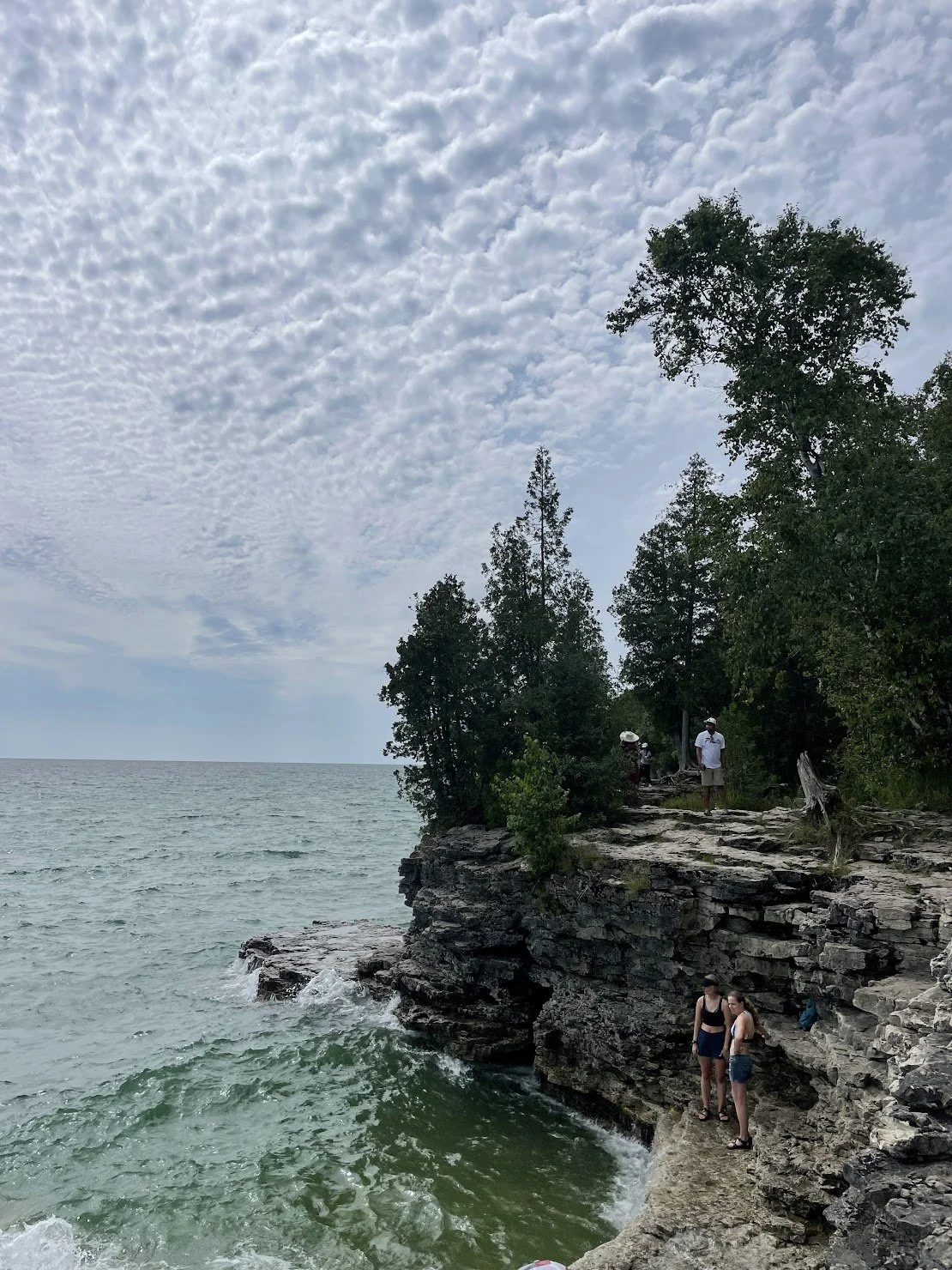
The single best companion stop is Cave Point County Park, a free 18.6-acre county park that's literally embedded inside the state park and reachable by foot via the Black Trail. Its dolomite cliffs, sea caves, blowholes, and the wave-pummeled Devil's Cauldron are Door County's most-photographed coastal features. Cave Point is open daily a half-hour before sunrise to 11 p.m. with no fees, and walking in via the state park trail saves you a separate vehicle sticker. The cliffs are unfenced and become slick when wet or icy — keep young kids hand-held within six feet of any edge.
For a fuller day, drive 25–30 minutes north to Cana Island Lighthouse in Baileys Harbor (open May–October, 10 a.m.–5 p.m., $12 adults / $9 youth), where a tractor-pulled haywagon crosses a stone causeway to an 89-foot 1869 lighthouse that kids 5-plus and 42 inches-plus can climb. Right next door, The Ridges Sanctuary preserves Wisconsin's largest concentration of native orchids on a wheelchair-accessible boardwalk ($5 suggested adult donation, kids free, no dogs).
In the other direction, Sturgeon Bay (15–25 minutes south) offers the Door County Maritime Museum and the new 10-story Jim Kress Maritime Lighthouse Tower (118 feet tall, opened May 2021; $12 adults, $10 youth, kids 4 and under free), the restored Potawatomi State Park observation tower (reopened April 21, 2025), and Sunset Park, a free 41-acre city park with a swim beach, two playgrounds, disc golf, and pickleball courts. Closer to the park, the village of Jacksonport has a free Lakeside Park beach, the long-running Mr. G's Logan Creek Grille supper club (currently dinner only, Friday and Saturday), and the lakeside Square Rigger Galley for breakfast and grab-and-go coffee. Seaquist Orchards in Sister Bay runs cherry U-pick mid-July through July 30 and apple U-pick on three October weekends, with a sandbox-and-pedal-car play area for younger kids.
Smart family tactics
A few specific strategies separate a great family day from a frustrating one:
Pick the right trail for the right kid. Toddlers and preschoolers do best on the flat Brachiopod loop or the picnic-area-to-beach corridor. Elementary kids can handle the Red Trail to Old Baldy in about an hour. Tweens and older want the Black Trail's rocky edge to Cave Point.
Pack like the dunes have no shade — because they don't. Sunscreen, hats, water shoes for stony sections of beach, layers for lake breezes that stay cool even in July, bug spray from mid-May through August, and your own water bottles since there are no concessions.
Time the crowds. Weekday mornings beat weekends every time, and arriving by 10 a.m. on a summer Saturday means parking and beach space are still easy.
The Milwaukee drive in plain terms
From downtown Milwaukee, take I-794 north to I-43 north and stay on it for nearly the entire trip — about 140 miles to Sturgeon Bay, then another 20 minutes to the park entrance via WI-57 north and Clark Lake Road (County WD). Total: 155–165 miles, 2.5 to 3 hours. The fastest route bypasses the lakeshore, but families with extra time can detour through Manitowoc to climb aboard the USS Cobia submarine at the Wisconsin Maritime Museum — typically a 1- to 2-hour stop that turns the drive into part of the experience. Sheboygan's Bookworm Gardens and Above & Beyond Children's Museum, plus Port Washington's harbor, are other natural mid-route breaks.
A trip that earns its name
Whitefish Dunes rewards careful planning more than most state parks. The dunes are fragile, the beach can be dangerous, the swimming window is narrow, and the best wildflowers bloom for a span of weeks — so visitors who come prepared with the right shoes, the right week, and the right rules briefed to their kids see a side of Lake Michigan that's nearly extinct elsewhere on the western shore. For a Milwaukee family, the calculus is simple: come in mid-May for warblers and irises, late July for swimming, or early October for color, build the day around Old Baldy and Cave Point, and let the park's quiet do the rest. With the new Cave Point connector trail and rebuilt Brachiopod boardwalk coming online, the 2026 season may be the best version of Whitefish Dunes in years.


Discover Wisconsin's best glamping destinations—from vintage Airstreams in the Northwoods to geodesic domes in the Dells, treehouses in Door County, and farm stays in the Driftless Area. Your complete guide to upscale outdoor adventures.