

Wisconsin's weirdest and most wonderful roadside attractions
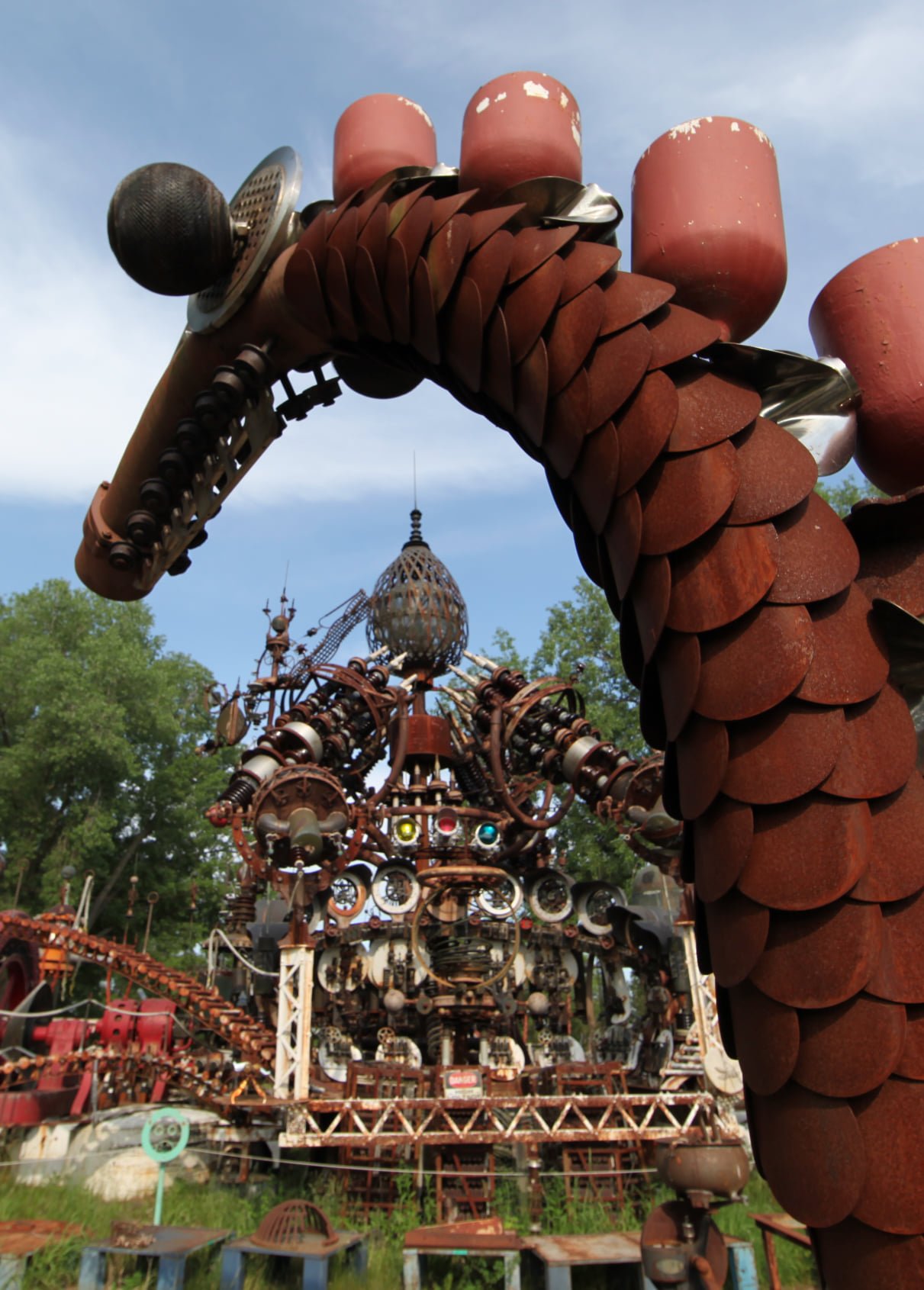
World of Dr. Evermor, Intergalactic Time Traveler
Wisconsin is quietly one of America's greatest states for roadside oddities, and a family road trip here can include a 143-foot fiberglass fish you can stand inside, a Soviet satellite crash site, goats grazing on a restaurant roof, and a 320-ton steampunk machine built to launch its creator into the heavens.
From Milwaukee to the Northwoods, the Badger State delivers a density of quirky stops that rivals Route 66 — most of them free, nearly all of them family-friendly. What follows is a region-by-region guide to 31 attractions that range from beloved classics to genuine hidden gems, curated for Milwaukee-area families looking to turn any weekend drive into an adventure.
Related: A guide to national road trip roadside attractions
Milwaukee area: Bronze Fonz and more
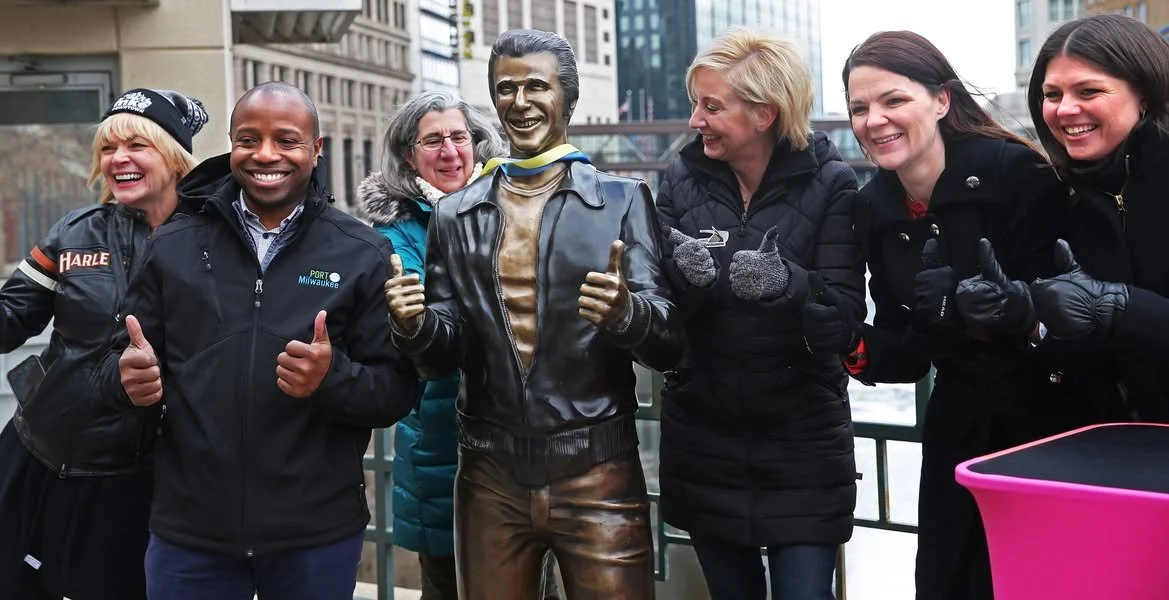
The Bronze Fonz
The Bronze Fonz — Milwaukee
Start with one of Milwaukee’s easiest roadside-photo stops. The life-size bronze Arthur “Fonzie” Fonzarelli stands on the Milwaukee RiverWalk just south of Wells Street, giving his trademark double thumbs-up.
The statue has been here since 2008 and is only 5 feet, 6 inches tall — the same height as Henry Winkler. It is free, outdoors and easy to combine with a walk through downtown Milwaukee. (Visit Milwaukee)
National Bobblehead Hall of Fame and Museum — Milwaukee
This Walker’s Point museum is dedicated to one of America’s strangest collectibles. The museum currently displays more than 6,500 unique bobbleheads, covering sports, entertainment, politics and plenty of subjects you never knew had been turned into bobbleheads.
Admission remains one of Milwaukee’s better museum bargains in 2026: $5 plus tax, with children younger than 5 free. It is open seven days a week at 170 S. 1st St. (Bobblehead Hall)
SafeHouse Milwaukee — Milwaukee
Part restaurant, part spy museum and part elaborate practical joke, SafeHouse has been sending aspiring secret agents searching for its hidden entrance since 1966.
Junior spies can explore gadgets, secret passages and spy memorabilia while completing a mission activity guide. Families should go earlier in the day: SafeHouse currently notes that it becomes 21+ after 9 p.m. Thursday through Saturday. (SafeHouse)
American Science & Surplus — Milwaukee
Imagine a science museum gift shop, hardware store, military-surplus warehouse and middle-school science closet mixed together and you get something close to American Science & Surplus.
The Milwaukee store at 6901 W. Oklahoma Ave. remains open under employee ownership, even though its online and mail-order operation has closed. The inventory constantly changes, which is half the fun. Browsing is free. (SciPlus)
Mars Cheese Castle — Kenosha
Few things announce “Welcome to Wisconsin” as effectively as a castle full of cheese.
Mars Cheese Castle was founded by Mario and Martha Ventura in 1947. The current castle-style building opened in 2011 and includes Wisconsin cheese, meats, bakery items, souvenirs, a kitchen and tavern.
It is at 2800 W. Frontage Road in Kenosha and is currently open daily from 9 a.m.–7 p.m. (Mars Cheese Castle)
Madison area: mustard, trolls, a pink elephant
Planning more than a quick roadside stop? Our Madison family guide can turn these oddities into a full day or weekend.
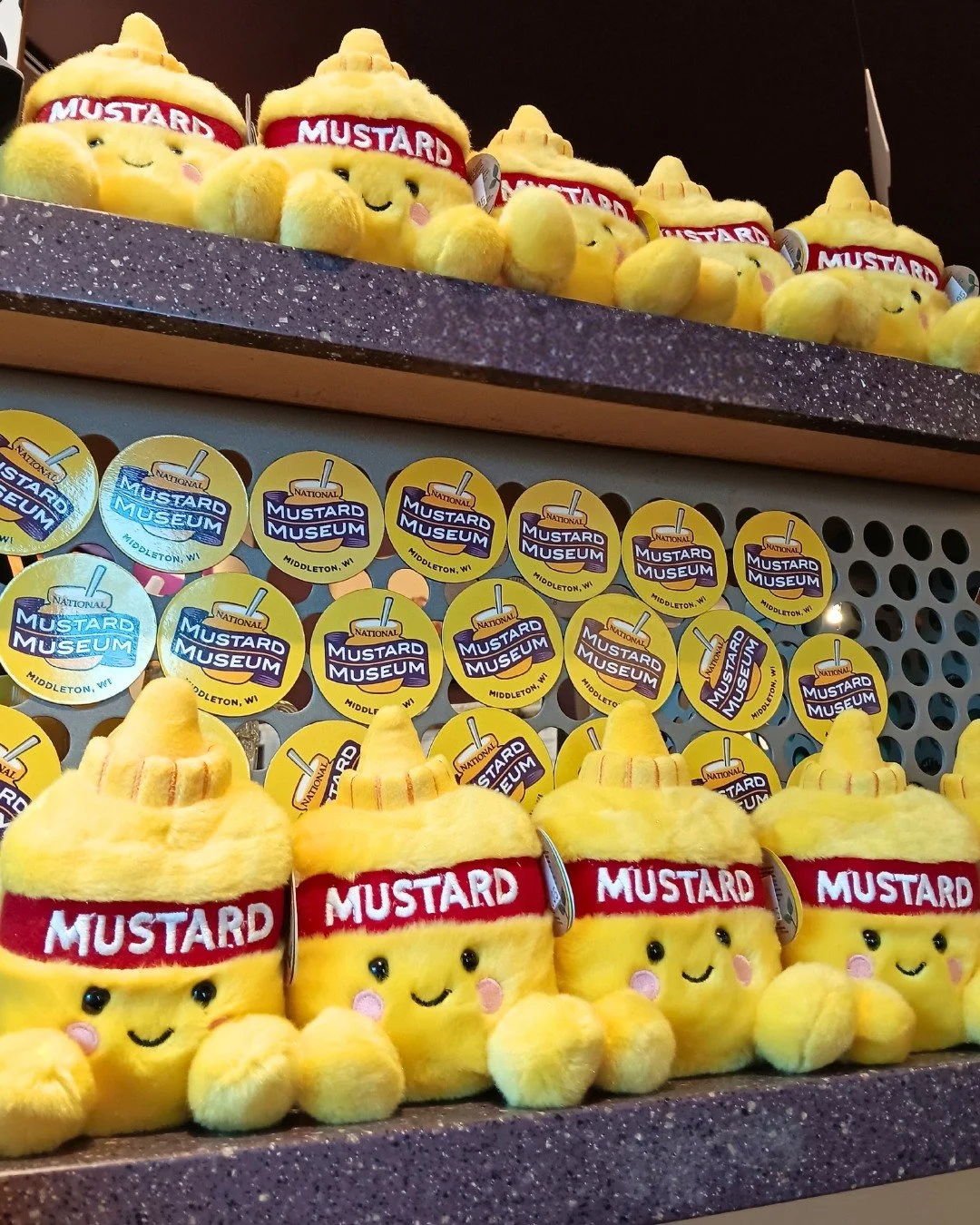
National Mustard Museum — Middleton
Yes, Wisconsin has an entire museum dedicated to mustard.
The National Mustard Museum displays more than 6,000 mustard jars, bottles and tins from all 50 states and more than 70 countries. There is also an impressively serious gift shop devoted to an objectively unserious amount of mustard.
Admission remains completely free in 2026. The museum is open daily from 10 a.m.–5 p.m. (National Mustard Museum)
Mount Horeb Trollway — Mount Horeb
Mount Horeb calls itself the Troll Capital of the World, and the community has populated downtown with dozens of handmade trolls inspired by its Scandinavian heritage.
Make it a scavenger hunt rather than simply driving through. The trolls are spread around downtown and other parts of the village, and the Mount Horeb Welcome Center is a good starting point.
The Trollway is free, and Mount Horeb is only about 30 minutes from Madison. (Trollway)
Dr. Evermor Sculpture Park and the Forevertron — North Freedom
This remains one of the strangest and best attractions anywhere in Wisconsin.
Artist Tom Every — better known as Dr. Evermor — transformed salvaged industrial equipment into a sprawling science-fiction sculpture park. The centerpiece is the roughly 300-ton Forevertron, an enormous retro-futuristic contraption Every imagined could launch Dr. Evermor into space.
Around it are giant bugs, animals, mechanical creatures and an entire orchestra of metal birds.
The park remains free, with donations appreciated. Current visitor information lists hours generally Thursday through Monday, with Tuesday and Wednesday closed; verify the schedule before making a special trip. (Sauk Prairie Area Chamber of Commerce)
House on the Rock — Spring Green
If Wisconsin roadside weirdness had a capital, House on the Rock would be a strong candidate.
Alex Jordan’s creation includes the cantilevered Infinity Room, automated music machines, a gigantic sea creature and the attraction’s famous carousel filled with hundreds of creatures and thousands of lights.
This is not a five-minute roadside stop. Allow at least a few hours.
For 2026, the regular season runs March 12 through November 8, followed by Christmas at the House on the Rock beginning November 12. The attraction notes that parts of the complex have limited air conditioning, which matters on hot summer days. (The House on the Rock)
Pinkie the Pink Elephant — DeForest
Pull off I-90/94 at the Highway V exit and there she is: an enormous pink fiberglass elephant wearing black glasses.
There does not need to be much more explanation than that.
Pinkie has become one of Dane County’s classic roadside photo stops and remains outside the gas station at 4995 County Road V. It is free and takes only a few minutes.
Wisconsin Dells: where kitsch is king
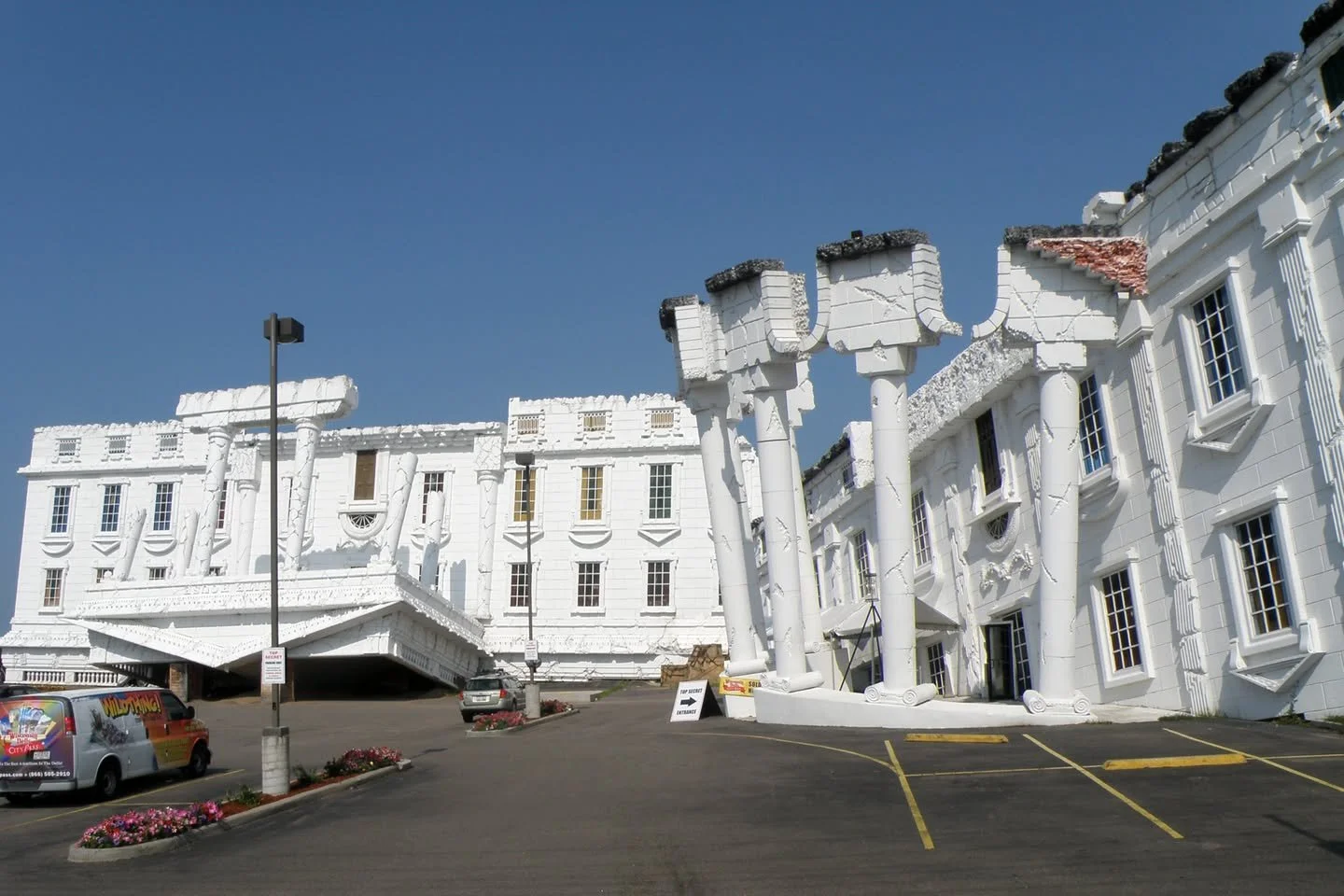
Top Secret: The Upside-Down White House
Wisconsin Dells: weird roadside attractions feel completely normal
For more unusual Dells stops beyond the water parks, use our Wisconsin Dells hidden-gems family guide.
Top Secret: The Upside-Down White House — Wisconsin Dells
A giant upside-down White House sitting along Wisconsin Dells Parkway is exactly the kind of attraction that belongs in Wisconsin Dells.
The walk-through attraction builds a ridiculous sci-fi story around the overturned building, with visitors exploring the supposedly classified wreckage.
The big 2026 update: admission is currently $8 plus tax per person, and Top Secret advertises itself as open year-round. Even if you skip admission, the exterior is worth a photo. (Mt. Olympus Water & Theme Park)
Ripley’s Tommy Bartlett Exploratory — Wisconsin Dells
This one has had a significant change since the original version of this guide: the longtime Tommy Bartlett attraction is now part of Ripley’s.
The Exploratory still centers on hands-on science, optical illusions, physics demonstrations and space exhibits. Its most unusual artifact is an original Russian MIR space-station module that visitors can enter.
It remains open year-round, with hours varying by season. (Ripley's)
Door County: goats and bitters

For a longer trip, start with our complete Door County family guide or our Sister Bay guide.
Al Johnson’s Swedish Restaurant & Butik — Sister Bay
The goats are real.
Every warm-weather season, live goats graze on the grass-covered sod roof of Al Johnson’s in downtown Sister Bay while people below eat Swedish pancakes and lingonberries.
The goats generally begin appearing in late May and continue through mid-October. Al Johnson’s even operates a rooftop Goat Cam so you can check whether they are out before arriving.
Watching the goats from outside is free. (Al Johnson's Restaurant)
Nelsen’s Hall Bitters Pub — Washington Island
Nelsen’s Hall dates to 1899 and became legendary during Prohibition, when founder Tom Nelsen used a pharmacist’s license to continue dispensing Angostura bitters as medicinal stomach tonic.
That history eventually evolved into the famous Bitters Club.
Families can enjoy the historic tavern and the story; actually joining the Bitters Club by drinking a shot of alcoholic bitters is, naturally, an adult activity.
Getting there adds another layer of adventure because Washington Island requires a ferry ride. (Atlas Obscura)
Green Bay and Fox Valley: burgers and glowing fish
Our Green Bay with kids guide has plenty more to pair with these stops.
Home of the Hamburger — Seymour
Seymour makes one of Wisconsin’s great culinary claims: that 15-year-old Charles “Hamburger Charlie” Nagreen invented the hamburger at the Seymour Fair in 1885 by flattening meatballs and placing them between pieces of bread so customers could eat while walking.
The Seymour Community Museum contains what organizers call the world’s largest collection of hamburger memorabilia, along with artifacts connected to Nagreen.
The enormous “Charlie Grill” was used to cook an 8,266-pound hamburger in 2001.
One important 2026 update: Burger Fest is scheduled for Saturday, September 19 — not its old early-August date. The Giant Ketchup Slide remains part of the festivities. (Home of The Hamburger)
Tunnel of Automatic Fish — Green Bay
Under the Walnut Street bridge along the Fox River Trail is a wonderfully odd 110-foot pedestrian tunnel containing 22 translucent fish sculptures.
Motion sensors activate LED lights inside the fish as people walk or bike through, creating the impression that the fish are moving through the tunnel.
The installation is free, and it is most effective after the daylight begins to fade. Pair it with a walk along Green Bay’s CityDeck. (Roadside America)
Hearthstone Historic House Museum — Appleton
This one is more historically astonishing than kitschy.
Hearthstone became the first private residence in the world illuminated by hydroelectricity from a central Edison electrical system in 1882. Original Edison light fixtures, switches and wiring remain inside.
All regular visits are guided. Current admission is $12 for adults, $9 for seniors and $5 for children ages 5–17. (Hearthstone Historic House Museum)
Manitowoc and Sheboygan: space junk, submarines and a gigantic flag
If you make a day of this stretch of I-43, our Sheboygan family guide has plenty more nearby.
Sputnik IV Crash Site and Sputnikfest — Manitowoc
On September 5, 1962, a roughly 20-pound piece of the Soviet Union’s Sputnik IV satellite crashed into North Eighth Street in Manitowoc.
Today, a marker identifies the unlikely Wisconsin space-junk landing spot, while the nearby Rahr-West Art Museum helps tell the story.
And because this is Wisconsin, the city naturally turned the incident into a festival.
Sputnikfest 2026 is scheduled for Saturday, September 12, from noon–6 p.m., with kids activities, costumes, live music, the Captain Space Debris contest and the Alien Drop raffle. (Manitowoc)
Wisconsin Maritime Museum and USS Cobia — Manitowoc
The museum’s centerpiece is USS Cobia, a restored World War II submarine docked in the Manitowoc River.
Admission has increased substantially from older versions of this guide. Current regular admission is $25 for adults and $15 for ages 4–12, with children 3 and younger free. Admission includes access to Cobia.
Even better, families can occasionally sleep aboard the submarine. Family Submarine Sleepovers are designed for ages 7 and older and currently cost $50 per participant. (Wisconsin Maritime Museum)
Acuity Insurance Flagpole — Sheboygan
The earlier version of this article called this the world’s tallest flagpole. The more accurate distinction is still pretty impressive: Acuity’s 400-foot pole is the tallest flagpole in North America.
The enormous American flag measures 70 by 140 feet and weighs about 250 pounds. Acuity describes it as the world’s largest free-flying American flag.
The flagpole and veterans memorial can be visited anytime, although the flag itself may be lowered for severe weather or maintenance. (Acuity)
Bookworm Gardens — Sheboygan
This children’s-literature botanical garden brings scenes and ideas from favorite books into a beautiful outdoor space filled with gardens, reading areas and interactive features.
There is an important pricing correction for 2026: Bookworm Gardens is no longer generally free.
Regular admission for visitors from outside Sheboygan County is $13 for adults and $11 for ages 3–17. Children 2 and younger are free. Sheboygan County residents currently pay $3 with proof of residency.
The regular season runs May through October. (Bookworm Gardens)
James Tellen Woodland Sculpture Garden — Sheboygan
Hidden in the woods south of Sheboygan are the concrete creations of James Tellen, who began building elaborate figures around his family’s summer cottage in the 1940s.
Historical, religious and mythic figures emerge from the trees along the trail, including Tellen’s remarkable 65-foot “Fallen Log.”
The site is free and currently open daily during daylight hours. Bring bug spray in summer. (Kohler Foundation)
Northern Wisconsin: giant fish, Hodags and the world’s largest penny
Fresh Water Fishing Hall of Fame and the Giant Musky — Hayward
The Giant Musky remains one of Wisconsin’s undisputed roadside champions.
The massive fish is 4½ stories tall, and visitors can walk inside and emerge in its open jaw, which functions as an observation deck overlooking Hayward.
Below the musky is an 88,000-gallon pond, while the surrounding museum complex contains more than 50,000 fishing artifacts.
Current admission is $9.95 for adults and $7.95 for ages 4–17, with ages 3 and younger free. The museum operates from mid-April through October 31. (Freshwater Fishing)
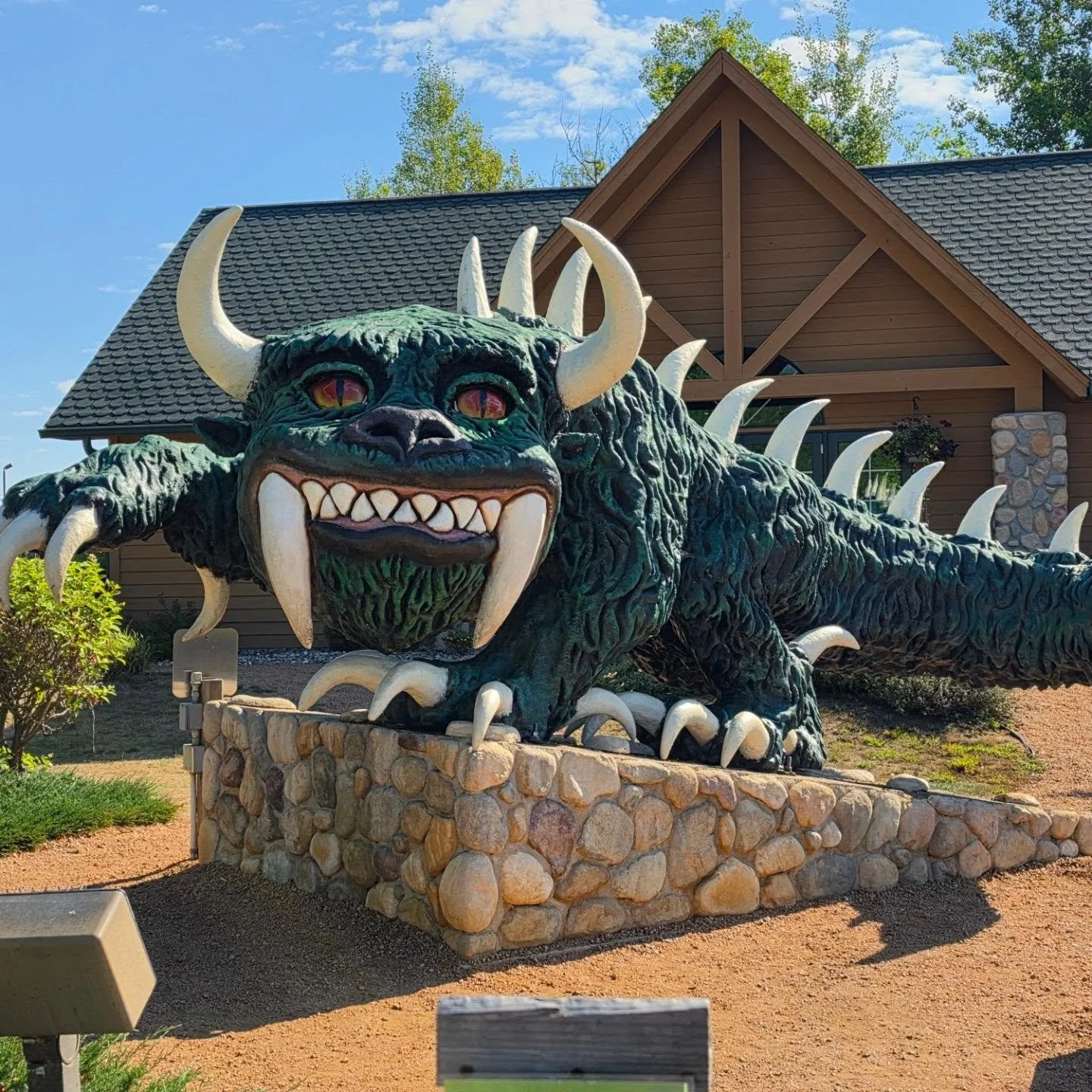
The Hodag and Hodag Finder — Rhinelander
The mythical Hodag allegedly appeared near Rhinelander in the 1890s looking like someone had combined the worst parts of a frog, elephant and dinosaur.
The original story became one of Wisconsin’s great hoaxes — and Rhinelander has wisely refused to let it die.
Today there are more than two dozen Hodag statues, murals and other Hodag sightings scattered around town. Use the official Hodag Finder to turn the visit into a scavenger hunt; complete the hunt and stop at the Chamber of Commerce during business hours for a Hodag-themed prize. (Explorer Rhinelander)
Claire d’Loon — World’s Largest Talking Loon — Mercer
Claire is a 16-foot-tall, roughly 2,000-pound fiberglass loon and one of those Northwoods attractions that requires essentially no explanation.
She stands in Mercer, the self-proclaimed Loon Capital of the World, and produces loon calls for visitors.
It is free, ridiculous and exactly the sort of stop this guide exists to celebrate. (Travel Wisconsin)
World’s Largest Penny — Woodruff
This giant penny commemorates a genuinely inspiring Northwoods story.
Dr. Kate Newcomb helped lead the famous Million Penny Parade, mobilizing schoolchildren and communities to collect pennies toward the construction of a hospital.
The oversized 1953-D Lincoln penny now stands as a monument to the campaign and makes an easy free stop while traveling through the Minocqua-Woodruff area. (Minocqua)
Wisconsin Concrete Park — Phillips
Retired lumberjack Fred Smith spent the years from 1948 to 1964 creating an extraordinary roadside world of concrete.
Today the park preserves 237 sculptures portraying everything from historic figures and Northwoods legends to animals, folk heroes and everyday life. Smith decorated many with colorful pieces of glass and found materials.
The biggest 2026 planning update: the outdoor Wisconsin Concrete Park is open 365 days a year and remains free, with donations appreciated. The gallery and gift shop operate seasonally. (Wisconsin Concrete Park)
Central Wisconsin: metal monsters, a talking cow and 400 chainsaws
Jurustic Park — Marshfield
Clyde Wynia has created an entire mock-prehistoric ecosystem out of rusted metal.
Dragons, monsters, strange birds and other creatures fill his property outside Marshfield, accompanied by Wynia’s tongue-in-cheek explanation that they are Iron Age creatures excavated from the nearby McMillan Marsh.
The attraction remains active in 2026. Visit Marshfield’s current visitor guide lists the outdoor park as open most days from about 10 a.m.–4:30 p.m. Because this is an artist’s property rather than a conventional theme park, check before making a long drive specifically to visit. (Marshfield Made New)
Chatty Belle — World’s Largest Talking Cow — Neillsville
Chatty Belle is a 16-foot-tall, 20-foot-long Holstein standing outside Neillsville’s historic Wisconsin Pavilion.
The pavilion itself originated at the 1964–65 New York World’s Fair before being moved back to Wisconsin. Chatty has been part of the Neillsville site since its dedication and speaks through a coin-operated voice box beneath her chin.
She remains billed as the World’s Largest Talking Cow. (Travel Wisconsin)
Chainsaw Forest — near Medford
This may be the most aggressively Wisconsin attraction on the list.
Gordy Lekies reportedly took roughly 400 old chainsaws and embedded them into 21 wooden poles along a roadside firewood business near County Highway M and Division Drive.
It looks like a forest designed by someone who has very strong opinions about firewood.
This is a roadside/private-property attraction, so admire it from appropriate public areas and do not wander onto the property without permission. (Roadside America)
Western Wisconsin: a giant six-pack and an enormous bicyclist
Pair the La Crosse stop with our Wisconsin Great River Road guide for one of the best family road trips in the state.
World’s Largest Six-Pack — La Crosse
Six 54-foot steel tanks stand beside City Brewing Company looking like the sort of beverage order Paul Bunyan might place.
The tanks hold about 22,000 barrels — the equivalent of more than 7.3 million standard beer cans.
They were originally built by G. Heileman Brewing in 1969 and painted to resemble Old Style cans. After years wearing La Crosse Lager graphics and later fading to plain tanks, the landmark was restored to its classic Old Style-inspired appearance in 2023.
Across the street, King Gambrinus keeps watch over the brewery.
Viewing the six-pack from public areas is free. (Wisconsin 101)
Ben Bikin’ — Sparta
A 32-foot figure riding an old-fashioned high-wheel bicycle greets travelers in Sparta, Wisconsin’s self-proclaimed Bicycling Capital of America.
The statue makes even more sense when you consider that Sparta sits at the junction of major state bike trails and is closely tied to Wisconsin’s rails-to-trails history.
Ben Bikin’ Park is free, accessible by bike and car, and includes a small visitor-information area during the tourist season. (Sparta Wisconsin)
How to turn these into Wisconsin family road trips
You could spend years collecting all 31, but several natural clusters make especially good family adventures.
The Madison weirdness loop combines the National Mustard Museum, Mount Horeb Trollway, Pinkie the Elephant and — with a longer drive west — House on the Rock.
The Baraboo-Dells route pairs Dr. Evermor’s Sculpture Park with the Wisconsin Dells attractions and is probably the highest concentration of pure roadside weirdness anywhere in the state.
For a Lake Michigan day trip from Milwaukee, head north toward Sheboygan and Manitowoc for the Acuity flagpole, Bookworm Gardens, James Tellen Sculpture Garden, Sputnik crash site and USS Cobia.
A Northwoods weekend can string together the Giant Musky in Hayward, Wisconsin Concrete Park in Phillips, the Hodag in Rhinelander, World’s Largest Penny in Woodruff and Claire d’Loon in Mercer.
And western Wisconsin gives you Ben Bikin’ in Sparta followed by the World’s Largest Six-Pack in La Crosse before continuing onto the Great River Road.
A few things to know before you go
Free stops are still a huge part of the fun. Roughly two-thirds of these attractions can be seen without paying admission, although donations are appreciated at several artist-created sites.
Do not trust old admission prices. Bookworm Gardens and the Wisconsin Maritime Museum in particular cost substantially more in 2026 than prices commonly found in older articles.
Small attractions have small-attraction schedules. Places like Dr. Evermor’s Sculpture Park, Jurustic Park and seasonal museums can change hours more easily than major attractions. Check before making a long detour.
Outdoor giants are easiest. The Bronze Fonz, Pinkie, Hodags, Giant Penny, Acuity flagpole, Six-Pack and Ben Bikin’ can all fit naturally into a road trip without requiring half a day.
Make the weirdness the game. Give kids control of the list, let them rate every attraction from “normal” to “completely unhinged,” or see who can find the strangest family photo of the trip.
Take the weird exit
The best roadside attractions are rarely the reason you planned the trip.
They are the reason everyone remembers it.
Wisconsin happens to be filled with artists who built concrete armies in their yards, tavern owners who survived Prohibition with bitters, communities that turned hamburgers and space debris into festivals, and towns that decided a 16-foot loon or 32-foot bicyclist was exactly what the roadside needed.
So the next time your GPS says the strange attraction is only 12 minutes out of the way, take the exit.
That is usually where the good stories begin.

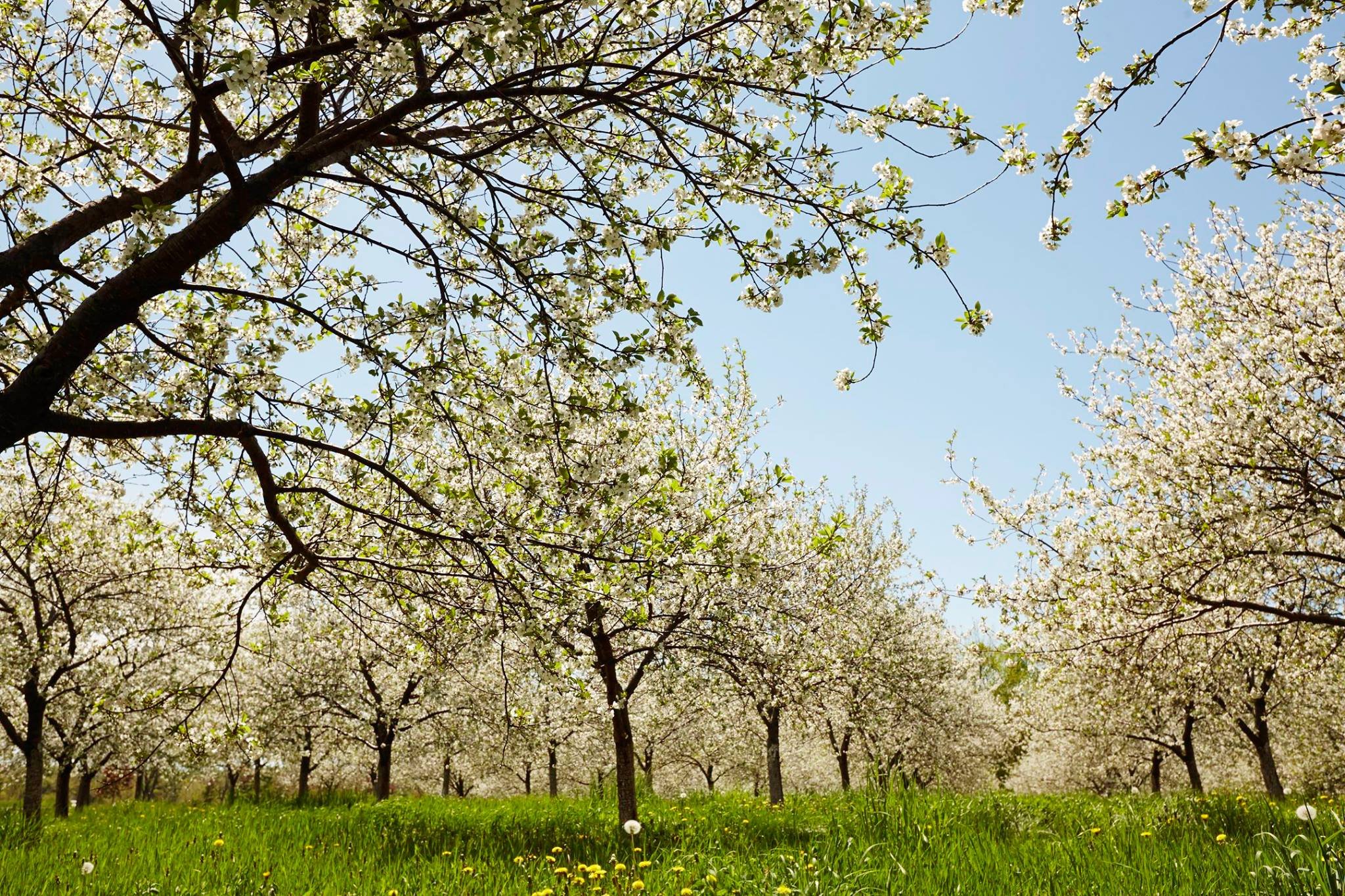
Plan your May Door County family trip with our guide to cherry blossoms, Maifest, lighthouse openings, kid-friendly parks, fish boils, and shoulder-season lodging deals.