

Snow removal services for Milwaukee's North Shore
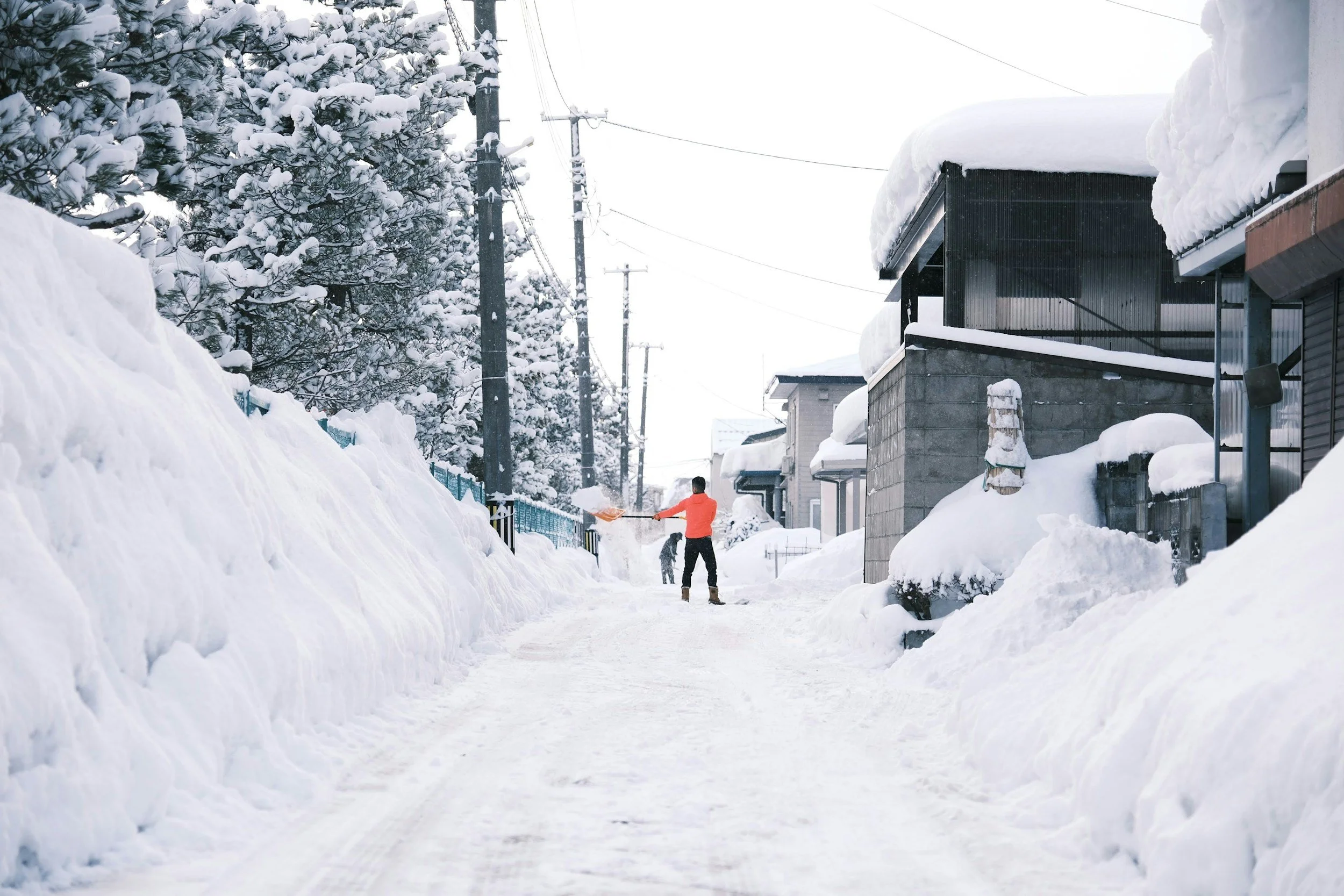
Milwaukee's North Shore receives approximately 45 inches of snow annually, making professional snow removal or proper DIY preparation essential for residents.
Residential snow removal costs range from $35-70 per visit or $300-700 for seasonal contracts, with September through October being the optimal booking window before quality providers fill their schedules. Each municipality enforces distinct sidewalk clearing deadlines—most critically, Shorewood requires clearing within 12 hours while other communities allow 24 hours—with non-compliance resulting in fines and special tax assessments.
Professional snow removal companies
The North Shore benefits from several established snow removal companies that specifically target these communities. Superior Outdoor Services (414-748-0111) explicitly serves the entire North Shore corridor from Shorewood through Mequon, offering around-the-clock residential service with both seasonal contracts and as-needed options. Their family-owned operation focuses exclusively on North Shore Milwaukee County and Southern Ozaukee County.
Nic Ehr Landscaping (414-352-9180), located at 7922 North Port Washington Road in Milwaukee, has an established presence serving Shorewood, Whitefish Bay, Fox Point, Bayside, Mequon, River Hills, and Glendale. They combine snow plowing with year-round landscape services, making them a convenient single-provider option for homeowners seeking bundled services.
J.R. Boehlke, Inc. (262-242-9924) operates from 9900 N. Granville Road in Mequon and provides 24/7 preparedness with both seasonal and per-push pricing. They emphasize pre-season planning and curb-to-curb clearing for properties in Mequon, Fox Point, Bayside, and Glendale, with particularly strong reviews for responsiveness during last-minute service requests.
For commercial properties and larger residential accounts, Nelson's Landscaping & Snow Services maintains locations in both Glendale and Mequon with 20+ years of experience and equipment ranging from skid steers to dump trucks. Their in-house doppler radar tracking enables proactive response to approaching storms.
App-based and on-demand alternatives
Modern technology has brought flexible options to the North Shore. Snow Scholars, backed by Mark Cuban on Shark Tank, operates within approximately six miles of the UW-Milwaukee campus—covering much of Shorewood and Whitefish Bay. Their student-operated service offers pay-per-snowfall pricing at rates claimed to be up to three times lower than traditional providers, with dispatch times of 4-12 hours for light snow and up to 24 hours during heavy events. Priority placement costs an additional $29.99 per storm.
Plowz & Mowz and LawnGuru (starting at $42) both serve Whitefish Bay, Glendale, Fox Point, and Mequon through their mobile apps, offering on-demand service with live tracking, photo confirmation, and no contract requirements. These platforms work well for residents who want flexibility without seasonal commitments.
Emergency and 24/7 service providers
When your regular provider fails to show or a dangerous situation develops, S&L Snow Removal (414-622-1441) offers 24/7 emergency services including roof snow removal and ice dam removal. Lake Effect Snow Removal (414-426-9674) provides 20+ years of Milwaukee-area experience with priority dispatch for seasonal contract holders and eco-friendly product options. For commercial emergencies, Waukesha Snow Removal Inc. (414-364-7563) specializes in rescuing clients whose providers didn't appear.
Understanding costs and contract options
North Shore snow removal pricing aligns closely with greater Milwaukee rates, though larger lot sizes common in Mequon and Fox Point naturally increase total costs. The per-push model typically costs $35-50 for a standard two-car driveway, $50-75 when including sidewalks, and $75-150 for full-service packages with salting. For a property with a long or steep driveway, expect to pay $70-100 per visit.
Seasonal contracts offer budget predictability and guaranteed priority service regardless of snowfall intensity. These typically run November 1 through April 1 and cost $300-700 for residential properties, depending on driveway size and services included. Given Milwaukee's average 45+ inches of annual snowfall spread across numerous events, seasonal contracts generally prove cost-effective—a winter with 15 snow events at $50 per push equals $750, making a $500 seasonal contract the better value in typical years.
Service type Typical cost Basic driveway plowing $35-50 per visit Driveway plus sidewalk $45-75 per visit Full service with salting $75-150 per visit Seasonal residential contract $300-700 per season Salt/de-icing application $20-40 per application Roof snow removal $200-500 per visit Emergency/overnight service Standard rate plus 50%
Salting costs add $20-40 per application, with materials alone running $5-15 for a 50-pound bag of rock salt at retail. For roof snow removal—increasingly necessary during heavy accumulation—expect $200-500 per visit or $50-100 per hour, with ice dam removal potentially reaching $2,400 for severe cases.
Contract negotiation and booking timeline
Book your seasonal contract in September or October for the best selection, rates, and terms. By November, quality providers are filling rapidly, and after the first significant snowfall, remaining availability shrinks while prices firm up. Some companies offer 5-15% discounts for multi-year contracts.
Your contract should specify exact service dates, trigger depth (typically 2 inches for residential), which areas will be cleared, response time guarantees, whether de-icing is included or additional, liability and insurance clauses, and communication protocols during storms. Contracts that use vague language like "as needed" or "weather permitting" represent red flags, as do providers unwilling to provide insurance proof, quotes significantly below competitors, or pressure to sign immediately without a property walk-through.
Municipal snow ordinances differ significantly across communities
North Shore municipalities enforce distinct snow removal requirements, and understanding your community's specific rules prevents citations and special assessments added to your property tax bill.
Shorewood enforces the strictest timeline
Shorewood requires sidewalk clearing within 12 hours after snow or ice stops falling—the shortest deadline among North Shore communities. Property owners must clear the full width of sidewalk down to pavement and apply salt, sand, or approved chemicals within this same period. Corner lot owners face additional responsibility for clearing corner ramps to crosswalks and any mid-block crosswalk ramps abutting their property.
Winter parking runs December 1 through March 1, prohibiting parking on the east or north side of most Village streets. When 3+ inches accumulates within 24 hours, Shorewood declares a snow emergency prohibiting parking on ANY public street, alley, or highway for 48 hours or until plowing completes. Contact the Shorewood Police Department at (414) 847-2610 for notifications or parking permissions. Dumping snow onto public streets—whether from shoveling, plowing, or snowblowing—can result in $100-500 in fines.
Whitefish Bay allows 24 hours but enforces width standards
Property owners have 24 hours after snow stops to clear sidewalks to a width allowing "adequate passage for pedestrians passing each other in opposite directions." When ice proves impossible to remove, you must sprinkle the surface with sand or another traction material and remove ice as soon as conditions permit. Failure to comply allows the Village to clear your sidewalk and charge the expense as a special tax against your property, including administrative costs.
The Village encourages residents to "adopt" the nearest fire hydrant, keeping it clear and maintaining a shoveled path from the street. Contact Public Works at (414) 962-6690 or Director Matt Collins at m.collins@wfbvillage.gov for questions.
Fox Point, Bayside, and Mequon restrict all street parking
Fox Point, Bayside, and Mequon enforce some of the region's strictest parking restrictions—no street parking at any time without express police permission. This applies year-round, not just during winter, and becomes particularly important during snow events when plows need clear roadways.
In Fox Point, call the police non-emergency line to request parking permission. The North Shore Fire Department asks Fox Point residents to maintain a 3-foot clearance around adopted fire hydrants. Village Hall can be reached at (414) 351-8900.
Bayside requires parking permission through their "Access Bayside" online portal, with as much advance notice as possible. Mequon's Highway Division (262-236-2913) handles snow removal operations, while the Police Department (262-242-3500) manages parking permissions. During snow emergencies, Mequon police can have vehicles towed if blocking plowing operations. Notably, police will typically NOT grant parking permission on state highways including Mequon Road (Highway 167), Cedarburg Road (Highway 57), and Wauwatosa Road (Highway 181).
Glendale provides 24 hours and operates clear city procedures
Glendale property owners have 24 hours to clear sidewalks AND curb ramps for handicapped access. The City will clear non-compliant sidewalks with ALL costs charged to the property owner. Main routes receive anti-icing treatment during every measurable snow event, while alleys are plowed once after events conclude. The City explicitly does NOT clear private driveways or open windrows at driveway approaches—that remains your responsibility.
Contact Glendale at (414) 228-1700 during business hours.
Fire hydrant clearing matters everywhere
All North Shore communities are served by the North Shore Fire Department, which emphasizes that fire engines carry only approximately 3.5 minutes of water—making quick hydrant access critical. Residents should maintain a 3-foot clearance around the nearest hydrant and shovel a path from the street. Contact the department's Public Education line at (414) 228-0292 for the adopt-a-hydrant program.
Essential DIY snow removal techniques and safety guidelines
For residents who choose to handle their own snow removal, proper technique prevents both property damage and serious injury. Shoveling snow creates exertion equivalent to 80-90% of maximum heart rate—comparable to maximum exercise—while cold weather simultaneously increases heart rate, blood pressure, and blood clotting risk while constricting arteries.
Warm up with light stretches for 10 minutes before starting. Bend at the knees rather than the back, lifting with your legs while keeping the shovel close to your body. Push snow rather than lift it whenever possible, and never twist while lifting—pivot your entire body to throw snow. Take breaks every 20-30 minutes and stay hydrated. Stop immediately and call 911 if you experience chest pain, tightness, pain in your left shoulder, shortness of breath, lightheadedness, or unusual fatigue.
Clear snow early and often rather than waiting for heavy accumulation. Fresh, dry snow weighs significantly less than wet, melted, or compacted snow. When possible, shovel during the warmest part of the day.
Equipment recommendations for Wisconsin winters
For snow blowers, Wisconsin's heavy, wet snow demands two-stage gas models ($800-2,000) for most driveways—single-stage units struggle with accumulation beyond six inches. Key features worth the investment include electric start (essential when temperatures drop), heated hand grips, LED headlights for early morning clearing, and anti-clogging systems. Ariens, manufactured in Wisconsin, along with Toro, Cub Cadet, and Honda offer reliable options. Purchase in September-October for the best selection.
Manual shovelers should use plastic or rubber-edged shovels to prevent surface damage, with ergonomic contoured handles reducing back strain. Maintain both a smaller blade (10-14 inches) for lifting and a larger push-style shovel for moving volume. Keep an emergency shovel in your vehicle.
Smart de-icing product choices
Standard rock salt (sodium chloride) costs the least but stops working below 15°F—a common Wisconsin occurrence—while damaging concrete and harming local waterways. Just one teaspoon of salt can pollute five gallons of water to levels toxic for freshwater organisms, with over 525,000 tons dumped annually in Wisconsin eventually reaching Lake Michigan.
Calcium chloride works to -25°F but burns pet paws and costs more. Magnesium chloride offers a middle ground, working to 0°F with less irritation and corrosiveness. For environmentally-conscious and pet-safe options, Safe Paw (chloride-free, urea-based) and Morton Safe-T-Pet top veterinary recommendations. Sand provides traction without chemicals but offers no melting action.
Apply de-icers sparingly—a 12-ounce coffee mug of salt adequately treats a 20-foot driveway or 10 sidewalk squares. Always shovel first since ice melt works poorly atop snow, and sweep excess granules for reuse rather than letting them wash into storm drains. After walks, wipe your pets' paws to remove any residue.
Roof snow removal requires careful assessment
Roof snow removal becomes necessary when accumulation reaches approximately 6 inches or when ice dams form at the roof edge. Each square foot of snow at one-inch depth weighs roughly one pound, with Wisconsin roofs typically designed to support 2-4 feet depending on snow density. Warning signs requiring attention include water marks on ceilings, dripping from windows, sagging drywall, and large icicles forming at roof edges.
For safety, stay off the roof entirely during winter conditions and avoid ladders with potentially icy rungs. Work from the ground using a roof rake with a 14-22 foot telescoping handle, choosing models with wheels or rollers to protect shingles. Clear the first six feet from the eaves, working from multiple positions to avoid creating dangerous overhangs. Never scrape down to bare shingles, and remain aware of overhead power lines.
Hire professionals ($200-500 per visit) for two-story or higher roofs, steep pitches, heavy ice dam formation, or any situation involving active leaking. Ice dam removal can cost $200-2,400 depending on severity, with steam removal reaching $500+ per hour during peak demand.
Resources for elderly and disabled residents
Milwaukee County's Department on Aging and the Area Agency on Aging provide funding for home and community-based services including snow removal assistance. Eras Senior Network (eras.org) specifically serves Waukesha and Milwaukee County seniors with snow removal help. Calling 211 connects residents with local snow shoveling service referrals and "Snow Angel" volunteer programs through neighborhood associations and faith communities.
The City of Milwaukee's Hardship Designation Program assists seniors 65+ and those with disabilities—contact (414) 286-CITY (2489) or email DPWDriveUpServices@milwaukee.gov. Medical documentation may be required for some assistance programs.
For those who prefer professional help, establishing relationships early with contractors and securing seasonal contracts before winter begins ensures priority service. Many providers offer senior-friendly payment plans and reduced rates through community partnerships.
HOA and condominium snow removal guidelines
HOA-governed properties typically divide responsibility with associations handling common areas, parking lots, private streets, and community amenities while individual homeowners remain responsible for their own driveways, walkways, front steps, and patios. Review your CC&Rs (Covenants, Conditions & Restrictions) carefully to understand your specific obligations.
Your HOA's snow removal policy should clearly define which areas fall under association versus homeowner responsibility, the trigger amount activating service (commonly 2 inches), timeframes for clearing safety-critical areas, communication procedures during storms, and emergency contacts. Associations contracting for service should require liability insurance, workers' compensation coverage, indemnification clauses, and documentation of all clearing efforts including photos and timestamps.
HOAs can face liability for slip-and-fall injuries in common areas if found negligent, making thorough documentation essential. Group contracts can reduce per-household costs significantly—some associations negotiate rates as low as $70 per household per season through volume agreements.
Preventative measures for management
Heated driveways eliminate snow removal entirely through electric radiant heating cables or hydronic (hot water) systems installed beneath the surface. Installation costs $12-28 per square foot with new concrete, averaging $9,600-22,400 for a two-car driveway. Operating costs run approximately $3.55 per hour for an 800-square-foot system. While the upfront investment is substantial, benefits include eliminated shoveling, prevented slip-and-fall injuries, reduced salt use, extended driveway life through eliminated freeze-thaw damage, and increased property value. Systems can be automated with snow sensors or configured to heat only tire tracks to reduce operating costs.
Snow guards prevent dangerous roof avalanches where heavy snow and ice slide off in sheets. These prove essential for metal roofs, steep pitches (6/12 or greater), and roofs above entrances, walkways, or decks. Pad-style "snow birds" install in staggered rows while continuous rail systems handle heavier snow loads.
Pre-treatment with brine solutions—salt dissolved in water applied before storms—prevents snow and ice from bonding to surfaces, making subsequent clearing far easier. Some contractors offer this as an add-on service, while DIY pre-treatment products are available at home improvement stores.


Looking to recycle old electronics on Milwaukee's North Shore? Find free drop-off events in Fox Point and Whitefish Bay, year-round programs in Glendale and Shorewood, and retail options at Best Buy — plus what Wisconsin law says you can't throw in the trash.