

No Hibernation: The Story Behind Winter Break Milwaukee
Milwaukee loves to call itself the City of Festivals—and it earns that title every summer.
But once the holidays pass and the cold settles in, the city can feel like it slips into hibernation. Kate Pociask started Winter Break Milwaukee to push back on that pattern and solve a bigger “winter problem” hiding in plain sight: when everyone stays inside for months, isolation spikes, bodies get more sedentary, neighborhoods lose touch, and small businesses are forced to limp through the slowest stretch of the year.
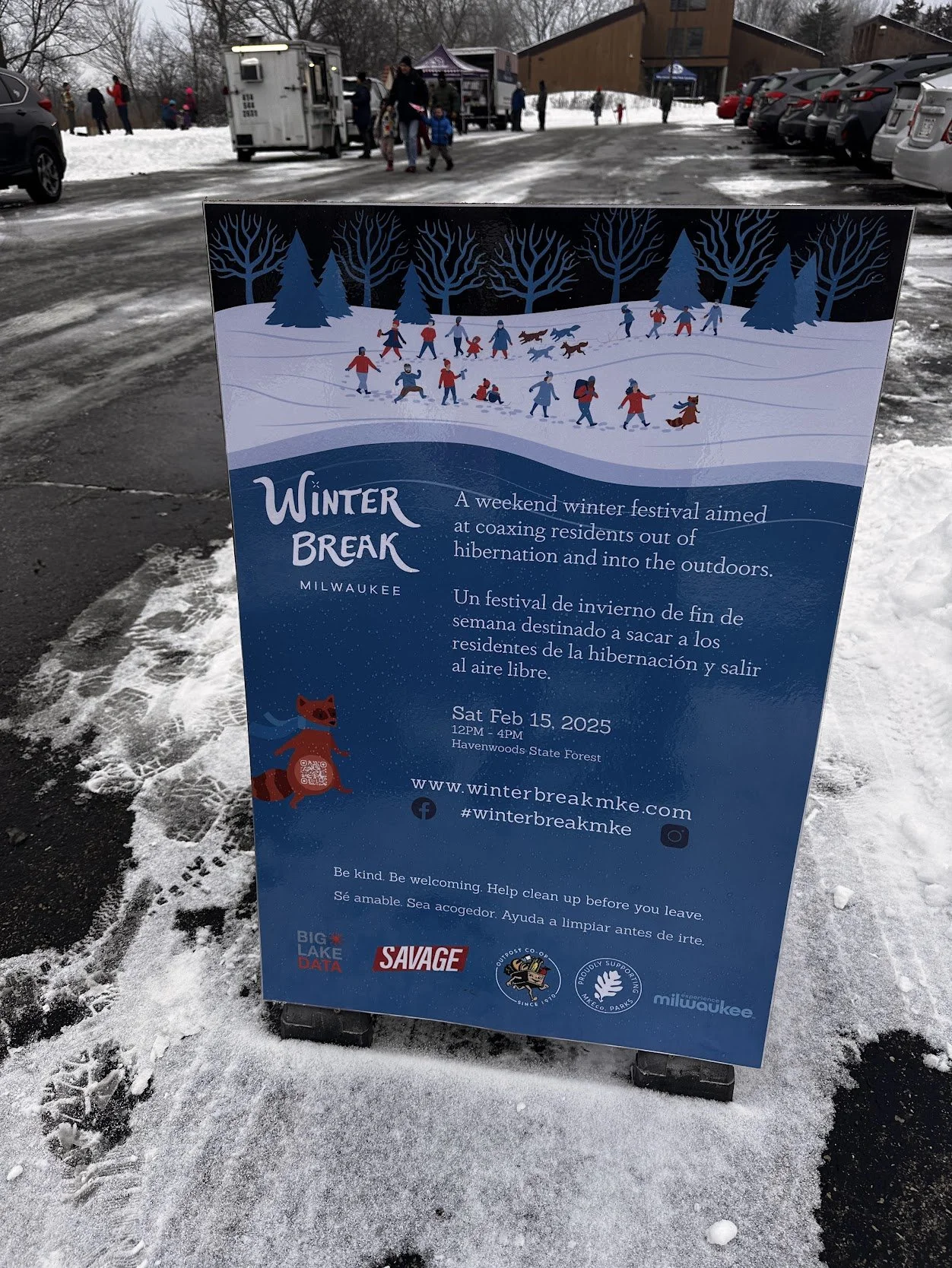
Winter Break Milwaukee is her antidote—a free, inclusive community festival designed to help people get out of the house and back into community without needing to be “outdoorsy.”
Hosted at Havenwoods State Forest, the event is built for all ages, bodies, and experience levels, with both indoor and outdoor options so people can warm up, participate at their own pace, and try beginner-friendly winter activities.
And “inclusive” isn’t just a vibe: everything is free, the programming is meant to be doable beyond the event, and there’s no alcohol—a deliberate choice inspired by a neighbor in recovery who told Kate winter in Milwaukee felt like “there’s nothing to do but drink.”
Now in its third year, Winter Break Milwaukee is becoming more than a one-day festival. It’s a small act of cultural defiance—and an invitation to reclaim winter as something we can actually live through together.
What problem were you trying to solve when you started Winter Break Milwaukee?
This is a bigger answer than one might expect for a 1-day festival.
Milwaukee has a Winter problem. We are the City of Festivals, but we only celebrate together in the Summer. The city hibernates during the cold season. And this isn’t the coldest weather; there are so many cities to the north of us that have it much colder.
Staying indoors feels comfy-cozy, but social isolation negatively impacts our mental health. Our physical health takes a hit from being sedentary. Our communities lose touch, meaning we don’t know when our friends and neighbors are struggling. Staying indoors for a season puts a lot of pressure on small businesses and restaurants (owned by locals who contribute to the local economy) to limp through the extreme seasonal highs and lows. It makes it hard to attract newcomers and new talent to our city since we seem to shut down for a portion of the year.
Why call it “Winter Break”? What does the name mean to you?
Winter Break was something I looked forward to as a kid, back when winter was fun and exciting. Kids tolerate winter so much better than adults. Their parents dress them properly so they get excited about snow. And why not? It’s a free, creative, and fun medium: you can build a fort, make a snow sculpture, have a snowball fight, go sledding. By contrast, adults have less fun and a lot more challenges associated with winter. They have to shovel within 24 hours of a snowfall, drive on snowy or icy roads, and walk carefully through slippery parking lots to work. I wanted to reclaim some winter enthusiasm for adults. It’s an opportunity to take a break and do something restorative in the post-holiday season.
This is the 3rd annual event—what’s one moment from the first two years that made you think, “Yep, this needs to keep happening”?
The heartfelt conversations I had with people who came up to me at the event to thank me.
What does “inclusive community festival” look like in practice?
First, everything is free.
Winter gear and winter sports are expensive. Anything I can do to make that affordable and accessible to people is important. I try to pick activities that a person could feasibly do again on their own without too much equipment investment. There are some winter activities that look really eye popping, like Ice Racing (racing motor bikes on a frozen lake), but it’s just not feasible for the average Milwaukeean to purchase equipment and do that thing.
Part of the inspiration for this event was that I had a young neighbor, a really talented musician, who was newly out of rehabilitation and in recovery for alcoholism. Right before he moved away, he told me, “I don’t think I can keep living here. The summer is fine, but in the winter, there’s nothing to do but drink. I can’t do it. I can’t keep living here.”
It really stuck with me. The need for 3rd spaces that don’t serve alcohol, but specifically 3rd spaces in winter. That’s why there isn’t any alcohol at the event.
So we are trying to be inclusive as possible by creating an event that people who are sober curious or in recovery can come to and feel comfortable. My personal feeling is that the cold-grey season is hard to begin with, I shouldn’t be pouring sad-juice on top of it. 12-3pm on a Saturday shouldn’t require alcohol and certainly not if you’re going to do sporty activities.
So we made decisions about what was allowed to be on site, who we would not accept money from in a town whose entire economy is based on exactly that.
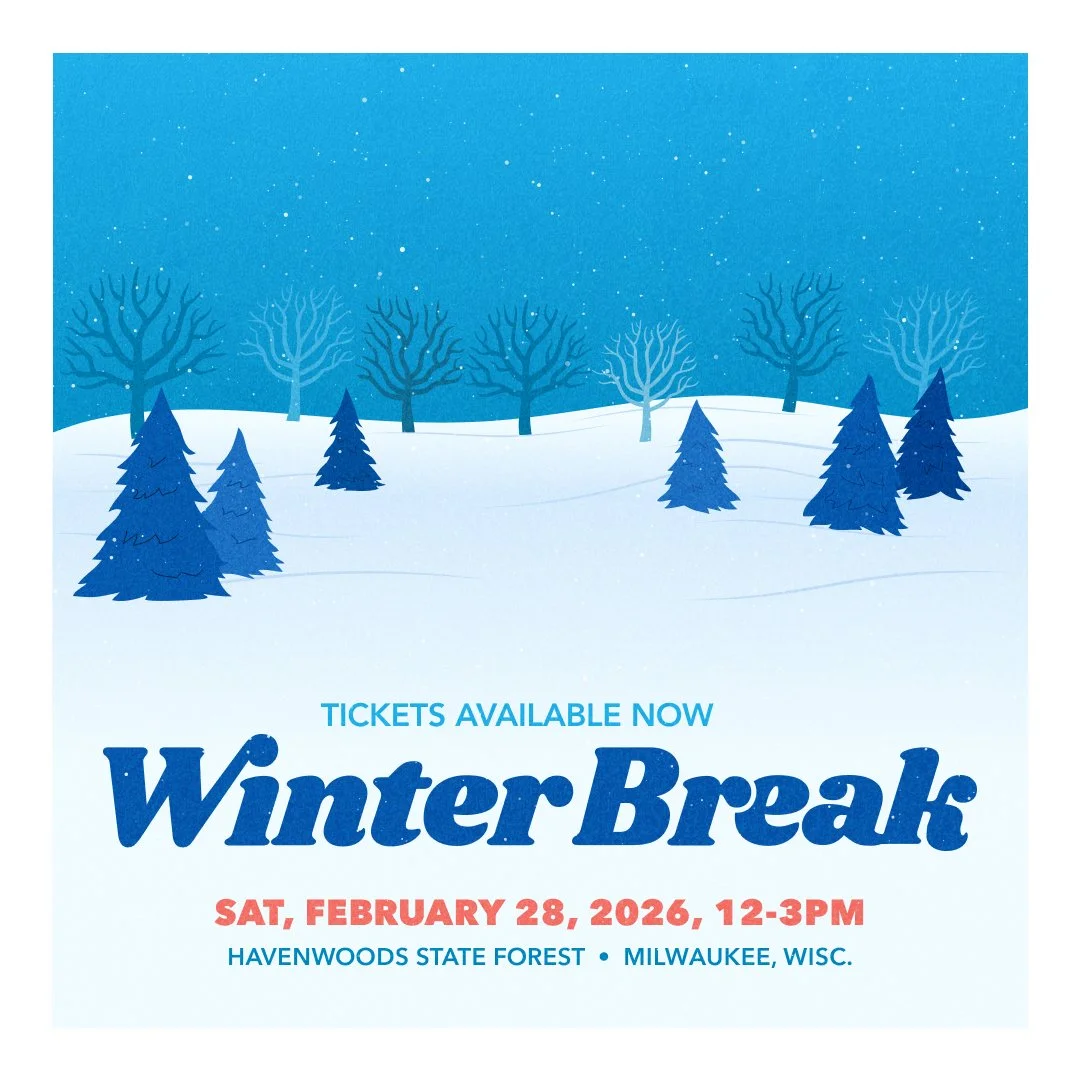
WINTER BREAK MKE 2026
What: Havenwoods' annual late-winter outdoor festival packed with free activities for all ages
When: Saturday, February 28, 2026 | 12–3 p.m.
Where: Havenwoods State Forest, 6141 N. Hopkins St., Milwaukee
Cost: Free with ticket reservation
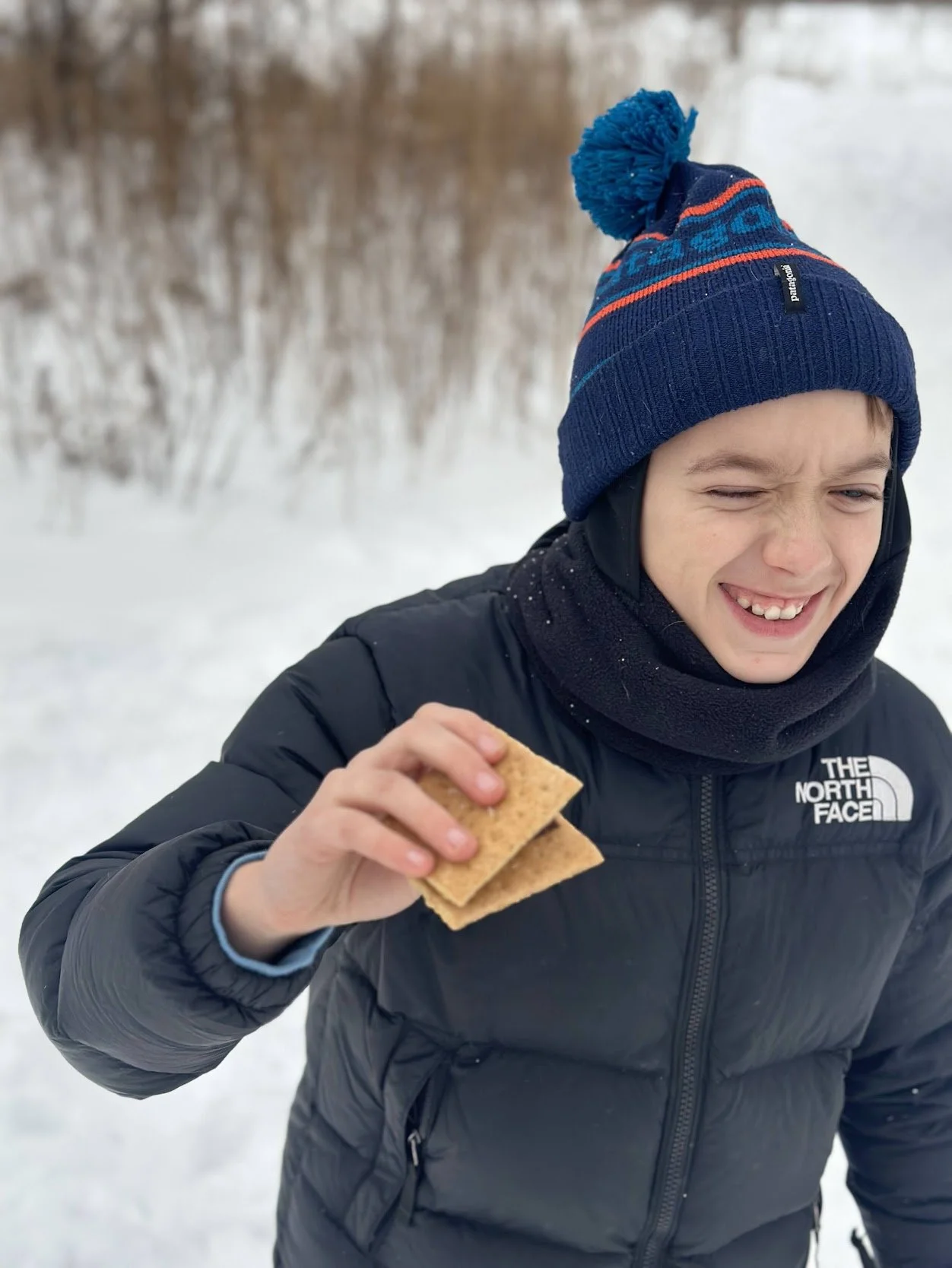
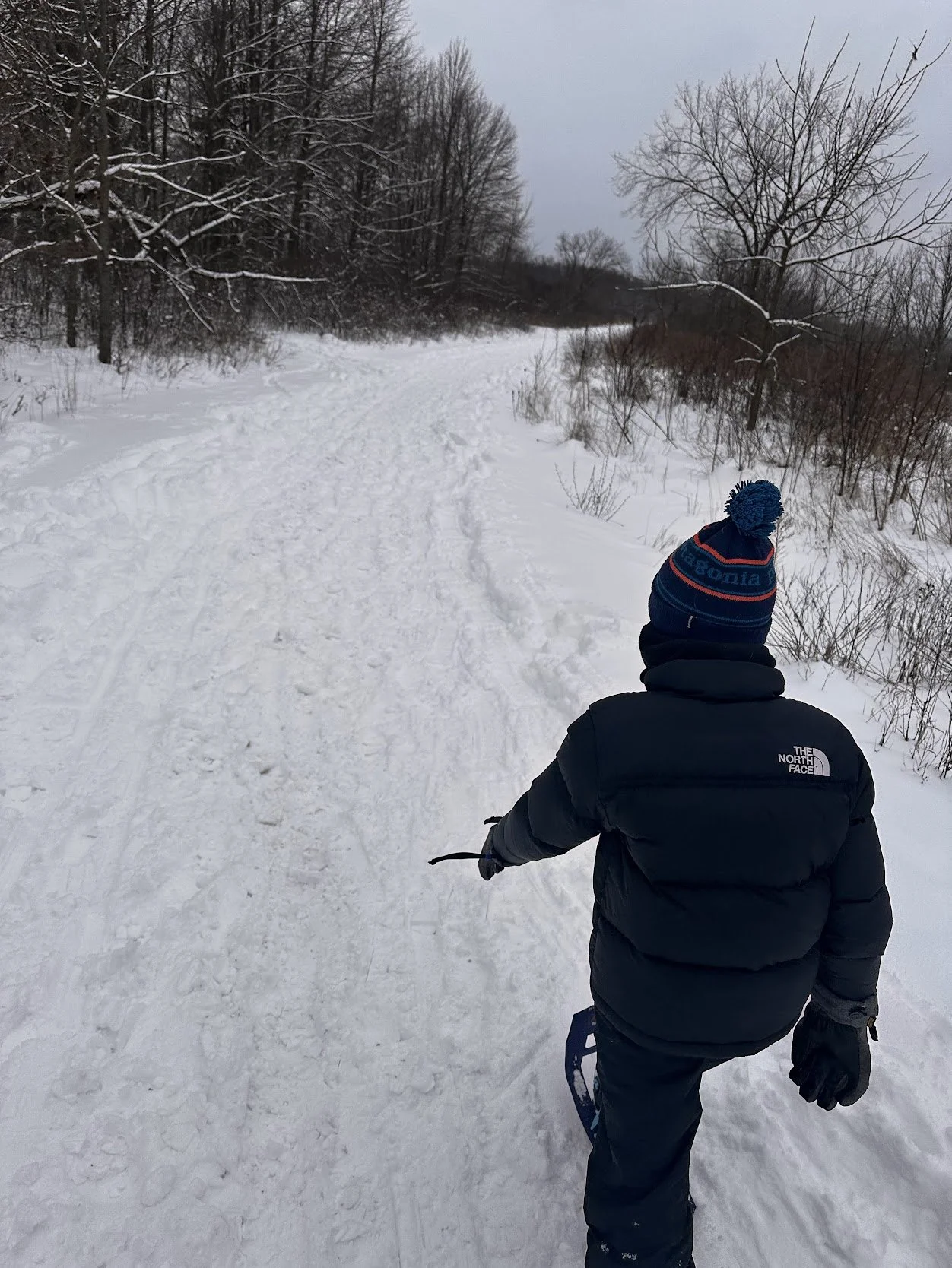
Highlights: Dog sled demos with the Milwaukee Mushers (free rides if there's snow) … Free fat tire bike rentals from Wheel & Sprocket … Free snowshoe rentals fitted by DNR staff … Animal footprint scavenger hunt with plaster-cast tracks … Walking stick decorating and upcycled birdfeeder crafts with Ice Age Trail Alliance … Personalized typewriter poetry from Johnny Types Ink … Documentary screening of Breaking Trail (Emily Ford's historic Ice Age Trail winter thru-hike) … Live demos of beeswax candle-making and alpaca fiber weaving … Beekeeper talk with free honey samples … Bonfires with s'mores … Hot food from MKE Bento (dumplings, rice bowls, spicy noodles, vegan options)
Accessibility: All-terrain wheelchairs available through Access Ability Wisconsin — reserve a spot when you get your ticket or call (608) 886-9388
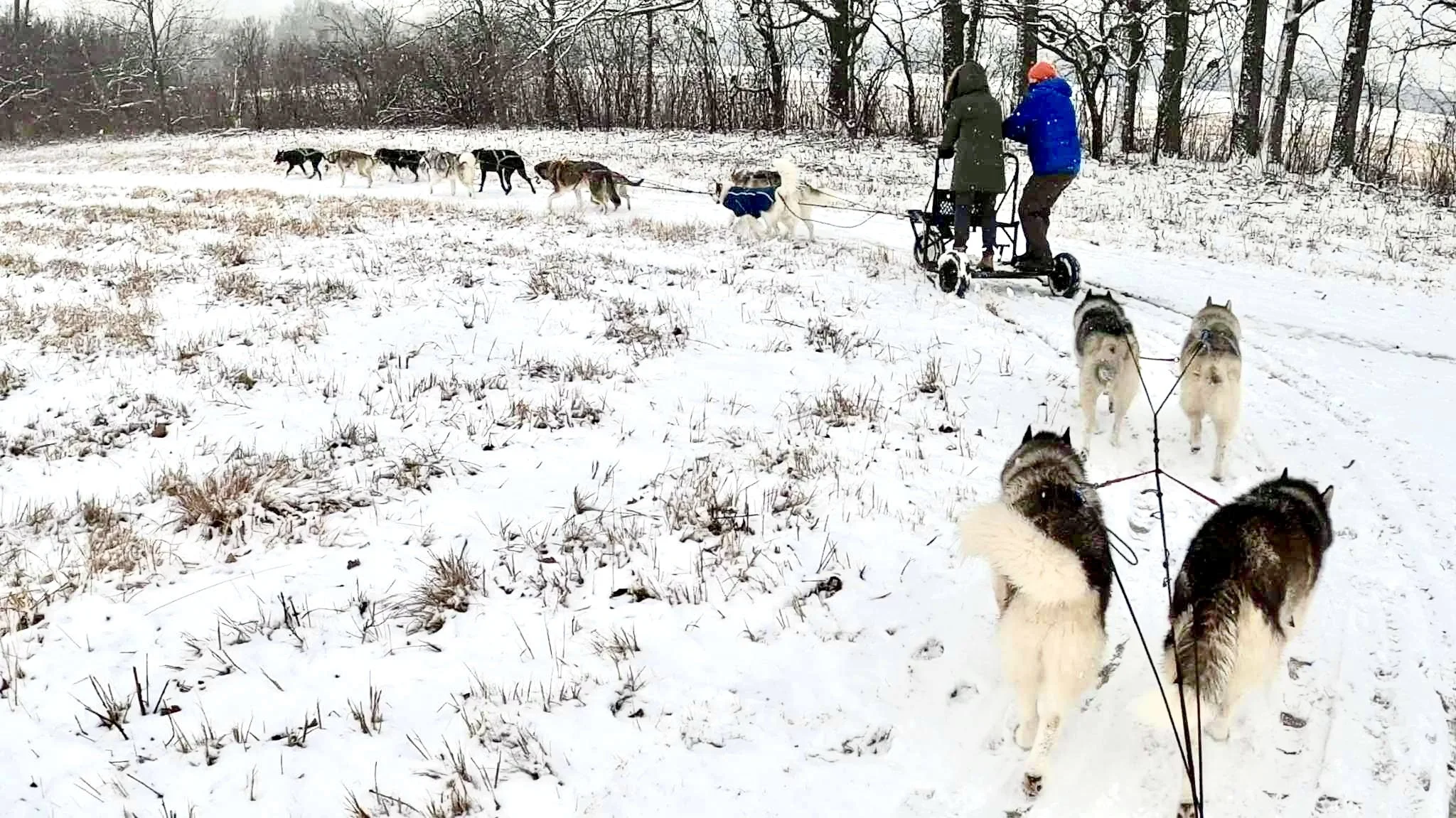
Dog sleds in action at Havenwoods State Forest
Why Havenwoods State Forest as the home base for Winter Break?
Havenwoods is right along a bus line, which makes it more accessible. They have indoor bathrooms, indoor space as well as outdoor space, which is important for letting people go at their own speed. Some people aren’t ready to be outdoors for hours, but that’s okay. The DNR has been amazing partners and it’s a beautiful little oasis in our city.
What do you wish more Milwaukee-area people understood about Havenwoods?
That it’s completely free! No entrance fees, no park sticker required. It’s open every day of the week.
The event says “all ages, all bodies, all experience levels.” What have you done (or learned) to make that true?
You have to have an indoor place for people to warm up, or you start blocking out elders, young kids, and people with mobility difficulties. People who aren’t used to being outside in the cold need indoor activities programmed, so I always make sure that the indoor event is just a rich as outdoor. I also include a few fun things for kids, like coloring sheets, making DIY bird feeders, or animal footprint ID.
As far as all bodies are concerned, rent ADA portapotties, because who doesn’t want more room in a portapotty, especially with big winter gear on. We also have an All-terrain wheelchair coming from Access Abilities Wisconsin, so people who have mobility difficulties can take it out on the trails. For all experience levels, we program the event so that most of the activities are not too daunting to try out, like bird watching, or snowshoeing. The most intimidating thing I put in the event is fat tire biking. If someone is a very experienced winter adventurer, they’ll enjoy hiking on the forested trails.
For someone who’s not “outdoorsy” (or feels like they don’t belong outside), what would you want them to know before they come?
First, everyone is welcome. Everyone belongs here. This whole event is meant to build mental health resilience. While my goal is to get you out in nature for its mental health benefits, you should still come, even if you do the indoor part of the event, because we can all benefit from getting out of the house and being in community, and from shaking up our routines.
Are there specific activities or entry points designed for total beginners?
If you’re not ready to be outdoors, you can come watch a documentary film indoors, or do some tea tasting. If you want to try being outdoors, a good place to start is to come pet some sled dogs, or try out playing a winter lawn game, Kubb, near the bonfires. It’s kind of like a mix between bowling and horseshoes, played with wooden batons.
What kinds of winter hobbies and demos are you most excited to feature this year?
I’ve always wanted to do knitting, crocheting and fiber arts, because I think that can help people make beautiful, wearable things that help winter feel more comfortable. This year Kim from Rustic Rose Suri Alpacas will be showing how she uses alpaca fibers to weave on a loom. From a nerdy, selfish perspective, I’m excited about that! We also have a candle-making demo from 1207 Wax Works, and I love all things hygge.
Is there a favorite activity you recommend for families with younger kids? For teens? For adults?
Truly, you can choose your own adventure; there’s no age min or max to these activities, but here are some places you might want to start:
Young kids: sled dog rides, animal footprint ID scavenger hunt
Teens: fat tire biking, bonfires and s’mores
Adults (winter newbs): tea tasting, poetry commissioning, enjoying the documetary film
Adults (outdoorsy): bird watching, snowshoeing, fat tire biking.
What partnerships (organizations, food, clubs, makers, outdoor groups) have been key to making this work?
The DNR has been an amazing partner. Wheel & Sprocket shows up each year with free fat tire bikes for people to ride, which is so cool to see. I have had counsel from the Urban Ecology Center since year one. This year Visit Milwaukee has been an amazing promotional partner, and we can offer hotel discounts through them. Access Ability Wisconsin has partnered with us this year to bring an all-terrain wheelchair to the event. We’ve formed a bit of a winter coalition for people throwing outdoor winter events. MKE REC was also incredibly formative to this event.
What’s the hardest part of building a free public festival in winter?
Because it’s an event filled with small niche hobbies, it’s difficult to find funding - someone really has to see the overall vision for a cultural shift away from hibernating and shutting down in the winter.
If weather is unpredictable (because Wisconsin), what’s your approach—adapt, relocate, roll with it?
We believe there is no bad weather, only bad clothes. Weather is always unpredictable. We roll with it. I truly only want to cancel if it’s truly unsafe for people to be outside, like during a winter storm. We have 4-5 different plans for each outdoor activity, depending on the weather. Every activity is designed to flex.
What’s the best way for people to stay updated?
We’re on Facebook and Instagram, and we have a website and newsletter at WinterBreakMKE.com
What would you love Winter Break Milwaukee to become over the next 3–5 years?
Overall, I’d love to do multiple weekends in February to create an event series. I have a ton of wild ideas about cool events to add! I would love to bring coffee to this event, like having an outdoor coffee lounge and an amateur barista competition. I’d also love to do ice golfing and an outdoor movie. Next year, we are working with Edessa School of Fashion to do an outdoor winter fashion show.
Anything else to add?
I had noticed in my travels how other cities in the US and abroad handle winter, and noticed how much room for improvement Milwaukee has by comparison.
I went to winter markets in Poland, I attended Winter Festivals in Minneapolis. I visited Rome during a snowfall. I met family in Sweden, where they have a totally different attitude toward winter, and the outdoors. Everyone must go outside, must move their bodies.
It’s part of Friluftsliv, a Scandinavian philosophy that prioritizes being in nature, and practicing mindfulness. I started talking about a Winter Festival then. Very theoretical up to that point.
A few years later, I underwent heart surgery to correct a congenital heart defect, and while hooked up to morphine, I told my loved ones, “I’m throwing a winter festival.” I don’t think they believed me because I was also talking a lot of morphine-induced nonsense.
But about 100 days after heart surgery, in February 2024, I threw the first Winter Break.


Sed purus sem, scelerisque ac rhoncus eget, porttitor nec odio. Lorem ipsum dolor sit amet.