

Milwaukee's iconic food scene (and where to eat it all)
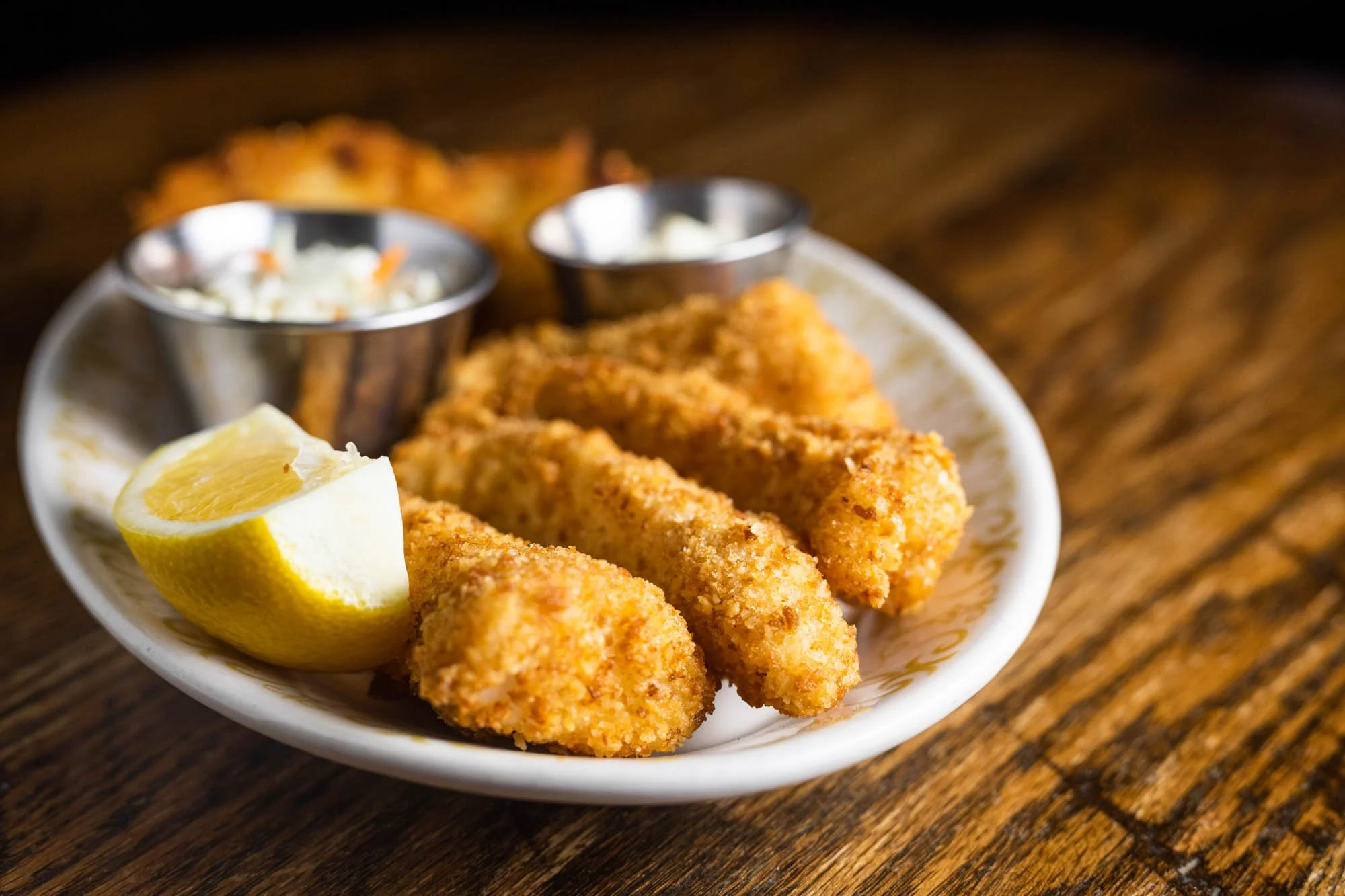
The iconic fish fry
Milwaukee is a food city — not in the trendy, Instagram-first way that gets national press, but in the deep-rooted, multi-generational, pass-the-recipe-down way that actually matters.
This is a city where Friday nights revolve around beer-battered cod, where frozen custard stands have loyal followings spanning decades, and where a proper Old Fashioned is made with brandy, not bourbon — and nobody will hear otherwise. Milwaukee's culinary identity was forged by waves of German, Polish, Serbian, Mexican, and Italian immigrants who brought their food traditions and planted them permanently in neighborhood taverns, corner bakeries, and family-run restaurants that still operate today. The result is a food culture unlike anywhere else in America — hearty, generous, unpretentious, and fiercely local.
Whether you've lived here your whole life or you're still discovering your favorite spots, this guide covers everything that makes eating in Milwaukee special: the iconic dishes, the cultural traditions behind them, the landmark restaurants that define each neighborhood, and the new wave of chefs putting Milwaukee on the national map. Grab an Old Fashioned and settle in.
Friday fish fry
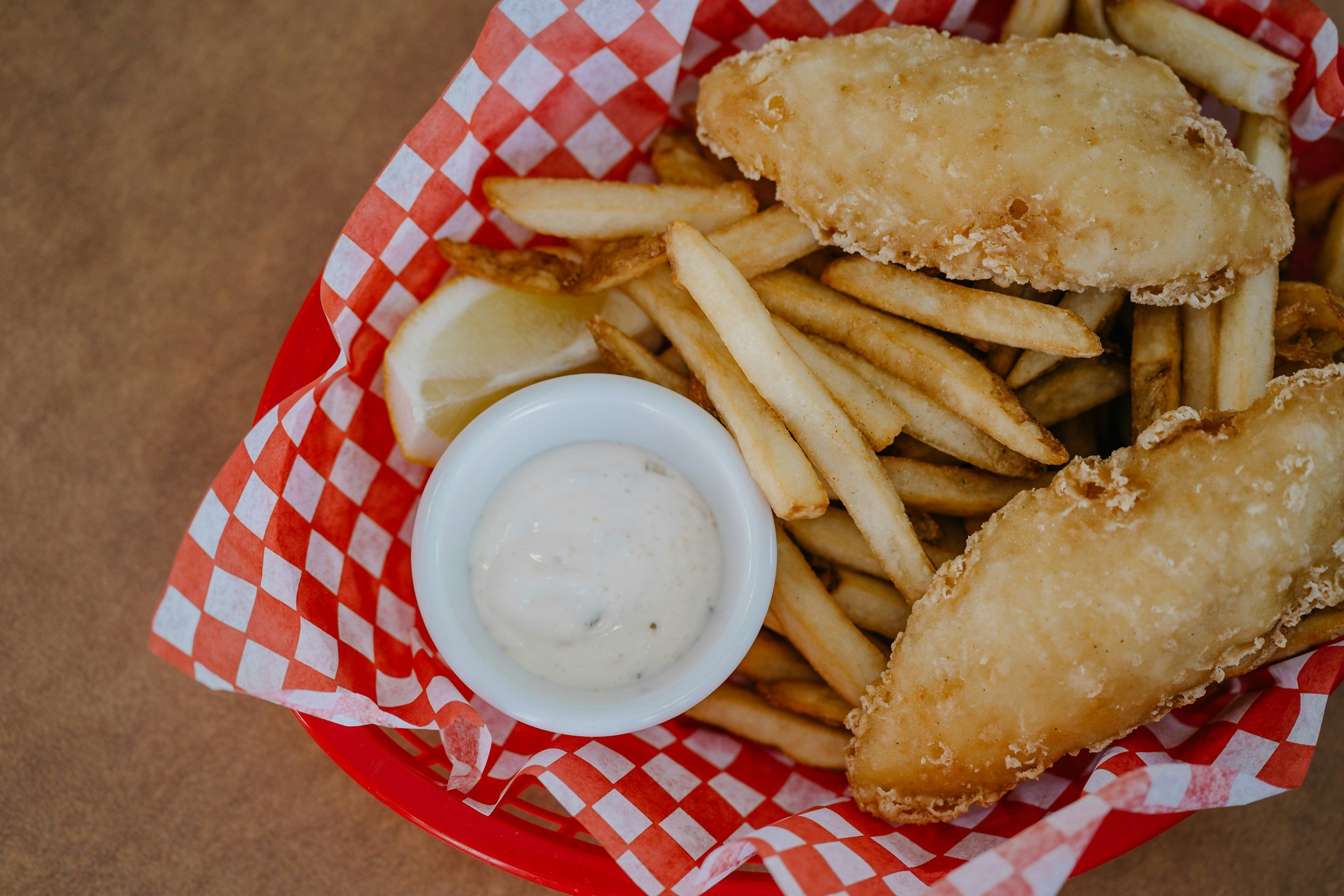
No single food tradition defines Milwaukee more than the Friday fish fry. What started as a Catholic practice of abstaining from meat on Fridays became, over generations, a full-blown cultural institution that transcends religion entirely. Brought to Milwaukee by German, Polish, and Kashubian immigrants in the 19th century, the tradition was further cemented during Prohibition, when taverns used affordable fried fish platters to draw crowds. Today, the Friday fish fry is a year-round ritual — not just a Lenten thing — available at hundreds of taverns, supper clubs, churches, VFW halls, and restaurants across the metro area. Governor Tony Evers even proclaimed an official "Friday Fish Fry Day" statewide.
The standard plate looks like this: beer-battered cod (or lake perch, walleye, or bluegill), served alongside potato pancakes or fries, creamy coleslaw, tartar sauce, marble rye bread with butter, and a lemon wedge. The drink of choice is a brandy Old Fashioned, ordered at the bar while you wait for your table. It is comfort food elevated to community event.
Lakefront Brewery in the Beerline B neighborhood is one of the city's most beloved fish fry destinations. They batter their cod in their own East Side Dark lager, serve it with house-made potato pancakes, and bring live polka music and dancing every Friday night. They even offer a vegan "fish" fry made with hearts of palm and nori for anyone who wants the experience without the fish. The Packing House near Mitchell Airport is a family-owned supper club that has served its hand-breaded Icelandic cod since 1974, and its drive-thru fish fry line stretches down Layton Avenue every Friday — it's a Milwaukee spectacle unto itself. Kegel's Inn in West Allis, a century-old former speakeasy listed on the National Register of Historic Places, offers an extraordinary range including cod, perch, walleye, bluegill, grouper, and catfish, plus their signature "3-2-1 platter" with three cod, two perch, and one walleye.
Serb Hall on the South Side is a Milwaukee institution where presidents from Kennedy to Reagan have campaigned, and where the fish fry tradition has run since 1967 — including a unique Serbian-style option with tomato-based sauce, peppers, onions, and garlic. For a classic neighborhood tavern experience, Erv's Mug on the South Side serves beautifully light beer-battered lake perch with generous portions at old-school prices. And downtown, the Swingin' Door Exchange, with its century-old stained glass and pine paneling, serves both Icelandic cod and lake perch every Friday in an atmosphere that feels like stepping back in time.
Butter burger deserves a James Beard Award

The butter burger is Wisconsin's love letter to dairy country. It's exactly what it sounds like: a beef patty cooked on a flat-top grill, then crowned with two to three tablespoons of real Wisconsin creamery butter that melts into every crevice between meat and bun. It's indulgent, unapologetic, and completely delicious.
Solly's Grille in Glendale is the undisputed temple of the butter burger, and in 2022, the James Beard Foundation agreed — awarding it an America's Classics honor. Solly's has been serving butter burgers since 1936, when founder Kenneth "Solly" Salmon opened a tiny coffee shop on Port Washington Road. Nearly ninety years later, it's still family-owned, still using 100% sirloin delivered fresh daily from a local butcher (never frozen), and still offering the option of "regular butter," "easy butter," or — for the brave — extra. The restaurant is small, with two horseshoe-shaped counters, and the experience feels like a time capsule. Don't skip the crinkle-cut fries or the Door County cherry shake served in a steel can. For North Shore families, Solly's is right in the neighborhood — just off Port Washington Road in Glendale.
Kopp's Frozen Custard, with locations in Glendale, Greenfield, and Brookfield, is primarily famous for custard but quietly serves some of the best burgers in America — Yelp ranked their jumbo burgers #11 nationwide in 2024. AJ Bombers downtown won Travel Channel's "Food Wars" and remains a solid burger destination. And of course, Culver's — founded in Sauk City, Wisconsin — made the butter burger accessible to the masses with their ButterBurger and fresh, never-frozen beef at locations across the metro.
Cheese curds are the unofficial state snack
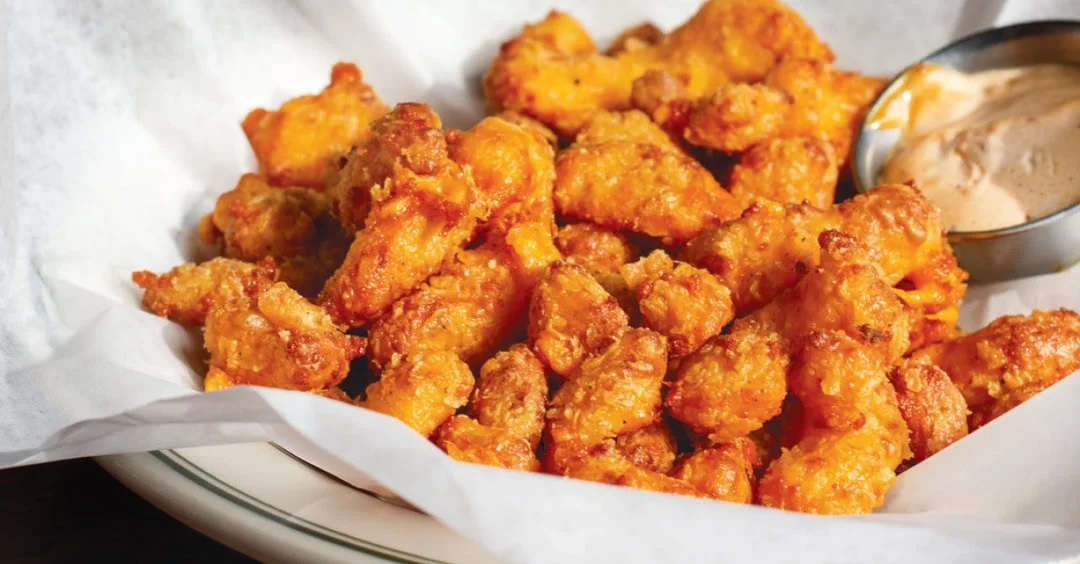
If you're from Wisconsin, you already know. If you're not, here's the deal: cheese curds are chunks of fresh cheddar that are either eaten straight (the hallmark of freshness is that satisfying squeak against your teeth) or beer-battered and deep-fried until golden and molten inside. They appear on virtually every bar and restaurant menu in Milwaukee, and debating the best ones is a legitimate local pastime.
Lakefront Brewery tops most lists for good reason. They use fresh curds from Hill Valley Dairy, batter them in Lakefront Lager, and serve them with their "secret granch sauce" (garlic ranch). They go through up to 1,000 pounds of curds per week and run creative "Curdsday" specials every Thursday with flavors like s'mores, churro, and Oreo. Black Sheep MKE in Walker's Point does something completely different — pancake-battered white cheddar curds dusted with powdered sugar and served with maple syrup, a sweet-savory combination that shouldn't work but absolutely does. Their curds come from Clock Shadow Creamery, an artisan cheese maker right in Walker's Point that supplies many of Milwaukee's best restaurants.
For fresh, squeaky curds to take home, West Allis Cheese & Sausage Shoppe (with a location inside Milwaukee Public Market) has been in business since the 1960s and stocks over 400 varieties of Wisconsin cheese. Wisconsin Cheese Mart downtown has been selling fresh curds in flavors like dill, garlic, and Cajun for over 80 years. And The Vanguard in Bay View serves theirs alongside inventive house-made sausages and craft beer — because in Milwaukee, cheese curds pair with everything.
Frozen custard
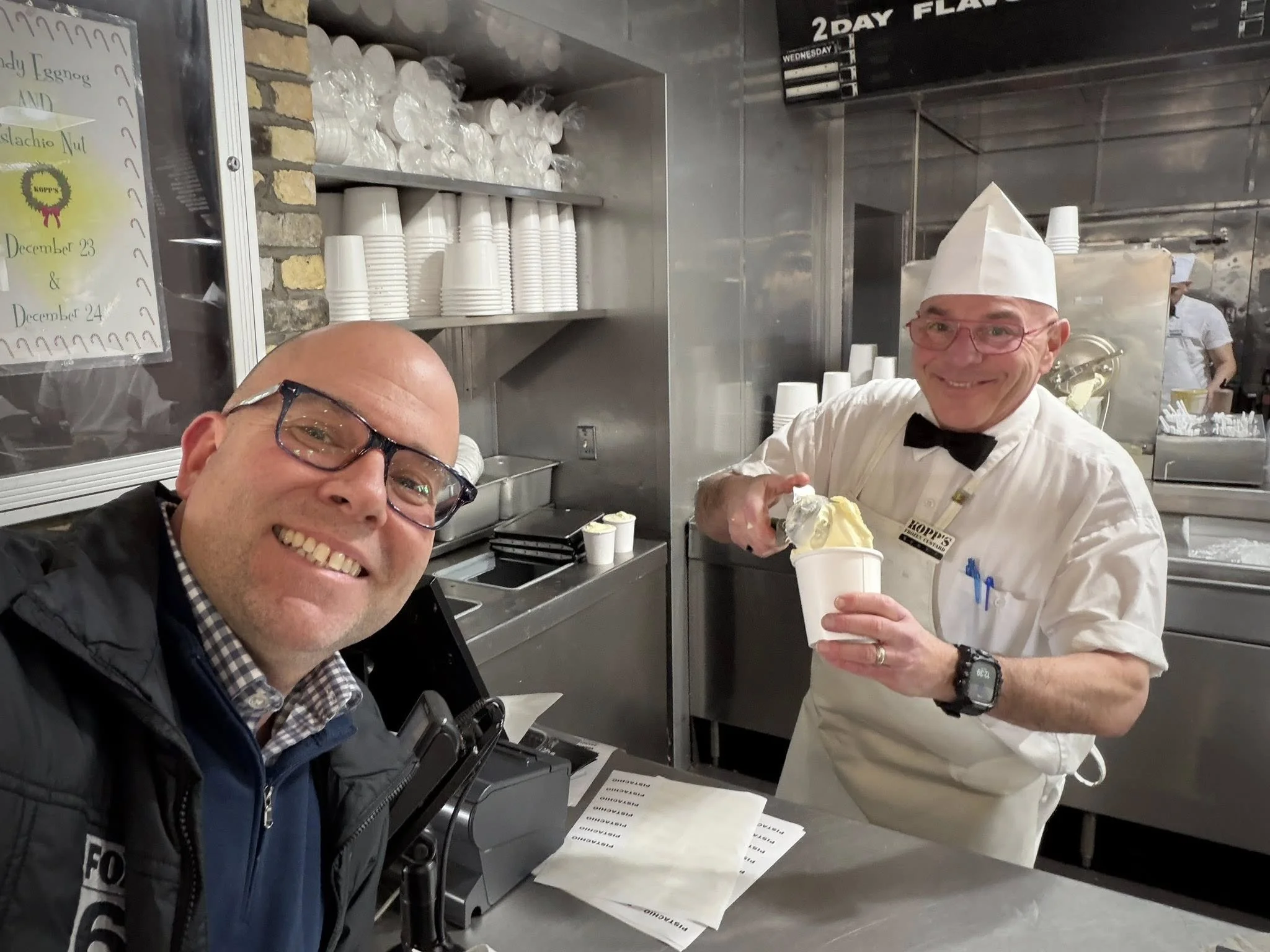
Milwaukee is the Frozen Custard Capital of the World, and this is not a self-appointed title — it's a genuine claim backed by a density of custard stands unmatched anywhere. Frozen custard differs from ice cream in crucial ways: it must contain at least 1.4% egg yolk, less air is churned in during production, and the result is denser, creamier, and silkier. The tradition took root here after the 1933 Chicago World's Fair, and three legendary stands have anchored the scene ever since.
Gilles Frozen Custard on Bluemound Road is the oldest, founded in 1938. Their chocolate custard is considered the gold standard, and their signature creation "Those Things" — a custard cookie sandwich dipped in chocolate shell — has a cult following. The renovated vintage building oozes nostalgia. Leon's Frozen Custard on South 27th Street, opened in 1942, is a neon-lit drive-in frozen in the 1950s that takes a purist's approach: just four daily flavors (vanilla, chocolate, butter pecan, and one rotating option), no toppings menu, no frills. Butter pecan is their signature, and the stand has attracted everyone from Neil Diamond to Phil Rosenthal. Kopp's Frozen Custard came along in 1950, founded by German immigrant Elsa Kopp, and revolutionized the industry by pioneering the "Flavor of the Day" concept in the 1960s — initially considered heretical, now copied everywhere. The Glendale location sits on the former site of a drive-in that reportedly inspired Arnold's from "Happy Days."
What makes the rivalry special is the warmth behind it. The three families know each other, respect each other, and have even shared custard mix in emergencies. For North Shore families, the Kopp's in Glendale on Port Washington Road is the most convenient, but making the drive to Leon's gleaming neon palace on the South Side is a Milwaukee rite of passage worth taking with your kids.
Old World Third Street: German epicenter
Milwaukee was once called "the German Athens of America," and for good reason. By 1880, native Germans made up 27% of the city's population — the highest concentration of any single immigrant group in any American city. Today, roughly 38% of the metro area still claims German ancestry. These immigrants built the breweries, the beer gardens, the sausage shops, and the restaurants that define Milwaukee's culinary DNA — and the beating heart of it all is Old World Third Street, a cobblestoned downtown corridor where you can still smell bratwurst sizzling and hear accordion music drifting from doorways.
Mader's Restaurant has anchored this street since 1902, when German immigrant Charles Mader opened its doors. Still family-owned after more than 120 years, Mader's houses a $3 million art collection including medieval suits of armor and 14th-century antiques, and the staff still wears lederhosen and dirndls. The menu features pork shank with apple demi-glaze, rouladen, wiener schnitzel, and liver dumpling soup. Presidents Kennedy, Ford, and Reagan have all dined here. Directly across the street, Usinger's Famous Sausage has been making bratwurst, knackwurst, and over 70 varieties of sausage since 1880, when German immigrant Fred Usinger brought his family recipes to Milwaukee. The retail shop is a must-visit, and their sausages supply restaurants across the city. Next door, the Old German Beer Hall serves Hofbräu München beer — brewed in Germany per the 1516 Purity Law — alongside giant pretzels imported from Munich and Usinger's sausages from literally across the street. On weekdays, they offer a remarkable deal: buy a beer and get a free sausage with sauerkraut and a side.
Kegel's Inn in West Allis celebrated its 100th anniversary in 2024. Built as a Prohibition-era speakeasy by Austrian immigrant John T. Kegel (his wife Anna was famously arrested in 1927 for possessing alcohol), it features hand-painted murals by German artist Peter Gries and is now on the National Register of Historic Places. Their schnitzels, boneless roasted duck, hasenpfeffer, and sauerbraten are the real thing, served in a dining room that feels like stepping into old Bavaria.
Polish, Mexican, and Serbian kitchens
Milwaukee's food identity extends far beyond its German roots. The South Side, in particular, is a patchwork of immigrant food traditions that have coexisted and enriched each other for over a century.
The Polish community arrived in massive waves before World War I, settling around parishes like St. Stanislaus — the first urban Polish parish in America, founded in 1866. Nearly 13% of the metro area traces its ancestry to Poland. For decades, Polonez was Milwaukee's beloved Polish restaurant, but it closed in 2022, leaving a void. That gap has been filled by Wioletta's Polish Kitchen, which opened in 2025 in Oak Creek. Run by Adam and Wioletta Bartoszek from Łódź, it serves pierogi sampler plates, Polish meatballs, beef goulash with potato pancakes, and stuffed cabbage, with a full bar featuring Polish beers and a flight of plum, cherry, and honey liqueurs. The Bartoszeks also run Wioletta's Polish Market on South Howell Avenue, stocked with frozen pierogi, fresh sausages, pączki, and a dozen varieties of Polish soups. On the deep South Side, Tower Chicken has been serving chicken dumpling soup, czarnina, and handmade pierogi since 1948.
Milwaukee's Mexican-American community dates to the 1920s, when the Pfister and Vogel Tannery recruited workers from Mexico. Today, the Walker's Point and Clarke Square neighborhoods pulse with taqueria culture, panaderías, and some of the most authentic Mexican food in the Midwest. Conejito's Place in Walker's Point is the landmark — founded in 1972 by José "Conejito" Garza (nicknamed "little rabbit" for his quick pace), it serves ultra-cheap tacos, tostadas, and enchiladas on paper plates in a no-frills room where two city proclamations hang on the walls. Botanas on South 5th Street has served Guadalajara-inspired cuisine for over twenty years, featuring tableside guacamole and more than 100 brands of tequila. Café El Sol at the United Community Center is known for its unique Mexican Friday fish fry — a beautiful fusion of Milwaukee's two most powerful food traditions. And El Rey Supermercados, founded by the Villarreal brothers who emigrated from Mexico in the early 1960s, operates multiple locations and a tortilla factory that supplies much of the city.
The Serbian community gave Milwaukee one of its most treasured restaurants. Three Brothers in Bay View, founded in 1956 by Milun Radicevic, won the 2002 James Beard Award for "American Classic" and still operates today. Walking in feels like entering someone's home — mismatched lamps, old Formica tables, and a menu that hasn't changed in nearly seventy years. The burek (a plate-sized phyllo meat and cheese pie that takes 45 minutes to prepare), ćevapčići sausages, sarma, and roast duck are the stuff of legend. It's cash-only, unhurried, and completely unforgettable.
Brady Street and the Third Ward
Milwaukee's Italian community historically centered in the Third Ward — once the city's "Little Italy," packed with Sicilian immigrants who worked as fishermen and produce sellers — and along Brady Street on the Lower East Side. While many of the old-school Italian joints have closed over the decades, essential anchors remain.
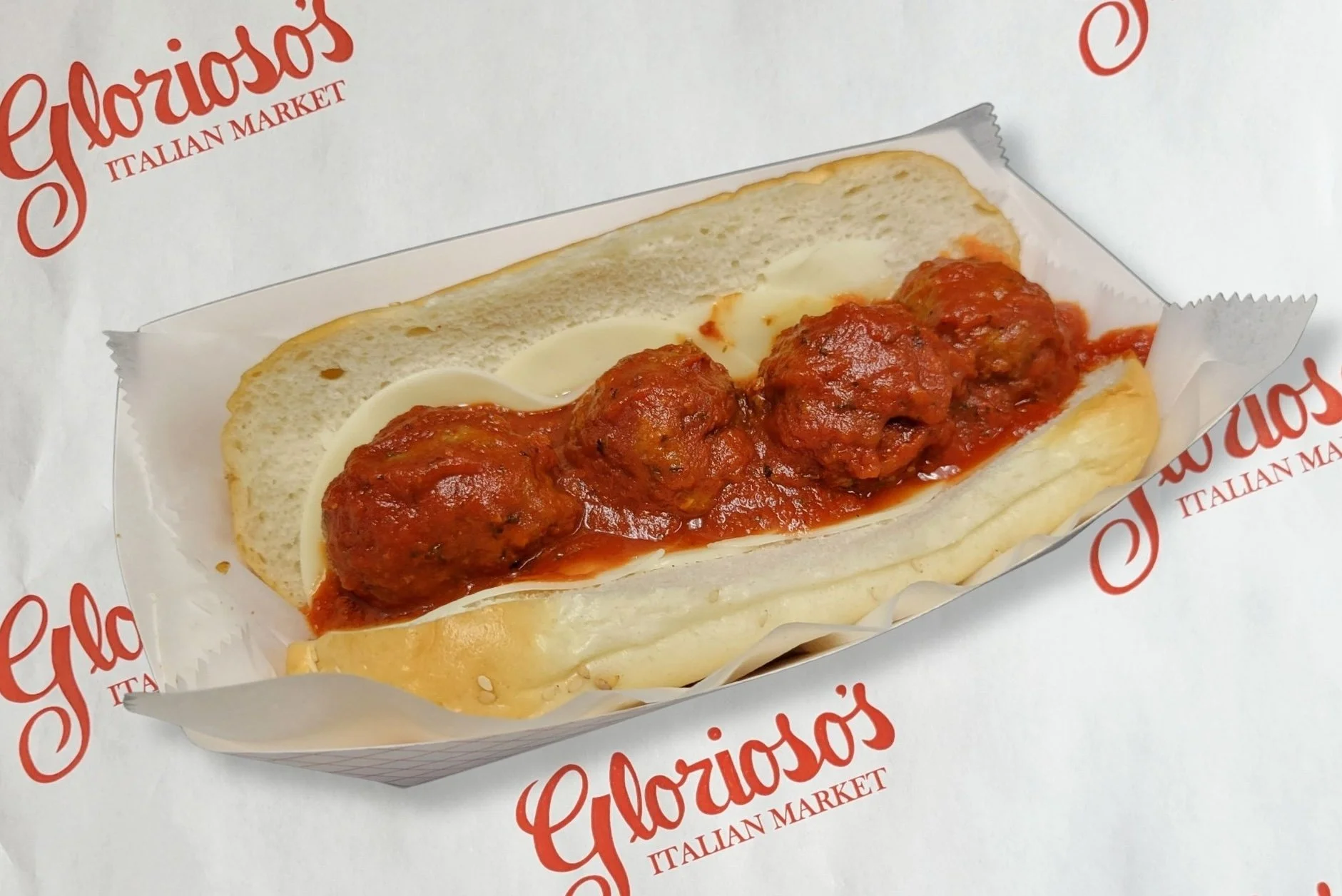
Glorioso's Italian Market on Brady Street has been a neighborhood institution since Valentine's Day 1946, when brothers Joe, Eddie, and Teddy Glorioso opened their small shop. Now spanning 10,000 square feet after decades of expansion, Glorioso's features a full-service deli with some of Milwaukee’s best sandwiches, homemade sausage from their grandfather Felice's original recipe, house marinara, gelato, and an extensive selection of imported Italian goods. Right around the corner, Peter Sciortino's Bakery has been baking Italian cookies, breads, and pastries since 1948 — their rye bread and rolls supply restaurants across the city.
The Bartolotta Restaurants represent the pinnacle of Italian dining in Milwaukee. The family's flagship, Ristorante Bartolotta dal 1993 in the Wauwatosa Village, has served handmade pasta and grilled seafood for over thirty years and holds an authentic Marchio Ospitalità Italiana certification. Paul Bartolotta himself is a two-time James Beard Award winner. The group also operates Lake Park Bistro overlooking Lake Michigan (French cuisine in a stunning setting), Harbor House on the lakefront, and several other restaurants across the metro.
Supper clubs, taverns and brandy Old Fashioned

Three interlocking traditions make Milwaukee nights unlike anywhere else in America: the supper club, the corner tavern, and the brandy Old Fashioned that ties them together.
The supper club is a uniquely Wisconsin institution. The ritual goes like this: you arrive, order an Old Fashioned at the bar, receive a relish tray (pickles, olives, celery, raw vegetables, cottage cheese), and eventually move to your table for a meal where bread, salad, soup, and sides all come included with your entrée. The menu features Friday fish fry, Saturday prime rib, steaks, and after-dinner ice cream drinks like grasshoppers and brandy Alexanders. Five O'Clock Steakhouse near the West Side has been Milwaukee's quintessential supper club since 1946 — Money Magazine named it a top-ten steakhouse in America, and its retro-swank 1940s atmosphere with dim lighting and wood paneling is the real deal. The upstairs Alley Cat Lounge hosts live jazz every Friday night. The Packing House near the airport has had the same live pianist, Jeff Stoll, performing Wednesday, Friday, and Saturday nights for over 44 years — the longest-running gig in the city. In Whitefish Bay, Jack Pandl's Whitefish Bay Inn has been serving families since 1915 and is famous for its oven-baked German Pancake, making it a perfect North Shore Sunday brunch destination. And Buckatabon Tavern & Supper Club in Wauwatosa offers a modern take on the northwoods supper club with mid-century design and their own locally made Buckatabon Brandy.
The brandy Old Fashioned deserves its own explanation, because visitors are often baffled. While the rest of America makes Old Fashioneds with bourbon or rye, Wisconsin uses brandy — specifically, the state consumes roughly half of all the brandy that Korbel produces. The tradition traces to the 1893 World's Columbian Exposition in Chicago, where the Korbel brothers showcased their brandy to Midwestern crowds. When you order one, you'll be asked: "sweet, sour, or press?" Sweet means topped with Sprite or 7-Up; sour means Squirt or grapefruit soda; press means half seltzer, half soda. It comes muddled with maraschino cherries, orange, sugar, and Angostura bitters. Bryant's Cocktail Lounge on the South Side — Milwaukee's oldest cocktail lounge, open since 1938 — is the place to experience this tradition at its finest. Bryant's has no written menu; you describe what you like and the bartenders, who collectively know over 450 cocktails, make something perfect. It's a James Beard semifinalist, an Esquire Best Bar in America, and the birthplace of the Pink Squirrel cocktail.
Milwaukee's tavern culture runs equally deep. The city has more taverns than grocery stores per capita, a legacy of its Big Four brewing era — Pabst, Schlitz, Miller, and Blatz. Wolski's Tavern on the Lower East Side has been family-owned since 1908, and its "I Closed Wolski's" bumper stickers are badges of honor for late-night regulars. Holler House on Lincoln Avenue, also from 1908, features the oldest certified bowling lanes in the country in its basement. Best Place at the Historic Pabst Brewery offers tours through Captain Frederick Pabst's original offices, complete with vintage beer commercials and a choice of PBR, Schlitz, or root beer — a living museum of Milwaukee's brewing legacy.
Milwaukee's new generation of chefs
Milwaukee's food scene has exploded in the past decade, and the James Beard Foundation has taken notice. The city now has four James Beard Award-winning chefs: Dane Baldwin of The Diplomat (2022), Justin Aprahamian of Sanford (2014), Adam Siegel (2008), and Paul Bartolotta (1994 and 2009). In 2026, Ca'Lucchenzo chef Zak Baker in Wauwatosa is a finalist for Best Chef: Midwest, and 1033 Omakase in Walker's Point — Milwaukee's first omakase restaurant, an intimate ten-seat experience with a 90s hip-hop soundtrack — is a finalist for Best New Restaurant.
The Diplomat on Brady Street, where Baldwin won his award, serves seasonally changing small plates that showcase technical precision and deep Midwestern flavors. Odd Duck, now in Walker's Point, was a 2022 semifinalist for Outstanding Restaurant and serves "unapologetically flamboyant" small plates like pork cheek goulash and duck confit agnolotti. EsterEv in Bay View, from Top Chef alum Dan Jacobs and partner Dan Van Rite, offers a refined four-course prix fixe tasting menu that's been called "accessible, nostalgic, aspirational, and offbeat." The duo also runs DanDan downtown, blending Chinese soul food with Midwestern sensibility. Bavette La Boucherie in the Third Ward practices whole-animal butchery under chef-owner Karen Bell, serving a raclette-topped burger with beef-fat fries that might be the best burger in the city. Braise in Walker's Point pioneered Milwaukee's farm-to-table movement, sourcing from over 40 Wisconsin farms. And Goodkind in Bay View, a perennial James Beard nominee, pairs creative American cuisine with an outstanding craft cocktail program helmed by co-owner Katie Rose.
The newest arrivals continue to push boundaries. Cassis, a French bistro from the team behind acclaimed Birch, opened in the Third Ward in 2025 with Midwestern ingredients and French technique. Mother's in Bay View, from former Ardent sous chef Vanessa Rose (a 2026 James Beard Emerging Chef semifinalist), grew from pop-up to brick-and-mortar in 2024 and brings supper club warmth to inventive small plates. Purslane serves Eastern Mediterranean cuisine from chef Mary Kastman, weaving Turkish flavors with seasonal Wisconsin farm produce. And Room Service in Bay View dazzles with Thai-Japanese fusion and gorgeous plating.
Eating your way through Milwaukee
Bay View has emerged as Milwaukee's buzziest dining neighborhood. Kinnickinnic Avenue — everyone calls it KK — is lined with restaurants, from Three Brothers' old-world Serbian charm to The Vanguard's creative house-made sausages (try the Thai Breaker with lemongrass and ginger) to Honeypie Café, a farm-to-table brunch institution since 2009 where pie for breakfast is actively encouraged and the garden patio keeps restless kids happy. Café Corazón serves excellent Mexican food with legendary margaritas and daily brunch in a family-friendly setting. Crafty Cow was essentially built for families — burgers, cheese curds, and mac and cheese in a casual, welcoming space.
Wauwatosa has quietly become a dining powerhouse. Beyond Ristorante Bartolotta and Ca'Lucchenzo, Blue's Egg is the go-to brunch spot (buttermilk pancakes, stuffed hash browns, and a line out the door on weekends), Café Hollander offers European-inspired fare with Belgian beers and a Tosa Village location where kids can watch trains pass by, and Eldr+Rime near Mayfair serves modern live-fire cuisine and was named Best New Restaurant by Milwaukee Magazine.
The North Shore suburbs — particularly relevant for local families — offer their own gems. In Shorewood, Benji's Deli is famous for its Hoppel Poppel egg scramble, a rite of passage for southeastern Wisconsinites, and Hubbard Park Lodge serves a legendary Sunday Lumberjack Brunch: all-you-can-eat flapjacks, an omelet bar, and continuous warm donuts delivered to your table, all inside a 1930s WPA-era log cabin on the Milwaukee River for around $18.50 per person. HIYA! Taco on Oakland Avenue serves creative tacos perfect for a quick family bite. In Whitefish Bay, Jack Pandl's remains the anchor, while Kopp's in Glendale and Solly's Grille are both right on Port Washington Road. Sprecher Brewery in Glendale offers family-friendly tours and their famous root beer (plus an annual Root Beer Bash), and the seasonal Klode Park Beer Garden overlooking Lake Michigan and Bayside Beer Garden at Ellsworth Park (with a playground right next to it) are perfect for summer family outings.
In the western suburbs, Brookfield's Jake's Steakhouse has operated inside a historic hundred-year-old barn since 1960, Mr. B's — A Bartolotta Steakhouse serves high-end cuts with signature haystack onion rings, and The Original Pancake House occupies a charming 1855 building that's a gold-standard family breakfast destination. The Corners of Brookfield offers upscale dining options including Indulgence Chocolatiers with a chocolate pairing bar that kids (and adults) go wild for.
Downtown and the Third Ward center around the Milwaukee Public Market, named the #1 public market in the country in both 2024 and 2025. Its 19 independently owned vendors include St. Paul Fish (nationally acclaimed lobster rolls), West Allis Cheese (fresh curds and epic bloody marys), Spice House (gourmet spices), and Foltz Family Market (artisan meats and cheese plates). The second-floor Palm Garden is a great spot to eat with kids, and cooking classes are available in the demonstration kitchen.
Festival season
Milwaukee calls itself "The City of Festivals," and the food at these events is no afterthought — it's the main attraction. Summerfest, the world's largest music festival, spans three weekends along the lakefront and features food vendors that Milwaukeeans follow as loyally as the musical acts, including Saz's iconic combo platters. The Wisconsin State Fair in West Allis draws over a million visitors each August, and the Original Cream Puffs are the non-negotiable must-eat — nothing else even comes close.
The ethnic festivals held at the Summerfest grounds are where Milwaukee's immigrant food traditions come alive in the most joyful way. German Fest features bratwurst, schnitzel, pretzels, and a Dachshund Derby. Polish Fest in June serves pierogi and kielbasa to polka soundtracks. Festa Italiana in July transforms the lakefront into Little Italy with bocce and fireworks. Mexican Fiesta in August celebrates with mariachi music and authentic regional Mexican cuisine. Most of these festivals are genuinely family-friendly, and many offer free or discounted kids' admission.
Throughout summer, the Milwaukee County Parks Traveling Beer Garden — a restored fire truck turned mobile taproom — visits different parks with Sprecher beers, brats, pretzels, and live music. It's a quintessentially Milwaukee experience that costs almost nothing and brings the whole neighborhood together.
Milwaukee food bucket list for families
If you're building your family's Milwaukee food bucket list, here's where to begin. Order a butter burger at Solly's Grille and let the kids marvel at the butter melting down the sides. Split an order of cheese curds at Lakefront Brewery and stay for the polka music on a Friday night. Take the whole family to Kopp's in Glendale for a jumbo burger and Flavor of the Day — it's the kind of place where memories crystallize. Wake up early for the Lumberjack Brunch at Hubbard Park Lodge in Shorewood, where warm donuts arrive at your table and the kids can explore the park afterward. Walk Old World Third Street and watch bratwurst being grilled at the Old German Beer Hall while sampling sausages from Usinger's across the way. Drive to Leon's on a summer evening and eat custard under the neon lights. Sit at a wobbly table at Three Brothers in Bay View and order the burek — it takes 45 minutes, but it teaches your kids that the best things are worth waiting for.
Milwaukee doesn't shout about its food the way some cities do. It doesn't need to. The traditions here are older, deeper, and more alive than most places can claim. Every Friday fish fry, every scoop of frozen custard, every brandy Old Fashioned muddled at a neighborhood tavern is a thread connecting this city to the families who built it — and to the families still gathering around the table today.
This guide distills the state down to the most iconic, beloved, and atmospheric ones you can actually book a table — organized by region so readers can plan a Friday fish fry close to home or a weekend detour