

Wisconsin's world of ethnic food is worth every mile
Wisconsin ranks among the most underrated states in America for diverse, immigrant-owned dining. From America's first-ever Nepalese restaurant on a Madison side street to a Burmese kitchen in Milwaukee opened by a mother-daughter team who fled Myanmar through a Thai refugee camp, the state's ethnic food landscape tells remarkable stories of resilience, family, and community.
Wisconsin's large Hmong, Laotian, Somali, Puerto Rican, Rohingya, and East African populations — many of them refugee communities — have built a culinary tapestry that rivals cities three times its size. This guide maps more than 40 independently owned, road-trip-worthy restaurants across the state, organized by region so you can plan your route.
What makes Wisconsin's ethnic food scene distinctive is its depth in cuisines you simply won't find in most Midwestern states: Tibetan, Burmese, Rohingya, Bhutanese, Hmong, and Laotian restaurants thrive here because of specific immigrant and refugee communities that settled across the state over the past four decades. The stories behind these kitchens are as compelling as the food.
Milwaukee: state's most delicious melting pot
Milwaukee's ethnic dining scene sprawls across distinct neighborhood corridors, each anchored by different immigrant communities. The South Side along Cesar Chavez Drive and 6th Street is the beating heart of Mexican and Central American food. Bay View's Kinnickinnic Avenue has emerged as a corridor for Southeast and South Asian cuisines. The northwest side is home to Hmong Town Market, and the 27th Street corridor heading into Greenfield has become a destination for Middle Eastern fare.
Ni Burmese (2140 S. Kinnickinnic Ave., Bay View) is Milwaukee's first and only authentic Burmese restaurant, and it's one of the most exciting openings in recent memory. The mother-daughter team of NyoNyo Lin and Ni Ni fled Myanmar — NyoNyo arrived in 2000 and her daughter in 2005, both through Thai refugee camps. Their dream was always to recreate grandmother's recipes; grandmother ran a restaurant back in Burma. The fermented tea leaf salad is pungent and smoky with fried mung beans, and the mohinga (iconic Burmese fish noodle soup) is NyoNyo's cherished childhood dish. PBS featured the mother in a 2021 episode of "My American Dream." Right down the street, Himalayan Yak (2321 S. Kinnickinnic Ave.) serves Nepalese momos with spicy tomato dipping sauce, Tibetan chicken thukpa, and daal bhat tarkari in a space decorated with prayer flags and traditional instruments.
Three Brothers (2414 S. Saint Clair St.) is a Serbian landmark that won the 2002 James Beard American Classic Award and has been family-run for over 60 years in a cream city brick building from 1897. Order the burek immediately — the flaky phyllo pastry takes 45 minutes to bake. On weekends, live musicians play while you eat.
For Laotian food, Vientiane Noodle Shop in the Silver City neighborhood has been family-owned for over two decades. Food critics call its house-made Lao sausage (sai oua) "the best Lao sausage" in the city — crispy outside, porky within, redolent with lemongrass and dill. The deep-fried marinated quail and joom seen (Laotian hot pot) are worth the drive alone. Nearby, Sweet Basil Thai Street Eats on the South Side blossomed during the pandemic, co-founded by Victoria Sithy with a philosophy of making everything from scratch and treating everyone like family.
Milwaukee's Mexican food runs deep and regional. El Tlaxcalteca on the South Side is known for the machete — fresh masa pressed into a large oval on a flat-top grill, loaded with birria and melting cheese. Guadalajara (901 S. 10th St.) has been virtually unchanged since the 1970s, and local food writers consider its bistec en chile de arbol one of the best plates in town. The homemade horchata blends rice milk, whole milk, evaporated milk, and cinnamon. El Canaveral (2501 W. Greenfield Ave.) specializes in Mexico City dishes like pambazo and alambre, and its quartet of table salsas — including a habanero cream — are destination-worthy. For Oaxacan mole, Jalapeño Loco was founded by Hugo Saynes from Oaxaca, who grew up cooking alongside his mother in a family of 12, and his Bay View-born wife Janet.
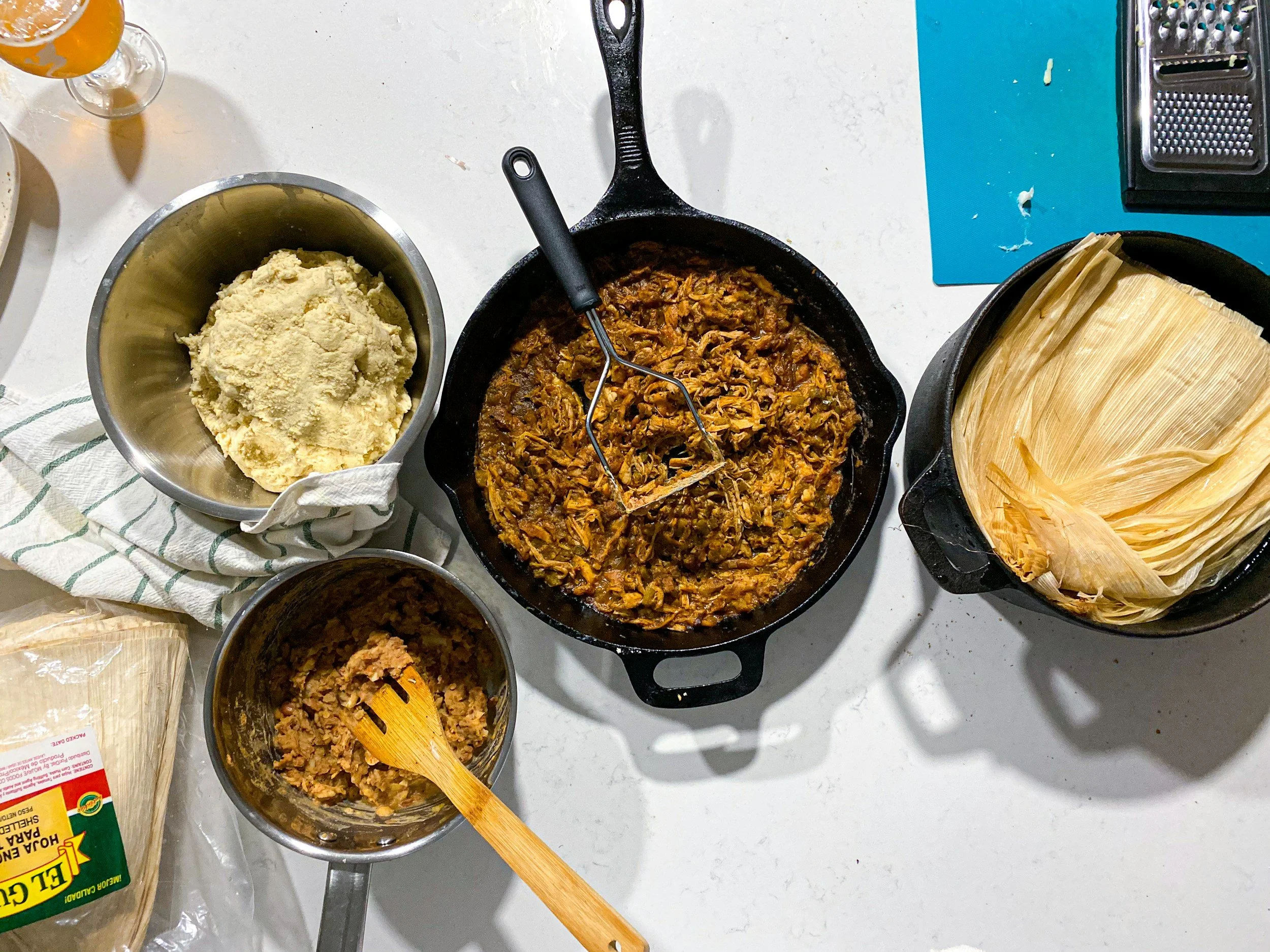
El Salvador Restaurant (2316 S. 6th St., Lincoln Village) is one of Wisconsin's only dedicated Salvadoran restaurants, opened by Conchita Arias in 2002. The pupusa revuelta — stuffed with cheese, pork, and beans — goes for under three dollars. Salvadoran tamales here are wrapped in green leaf rather than corn husk, a subtle but meaningful distinction from their Mexican counterparts. The New York Times mentioned it in their "36 Hours in Milwaukee" feature.
Caribbean and African flavors that surprise
Milwaukee's Puerto Rican food scene is thriving. Sabor Divino (3300 W. Lincoln Ave., with a second location in Kenosha) is the creation of Giovany Rodriguez, who started with a food truck at 8th and Mitchell in 2019. After a serious accident shut them down temporarily, the family persevered and opened brick-and-mortar locations. Try the slow-roasted pork with guajillo chile sauce and amarillos. Santurce (3010 S. 10th St.) is named after owner Brenda Caraballo's home district of San Juan and serves jibaritos — sandwiches made with plantains instead of bread. La Caribeña (1704 S. Pearl St.) claims to be the only Dominican-Puerto Rican-Colombian restaurant in Milwaukee, run by three female chefs who host monthly domino tournaments.
Irie Zulu (7237 W. North Ave., Wauwatosa) fuses West African and Jamaican cuisines because of a beautiful personal story: owner Yollande Deacon came from Africa to attend Marquette's MBA program, and her husband is Jamaican. She hosts cooking classes every third Saturday. The braised oxtail, egusi spinach stew, and Ghana's Watchee are standouts. Immy's African Cuisine on the East Side started as a food truck at farmers markets and grew into a brick-and-mortar. Owner Immy Kaggwa, a Uganda native, serves egusi stew with fufu and vibrant jollof rice. Mobay Cafe in Walker's Point is named after Montego Bay, where the owner grew up. The braised oxtails melt in your mouth.
Blue Star Cafe (1619 N. Farwell Ave.) is one of Milwaukee's most meaningful restaurants. Owners Alia Muhyadin and Abdirizak Aden opened it in 2012 — Muhyadin fled Somalia's civil war in the 1990s. PBS featured her journey. The name "Blue Star" was chosen by their teenage son; the blue Somali flag hangs on the wall. Sambusas arrive flaky and filled with ground meat, served with spicy basbaas sauce. Every meal comes with complimentary mango juice or chai tea.
Alem Ethiopian Village (307 E. Wisconsin Ave.) is Milwaukee's premier Ethiopian dining destination, where owner Mulu Habtesilssie personally explains dishes and their cultural significance. Hmong Fusion inside the massive 61,924-square-foot Hmong Town Market on Appleton Avenue is a cultural immersion — ask for the larb "made bitter" for authentic Hmong preparation, and explore the market's produce, clothing, and cultural goods while you're there. Shah Jee's, in the basement of a downtown office building, has been serving world-class Pakistani curry at bargain prices since 1995. Shahrazad, founded in 1993, remains Milwaukee's only Persian restaurant, with over 30 years of freshly grilled kebabs over saffron rice. Taqwa's Bakery & Restaurant (4651 S. 27th St., Greenfield) serves Palestinian and Jordanian food — don't miss the Friday special Jordanian mansaf (lamb in fermented yogurt sauce).
Milwaukee also has a growing Rohingya refugee community — one of the largest in America. Khan Aseya in Lincoln Village, known as "Mom's Kitchen," serves Burmese-Rohingya cooking alongside Myanmar Shop, an adjacent Asian grocery. The nasi lamek (coconut rice with fried anchovies, roasted peanuts, and sambal chili paste) reflects the family's Malaysian-Burmese roots. Taste Amir's Roti started as a food truck in 2020 by a Rohingya family and expanded to a brick-and-mortar.
The SapSap story deserves its own spotlight
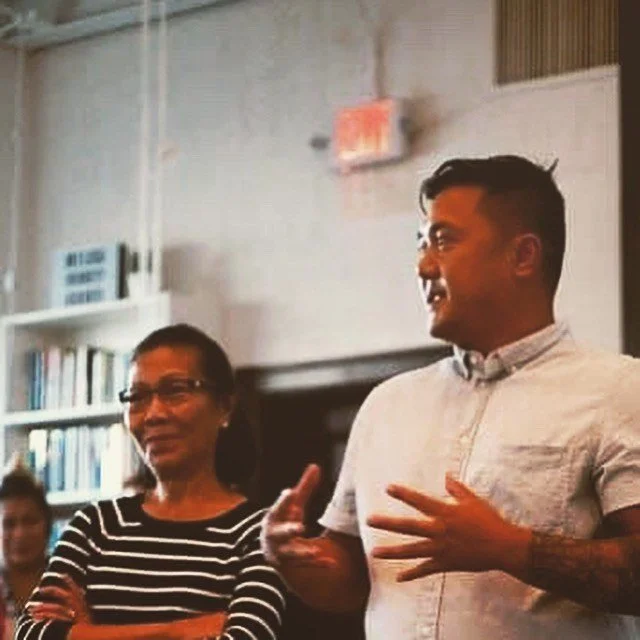
Photo via SapSap on Facebook
SapSap is one of the most compelling food stories in all of Wisconsin. Owner Alex Hanesakda was born in a Thai refugee camp after his family fled Laos during the Secret War. His father fought alongside American soldiers and later suffered from PTSD.
After his father passed, Alex started recreating his dishes as a way of coping. "SapSap" means "delicious delicious" in Lao. What began as pop-ups grew into a movement — the PengPeng initiative provides free meals to veterans and hungry community members, distributing over $10,000 in food to veterans in 2021 alone.
His Mamma's Eggrolls are a competition-winning recipe, and the fish sauce–salted caramel brownies are unforgettable. SapSap has operated from a food truck, a Mount Pleasant brick-and-mortar (now closed), and Zócalo Food Park in Milwaukee — check social media for current pop-up locations.
Madison’s incredibly diverse scene
Madison's global food scene is concentrated along a few walkable corridors — Williamson Street ("Willy Street"), State Street, and Atwood Avenue — making it an ideal day-trip eating destination. The city benefits from UW-Madison's international population, one of the largest Hmong/Lao communities in the country, and a progressive food culture that supports independent restaurants.
Himal Chuli (318 State Street) holds a genuinely historic distinction: when it opened in 1986, it was the first Nepalese restaurant in the United States. Founded by Bishnu and Krishna Pradhan (Krishna was a UW lecturer), the tiny 40-seat restaurant became a nearly four-decade institution. It closed December 31, 2025, but Himali Chulo is set to reopen in the same space, run by grandson Ashim Malla. Son Rajan Pradhan went on to open Ama on Williamson Street, which Isthmus called "a stunner" — a modern continuation of the family's pioneering Nepali legacy.
Little Tibet on East Johnson Street is extraordinary. It started as Madison's first Tibetan food cart in 2016 and grew into a full restaurant plus a separate market and cafe on Sherman Avenue. Owned by the Tibetan family of Nomgyal Ponsar and brothers Tharten Tsering and Thinley Tenzing, it serves rare Bhutanese dishes you'll struggle to find anywhere else in America: ema datshi (the national dish of Bhutan — a stew of chilies and cheese) and shakam datshi (made with homemade beef jerky simmered in gouda and blue cheese with Thai chilies). The décor includes hand-carved arts and murals by family members, and the back patio features colorful Tibetan prayer flags. A sign by the window reads: "If this food and space brought you comfort today, may that comfort ripple outward."
Buraka (1210 Williamson St.) has been a Madison Ethiopian institution since 1992. Owner Markos Regassa immigrated from Ethiopia in the 1980s, earned a UW business degree, and after receiving too many job rejection letters, noticed the food carts on Library Mall and decided to start cooking. He taught himself from memory — watching the women in his family cook daily. Named after his great-grandfather, "Buraka" means "joy and contentment" in the Oromo language. His Friday fish fry features cod in berbere-spiked batter — a Wisconsin classic, Ethiopian style.
Lao Laan-Xang (two locations on Williamson and Atwood) has been family-owned since 1989, making it Wisconsin's first Lao restaurant. The squash curry was named one of the "30 Plates that Define Madison" by the Wisconsin State Journal. Ahan, a newer Lao restaurant on Williamson Street, has won multiple "Best Southeast Asian" awards and represents the next generation of Lao cuisine with a more elevated, modern approach. Bandung on Williamson Street is one of the few Indonesian restaurants in the entire Midwest — try the Indo Mac with housemade tempeh.
La Taguara (two locations) brought Venezuelan food to Wisconsin for the first time in 2013. Owner Jeykell Badell adapted recipes directly from his mother. The patacón pisao — ground beef and condiments sandwiched between slabs of fried green plantain — requires napkins. Many dishes are naturally gluten-free since Venezuelan cuisine relies heavily on corn flour. Paul's Pel'meni on Gorham Street is a tiny, cult-favorite late-night spot serving nothing but Russian dumplings with various sauces — and that's all you need. Finca Coffee on Rimrock Road connects Wisconsin to El Salvador through both handmade pupusas and direct-trade coffee purchased straight from Salvadoran farmers.
Brothers Cafe & Restaurant is Madison's Somali restaurant, where the malawax roll with chicken — a lightly sweet Somali pancake packed with grilled chicken, onions, and peppers — was called "a revelation" by the Wisconsin State Journal. Kabul Afghan Cuisine on State Street has served Afghan food for over 40 years, and Kingdom African Restaurant in the Northside Town Center serves African fusion dishes with a charming Wisconsin touch: Babcock Hall ice cream (a UW-Madison classic) for dessert. Les Délices / Awa's Kitchen on Atwood Avenue is run by Awa Sibi from the Ivory Coast, whose story of resilience — leaving her son behind, escaping an abusive relationship, and rebuilding from a shelter — makes every bite more meaningful.
Wausau and the Fox Valley: Wisconsin's Hmong food heartland
Wisconsin has the third-largest Hmong population in the United States (after California and Minnesota), and Wausau is the epicenter. The city's 3rd Avenue corridor is a must-visit for anyone interested in Hmong cuisine, and Travel Wisconsin published a dedicated feature on the scene in late 2025.
Hmong Eggrolls (932 S. 3rd Ave., Wausau) is run by owner Phoua Xiong and offers over ten varieties of eggrolls stuffed with shredded cabbage, carrots, and various meats, plus pineapple fried rice, Hmong stir fry with roasted pork belly, and sesame buns you should get in the morning. (Note: the restaurant announced a temporary closure in March 2026 — confirm reopening before visiting.) Yummy Deli Hmong Cuisine (1205 Merrill Ave.) is a small family-run spot known for the most authentic pho in the area, purple sticky rice, and Hmong sausage. Jade Panda Filipino Fusion just south of Wausau opened in 2024 as a tribute to owner John Greene's Filipino heritage — the lumpia stuffed with cheese curds is a Wisconsin-Filipino crossover that shouldn't work but absolutely does.
In the Fox Valley, Mai's Deli in Appleton is beloved for legendary stuffed chicken wings, and GingeRootz Asian Grille (also Appleton) features Filipino-influenced dishes alongside Hong Kong-style cuisine — the Crystal Shrimp in creamy sauce is the signature. Manila Resto in downtown Oshkosh is one of Wisconsin's few Filipino restaurants, opened by first-generation Filipino American Marlo Ambas, who shares his mother's recipes and hosts live music on weekends. The crispy pata (pork leg, moist inside and shatteringly crispy outside) is a showstopper.
Green Bay, Door County, and the lakeshore
SaBaiDee Cafe (1730 S. Ashland Ave., Green Bay) is a family-owned Lao restaurant opened by Jenny and Ken Thammavong. "SaBaiDee" means "hello" in Laotian. Jenny's parents were born in Laos, and her mother ran a food booth there before the family immigrated. The raw laab with sticky rice and house-grown herbs (lemongrass, kaffir lime, holy basil) are transporting. Reviewers call the pad Thai "the best in Green Bay, hands down." Check social media for limited hours. Mi Salvador Pupusaria (1620 Lime Kiln Rd., Green Bay) is a family-run Salvadoran spot where the pupusas taste "just like homemade ones from El Salvador," and Goly & Eve Puerto Rican Kitchen brings Caribbean platters to downtown Packers country.
The most unexpected find in this entire guide may be Kinara Urban Eatery in Sturgeon Bay — Door County's only Indian restaurant, hidden inside a gas station. Owner Archana Patel, from Gujarat, India, makes all curries from scratch with no canned ingredients. She sources lamb from Strauss Meats, chicken from Waseda Farms, gets turmeric direct from India ("the darker the better — that means it's fresher"), and drives to Green Bay and Chicago for spices. "I didn't want a restaurant," she told a local paper. "But I love to cook." She started with a couple Indian dishes alongside grab-and-go fare, but customers demanded more. Now it's rated 4.7/5 on TripAdvisor and called "hands down the best restaurant in Sturgeon Bay, possibly Door County." The lamb kati roll — naan wrapped around spiced lamb — is a unique preparation worth the drive.
In Sheboygan, Cocina Mi Familia (1423 Union Ave.) is the highest-rated Mexican restaurant in the city, and Union Asian Market serves prepared Hmong food alongside Southeast Asian groceries in a space that doubles as a cultural experience.
Western Wisconsin has its own gems
Hmong's Golden Egg Rolls in La Crosse has been featured on the Food Network and won "Best of La Crosse." The owners — Hmong immigrants from Laos — proudly defend their authenticity: "Our recipes are our actual family's recipes." La Crosse has one of Wisconsin's largest Hmong populations. Mimi's Kitchen, also in La Crosse, was opened by a Hmong family that immigrated in 1988 as refugees from the Vietnam conflict.
In Eau Claire, Thai Orchid (203 N. Barstow St.) is run by Carrie Cha, whose parents were born in Laos. Her panang curry uses a "secret ingredient" that reviewers call possibly "the best panang curry I've ever had." Taqueria La Poblanita (2436 London Rd.) draws from owner Michael Nieves Flores's family recipes rooted in Puebla, Mexico. The chile rellenos earned this verdict from a 50-year Southern California resident: "the best he has ever had." The restaurant doubles as a grocery for authentic Mexican ingredients.
Planning your Wisconsin ethnic food road trip
A few practical notes for families. Most of these restaurants are extremely affordable — many entrées run under $15, and several (Shah Jee's, Bombay Sweets, Paul's Pel'meni) are under $10. Smaller family-owned spots often keep irregular hours, so always check social media or call ahead. Many of these restaurants are deeply family-friendly; places like Irie Zulu and Alem Ethiopian Village actively welcome kids and enjoy explaining their food and culture to curious diners.
For a single-day Milwaukee food crawl, you could hit Ni Burmese and Himalayan Yak on Kinnickinnic, swing to El Salvador Restaurant and Three Brothers on the South Side, stop at Hmong Town Market on the northwest side, and finish at Blue Star Cafe or Alem Ethiopian Village. For a longer road trip, the Milwaukee-to-Madison-to-Wausau triangle covers an extraordinary range of cuisines — Burmese, Serbian, Salvadoran, and Mexican in Milwaukee; Tibetan, Nepali, Ethiopian, Laotian, and Indonesian in Madison; and Hmong and Filipino in Wausau. Add a Door County detour for gas-station Indian food at Kinara, and you have one of the most rewarding food road trips in the Midwest.
Wisconsin's ethnic restaurants aren't just places to eat. They're living archives of refugee journeys, family recipes carried across oceans, and communities building new lives in unlikely places. Every restaurant on this list has a story — and every one of them is worth the drive.
This guide organizes some of Wisconsin’s most memorable pizza destinations by style. It is not intended to declare one indisputable champion. Instead, think of it as a Wisconsin pizza bucket list built for families, road-trippers and anyone who knows that “What kind of pizza?” is a much more useful question than “Who has the best pizza?”