

Replacing Your Home Windows: A Guide for the North Shore
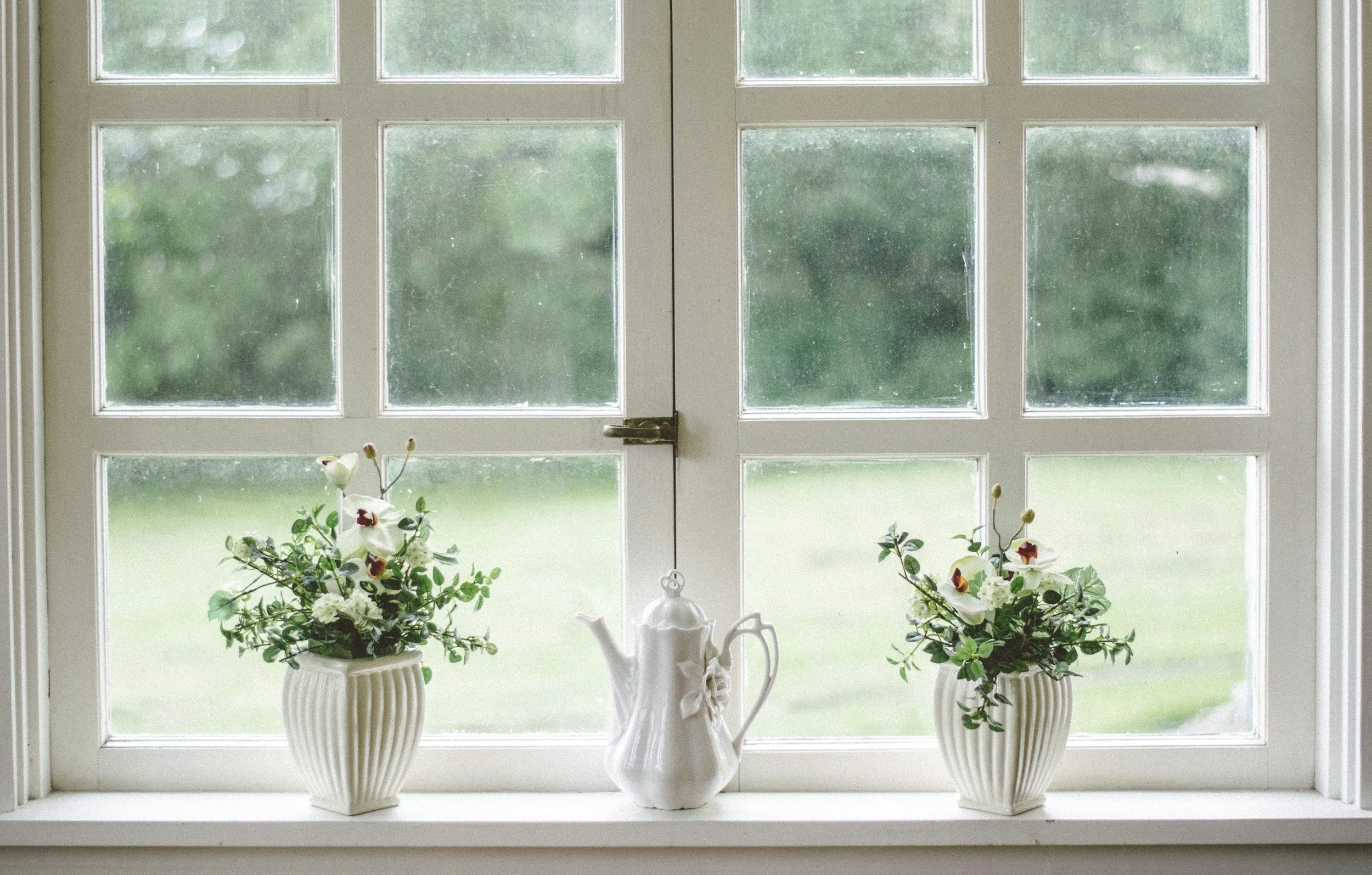
If you live in the North Shore, your home almost certainly falls into one of three buckets: a pre-1940 wood-sash classic (Tudor, colonial revival, bungalow, four-square, or Cape Cod), a mid-century ranch or split-level from the 1950s–1970s, or a more recent build with first-generation vinyl windows that are now 20–30 years old and failing. Each scenario calls for a different strategy.
Original early-1900s wood sashes, especially those visible from the street in Whitefish Bay's older blocks, are often better candidates for restoration plus interior or exterior storm windows than full replacement — both for energy reasons (the U.S. Department of Energy's Energy Saver guidance on storm windows notes that "installing interior or exterior energy-efficient storm windows that are rated by the Attachment Energy Rating Council (AERC) can produce similar savings but at about 1/3 of the cost") and to preserve wavy historic glass and architectural character. Mid-century and 1980s-era windows, by contrast, almost always benefit from outright replacement with modern triple-pane or high-performance double-pane units.
Local Window Replacement Companies Serving the Milwaukee North Shore
Weather Tight Corporation is the most frequently recommended Milwaukee-area window installer in our research, with an A+ BBB rating, 35-plus years in business, and over 34,000 reported customers across the nine-county Southeastern Wisconsin region. Their headquarters and showroom are in West Allis, and they routinely service Whitefish Bay, Shorewood, Glendale, Fox Point, and the rest of the North Shore. They focus on vinyl Restorations® windows in double-hung, casement, sliding, and bow/bay configurations, with up to 18 color and woodgrain options. Every Weather Tight installation comes with a fully transferable lifetime warranty, and they emphasize a no-pressure, free in-home consultation. The website is weathertightcorp.com. Customer feedback consistently praises the install crews (Brian, Robert, Luis, Luke, Keith, and others are named repeatedly) and the post-installation cleanup; the most common critique is that prices are not the cheapest in town.
Renewal by Andersen of Milwaukee operates from a Waukesha showroom at 1741 Dolphin Drive, Waukesha, WI 53186 (262-522-1001), and serves all of Southeastern Wisconsin including the entire North Shore. Their differentiator is the proprietary Fibrex® composite frame, which Andersen describes as twice as strong as vinyl, and a 20/2/10 limited warranty structure. Renewal by Andersen has been an ENERGY STAR Partner of the Year multiple times and was the official replacement window partner of the Green Bay Packers as of the 2025–2026 season. Reviews on HomeAdvisor average 4.3 stars; reviews are heavily positive on craftsmanship and "Signature Service," with the typical caveat being that pricing is at the premium end of the market. They are BBB-accredited (since May 2021) and offer custom-built double-hung, casement, awning, picture, bay/bow, and gliding windows — a strong fit for North Shore Tudor and colonial revival homes that need historically appropriate sight lines.
Pella Windows & Doors of Wisconsin runs the Milwaukee-area showroom at 19030 W. Bluemound Road, Brookfield, WI 53045 (262-783-6600), open Monday–Friday 8 a.m.–5 p.m. and Saturday 9 a.m.–noon. Pella's product line spans wood (Reserve, Architect, and Lifestyle Series), fiberglass (Impervia), and vinyl (250 and 350 Series), making them one of the few brands well suited to historically sensitive replications on Whitefish Bay or Shorewood houses where the homeowner wants real wood interiors with EnduraClad® aluminum cladding outside. The Pella Care Guarantee covers in-home replacement projects done through the local showroom. HomeTowne Windows & Doors in New Berlin is an independent Pella-certified contractor with strong reviews, an alternative path to Pella products with a separate installation team.
Window World of Southeastern Wisconsin is the regional Window World franchise, based at W188 N10707 Maple Road, Stop 2, Germantown, WI 53022 (262-703-9500). They specialize in affordable vinyl replacement windows (double-hung, casement, awning, sliders, bay/bow, garden) and explicitly serve Brown Deer, Glendale, River Hills, and the rest of the northwest North Shore. Window World's pricing model is among the most aggressive in the metro, and they emphasize American-made products with a lifetime limited warranty. The franchise was founded in 2000 and has earned consistent five-star Angie reviews.
Feldco Windows, Siding & Doors has a Milwaukee location at 401 W. Boden Street, Milwaukee, WI 53207 (414-259-1400), open seven days a week and accredited by the BBB since 2007. Feldco has been in business since 1976 across the Midwest and offers custom vinyl windows with multi-chamber construction and reinforced fiberglass frames, plus vinyl siding, doors, and roofing. Their average review score across more than 5,000 customer reviews is roughly 4.6 stars, with strong praise for sales reps Anthony Boris, Chris Kliner, and Michael Williams. Be aware that the BBB profile lists 89 complaints filed against the business over the past three years, so vet your specific salesperson and read the contract carefully.
Tight Seal Exteriors (Milwaukee) and HomeSealed Exteriors (the operator of homesealed.com, with Milwaukee-area service) are two locally owned exterior remodelers that have published transparent 2025 pricing guidance, install vinyl, fiberglass, and wood windows, and emphasize education over high-pressure sales — a good fit for North Shore homeowners who want a consultative experience.
Zen Windows Milwaukee (414-488-6967) markets itself on transparent, no-money-down pricing and a no-hard-sell consultation done largely by photos and email — appealing for busy families who don't want a multi-hour in-home pitch. They offer a "double lifetime" warranty and serve both historic East Side bungalows and newer North Shore subdivisions.
Window Nation has expanded into Milwaukee in recent years with aggressive promotions (often 30–50% off plus payments from $199/month), serving the entire metro from a regional operations base. They install bay, bow, double-hung, and casement vinyl windows and emphasize warranty service after installation.
For homeowners who prefer a smaller, family-owned local installer, Community Roofing & Restoration has served Milwaukee's North Shore since 1975 with windows, siding, and roofing, explicitly listing Shorewood, Whitefish Bay, Fox Point, and Glendale as primary service areas. Absolute Home Improvements is another locally owned, licensed-and-insured exterior remodeler operating since 2005, serving Shorewood, Whitefish Bay, Glendale, and the surrounding North Shore. Quality Window Specialists Inc. (qualitywindowspecialists.net) is a Milwaukee custom window dealer drawing on more than 40 years of business and 60 years of total home improvement experience; they install across the metro.
For wholesale and DIY/contractor purchases, Lisbon Storm, Screen & Door in Milwaukee is the Midwest's largest window, door, and screen repair department, an authorized Marvin, Crystal, Silverline, and Provia dealer, with an in-shop repair operation that handles broken sashes, fogged insulated glass, and storm window glass — invaluable for older Whitefish Bay homes where replacement parts for a 50-year-old Pella, Hurd, or Andersen window are needed. Milwaukee Windows (mkewindows.com) is a wholesale custom window supplier with shorter lead times than national competitors. Window Concepts of Milwaukee advertises virtual consultations and competitive pricing.
For historic restoration specifically — and this matters in Whitefish Bay's pre-1930 Tudor and colonial revival blocks, in Shorewood's older streets, and in the early-20th-century housing stock of River Hills — Thoughtful Craftsmen in Milwaukee (thoughtfulcraftsmen.com) builds custom wood storm windows in two-track and three-track designs that match original storms and screens. Their custom storm windows are approved by historic and design review boards and are eligible for state historic tax credits when applicable. Argo Glass & Windows (argowindowrepair.com), Apex Window Werks, and Home Glass Company in Milwaukee all handle wood sash repair, glazing putty replacement, sash cord and balance repair, and glass-only swaps for older homes where outright replacement would destroy the wavy historic glass.
Window Types For Older North Shore Homes
Double-hung windows — where both the top and bottom sash slide vertically — are the workhorse of the North Shore. They look right on Whitefish Bay's Tudors, Shorewood's American foursquares and bungalows, Fox Point colonials, and Cape Cods throughout the area. Most modern double-hungs tilt in for cleaning. They are versatile for ventilation and the easiest replacement style to find at every price point. The downside is that they have a meeting rail in the middle of the view and slightly more air infiltration than fixed or hinged styles.
Casement windows — hinged on the side and cranked outward — provide the tightest seal and the best ventilation per square foot of glass, making them excellent for kitchen windows, hard-to-reach openings, and side elevations of mid-century homes. They are not, however, traditionally appropriate on the front of a colonial revival or Tudor. Awning windows are top-hinged and tilt outward at the bottom; they shed rain and are common in basements, bathrooms, and as transoms above picture windows.
Picture windows are fixed (don't open) and offer the largest unobstructed view and the lowest U-factor for the same glass package — perfect for Lake Michigan views in Bayside and on the lakeward side of Fox Point and River Hills homes.
Sliding (gliding) windows open horizontally and are common on mid-century ranch homes and 1960s split-levels in Glendale and Brown Deer; they're easy to operate but have a meeting rail.
Bay and bow windows project outward from the wall to add interior space, light, and a visual focal point — bay windows have three panels (typically two flanking double-hungs or casements with a center picture window at 30° or 45°), while bow windows have four to six panels in a gentle curve. They are great in dining rooms and breakfast nooks of older homes but require careful structural work and proper roofing/insulation above.
Custom historic replications — typically in clad-wood with simulated divided lites (SDL) and historically accurate muntin profiles — are appropriate for any front-elevation work in Whitefish Bay's older blocks where the village's design guidelines emphasize stylistic consistency.
Window Materials: Cost, Durability, and Aesthetic Fit
Vinyl is the most popular choice in the Milwaukee market by a wide margin. Quality vinyl windows last 20–25 years, resist moisture (critical for Wisconsin freeze-thaw cycles), require essentially no maintenance, and are the most affordable category. Per Tight Seal Exteriors' published 2025 Milwaukee pricing, vinyl runs roughly $300–$700 per window installed; Heins Contracting's 2025 Wisconsin guide cites $250–$1,000 per window depending on energy package. Vinyl is appropriate aesthetically on most mid-century and newer homes, and on side and rear elevations of older homes; on the front elevation of a 1920s Tudor or colonial, however, vinyl can flatten architectural detail and sometimes runs into pushback from neighborhood design guidelines.
Wood windows are the most authentic visual match for pre-1940 North Shore homes and last 30–40 years with regular maintenance (staining, painting, caulking every several years). Tight Seal Exteriors prices wood at roughly $800–$1,500-plus per window installed in Milwaukee.
Clad-wood (real wood interior, aluminum or fiberglass exterior — Pella's EnduraClad, Andersen's Perma-Shield, Marvin's Ultrex-clad) is widely considered the best of both worlds for older homes: the warmth and stainability of wood inside, the maintenance-free durability of metal or composite outside.
Fiberglass windows ($500–$1,000+ per window installed in Milwaukee, $1,400–$1,800 according to Ridge Top Exteriors) expand and contract at almost the same rate as glass, making them dimensionally stable in extreme cold; Marvin Ultrex and Andersen Fibrex are leading examples. They can last 40-plus years and accept paint.
Composite windows like Renewal by Andersen's Fibrex® combine reclaimed wood fiber and thermoplastic polymer for strength and rigidity.
Aluminum is a poor choice for Wisconsin's climate; high thermal conductivity makes for cold frames and condensation issues, and it's now rare in residential applications.
Energy Efficiency: What Wisconsin Winters Demand
Milwaukee County and the North Shore sit firmly in ENERGY STAR's Northern Climate Zone, where heating loads dominate. As of ENERGY STAR Version 7.0 — finalized by the EPA on October 20, 2022 and effective October 23, 2023 — the prescriptive Northern-zone window criteria are a U-factor of ≤ 0.22 and a minimum Solar Heat Gain Coefficient of ≥ 0.17 — meaning for the first time, the Northern zone now has a minimum SHGC, because beneficial winter solar gain matters in our climate. The Northern zone also allows an "equivalent energy performance" path with slightly higher U-factor if the SHGC is correspondingly higher. In practical terms, hitting U ≤ 0.22 essentially requires triple-pane glass with two low-emissivity (low-E) coatings and argon or krypton gas fills between panes; standard double-pane low-E argon windows typically hit U-factors of about 0.27–0.30.
The U-factor measures rate of heat transfer through the entire window assembly — lower is better and is the most important number for North Shore homes. SHGC measures how much solar heat passes through; in our climate you want it on the higher side (around 0.25–0.40) on south-facing windows to capture free winter heat, and you don't need to worry as much about solar heat gain for cooling because our cooling season is short. Visible Transmittance (VT) measures daylight admission and air leakage rates measure draftiness. Tight Seal Exteriors notes that high-performance glass packages (low-E + argon) typically add $50–$150 per window but save 15–30% on energy compared to base double-pane units. Triple-pane windows cost roughly 30% more than double-pane but reduce heat loss by another 30%, with a payback period in Wisconsin of about 8–12 years per Heins Contracting. Tight Seal's local guidance is to refuse anything with a U-factor above 0.35 in our climate.
What Window Replacement Costs in the Milwaukee Area
The honest answer is that prices in the Milwaukee market vary by a factor of seven between the cheapest and most expensive vendors. Tight Seal Exteriors, writing in May 2025, cites a range of $200 to $1,500-plus per window in Milwaukee. Clear Home Projects' 2025 local guide gives a more realistic working range of $350–$2,800 per window installed, depending on frame material, glass package, and whether the project is an insert or full-frame replacement; their typical whole-home figure (8–15 windows) is $6,000–$18,000.
Heins Contracting's 2025 Wisconsin numbers are $300–$2,500 per window and add a key observation: professional installation labor alone runs $620–$949 per window in 2025, and they recommend budgeting 30% above the initial estimate for hidden costs (rotted sills, non-standard openings, lead-safe work, permit fees). Northern Generations cites $200–$1,200 per window and $3,000–$10,000-plus for a complete house. Window Concepts of Milwaukee notes labor is roughly $40–$50 per hour per person, with extra costs in older homes for rotted wood frames, water-damaged beams, and structural support repair.
The single biggest factor that swings price within Milwaukee is whether you choose insert (pocket) replacement, where the existing frame and trim are kept and only the sash and inner frame are replaced, versus full-frame replacement, where everything down to the studs is removed and a new construction window is installed; full-frame can add $500-plus per window. Pricing also drops 15–20% per window when you do the whole house at once, because installers are already mobilized. Milwaukee labor rates trend slightly higher than the national median because of Wisconsin's union construction market.
Wisconsin and Milwaukee-Area Rebates, Tax Credits, and Incentives in 2026
The federal Energy Efficient Home Improvement Credit (Section 25C), which provided up to 30% of cost capped at $600 per year for ENERGY STAR Most Efficient windows and skylights, expired for any property placed in service after December 31, 2025, under the One Big Beautiful Bill Act (Public Law 119-21, signed July 4, 2025). 26 USC §25C(i) reads: "This section shall not apply with respect to any property placed in service after December 31, 2025." The Arnold & Porter July 2025 advisory ("From IRA to OBBBA") similarly confirms: "Section 25C (Energy Efficient Home Improvement Credit) and Section 25D (Residential Clean Energy Credit) will terminate on December 31, 2025." If you ordered windows in 2025 but they were not installed and operational by December 31, 2025, you cannot claim the credit on your 2025 return. There is no federal tax credit for replacement windows for 2026 installations.
Focus on Energy is Wisconsin's statewide energy efficiency program, funded by ratepayers of the participating utilities (We Energies, Alliant Energy, Madison Gas and Electric, Wisconsin Public Service, Xcel Energy Wisconsin, and most cooperatives and municipal utilities). Focus on Energy explicitly does not offer a standalone rebate for replacement windows in 2026. Their official customer-support FAQ states verbatim: "No, at this time Focus on Energy does not provide any rebates for windows or doors. Despite common claims, there is typically not much energy saved from replacing windows. Customers commonly mistake drafts coming from around windows as a sign it is time to replace the whole window assembly, but most of the time drafts can be eliminated (and energy saved) by doing some air sealing around the window casing." So if a contractor tells you they'll get you a Focus on Energy rebate of "$50–$100 per window," that's incorrect — disregard those claims.
What you CAN get is window inclusion in Focus on Energy's HOMES (Home Efficiency Rebates) program, the IRA-funded whole-home rebate administered by Focus on Energy from Wisconsin's $149 million federal allocation. Per Focus on Energy's official IRA Home Energy Rebates page: "As part of the Inflation Reduction Act (IRA), Wisconsin has been allocated $149 million for Home Energy Rebates. Focus on Energy was chosen by the Public Service Commission of Wisconsin to deliver IRA Home Energy Rebate Programs." To use HOMES, you must hire a Focus on Energy IRA Registered Contractor, complete a professional energy assessment before work begins, and demonstrate at least 20% modeled energy savings; ENERGY STAR appliances, windows, doors, and skylights are eligible only as supplementary measures alongside core upgrades like insulation and air sealing or ENERGY STAR HVAC and water heating equipment. The 2026 HOMES tiers, per focusonenergy.com/ira-homes, are: For modeled savings of 20–34%, households below 80% of Area Median Income receive 100% of project cost up to $5,000, households between 80% and 150% AMI receive 50% up to $2,000, and households above 150% AMI receive 50% up to $1,500. For modeled savings of 35% or greater, households below 80% AMI receive 100% of project cost up to $10,000, households between 80% and 150% AMI receive 50% up to $4,000, and households above 150% AMI receive 50% up to $3,000. The companion HEAR (Home Electrification and Appliance Rebate) program covers heat pumps, electric panels, insulation, and air sealing for households at or below 150% AMI, with up to $14,000 in rebates per home address — windows are not directly eligible, but bundling HEAR-funded electrification work with HOMES-funded window replacement can be a powerful combination if you qualify.
We Energies does not run a separate window rebate; like the other major investor-owned utilities in Wisconsin, they direct customers to Focus on Energy. Focus on Energy did historically run a "25 percent off purchases of up to 15 low-E storm windows" promotion for customers of participating utilities — if storm windows on a historic home make sense for you, check focusonenergy.com to see whether that storm-window promotion is active in any given quarter of 2026. The Wisconsin Historic Tax Credit (administered by the Wisconsin Historical Society and Wisconsin Department of Revenue) can offset the cost of historically appropriate window restoration or replication on income-producing properties or designated historic homes, and some custom storm window installations qualify.
Permits and Historic District Considerations
Whitefish Bay explicitly requires a building permit for window replacement: per the village's permit guidance and confirmed by local installer Infinity Exteriors, "if you own a home or business in Whitefish Bay and want to replace your windows you will need to get a building permit approved before starting any work." Failure to permit results in a 4× permit fee (and potentially 6× for work started before permit issuance). Applications go through the Whitefish Bay Building Services Department at 5300 N. Marlborough Drive (414-962-6690). Beyond the permit itself, Whitefish Bay's adopted Single-Family and Two-Family Residential Design Guidelines explicitly address windows as one of the architectural elements that should be "stylistically consistent" — meaning if you're replacing wood-frame windows on a Tudor revival with vinyl on a visible elevation, you may face design review pushback, and the guidelines apply to "all additions and remodels requiring a building permit." The guidelines reference McAlister's A Field Guide to American Houses by reference for style determination.
Shorewood is more permissive: per the village's published guidance, "if you're planning to replace your existing windows with windows of the same size, the Village of Shorewood does not require you to get a permit." Changing the size of a window opening or adding an egress window does require a permit, with a $60 minimum fee, processed through the Planning & Development Department at 3930 N. Murray Avenue (414-847-2640). Shorewood also has a separate ordinance for designated historic properties (those on the National Register or State Register of Historic Places located within the village), which requires a permit before any enlargement, alteration, or modification.
Fox Point follows the Wisconsin Uniform Dwelling Code statewide permit framework — 2015 Wisconsin Act 211 requires online application through the state's electronic permit system; the village's building inspector can be reached at 414-247-6622. Fox Point's fee schedule includes a $75 Wisconsin uniform building permit seal plus per-$1,000 valuation fees. Glendale also operates under Wisconsin Act 211 and requires online permit applications; residential permit guidance is at glendale-wi.gov. Brown Deer's permit office is at 4800 W. Green Brook Drive and the village explicitly requires that "plumbers, electricians, and HVAC contractors must all be licensed by the State of Wisconsin, and construction contractors must be certified by the State of Wisconsin to perform work on your home." Bayside and River Hills follow the same state framework and contract with the North Shore Fire Department for inspection coordination on certain trades.
A reputable contractor will pull permits on your behalf as a standard part of the contract. If a contractor tries to skip permits or asks you to pull a homeowner permit on a job they are doing, treat that as a major red flag — Wisconsin DSPS code SPS 305.31 requires permit-pulling contractors to hold a Dwelling Contractor certification (held by the business) and to employ at least one person with a Dwelling Contractor Qualifier certification (held individually).
What to Look for in a Contractor (Wisconsin Specifics)
The single most important Wisconsin-specific credential is the Dwelling Contractor certification issued by the Wisconsin Department of Safety and Professional Services (DSPS). To pull a building permit on a one- or two-family home in Wisconsin, the contracting business must hold a Dwelling Contractor certification, and at least one individual at that business must hold a Dwelling Contractor Qualifier certification (which requires a 12-hour initial qualifier course and 12 hours of continuing education every two years). Verify both at the DSPS LicensE portal before signing a contract. Wisconsin contractors must also carry either a $25,000 surety bond or liability insurance covering $250,000 per occurrence, plus workers' compensation if they have employees. Beyond state credentials, ask for and verify: BBB accreditation and rating (Weather Tight, Renewal by Andersen of Milwaukee, and Feldco are all BBB-accredited); manufacturer certifications such as Andersen Certified Contractor, Pella Certified Contractor, Marvin Authorized Replacement Contractor, or Renewal by Andersen Signature Service; Fenestration and Glazing Industry Alliance (formerly AAMA) installation certification; written warranties covering both the windows (typically 10–20 years for vinyl, 20-plus years for fiberglass, lifetime for premium brands like Andersen Fibrex and Pella) AND labor (a separate workmanship warranty of at least 2 years, ideally 5–10 years or lifetime); Google reviews from named installers (the most reliable Milwaukee-area companies' reviews repeatedly name specific install crew members); and a written, itemized estimate that is good for at least 30 days — the ENERGY STAR program specifically warns "try to avoid same-day signing specials" because reputable companies will give you a cost estimate that is good for at least 30 days. Confirm any contract clearly states "the windows to be installed in the home are ENERGY STAR certified for the installation location" along with the exact U-factor and SHGC of each window.
For pre-1978 homes — which describes the majority of North Shore housing — your contractor must also be lead-safe certified under both the federal EPA Renovation, Repair and Painting (RRP) Rule and Wisconsin's Lead-Safe Renovation Rule (Wis. Admin. Code ch. DHS 163), administered by the Wisconsin Department of Health Services. Window replacement is specifically called out as a regulated activity that disturbs paint and requires lead-safe work practices. The Wisconsin DHS rule "specifically prohibits renovators from… opting out, even at a homeowner's request and even if no children are currently living there" and explicitly applies to "window replacements, even if the windows to be removed and replaced are vinyl (lead-based paint can still be present on window casings, which are not usually replaced and can be disturbed during future window replacements)." Penalties for using uncertified subcontractors are real — per a Testudo (an EPA-accredited Wisconsin training provider) review of DHS enforcement, in 2013 DHS fined one Wisconsin window installation firm a total of $14,104 for using uncertified subcontractors on multiple projects. Verify lead-safe certification at dhs.wisconsin.gov/lead.
Timing: When to Replace Windows
The conventional wisdom that you must replace windows in summer is wrong. Late spring (April–May) and early fall (September–October) are the ideal windows in Wisconsin: temperatures of 50–70°F let sealants and foam expand and cure properly, lead times are shorter than summer peak, and you finish before winter heating season. Summer (June–August) is peak demand season; expect 4–8 week lead times and prices that typically run 20–25% above March pricing per Heins Contracting. Winter is actually the slowest season for installers, which means faster scheduling, better pricing, and the ability to immediately feel which old windows were leaking the worst — professional installers work one window at a time in winter to minimize heat loss, and a well-equipped crew can usually swap a single window in 30–60 minutes. Most window manufacturers quote 4–6 week production lead times for custom-built replacement windows; Pella, Andersen, and Marvin can run longer (8–12 weeks for specialty colors, divided lites, or odd sizes). The actual install on a typical North Shore home is one to three days for 8–15 windows. A pro tip from local Wisconsin installers: book your spring installation in February when contractors are eager for work after the winter lull, and lock in pricing before seasonal demand kicks in.
Special Considerations for Older and Historic Homes
The North Shore has an unusually high concentration of pre-1940 housing, and not every old window should be replaced. Before scheduling a full replacement, do a five-minute draft check: on a windy day, hold a thin tissue near the meeting rail, side jambs, and sill of each window. If air movement is happening at the perimeter (around the trim) rather than through the sash, the issue is air sealing, not the window itself. Per the U.S. DOE Energy Saver "Storm Windows" page, AERC-rated low-e storm windows "can produce similar savings but at about 1/3 of the cost" of full replacement, and the same DOE page notes they "act as an air sealing measure and can reduce overall home air leakage by 10% or more." For historic Tudors, colonial revivals, and bungalows with original wood sashes, the preservation-best-practice sequence is: lead-safe paint stabilization, sash cord and balance repair, reglazing of loose panes (replacing dry, brittle window putty with new oil-based putty), bronze weatherstripping at the meeting rail and jambs, exterior caulking at the trim, and addition of a low-profile interior or exterior storm window — only replacing units that genuinely fail repair standards. This approach preserves wavy historic glass (a defining character feature), keeps sash depth and muntin profiles intact, and avoids the "flattened" look that thick modern replacement-window frames often impose on a 1920s opening. Hayes Windows, Thoughtful Craftsmen, Lisbon Storm/Screen & Door, Argo Glass & Windows, Apex Window Werks, and Home Glass Co. are all Milwaukee-area resources for this kind of preservation work. If you do replace, custom-sized clad-wood windows with simulated divided lites and historically accurate muntin profiles (Pella Reserve, Marvin Ultimate, Andersen 400/A-Series, or Kolbe Heritage Series) will integrate best.
Lead paint matters in any home built before 1978, which covers the vast majority of homes in Whitefish Bay, Shorewood, the older sections of Glendale and Fox Point, and parts of River Hills. By Wisconsin DHS estimate, roughly one-quarter of Wisconsin homes were built before 1950. Insist on a lead-safe certified renovator (the firm carries a state-issued certification card, and the on-site supervisor carries an individual Lead-Safe Renovator certification), and review the EPA "Renovate Right" pamphlet that the contractor is legally required to give you no earlier than 60 days before the start of work.
Questions to Ask Contractors Before Signing
Before you sign anything, ask: Do you hold a Wisconsin Dwelling Contractor certification (business) and a Dwelling Contractor Qualifier certification (individual)? Are you BBB-accredited and what is your current rating? Are you lead-safe certified under Wisconsin DHS 163 and the federal RRP Rule, and can you produce both certifications before work starts? Are your installers W-2 employees of your company or subcontractors? (Reputable Milwaukee-area firms generally answer "employees.") What manufacturer certifications does your crew hold? Will you pull all required permits in Whitefish Bay/Shorewood/Fox Point/etc. on my behalf, and is the permit fee included in the quoted price? Will the contract specify that each window installed is ENERGY STAR certified for the Northern Climate Zone and list the exact U-factor and SHGC? What is the written workmanship warranty in years, and is it transferable if I sell the home? What is the manufacturer's product warranty, and is it transferable? Can you provide three local references on similar-vintage homes that I can call (and ideally visit)? What is your standard deposit (Wisconsin convention is roughly 10–33%)? What is your remediation plan if rotted sills, lead-painted casings, or non-standard openings are discovered after demolition begins, and what hourly rate or unit cost applies to those change orders? What is your lead time from contract signing to installation completion?
Red Flags to Watch For
Door-to-door sales and same-day signing pressure are the classic warning signs and ENERGY STAR's program guidance explicitly says "try to avoid same-day signing specials." Demands for 50% or more upfront deposit are not standard in the Milwaukee market — most reputable local installers ask for 10–33% at signing, with the balance due at completion or split into milestones. No physical showroom, vague answers about Wisconsin Dwelling Contractor certification, refusal to put U-factor and SHGC in writing, and "lifetime warranties" with no written terms are all reasons to walk away. Be skeptical of "$189 installed" or unusually low per-window prices: per local installer HomeSealed Exteriors, "all windows seem nice on day one, but these are typically ready for replacement by year ten."
Watch for false claims about "Focus on Energy rebates" of specific dollar amounts per window — Focus on Energy does not currently offer such a rebate. Check the BBB Business Profile not just for the rating but for the number of complaints filed (Feldco has 89 over three years; Weather Tight and Renewal by Andersen of Milwaukee both have far fewer). Finally, the small-business attrition data is real — per smallbiztrends.com data cited by HomeSealed Exteriors, "nearly 70% of contractors fail in the first 5 years of business," so a contractor who has been in business under five years and lacks a physical Wisconsin showroom is a higher risk on warranty service.
Recommendations
1. If your home is pre-1940 with original wood sashes, start with restoration plus storm windows, not full replacement. Get a quote from Thoughtful Craftsmen for custom wood storm windows (eligible for Wisconsin historic tax credits if your home qualifies) and a sash repair quote from Lisbon Storm/Screen & Door, Argo Glass & Windows, or Apex Window Werks. Per the U.S. DOE, expect roughly one-third the cost of full replacement and similar energy savings. Threshold to escalate to full replacement: when more than 30–40% of sashes are structurally compromised (rotted rails, broken muntins, missing glazing) or when storm windows alone don't get you below your comfort threshold.
2. If your home is 1950s–2000s with failing aluminum, wood, or first-generation vinyl, do full replacement with ENERGY STAR-certified vinyl or composite. Get three written quotes — one from a national/regional brand (Renewal by Andersen of Milwaukee or Pella through HomeTowne), one from a local high-volume installer (Weather Tight or Window World of Southeastern Wisconsin), and one from a smaller local installer (Tight Seal, HomeSealed, or Community Roofing). Spec floor: U-factor ≤ 0.27 for double-pane and ≤ 0.22 for triple-pane, SHGC of 0.25–0.40, and an NFRC label on every unit. Threshold to upgrade from double-pane to triple-pane: if you live on a windward (typically west or north-facing) elevation, plan to be in the home 10-plus years, or are sensitive to drafts and noise.
3. To capture the only meaningful 2026 incentive money, pair your window replacement with a Focus on Energy HOMES whole-home project. Hire an IRA Registered Contractor (find one at focusonenergy.com), schedule a pre-installation energy assessment, and bundle attic insulation, air sealing, and HVAC work with the windows so the modeled savings exceed the 20% threshold (or, ideally, 35%). At 35%-plus modeled savings and household income above 150% AMI, you'd capture 50% of project cost up to $3,000; below 80% AMI, up to $10,000. Threshold to skip HOMES: if you have only 5–8 windows and no other major energy improvements planned, the rebate paperwork and assessment cost may not be worth it — go ahead with windows alone.
4. Schedule installation for April–May or September–October, contract by February if you want a spring slot, and require lead-safe certification documentation before work begins on any pre-1978 home. Pull permits as required by your village (mandatory in Whitefish Bay, optional for like-for-like in Shorewood, mandatory state-uniform process in Fox Point/Glendale/Bayside/River Hills/Brown Deer). Threshold to switch installers: any contractor who pressures you to skip permits, refuses to produce DSPS or lead-safe certifications, or won't put U-factor and warranty terms in writing.
5. Cap your deposit at 33%, demand a written 30-day price hold, and never sign on the day of the in-home consultation. If a salesperson cannot leave a quote that's good for 30 days, that's not a price problem — that's a sales-tactic problem.
Caveats
Pricing in this guide reflects 2025 published Milwaukee-area data and Wisconsin-wide 2025 contractor pricing; North Shore homeowners should expect to be quoted at the upper end of these ranges due to higher property values, more historic homes requiring custom sizes, and lake-proximity wind-load considerations in Bayside and Fox Point. Some of the per-window prices reported by national review aggregators (such as Today's Homeowner's "around $280 per window" figure for Whitefish Bay) appear unrealistically low for the actual Milwaukee installed market and should be treated with skepticism.
Rebate and tax-credit programs change frequently — Focus on Energy 2026 program details at focusonenergy.com supersede anything in this guide, and the $149 million HOMES allocation is a fixed pool that will be exhausted at some point with no replenishment mechanism. The federal Section 25C credit's expiration was a recent change (July 2025 legislation), and some contractors may still be advertising it in early 2026; verify current federal eligibility with your tax preparer or the IRS Energy Efficient Home Improvement Credit page.
BBB ratings, complaint counts, and Google review averages cited here are accurate as of research conducted in May 2026 but change continuously. Manufacturer warranty terms shift with each product line refresh; always read the actual current warranty PDF rather than relying on a salesperson's verbal summary. Finally, this guide is informational; specific permit requirements, design review thresholds, and historic district rules in your village can change, and you should always confirm current requirements with your village's building services department before contracting work.

Water pooling near your foundation? Here's a North Shore homeowner's guide to the best grading and drainage contractors in greater Milwaukee, plus real costs and what to ask before you sign.