

Bublr Bikes: Your Guide to Bike Share in Milwaukee
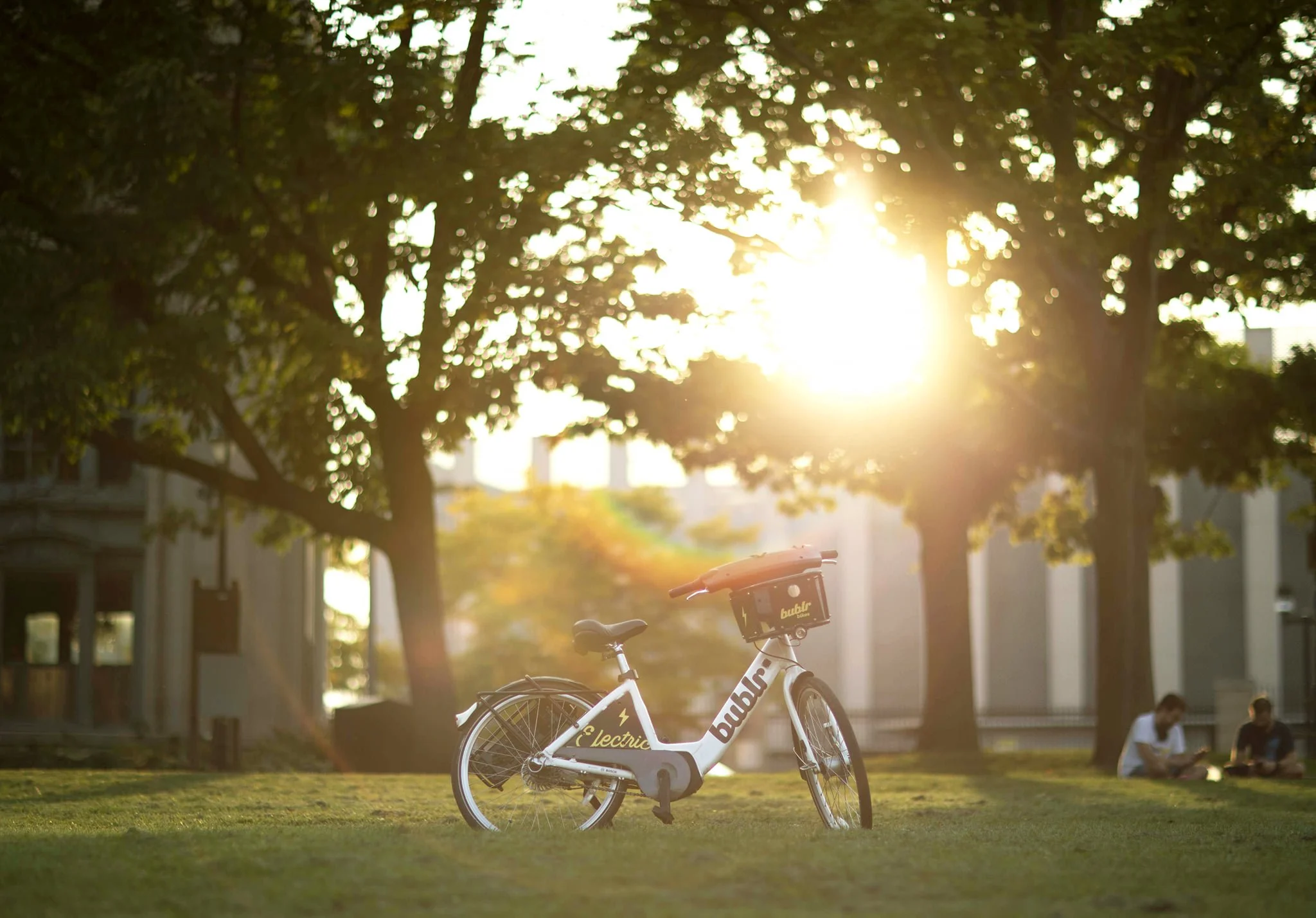
Bublr Bikes is Greater Milwaukee's nonprofit bike-share system — and it's in the midst of its biggest expansion ever. With over 100 stations across Milwaukee, Wauwatosa, and West Allis, the program connects riders to 135+ miles of trails, iconic lakefront views, and some of the Midwest's best urban neighborhoods. Launched in 2014 with just 10 stations and 50 bikes, Bublr (a nod to Milwaukee's beloved word for a drinking fountain) now offers classic pedal bikes, electric-assist e-bikes, and adaptive cycles — making it one of the most inclusive bike-share systems in the country. A $5.85 million expansion called Bublr 2.0 is doubling the system's footprint through 2027, adding 800 e-bikes and nearly 100 new stations across underserved neighborhoods.
How Bublr works, what it costs, and who runs it
Bublr Bikes is operated by Midwest BikeShare Inc., a 501(c)(3) nonprofit with a small team of six full-time staff, a board of directors, and seasonal support. The current Executive Director is Ted Chisholm, who took over in December 2025. The system runs on the BCycle platform — a Trek Bicycle subsidiary that powers bike-share programs in 43+ U.S. cities — meaning visitors from other BCycle cities can use their home pass in Milwaukee.
The system is station-based (docked), not dockless. Riders pick up a bike at any station and return it to any other station in the network. Three checkout methods are available: swiping a credit card at a station kiosk, unlocking via the BCycle mobile app (available on iOS and Android), or tapping a $5 RFID key fob that annual members can order by mail. The app shows real-time bike availability, battery levels on e-bikes, and directions to nearby stations.
Pricing is structured to serve everyone from tourists to daily commuters:
Pass Price What you get Single Ride $0.25/min Pay-as-you-go; $1 e-bike unlock fee 24-Hour Pass $24 Unlimited docking/undocking for 24 hours Weekender / VISIT Milwaukee Pass $25 3-day access, up to 120 min per trip 30-Day Pass $30/month Unlimited 60-min rides; $0.25/min overage Annual Pass $129/year Unlimited 60-min rides; no e-bike fee; optional key fob UWM Student Pass $8/year Same benefits as annual for enrolled students Access Pass Free For residents receiving FoodShare, WIC, Medicaid, or SSI — unlimited 60-min rides for a full year
A temporary $10 hold is placed on your card with any pass purchase. Each account can check out only one bike at a time. If a station is full when you try to return, use the app or kiosk "Station Full" option to get an extra 15 minutes to find another dock.
Where to find stations
Bublr currently operates 100+ stations across three municipalities: Milwaukee, Wauwatosa, and West Allis, with possible limited presence in Shorewood. No stations exist in Whitefish Bay or other northern suburbs. Roughly 80% of stations sit alongside MCTS bus stops, and 60% are near stops for The Hop streetcar, making Bublr a true "last-mile" transit connector.
Key station clusters include Downtown (Cathedral Square, Wisconsin Center, Fiserv Forum/Deer District, Central Library, Red Arrow Park), the Historic Third Ward (Milwaukee Public Market, Jefferson & Menomonee), the Lakefront (Discovery World, near the Milwaukee Art Museum), Brady Street/Lower East Side (Brady & Humboldt, Prospect & Brady), UW-Milwaukee (Student Union, Sandburg Hall, Golda Meir Library), Marquette University (16th & Wells), Bay View (Zillman Park at Kinnickinnic & Ward), and Riverwest (near Lakefront Brewery). The Milwaukee Intermodal Station — the city's Amtrak and intercity bus hub — also has a Bublr dock, making it easy to grab a bike straight off a train.
In Wauwatosa, stations include Hart Park (which also offers adaptive bikes). West Allis added eight stations in 2017 through a federal grant. Adaptive bikes are stationed at three parks: Estabrook Park, South Shore Park, and Hart Park.
The Bublr 2.0 expansion (summer 2025 through spring 2027) is the system's largest investment since launch. Funded by a $3.3 million federal TAP grant, an $830,000 city match, and an additional $1.7 million CMAQ grant, the project will add roughly 100 new stations and 800 e-bikes. New neighborhoods being targeted include Bay View, Lincoln Village, western Walker's Point, and Clarke Square — areas south and west of downtown that previously had sparse coverage. By May 2025, the system had already grown to over 200 dedicated bike docking points. The full interactive station map is at bublrbikes.org/map.
Four types of bikes, including a national first in adaptive cycling
Bublr's fleet includes four categories of bikes designed for different riders and needs.
Classic pedal bikes form the core fleet — light blue, step-through frames with upright seating, front baskets, built-in chain locks, dynamo-powered lights, and bells. They're intentionally sturdy and comfortable rather than fast. Electric-assist bikes use Trek motors that assist pedaling up to 15 mph. A button on the handlebar activates the motor. E-bikes carry a $1 unlock surcharge for non-annual members but are free for Annual and Access Pass holders. The Bublr 2.0 expansion is adding 500 new e-bikes in spring 2026 and 300 more in spring 2027, making electrics the fastest-growing segment of the fleet.
What truly sets Bublr apart nationally is its adaptive bike program, launched in 2019. Milwaukee became the first city in the United States to integrate adaptive bikes directly into a public bike-share system. The adaptive fleet includes side-by-side tandem tricycles (ideal for riders who are blind or have intellectual disabilities), single-seat upright tricycles (for elderly riders or those needing extra stability), and hand-crank tricycles for riders with lower-extremity disabilities. These are available at Estabrook Park, South Shore Park, and Hart Park.
The best rides: lakefront trails, beer gardens, and 135 miles of paths
Milwaukee's trail network is one of the great underappreciated cycling assets in the Midwest, and Bublr stations connect directly to most of it.
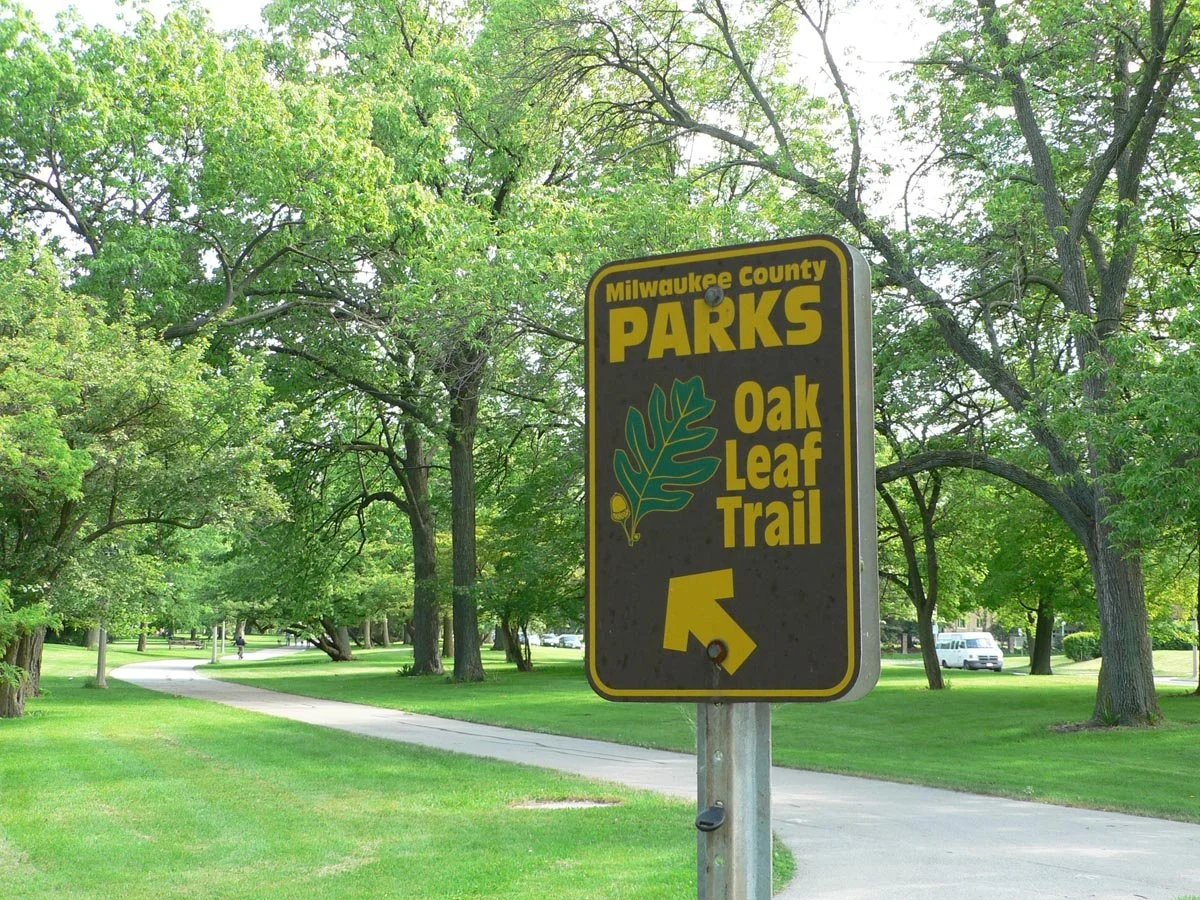
The Oak Leaf Trail is the crown jewel — a 135+ mile paved multi-use system encircling Milwaukee County across seven branch lines, two loops, and two connectors. No trail pass is required. The Lake Line runs roughly eight miles along the Lake Michigan shoreline from the Art Museum through Veterans Park, Bradford Beach, and up to Lake Park and the historic North Point Lighthouse — a flat, scenic out-and-back of about 16 miles that delivers Calatrava skyline views and open-water breezes with zero traffic lights. The Milwaukee River Line (14 miles) traces the river north from downtown through Estabrook Park and passes three beer gardens along the way. The South Shore Line (16 miles) runs through Bay View's quiet lakefront parks and is considered one of the system's most scenic stretches.
The Hank Aaron State Trail offers a 15.2-mile east-west route from Lakeshore State Park to the Milwaukee/Waukesha county line, passing the Harley-Davidson Museum, Three Bridges Park, American Family Field, and the State Fair grounds. It's mostly flat and free to use. The Beerline Trail (3.7 miles) threads through Riverwest and Harambee along a former freight rail corridor, ending near Lakefront Brewery. The Kinnickinnic River Trail (2.5 miles) connects the Harbor District with Bay View along a beautifully restored river corridor.
One important note for visitors: the Milwaukee RiverWalk is mostly off-limits to bikes. Posted signs prohibit cycling on many sections of this 3.1-mile pedestrian path, and stairs in some areas make it impractical. Ride adjacent trails (Beerline, Oak Leaf) to travel the same corridor on two wheels.
For a curated ride, try the Beer Garden Tour: start at the Estabrook Park Beer Garden, ride south on the Oak Leaf Milwaukee River Line through Hubbard Park Lodge's beer garden, continue to Juneau Park's beer garden, then finish at the lakefront — about 7.5 miles of riverside riding punctuated by local brews. Visit Milwaukee promotes this as a signature cycling itinerary.
The best neighborhoods to explore by Bublr include the Historic Third Ward (boutique shops, galleries, Milwaukee Public Market), Brady Street (bohemian cafes, Black Cat Alley murals), Bay View (craft breweries, Humboldt Park beer garden, South Shore Park), Walker's Point (food scene, LGBTQ+ nightlife, the National Bobblehead Hall of Fame), and Riverwest (cooperative businesses, community gardens, home of the annual Riverwest 24 community bike race).
Rules, safety, and what families need to know
Wisconsin has no mandatory helmet law for bicyclists of any age, and Bublr does not provide helmets with its bikes. The system strongly encourages helmet use and offers free helmets through its Savvy Cycling education classes, which also include a free 30-Day Bublr Pass. Families wanting helmets can bring their own or rent from Wheel Fun Rentals at Veterans Park, which offers professional fittings.
Age requirements are straightforward: riders must be at least 14 for classic bikes and at least 16 for e-bikes. For minors aged 14–17, a parent or legal guardian must accept the user agreement. No exceptions exist for younger children, even with parental supervision.
In Milwaukee, adults cannot ride bicycles on sidewalks — only children under 10 may do so when accompanied by an adult. Bicycles are legal vehicles under Wisconsin law and must follow all traffic rules: ride with traffic, obey signals, and use hand signals for turns. After dark, a white front lamp visible from 500 feet and a red rear reflector or light are required (Bublr bikes have built-in dynamo lights). Wisconsin's 3-foot passing law requires motorists to give cyclists at least three feet of clearance, and the state's dooring law protects cyclists from car doors opened into their path.
Seasonal patterns and winter riding
Bublr operates year-round, 24 hours a day, though winter brings modifications. Classic pedal bikes remain available through snow and cold, but e-bikes are typically removed from early December through mid-March. Lower-use stations — including all Wauwatosa and West Allis locations — may also close for winter. During snow emergencies or severe weather, the entire system can be temporarily suspended. Customer service runs 9 a.m. to 5 p.m. Central Time, with text and email support after hours.
This year-round commitment was a deliberate equity decision. When Bublr shut down entirely during its first winter in 2014–15, leadership decided that a true public transportation system couldn't go dark for four months. The system has stayed open every winter since late 2015.
Record ridership and a system that keeps growing
Bublr hit a milestone in 2023 with 107,498 total trips — its first time crossing 100,000 rides in a single year. The Access Pass program (free memberships for income-qualified residents) saw a 66% ridership increase in 2024, logging over 15,000 free rides compared to just 488 in 2022. UW-Milwaukee students, who pay just $8 per year, are the system's most active riders.
The April 2025 Veolia partnership added three new stations and 36 bikes (12 e-bikes and 24 classic) with corporate sponsorship. Bublr's new third-generation docks — sleek, freestanding black units manufactured locally by Connected Technology Solutions in Menomonee Falls — are more compact and modular than the original blue kiosk stations, allowing placement on narrower streets and in tighter spaces.
There is no indication of the program being threatened or replaced. On the contrary, federal, state, and city funding continues to flow, and the system enjoys strong political support.
How Bublr compares to other ways to ride Milwaukee
Bublr is Milwaukee's only bike-share system — no competing programs exist. But riders have alternatives worth knowing about.
Lime and Spin electric scooters launched permanently in May 2024 after three pilot studies. Scooters are dockless (park anywhere on sidewalks with four-foot clearance), cost about $1 unlock plus $0.40/minute, and logged a staggering 971,980 trips in 2024 — nearly ten times Bublr's volume. They're more expensive per ride but offer spontaneous, dockless convenience. Riders must be 18+. Scooter ridership continues to set records into 2026.
Wheel Fun Rentals at Veterans Park offers staffed, recreational bike rentals starting at $10/hour or $35/day, including cruisers, tandems, surreys, kids' bikes, and helmets. It's seasonal (roughly April through September) and best for families wanting a guided lakefront experience without per-minute pressure.
For regular commuters and residents, Bublr is far cheaper: an annual pass works out to roughly $0.35 per day, and the student pass is essentially free at $8/year. The Access Pass removes cost barriers entirely for low-income residents. Bublr's station-based model requires more planning than dockless scooters, but its integration with bus and streetcar stops makes it a genuine piece of Milwaukee's public transit puzzle — not just recreation.
Conclusion
Bublr Bikes occupies a unique niche in Milwaukee's transportation landscape: affordable enough for daily commuting, accessible enough for adaptive riders, and connected to one of the Midwest's most extensive urban trail networks. The Bublr 2.0 expansion will push the system past 200 stations and 800 e-bikes by 2027, reaching neighborhoods that have historically lacked cycling infrastructure. For families, the key considerations are the age-14 minimum, the lack of provided helmets, and the fact that the system rewards planning — knowing where stations are and timing rides under 60 minutes keeps costs near zero for members. Download the BCycle app, check the station map at bublrbikes.org/map, and start at the lakefront. The 16-mile Lake Line out-and-back, with the Calatrava wings shrinking behind you and Lake Michigan stretching to the horizon, is one of the best urban rides in America.
If it feels like every trip around Milwaukee’s North Shore involves construction cones lately, there’s a reason.