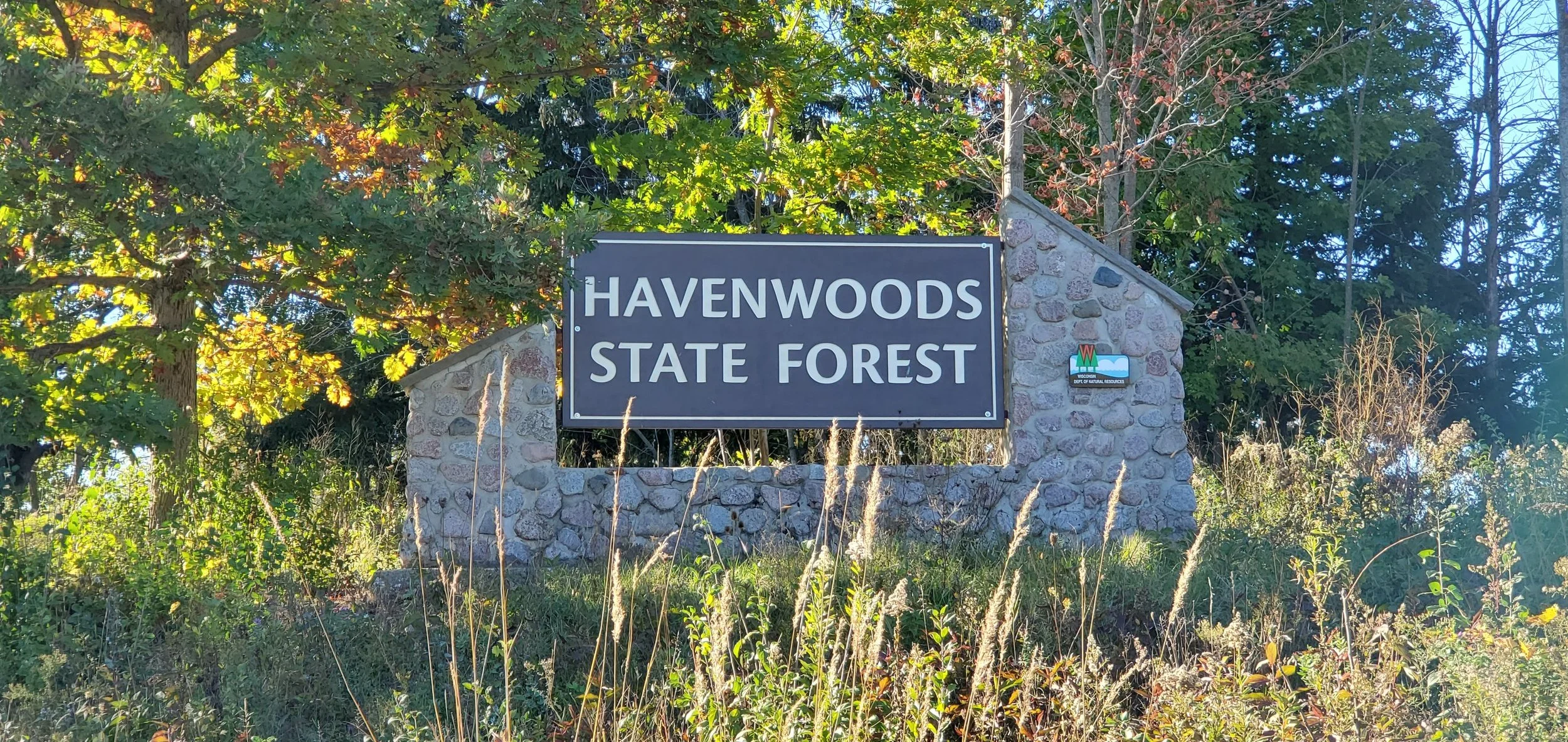
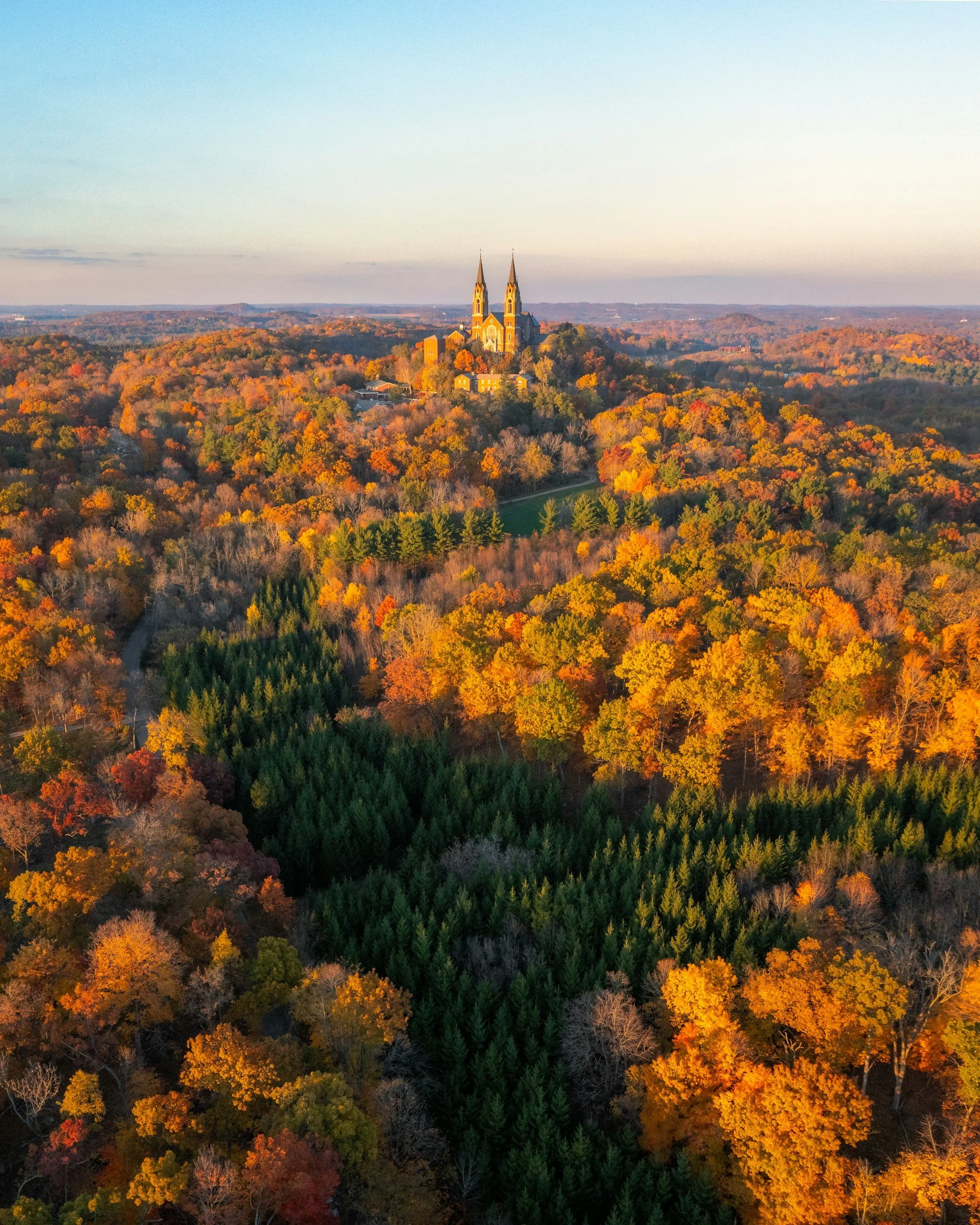
Havenwoods State Forest: Milwaukee's urban wilderness
Havenwoods State Forest
Milwaukee's only state forest sits just 15 minutes from downtown. And it's completely free.
Havenwoods State Forest packs 237 acres of prairie, woodland, wetlands and ponds into Milwaukee's north side, offering families more than six miles of trails without ever leaving the city.
What makes Havenwoods remarkable isn't just its size or variety of ecosystems, but its story. This land has been Native American hunting ground, farmland, a county correctional facility, a U.S. Army installation, a Cold War missile site and a landfill before becoming Wisconsin's first — and still only — urban state forest.
For Milwaukee families looking for an easy, affordable outdoor adventure, Havenwoods is one of the city's most overlooked nature destinations.
Looking for more places to explore? See our complete Milwaukee Hiking Guide and our guide to nature centers around Milwaukee.
From missile base to nature preserve
The most compelling feature of Havenwoods may be the ground beneath your feet.
Before European settlement, the area included lowland forest and wetlands. Farming followed, and in 1917 Milwaukee County opened its House of Correction on the property, where prisoners worked agricultural land and produced food.
The military chapter came next. In 1945, the U.S. Army took over the site as a disciplinary barracks. Then, during the Cold War, the Army constructed a Nike Ajax anti-aircraft missile installation here — one of several sites around Milwaukee intended to defend the region against a potential Soviet bomber attack.
The military eventually left, and portions of the property were also used as a landfill.
By the 1970s, however, a different future began to emerge. Community advocates pushed to preserve the property as open space. The City of Milwaukee transferred the land to the Wisconsin Department of Natural Resources, Havenwoods became a state forest in 1980, and its nature center opened soon afterward.
Today, exhibits inside the nature center help visitors make sense of the property's unusual transformation from farmland to prison to military installation to restored natural area.
Six miles of easy trails
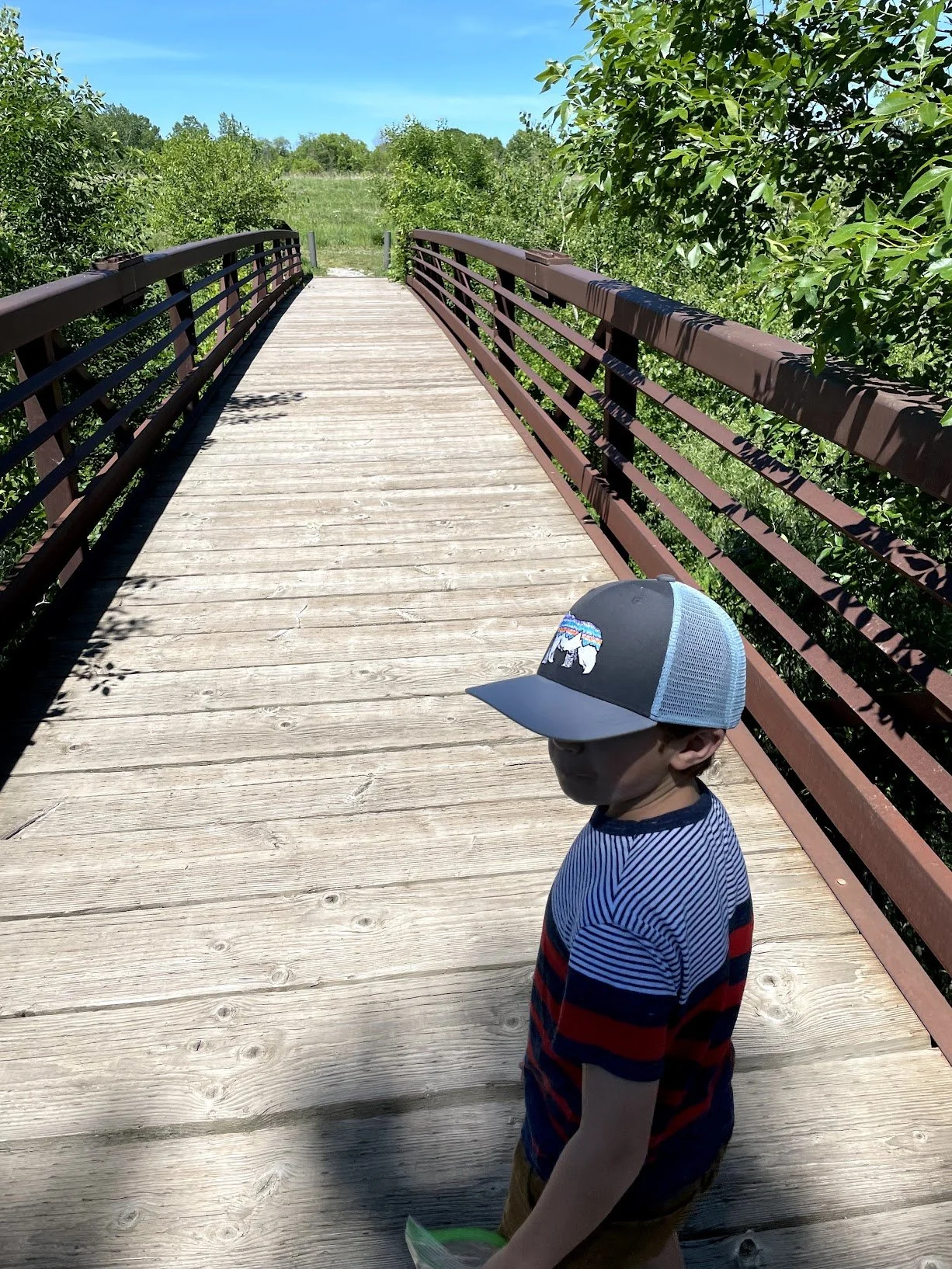
Havenwoods has more than six miles of trails through grasslands, forests and wetlands. The terrain is generally flat, making this an especially approachable place for families, beginning hikers and anyone who doesn't want a strenuous trek.
The trail system includes limestone paths, asphalt surfaces and natural trails. One of the highlights is the 120-foot pedestrian bridge, along with several ponds and wildlife-viewing areas.
For a more structured adventure, try the People and the Land Trail, a 1.3-mile route that tells the story of Havenwoods and the restoration of the property. Pick up a trail brochure at the nature center before heading out.
Another option is Trek Through Time, a geocaching adventure that mixes hiking with Havenwoods history. Stop inside the nature center for the booklet before starting.
Want a longer walk? The Cross-Country Trail follows an approximately 2.7-mile outer route around the property.
Bicycles are permitted on about two miles of limestone trails and asphalt roads. Pets are allowed on designated trails but must remain on a leash no longer than eight feet. Check the official Havenwoods recreation information or trail map before heading out with a dog.
For more family hikes around the area, bookmark our Milwaukee Hiking Guide.
NEW FOR 2026: Havenwoods' Braille Trail
Havenwoods is about to become an even more accessible place to experience nature.
The Wisconsin DNR will officially open a new Braille Trail on Saturday, October 17, 2026, creating an outdoor experience designed specifically to be more engaging for visitors who are blind or visually impaired.
The new trail is a 1/3-mile loop featuring Unified English Braille, tactile elements and audio components. Rather than simply translating traditional trail signs into Braille, the interpretive features are designed to let visitors explore Havenwoods through touch and sound.
Stops along the trail focus on the forest's history, habitats, plants and wildlife.
The Havenwoods Nature Center will also have tactile maps and a limited number of white canes available to borrow for use on the trail.
Braille Trail Ribbon Cutting
When: Saturday, October 17, 2026, 10 a.m.–noon
Ribbon cutting: 11 a.m.
Where: Havenwoods State Forest, 6141 N. Hopkins St., Milwaukee
Cost: Free
The celebration will include interactive activities and organizations that provide services and recreational opportunities for people who are blind or visually impaired. The official acknowledgement, ribbon cutting and cake are scheduled for 11 a.m.
If the weather doesn't cooperate, activities and resource tables will move inside the nature center.
The project was supported by several organizations, including the Ford Bronco Wild Fund, National Association of State Parks Directors, Natural Resources Foundation of Wisconsin, Greater Milwaukee Foundation, Friends of Havenwoods State Forest and Wisconsin DNR. Organizations providing consultation and other assistance included Audio & Braille Literacy Enhancement, Milwaukee Public Museum, Milwaukee Public Schools Specialized Services and Wisconsin's Office for the Blind and Visually Impaired.
See the official DNR Braille Trail ribbon-cutting announcement for the latest details.
The addition fits especially well at Havenwoods, where free admission, relatively flat terrain, public transportation access and free equipment lending have already made accessibility a major part of the experience.
The nature center is where the magic happens
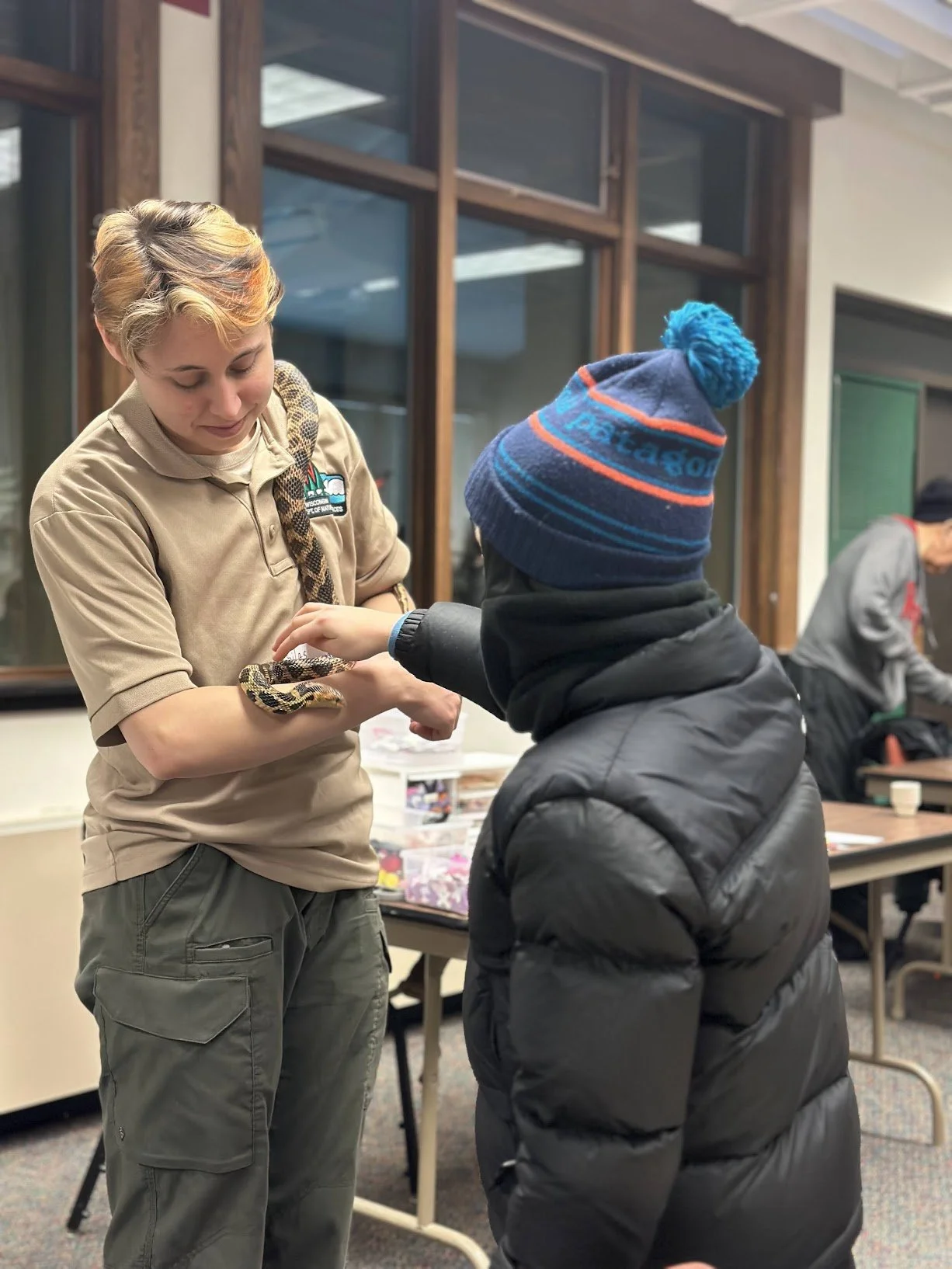
The Havenwoods Nature Center is open Tuesday through Saturday from 8:30 a.m. to 4 p.m. year-round.
Inside, kids can see live Wisconsin reptiles and amphibians, explore hands-on exhibits and learn about both the natural and human history of Havenwoods.
One of the best features is the equipment lending program.
Depending on availability and season, visitors can borrow:
Binoculars for birdwatching
GPS units for geocaching
Snowshoes during winter
Tactile maps for the Braille Trail
White canes for use on the Braille Trail
Equipment is available at no charge on a first-come, first-served basis while the nature center is open.
That makes Havenwoods particularly good for families who want to introduce kids to birding, geocaching or snowshoeing without buying equipment first.
Check the Havenwoods Nature Center page before your visit.
You can also explore more destinations like this in our Milwaukee-area nature centers guide.
Free events throughout the year
Havenwoods hosts an impressive calendar of free programming throughout the year.
Depending on the season, you'll find bird walks, guided hikes, animal programs, crafts, stewardship events, outdoor recreation programs and special family events.
The recurring Second Saturday Bird Walks are an easy introduction to birding, while other programs give families opportunities to meet Havenwoods' animal ambassadors or learn about the unusual history of the property.
Rather than relying on an old event schedule, check the Wisconsin DNR Havenwoods event calendar before your visit. There is often something happening on Saturdays.
Winter Break Milwaukee
Havenwoods has also become home to Winter Break Milwaukee, a free winter festival created to get Milwaukee families outside during one of the hardest times of year to find outdoor motivation.
The festival has included activities such as snowshoeing, fat-tire biking, dog sled demonstrations, nature activities, crafts, bonfires and indoor programming.
North Shore Family Adventures talked with Winter Break founder Kate Pociask about why she created the event, why Havenwoods became its home and her goal of making winter recreation accessible to people of different ages, abilities and experience levels.
Read our full story: No Hibernation: The Story Behind Winter Break Milwaukee.
Wildlife thrives in the middle of Milwaukee
Despite its urban surroundings, Havenwoods contains a surprisingly diverse collection of habitats, including hardwood forest, tallgrass prairie, wetlands, bottomland areas along Lincoln Creek and upland shrub habitat.
That makes it a great place to introduce kids to wildlife watching.
Depending on the season, visitors may see Sandhill Cranes, Great Horned Owls, Eastern Bluebirds, Cedar Waxwings, Wild Turkeys, American Kestrels and a variety of waterfowl.
White-tailed deer are common, while coyotes, muskrats, mink, rabbits, squirrels, frogs, turtles and snakes also make their homes here.
Havenwoods can be particularly colorful from mid-summer into August as prairie wildflowers bloom and pollinators fill the restored grasslands.
Interested in turtles? Havenwoods is also featured in our Milwaukee guide to turtles and where to find them.
Perhaps the most interesting lesson for kids is that Havenwoods isn't untouched wilderness.
Much of this landscape was farmed, developed, disturbed or filled at some point in its history. What families see today is the result of decades of ecological restoration.
It's a pretty remarkable example of what can happen when a city gives nature a chance to return.
A major restoration is reshaping Havenwoods
That restoration is continuing.
The Wisconsin DNR has undertaken a broad rehabilitation effort across the property aimed at improving prairie, wetland and forest habitat.
Work has included invasive-species removal, prescribed burning, forestry mowing, wetland improvements and planting new trees. Portions of the property are gradually being transitioned toward more diverse and resilient forest habitat.
Visitors may occasionally notice areas that look recently cleared or disturbed. In many cases, that's intentional habitat work rather than development.
Havenwoods is therefore an interesting place to revisit over time. You're not simply seeing a preserved landscape — you're watching an urban ecosystem being rebuilt.
What to know before you go
Address: 6141 N. Hopkins St., Milwaukee, WI 53209
The entrance is one block west of Sherman Boulevard on Douglas Avenue. Continue uphill from the entrance to reach the parking lot and nature center.
Forest hours: Daily, 6 a.m.–8 p.m., year-round
Nature Center: Tuesday–Saturday, 8:30 a.m.–4 p.m. The center is closed Sundays, Mondays and legal holidays.
Cost: Free.
State park sticker: Not required.
Parking: Free parking is available near the nature center.
Restrooms: Available inside the nature center, so families with younger kids may want to visit during nature center hours.
Trails: More than six miles, with mostly flat terrain and several possible route lengths.
Dogs: Allowed on designated trails with an eight-foot-or-shorter leash. Some areas prohibit pets.
Bikes: Allowed on approximately two miles of limestone trails and asphalt roads.
Picnics: Picnic tables are available near the parking lot and Urban Arboretum. Fires and grills are prohibited.
Winter: Cross-country skiing and snowshoeing are permitted. Trails aren't groomed for skiing, but the mostly flat terrain makes Havenwoods approachable for beginners. Snowshoes can be borrowed when the nature center is open.
Accessibility: Portions of the trail network use limestone or paved surfaces, and the new 1/3-mile Braille Trail adds tactile, audio and Unified English Braille interpretation. Tactile maps and white canes will be available from the nature center beginning in fall 2026.
Official information: Wisconsin DNR Havenwoods State Forest
Events: Havenwoods DNR Events Calendar
Friends group: Friends of Havenwoods State Forest
Phone: 414-527-0232
Email: DNRHavenwoods@wisconsin.gov
Why Havenwoods is worth the trip
Havenwoods is one of those Milwaukee places that doesn't make sense until you visit it.
You're inside the city, yet you can walk through prairie, disappear into woods, cross a footbridge over Lincoln Creek, watch birds around a pond and hike for miles without paying a dollar.
The nature center gives younger kids something tangible to explore. The site's bizarre history adds another layer for older kids and adults. Free binoculars, GPS units and snowshoes make it easier to try something new without investing in equipment.
And beginning in October 2026, the new Braille Trail makes Havenwoods an even more interesting example of how outdoor spaces can be designed so more people can experience them.
For families, that's probably the best reason to put Havenwoods on the list: it's close, it's easy, it's interesting and it's completely free.
Keep exploring
If Havenwoods gets your family in the mood for another outdoor adventure, check out our Milwaukee Hiking Guide, explore our guide to Milwaukee-area nature centers, or browse the complete North Shore Family Adventures Outdoor Activities Guide.