

Kayaking Wisconsin: The complete guide
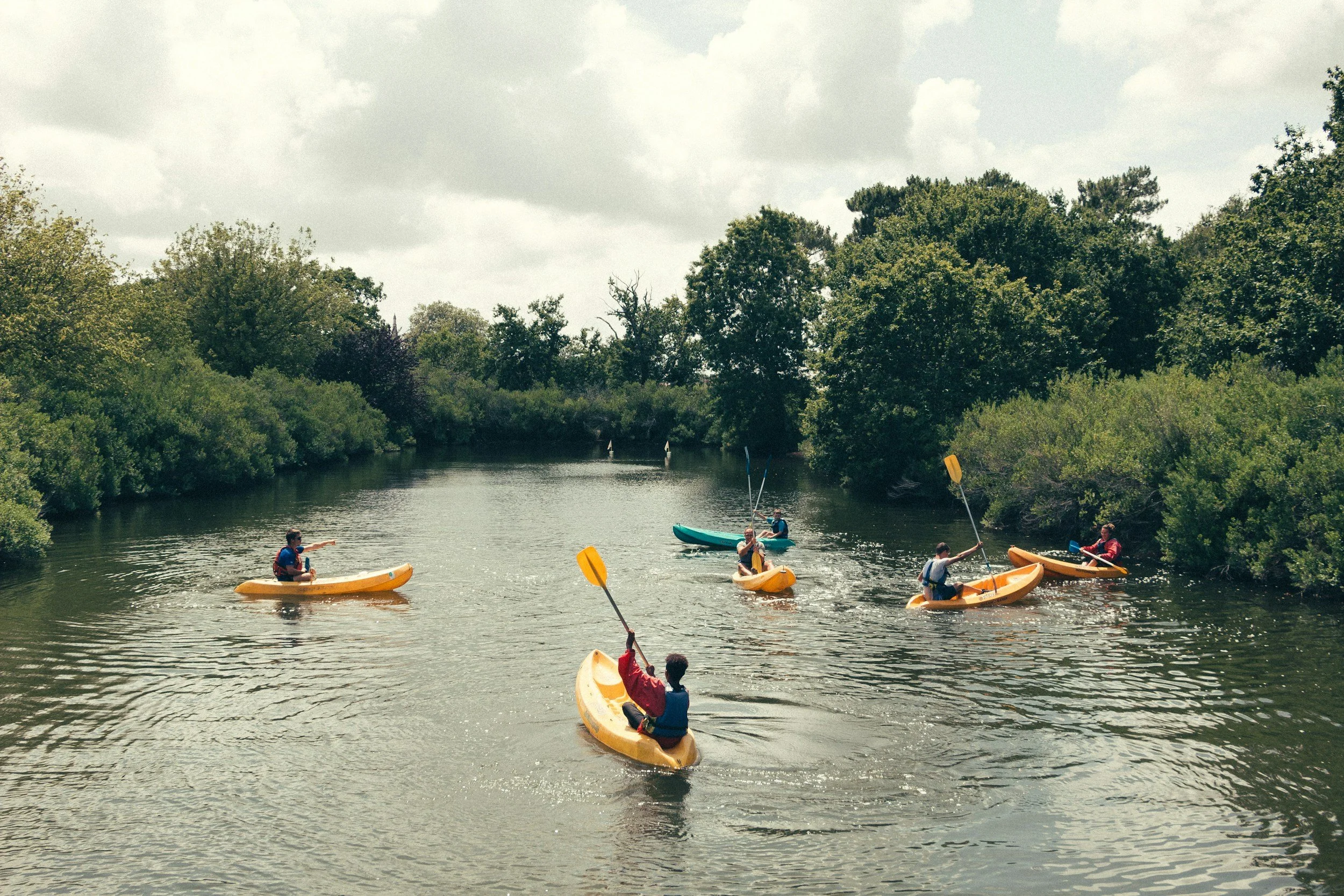
Wisconsin ranks among the Midwest's finest paddling destinations, with more than 15,000 lakes, 84,000 miles of rivers and streams, and shoreline on two Great Lakes. Whether you want a 90-minute urban paddle through downtown Milwaukee, a multi-day sandbar camping trip on the Lower Wisconsin River, or a bucket-list sea cave expedition in the Apostle Islands, this state has options for every skill level and age group. The kayaking season runs roughly from late May through September, with June through August offering the warmest water and widest availability of rentals and tours. Below is everything you need to plan trips across the state — from toddler-friendly lagoons to expert-only Lake Superior crossings.
Milwaukee area kayaking
Milwaukee's urban waterways and nearby "Lake Country" provide dozens of paddling options within an easy drive.
Downtown Milwaukee River is the most popular urban paddle. The river runs flat through the heart of the city, passing the Riverwalk art installations, the Bronze Fonz statue, historic bridges, and riverside breweries with dockside access. Multiple outfitters launch from the 300–800 blocks of South Water Street. Milwaukee Kayak Company (three locations, operating since 2013) offers single kayaks, tandems, canoes, and paddleboards for 2- and 4-hour rentals; a family tandem for an adult and child under 12 runs $60–$70. Brew City Kayak at 820 S. Water Street runs themed guided tours including a City Skyline Tour (1.5–2 hours), a Cheese Curd Tour with restaurant stops (~4 hours), and popular Full Moon Paddles. Forward Outdoor launches from Discovery World at Lakeshore State Park and also offers a shuttle-and-paddle experience on the Milwaukee River.
Lakeshore State Park, Wisconsin's only urban state park, is the best family-friendly option in the city. Its protected lagoon offers calm, sheltered water with skyline views and birding (70+ species), and there's no vehicle admission fee. Forward Outdoor rents sit-on-tops, tandems, and inflatables here for $25 for two hours. Nearby, the Washington Park Lagoon — operated by the Urban Ecology Center — provides the calmest, most protected water in the metro. Members can borrow canoes and kayaks free of charge; non-members can attend instructional programs that teach strokes, safety, and life jacket fitting before independent paddling.
For lake paddling, Waukesha County's "Lake Country" sits 20–45 minutes west of Milwaukee and contains over 140 lakes. Pewaukee Lake (2,493 acres) is the largest but gets heavy powerboat traffic on summer weekends — not ideal for first-timers. Better family picks include Beaver Lake in Chenequa (dedicated kayak ramp, less traffic), Big Muskego Lake (shallow water that provides extra safety for nervous beginners), Pine Lake, and Fowler Lake in Oconomowoc (small, quiet, free parking). Lake Geneva (~1 hour south) is a classic day trip with clear calm water and three boat launches; Clear Water Outdoor rents singles for about $60/two hours from the pier across from Baker House. The nearby Lake Como is described as a "beginner paradise" — less boat traffic, shallower, and calmer than Geneva Lake, with free parking.
River options close to Milwaukee include the Fox River from Big Bend to Tichigan (a 4-hour, all-levels float with turtles, cranes, and herons, served by Fox River Canoe Adventures & Kayaks) and the Bark River from Lower Nemahbin Lake through cattail corridors into Crooked Lake (~3 miles, 3 hours, with exceptionally clear water and an "up-north" feel). The Menomonee River from Three Bridges Park connects to the Harley-Davidson Museum and City Lights Brewing Company, which has its own kayak dock.
Door County delivers diverse coastal paddling
Door County's 300-mile shoreline on a narrow peninsula between Lake Michigan and Green Bay creates an extraordinary range of conditions — from glassy bays to dramatic sea caves — all within a few miles of each other.
Cave Point County Park is the most famous kayaking destination in Door County. Wave-carved limestone sea caves, underwater caverns, and turquoise water draw thousands of paddlers each season. There is no direct launch from the park's rocky shore; paddlers put in at Schauer Park to the north or Whitefish Dunes State Park to the south. Conditions change rapidly — morning calm can give way to dangerous surf by midday — so guided tours are strongly recommended. Bay Shore Outfitters runs Cave Point tours at $55/person; Door County Kayak Tours and Cave Point Paddle & Pedal charge $69/person for two hours. On rough days, guides reroute to calmer alternatives like Door Bluff.
For families seeking calm water, Mink River Estuary near Rowleys Bay is one of the finest freshwater estuaries in the United States. Protected by The Nature Conservancy, it offers flat, wind-sheltered water through winding cattail channels with 200+ bird species. The 4.5-mile round trip takes about 90 minutes and is suitable for ages 4 and up. Eagle Harbor in Ephraim is another beginner favorite — sheltered Green Bay waters, sea caves along Peninsula State Park's shoreline, and sunset tours that rank among the peninsula's most memorable experiences. Logan Creek and Clark Lake offer protected wetland paddling through white cedar forests with outstanding birding, and Peninsula State Park itself (3,776 acres, 8 miles of shoreline) provides access to Eagle Bluff's 150-foot dolomite cliffs, Eagle Cave, and Horseshoe Island, where paddlers can land, swim, and hike.
Door County's Green Bay side is generally calmer than the Lake Michigan side, making it the better default for families. On the Lake Michigan side, experienced paddlers can explore Moonlight Bay and paddle to Cana Island Lighthouse (built 1869), passing visible shipwrecks including the Australasia (sunk 1896). Lakeshore Adventures in Baileys Harbor offers a unique clear-bottom kayak shipwreck tour over 14 accessible 1800s wrecks — a hit with older kids. Newport State Park, Wisconsin's only wilderness state park and an International Dark Sky Park, provides a remote Lake Michigan launch from Europe Bay.
Tour companies abound. Door County Kayak Tours (Jacksonport) covers caves, shipwrecks, lighthouses, and eco-estuary routes from $65–$140/person. Cave Point Paddle & Pedal meets minutes from Cave Point itself and launches from the safer north side. Kayak Guide Justin, an ACA Level 3 instructor and Wisconsin Master Naturalist, runs small-group tours (2–8 people) in single sea kayaks with complimentary photos, from $89/person. Peninsula Kayak Company has four rental locations (Sister Bay, Ephraim, Jacksonport, Logan Creek). Gravity Trails offers a half-day Peninsula State Park tour with van shuttle. Kayak rentals run roughly $25–$50/hour or $50–$80/day across the peninsula.
The Apostle Islands sea caves are a bucket-list paddle
The 22-island Apostle Islands archipelago on Lake Superior contains North America's most spectacular freshwater sea caves — ornate sandstone arches, vaulted chambers, honeycombed passageways, and pillars carved by millennia of wave and ice erosion.
Meyers Beach (mainland) is the most accessible cave system. Paddlers launch from the beach and travel 1.5 miles to reach the first caves, which extend 3+ miles along the shoreline with the tallest cliffs in the area. Sand Island has some of the deepest caves and requires a 3-mile open-water crossing from Little Sand Bay. Devil's Island boasts the most ornate formations but requires a multi-day expedition. The mainland caves are reachable on a guided half-day trip; island caves demand progressively more skill and commitment.
Lake Superior is not a casual paddling environment. Water temperatures average 40°F in spring and rarely exceed 60°F even in late summer. Conditions can shift from flat calm to 3-foot waves in 20 minutes. The National Park Service requires a minimum 16-foot sea kayak with sealed bulkheads and spray skirt — sit-on-tops, canoes, and paddleboards are explicitly not recommended. Self-guided paddlers must be proficient in wet exits, T-rescues, and open-water re-entry. Cell service is unreliable and rescue can be 30+ minutes away.
For those without expert sea kayaking skills, guided tours make the caves accessible to beginners. Several outfitters stand out:
Trek & Trail (Bayfield) has operated for 30+ years as the original Apostle Islands outfitter. Half-day tours run $70–$149. Kayak rentals start at $40/6 hours but require passing a safety course ($55).
Lost Creek Adventures (Cornucopia) is the closest outfitter to the mainland caves and runs half-day ($75), full-day ($149), and multi-day camping expeditions (2–6 nights) with small groups of 4–10.
Whitecap Kayak (near Washburn) holds the highest ACA certifications among area guides and offers fully outfitted overnight camping trips including meals, permits, and all equipment; children 17 and under paddle at 50% off.
Apostle Islands Kayaking Express (Bayfield) is the only outfitter with a motorized support boat that transports paddlers directly to Devil's Island and Stockton Island — normally inaccessible caves become a half-day trip with about 2 hours of actual paddling.
Wilderness Inquiry operates a fully wheelchair-accessible base camp at Little Sand Bay with custom-designed accessible kayaks, offering 4- and 5-day itineraries including a "Family Paddle and Hike" option.
Kayak camping is available on 19 of 21 islands plus 3 mainland sites. All campsites are tent-only and accessible only by boat. Advance reservations are required through Recreation.gov and open 30 days before arrival. Each permit covers up to 14 nights. Sites have fire rings, bear-resistant food lockers, vault toilets, and picnic tables. A popular beginner itinerary is Little Sand Bay → Sand Island → Oak Island → return over 2–3 days. Extended 5–7 day trips to the outer islands (Devil's, Rocky, Outer) are expert-only.
The Lower Wisconsin River: paddling corridor
The Lower Wisconsin State Riverway flows 92 unimpeded miles from Prairie du Sac to the Mississippi River confluence at Wyalusing State Park — the longest free-flowing stretch of navigable river in the upper Midwest. There are no rapids, no portages, and shifting sandbars keep powerboats away, making it ideal for families of all skill levels.
The river passes through the Driftless Region's unglaciated landscape of tall wooded bluffs, sandstone outcroppings, oak savanna, and bottomland forests. Bald eagles, ospreys, and sandhill cranes are common. The Arena to Spring Green stretch (10 miles) has the highest concentration of sandbars on the entire river — perfect for day-tripping and sandbar hopping. The most popular overnight trip is Prairie du Sac to Spring Green (25 miles over 3 days/2 nights). The most secluded stretch is Boscobel to Wyalusing State Park (31 miles), ending at the stunning Wisconsin-Mississippi confluence.
Sandbar camping is free — no permits, no fees, no reservations. It is first-come, first-served on state-owned sandbars and islands, with a 3-night maximum stay. This is true primitive camping: no designated sites, no facilities, no drinking water. Camp on mid-river sandbars for the best breezes and fewest mosquitoes. The river can rise a foot overnight after heavy rain, so set camp well above the waterline.
Wisconsin Canoe Company (Spring Green) operates a fleet of 200 boats with shuttle service for day and overnight trips. Wisconsin River Outings (Sauk City and Boscobel) specializes in multi-day sandbar camping packages covering up to the full 92 miles. Blackhawk River Runs near Mazomanie has been family-owned since 1970.
Nearby, the Wisconsin Dells section of the river runs through a 15-mile sandstone gorge with towering cliffs, caves, and side canyons. Vertical Illusions offers guided kayak tours at $69/person. However, powerboat and tour boat traffic is significant in summer — paddle early morning or in shoulder season. For a crowd-free alternative, Mirror Lake State Park (just south of the Dells) is a slow-no-wake lake surrounded by sandstone cliffs and pine forests with in-park kayak rentals at $30 for a single. Devil's Lake State Park in Baraboo bans gas motors entirely — its quartzite bluffs rise 500 feet above calm, clear water, making it one of the state's best beginner lakes.
Wisconsin's other rivers: crooked to the wildest
The Kickapoo River in the Driftless Area bills itself as the "crookedest river in the world," with tight meanders through moss-covered sandstone bluffs, ferns, and wildflowers. The Ontario to Rockton section (12.5 miles) is the most popular, flowing through the Kickapoo Valley Reserve and Wildcat Mountain State Park. Ninety percent of the upper portion can be waded, making it exceptionally safe for families with young children (ages 4+). Four outfitters operate from the village of Ontario, including Drifty's Canoe Rental and Mr. Duck's (operating since 1988), with kayaks starting around $40/day and shuttle included.
The Wolf River in northern Wisconsin is the state's premier whitewater destination. The "Short Section 3" from Herb's Landing to Wild Wolf Inn (3.8 miles) is the most-paddled whitewater reach, with three popular Class II-III rapids that experienced paddlers can run multiple times in a day. Sections 4 and 5 through the Menominee Indian Reservation include Class III-IV rapids and require a tribal permit — Big Smokey Falls Rafting and Shotgun Eddy offer guided raft trips here. Note that Boy Scout Rapids (Class III) has claimed lives; never stand in strong current due to foot entrapment risk.
The Flambeau River threads through 90,000 acres of state forest with 14 free primitive canoe campsites along its banks. The North Fork offers beginner-to-intermediate paddling (Class I-III), while the South Fork is expert-only (up to Class V in spring). The nearby Turtle-Flambeau Flowage, sometimes called "Wisconsin's Boundary Waters," is a flatwater system of lakes and channels with remote boat-access-only campsites — outstanding for beginner paddlers seeking a wilderness experience.
In northern Wisconsin, the Eagle River Chain of Lakes (29 connected lakes — the world's largest freshwater chain) offers nearly unlimited flatwater exploration. The Chippewa Flowage near Hayward covers 15,300 acres with 200 islands and a true wilderness feel. The Namekagon River and St. Croix River are both part of the National Wild and Scenic River system with camping on islands and sandbars.
What to know before you paddle
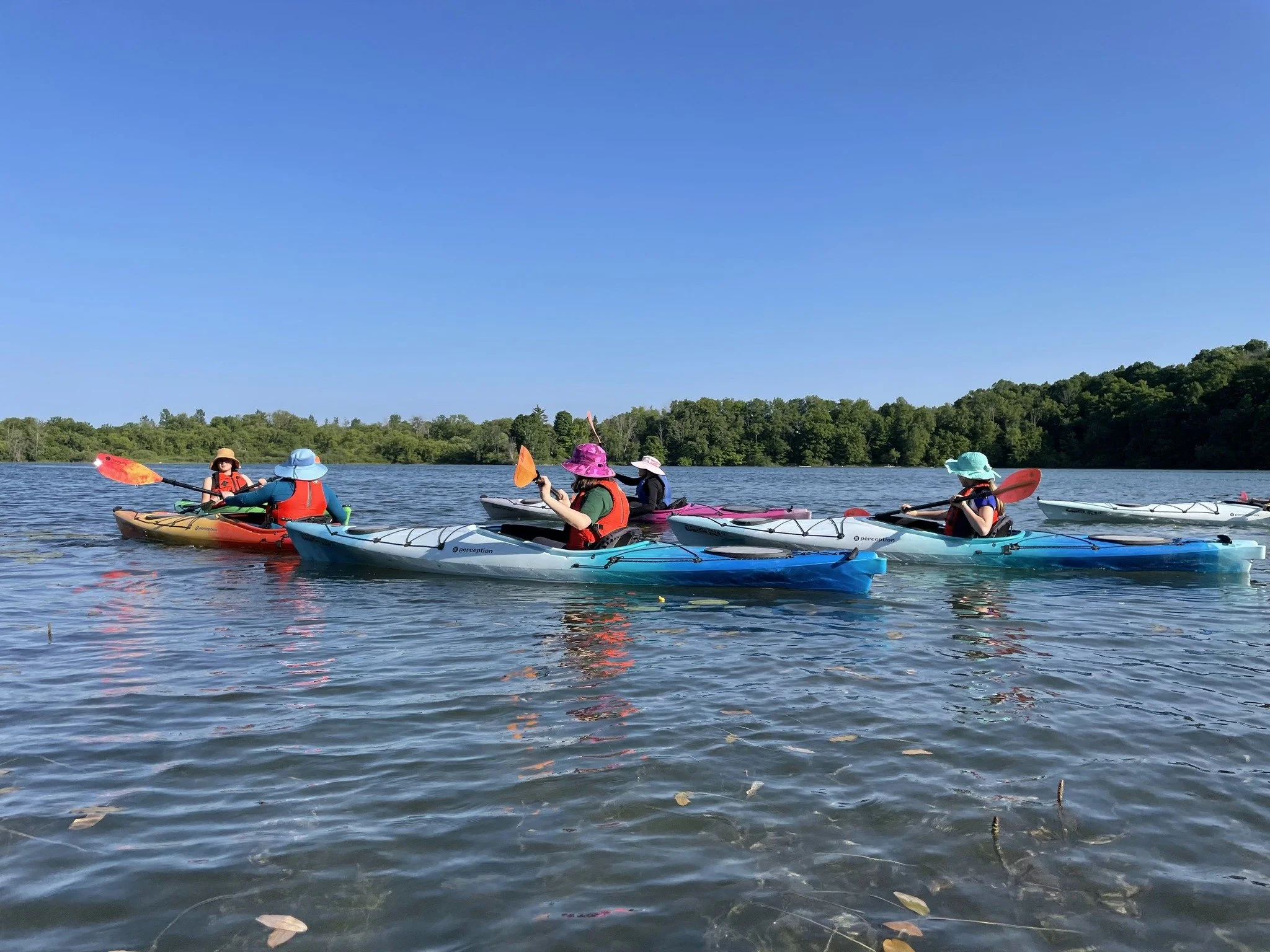
June through August is peak season with the warmest water (inland lakes reach 74–86°F by July), the widest rental availability, and the longest days. May and September are excellent shoulder months with fewer crowds, lower prices, and beautiful scenery — wildflowers in spring, spectacular foliage in fall — though water temperatures drop to the 55–65°F range and a sit-inside kayak with proper layers becomes important. Wisconsin's Great Lakes remain cold year-round; Lake Michigan near Milwaukee reaches only 60–70°F at the surface in summer, and Lake Superior rarely tops 60°F. Dress for the water temperature, not the air temperature.
Wisconsin law requires one USCG-approved PFD for every person on board any vessel, including kayaks. PFDs must be readily accessible — not stowed in a hatch. On federally controlled waters (Lake Michigan, Lake Superior, Green Bay, the Mississippi), children under 13 must wear their PFD at all times while the vessel is underway. Fines run approximately $232 per violation. Non-motorized kayaks do not require registration or licensing. State park launches require a vehicle admission sticker (annual or daily). OUI laws apply to kayaks — the BAC limit is 0.08%.
For kayaking with kids, experts recommend starting with trips of 30–60 minutes at about one-third the distance adults would cover alone. Children ages 2–3 can ride as passengers in a tandem with an experienced adult. By ages 4–7, most kids can sit in the bow of a tandem and help paddle with a child-sized paddle. Ages 7–8 typically marks the point where kids can handle their own small kayak on calm water for short distances. Tandem sit-on-top kayaks are the best starting platform for families in summer — stable, self-bailing, and easy to re-enter after a capsize.
The five best introductory family spots statewide are Lakeshore State Park lagoon (Milwaukee — calm, free, rentals available), Mirror Lake State Park (no-wake, in-park rentals, guided naturalist tours), Devil's Lake (no motors, stunning scenery), Mink River Estuary (Door County — flat calm, amazing birding), and the Lower Wisconsin River (no rapids, sandy bottom, sandbar stops for swimming and exploring).
Outfitters, tours, and events
Wisconsin's outfitter network is extensive. In the Milwaukee area alone, Milwaukee Kayak Company (3 locations), Brew City Kayak, Forward Outdoor, Clear Water Outdoor, and the Urban Ecology Center (free boat borrowing for members) ensure that no one is far from a rental. In Door County, Bay Shore Outfitters, Peninsula Kayak Company (4 locations), Door County Kayak Tours, and Lakeshore Adventures collectively cover every bay, cave, and lighthouse on the peninsula. Along the Wisconsin River, Wisconsin Canoe Company and Wisconsin River Outings handle everything from day floats to week-long expeditions. In the Apostle Islands, Trek & Trail, Lost Creek Adventures, and Whitecap Kayak range from introductory half-day tours to multi-night island camping.
Notable guided experiences include Brew City Kayak's Cheese Curd Tour (a 4-hour paddle with Milwaukee restaurant stops), Lakeshore Adventures' clear-bottom kayak shipwreck tour in Baileys Harbor, Apostle Islands Kayaking Express boat-to-kayak Devil's Island tours, and Vertical Illusions' sandstone canyon tours through the Wisconsin Dells. For instruction, Silent Wake near West Bend offers ACA-certified courses from beginner through sea kayaking on Lake Michigan, including an adaptive program for paddlers with disabilities.
Canoecopia, held each March at Madison's Alliant Energy Center, is the world's largest paddlesports consumer expo — 250,000+ square feet of gear, 100+ presentations, and over 20,000 attendees. Admission is $17/day; ages 17 and under are free. The Door County Sea Kayak Symposium in July (Rowleys Bay) and the Freshwater Paddlers Symposium in June (Cornucopia) offer on-water clinics and guided cave tours at all skill levels.
Conclusion
Wisconsin's paddling landscape divides neatly into four tiers of commitment. Tier one is calm, protected water perfect for young children and absolute beginners — think Lakeshore State Park lagoon, Mirror Lake, Devil's Lake, and Door County's Mink River Estuary. Tier two covers moderate day trips on gentle rivers and sheltered bays — the Fox River near Milwaukee, the Kickapoo River's wadeable meanders, and guided Cave Point tours. Tier three is multi-day adventure: free sandbar camping on the Lower Wisconsin River, island-hopping the Flambeau, or overnight kayak camping in the Apostle Islands with a guided outfitter. Tier four is expert territory — self-guided Apostle Islands crossings, Wolf River whitewater, and open Lake Superior paddling.
The single most important safety takeaway is to always wear your PFD, dress for the water temperature, and start with guided tours when venturing onto the Great Lakes. Beyond that, Wisconsin rewards paddlers who explore beyond the obvious. The Bark River's cattail corridors 30 minutes from Milwaukee feel like northern wilderness. Lake Como near Lake Geneva is quieter and more family-friendly than its famous neighbor. And the Boscobel-to-Wyalusing stretch of the Lower Wisconsin — the river's most secluded 31 miles — ends at one of the most dramatic landscape confluences in the Midwest, where the Wisconsin meets the Mississippi under towering bluffs. Most visitors never see it. A kayak is the best way to get there.

Discover Forest Home Cemetery's fall events in Milwaukee and guided historical tours through November at Wisconsin's oldest cemetery and accredited arboretum.