

Shorewood Considers No-Right-on-Red Rules Near Schools
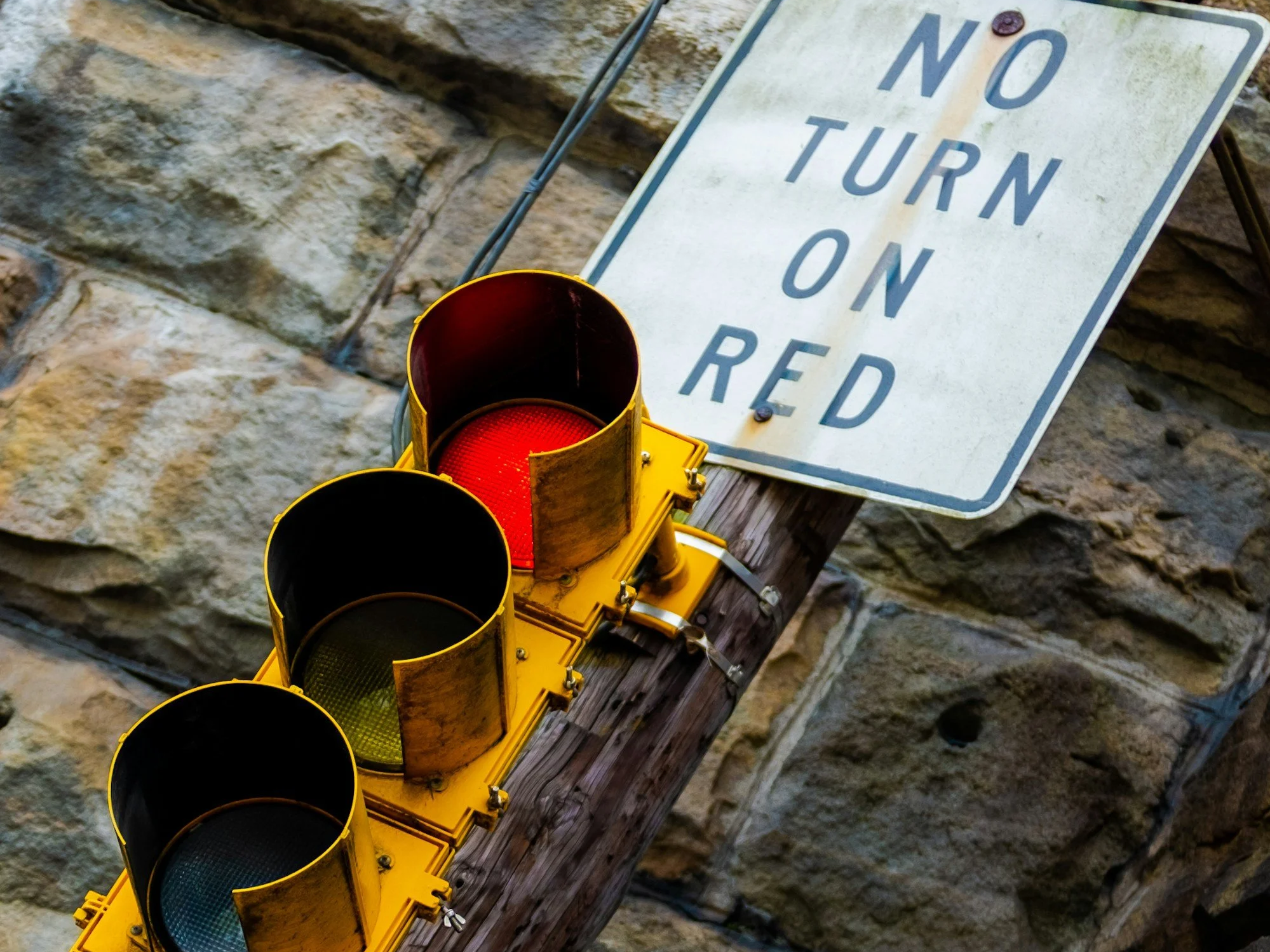
The trip to school could soon look different at several busy Shorewood intersections.
On Monday, September 21, the Shorewood Public Works Committee will consider recommending new and expanded no-right-turn-on-red restrictions near local schools. The proposal is intended to reduce conflicts between turning vehicles and the students, parents, pedestrians and bicyclists using school routes.
No change has been approved yet. The committee is being asked to make a recommendation to the Village Board, which would consider the ordinance change later.
Shorewood School Intersection Proposal at a Glance
What: Expanded no-right-turn-on-red rules at traffic signals adjacent to schools
Committee meeting: Monday, September 21, 2026, at 6:30 p.m.
Location: Shorewood Village Hall, 3930 N. Murray Avenue, with a virtual participation option
Estimated cost: $1,532.25 for 27 signs, including two spares
Status: Under consideration; not yet adopted
Families can review the September 21 Village meeting packet for the staff report and proposed ordinance language. For other dates affecting local students, bookmark the Shorewood School District 2026–2027 calendar.
What Shorewood Is Considering
The idea began as a 2026 Village initiative called “Safer Walk to School Stop Signs for 2026–27 School Year.” It calls for a no-right-turn-on-red policy at intersections adjacent to schools.
The Public Works Committee first discussed the proposal in July and sent it to Shorewood’s Parks and Public Spaces Pedestrian and Bicycle Subcommittee for additional review. On September 8, that group supported the restrictions and recommended removing “when pedestrians are present” language from several existing rules.
From the proposal: “Signage directing drivers to make no turns on red when pedestrians are present is confusing. Adopting a no turn on red policy would support a culture of safer driving by removing any ambiguity about whether a driver should wait until the light is green to make a turn.”
The draft ordinance includes specific approaches at intersections along Maryland Avenue, Downer Avenue, Edgewood Avenue, Capitol Drive, Oakland Avenue, Murray Avenue, Morris Boulevard and Menlo Boulevard. It also includes entries for East Shorewood Boulevard at North Oakland Avenue and East Lake Bluff Boulevard at North Oakland Avenue.
This is not necessarily a ban on every right turn at every approach. Several of the restrictions are direction-specific, so the final ordinance and posted signs will matter. The proposed language also appears to create full-time restrictions rather than rules limited only to school arrival and dismissal.
Map: Shorewood’s Proposed School-Route Turn Restrictions
Explore the eight physical intersections named in the draft ordinance. Maryland Avenue and Downer Avenue meet Capitol Drive at the same signal, so they share one marker.
Proposal status: These ordinance changes have not yet been adopted. Drivers should follow the signs currently posted at each intersection.
Why Right Turns on Red Can Create a Conflict
Wisconsin law generally permits a right turn on red after a driver stops and yields, unless a sign prohibits the turn. The maneuver can become complicated at a busy crosswalk because a driver looking left for an opening in traffic may not immediately see a pedestrian or cyclist entering from the right.
The National Highway Traffic Safety Administration identifies a turning vehicle entering a pedestrian’s path as one of the common pedestrian crash scenarios. It advises drivers to slow down and prepare to stop when turning through a crosswalk, with additional caution in school zones and neighborhoods where children are present.
Right turns on red were not always the nationwide default. A federal energy-conservation policy adopted in 1975 encouraged states to allow the maneuver as a way to reduce idling and fuel consumption. By 1980, every state permitted right turns on red as a general rule.
What Recent Research Says
A 2024 Mineta Transportation Institute study concluded that right-turn-on-red movements are generally unsafe for pedestrians, bicyclists and drivers while providing only marginal emissions benefits in limited circumstances.
The researchers also offered an important qualification: right-turn-on-red crashes make up a relatively small portion of all collisions and fatalities at signalized intersections. However, when these crashes involve pedestrians or bicyclists, the consequences can be more severe. The study recommends context-sensitive decisions instead of assuming every intersection should have the same rule.
That makes Shorewood’s school-focused proposal different from a village-wide ban. It concentrates the restriction in places where children and families are expected to cross regularly.
Shorewood Is Part of a Larger Safety Trend
Communities around the country are reconsidering right turns on red in busy pedestrian areas.
In San Francisco, the city installed no-turn-on-red restrictions at more than 50 Tenderloin intersections as part of a broader Vision Zero safety initiative. The San Francisco Municipal Transportation Agency said the restrictions were intended to reduce turning conflicts and keep vehicles out of crosswalks.
In Maryland, Montgomery County placed more than 200 no-right-on-red signs in designated downtown and town-center areas beginning in 2025. That policy focuses on locations where larger numbers of people walk, bike and use scooters.
Those examples are broader than Shorewood’s school-intersection proposal, but they reflect the same shift: communities are increasingly treating turns on red as a location-specific safety decision rather than an automatic convenience for drivers.
Shorewood does not have a clear count of local crashes caused by right turns on red. According to the staff report, Wisconsin’s accident-reporting system does not provide filters that make it practical to isolate those incidents.
From 2020 through the preparation of the report, Shorewood recorded 16 signal violations among 769 non-speeding violations. Police also issued 452 citations for failing to obey a sign or signal, but that broader category does not show how many involved right turns on red.
In other words, the proposal is based on reducing a recognized point of conflict near schools—not on evidence of a documented spike in local right-turn-on-red crashes.
The Questions Shorewood Still Has to Consider
The meeting packet identifies several practical issues that could shape the final recommendation:
Traffic flow: The restrictions could slow vehicle movement during school drop-off and pickup.
Driveway access: Staff noted an earlier concern about vehicles at the Shorewood Boulevard and Oakland Avenue signal blocking access to the Eastwood condominiums.
Enforcement: A standard Shorewood police shift consists of two patrol officers and one patrol sergeant covering the entire village. Police say continuous enforcement of every sign category is operationally difficult.
School input: Staff suggested the committee may want feedback from the Shorewood School District.
Cost: The signs would consume roughly one-quarter of the Department of Public Works’ annual sign-supply budget and would likely contribute to a budget overage.
Families may also want clarification about the exact approaches receiving signs, whether every restriction would apply around the clock and whether the school district has reviewed the expected effect on arrival and dismissal traffic.
What Happens Next
The Public Works Committee will discuss the proposal at 6:30 p.m. Monday, September 21, at Shorewood Village Hall. The meeting will also be available through the virtual option included in the official meeting notice.
Residents planning to speak are asked to email the Village Clerk by 3 p.m. on the meeting day. If the committee supports the change, it can recommend approval to the full Village Board. Drivers should continue following the currently posted signs unless and until the ordinance is approved and new signs are installed.
The Bottom Line
The proposal is a relatively low-cost attempt to reduce a predictable conflict between turning vehicles and children walking or biking near school. Recent research supports targeted no-turn-on-red restrictions in pedestrian-heavy settings, but Shorewood does not yet have local crash data showing how frequently this particular maneuver has caused problems.
That leaves the Village with a reasonable policy question: Is the potential safety benefit near schools worth the added signs, enforcement demands and possible traffic delays?
North Shore Family Adventures will continue following the discussion and update this article if the committee or Village Board advances the proposal. Explore more local news, school information and family activities in our Shorewood family guide.
The Shorewood Public Works Committee will consider recommending new and expanded no-right-turn-on-red restrictions near local schools. The proposal is intended to reduce conflicts between turning vehicles and the students, parents, pedestrians and bicyclists using school routes.