

From Milwaukee to the Black Hills: Father-Son Road Trip Tales
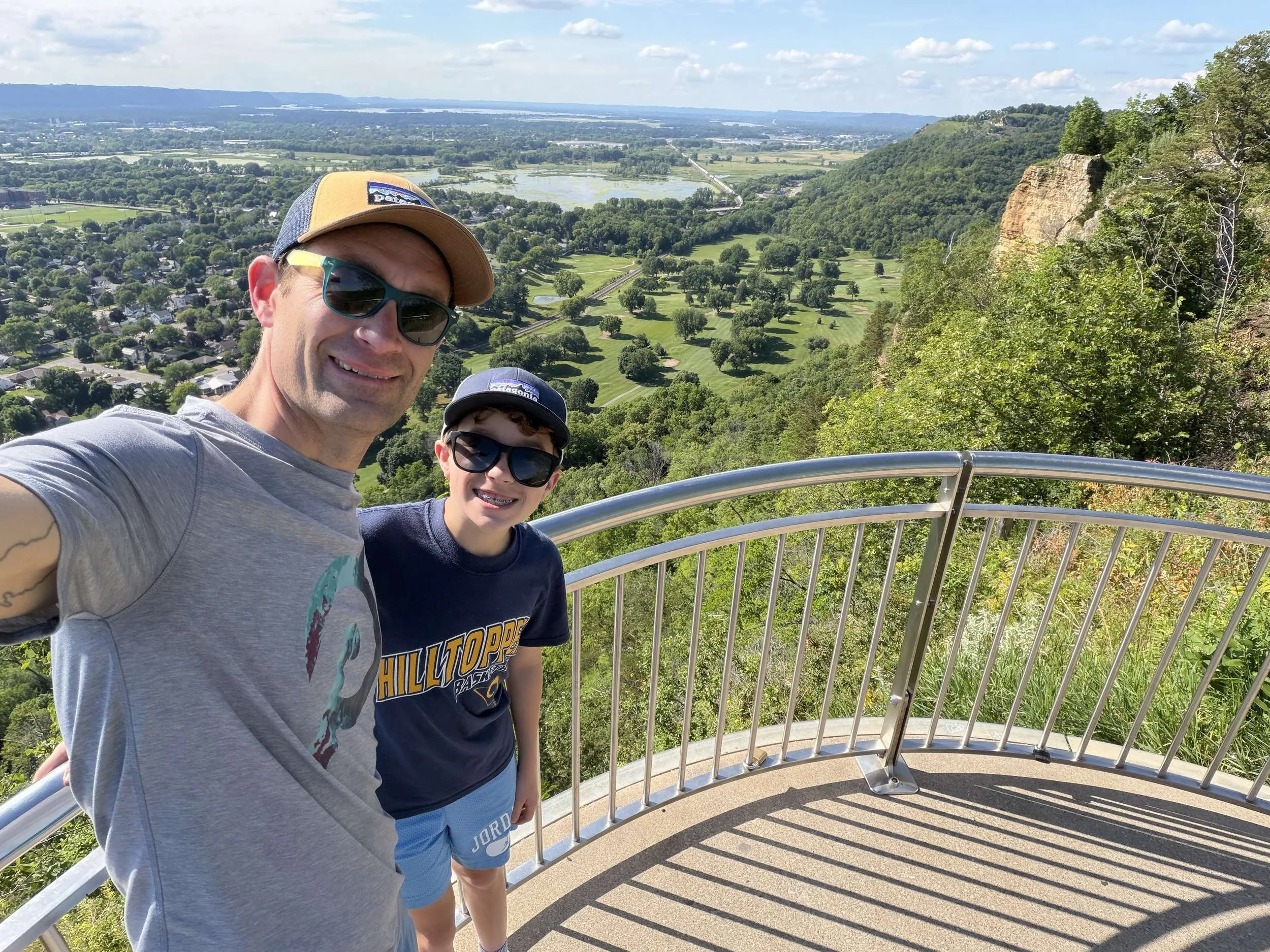
This summer my 12-year-old son Xavier and I did something we'd been talking since the winter: we packed up, hit the road, and set out on a weeklong father-son road trip from Milwaukee to the Badlands and the Black Hills of South Dakota.
The drive out is roughly 12 hours, so rather than grind it out in one shot, we decided to split it across two days and actually enjoy the journey: Stretch our legs, get a real hike in, and see a few roadside oddities along the way.
Here's how day one went.
The hike: Grandad Bluff in La Crosse
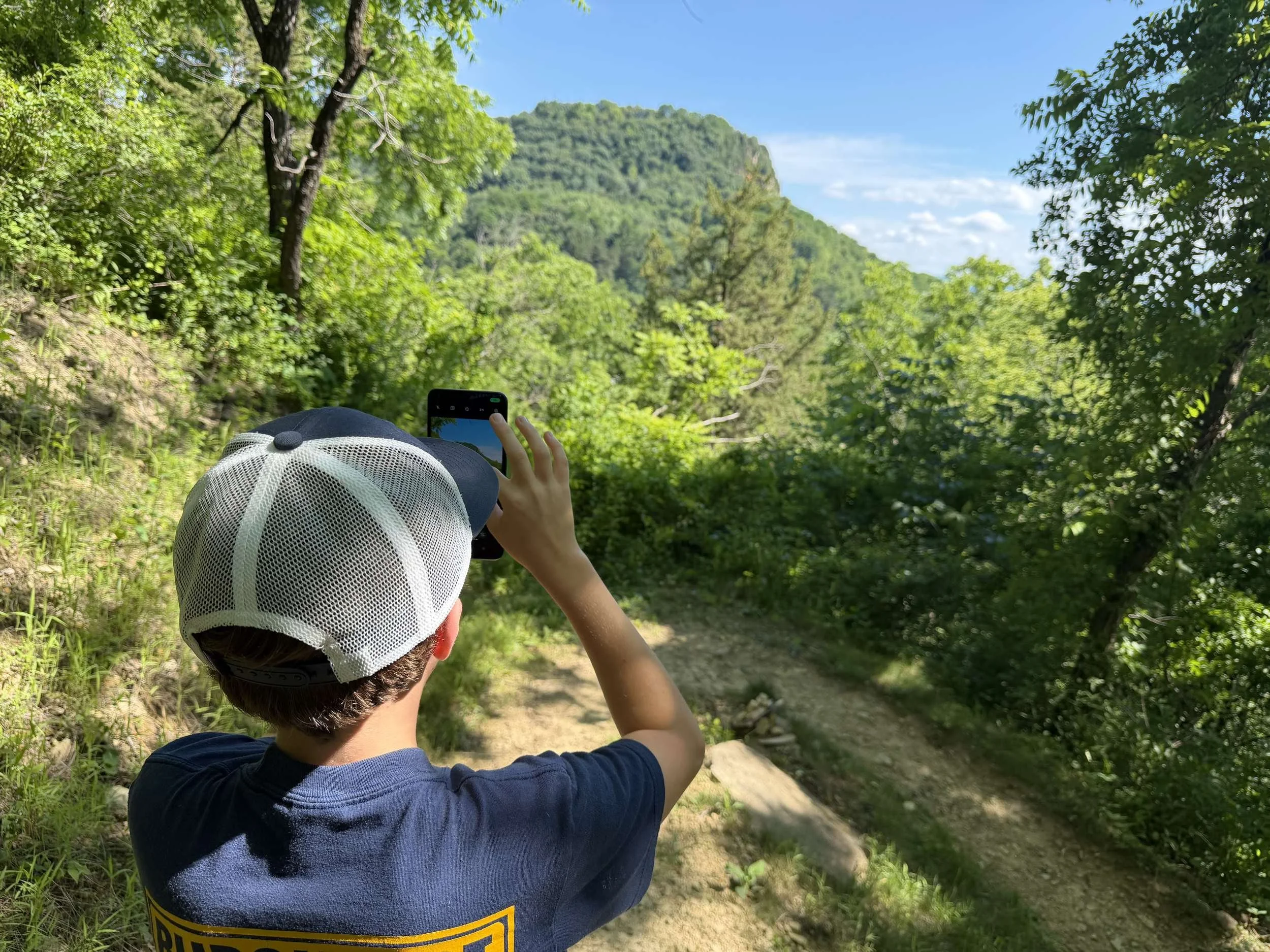
The first major stop came in La Crosse and the highlight of day one — hiking Grandad Bluff.
If you've never been, Grandad Bluff is the towering landmark that watches over the entire city of La Crosse. It rises about 600 feet above town and sits 1,184 feet above sea level, making it the tallest bluff in the area and a defining feature of Wisconsin's Driftless Region: the rugged, un-glaciered corner of the state where the bluffs and coulees never got flattened by the last ice age. It’s the same landscape features that also makes Devil’s Lake so dramatic.
From the top, you can see across three states: Wisconsin, Minnesota, and Iowa, with the Mississippi River winding through it all. Wisconsin Trails readers once voted it the most scenic view in the state, and standing up there, it's hard to argue.
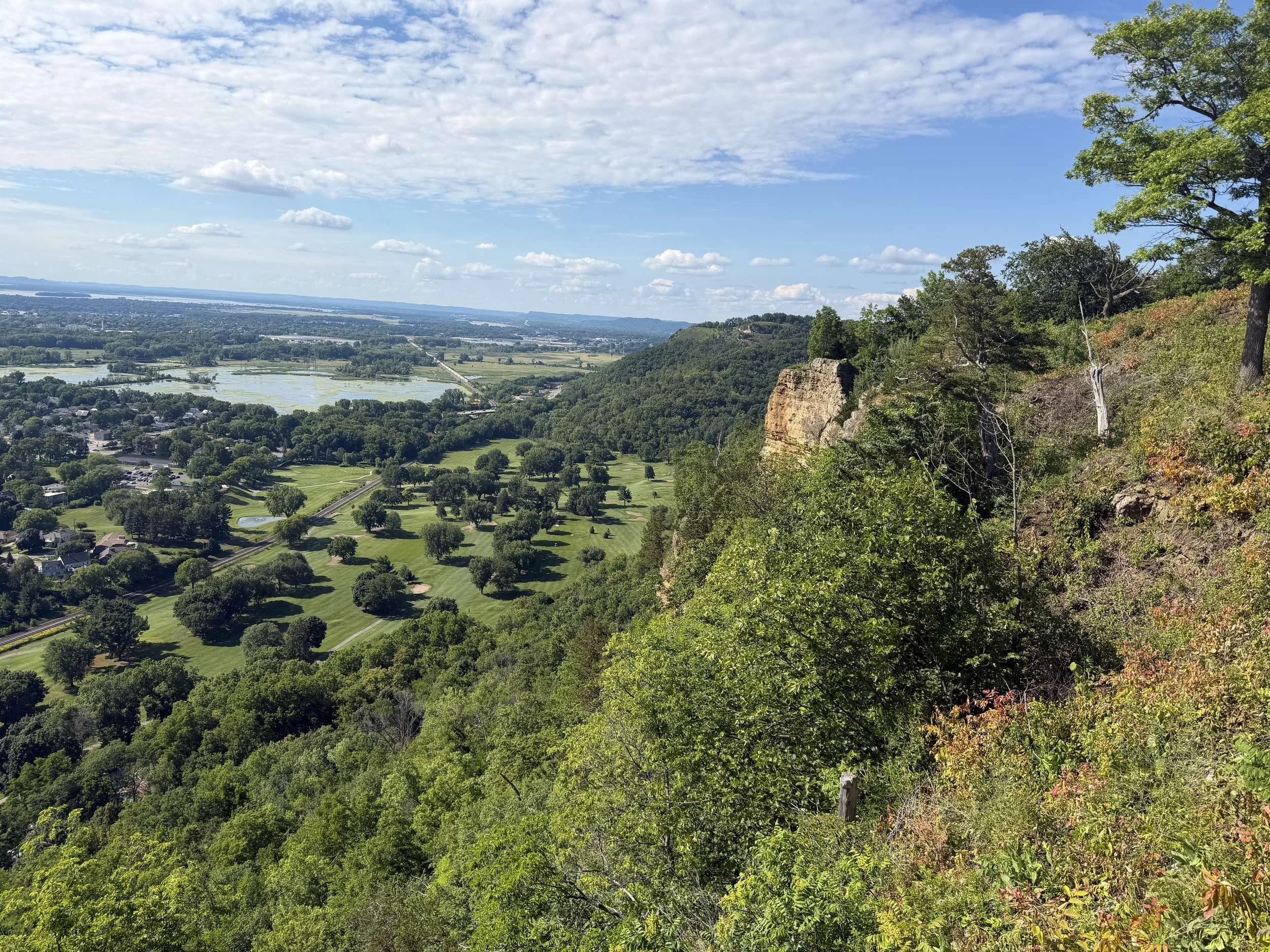
Getting there is easy: You simply drive to the overlook. But there are also plenty of trails around the spot to make it feel like you earned the view.
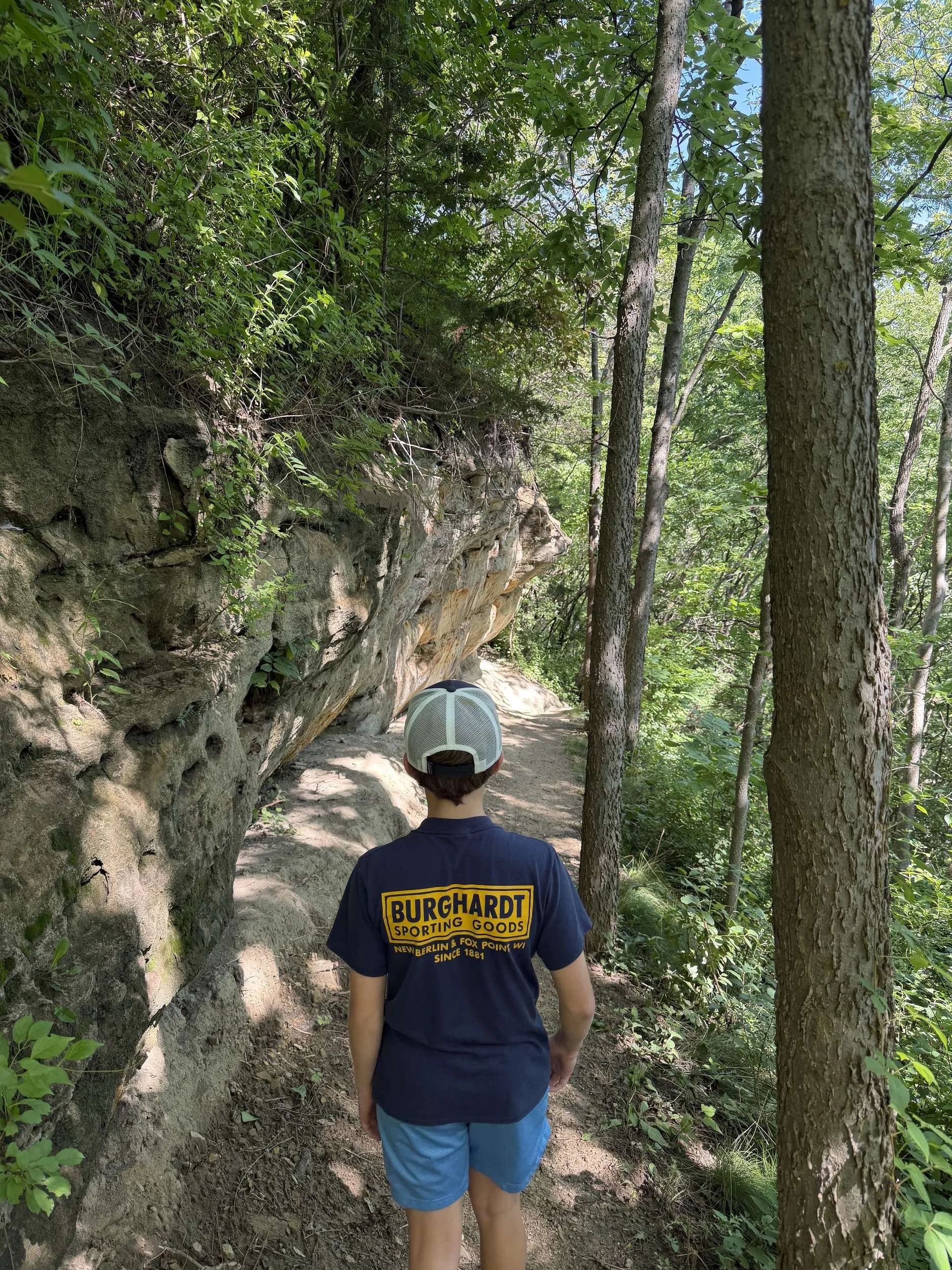
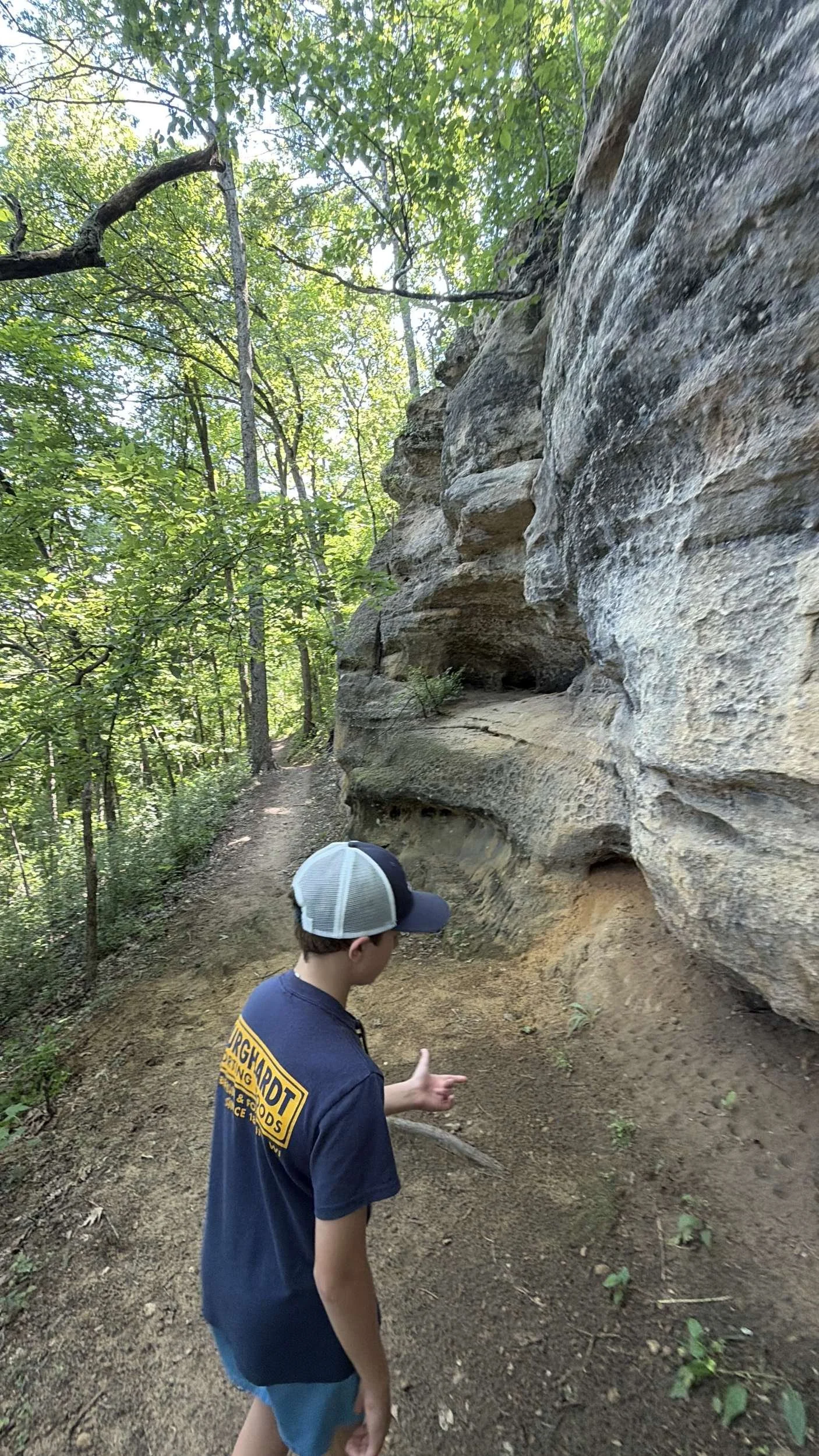
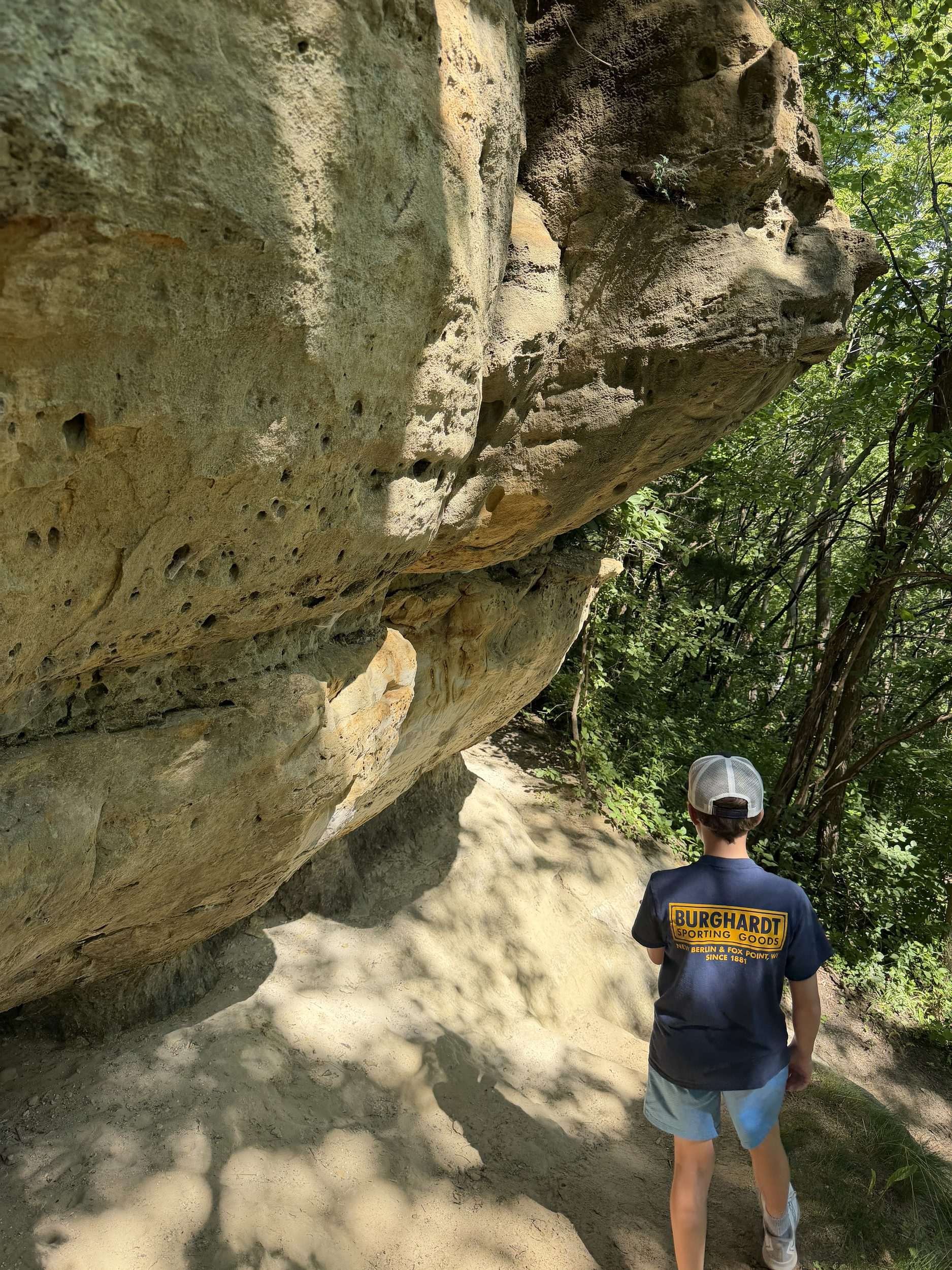
We hiked a roughly 2.8-mile loop through the bluffside trail system (the Wolfsbane–War Eagle–Wilder Way–Tramway loop, if you want to look it up on AllTrails), with about 470 feet of climbing. It's rated moderate and it lived up to it. A genuinely challenging climb in the summer heat, but shaded, beautiful, and full of payoff.
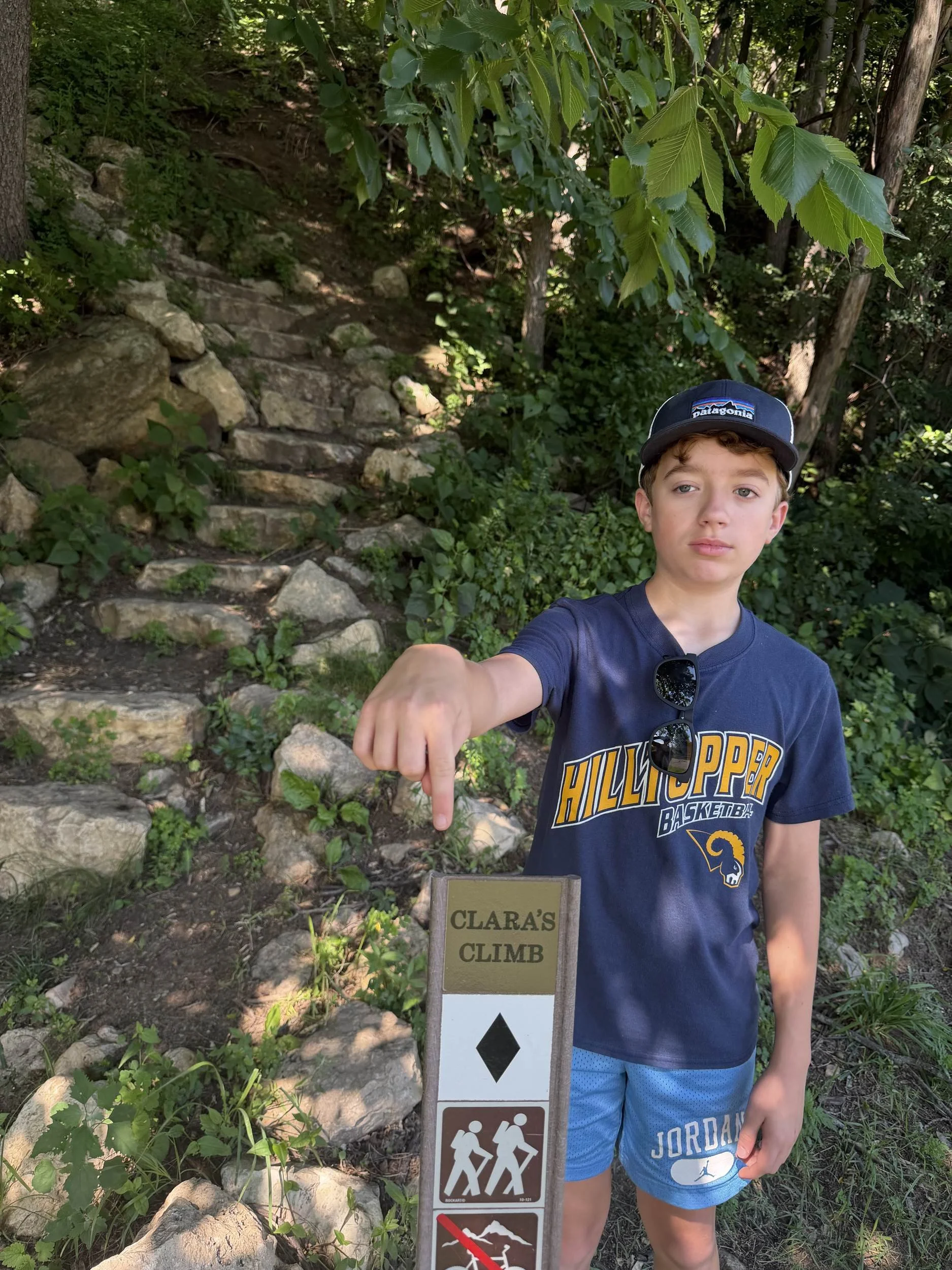
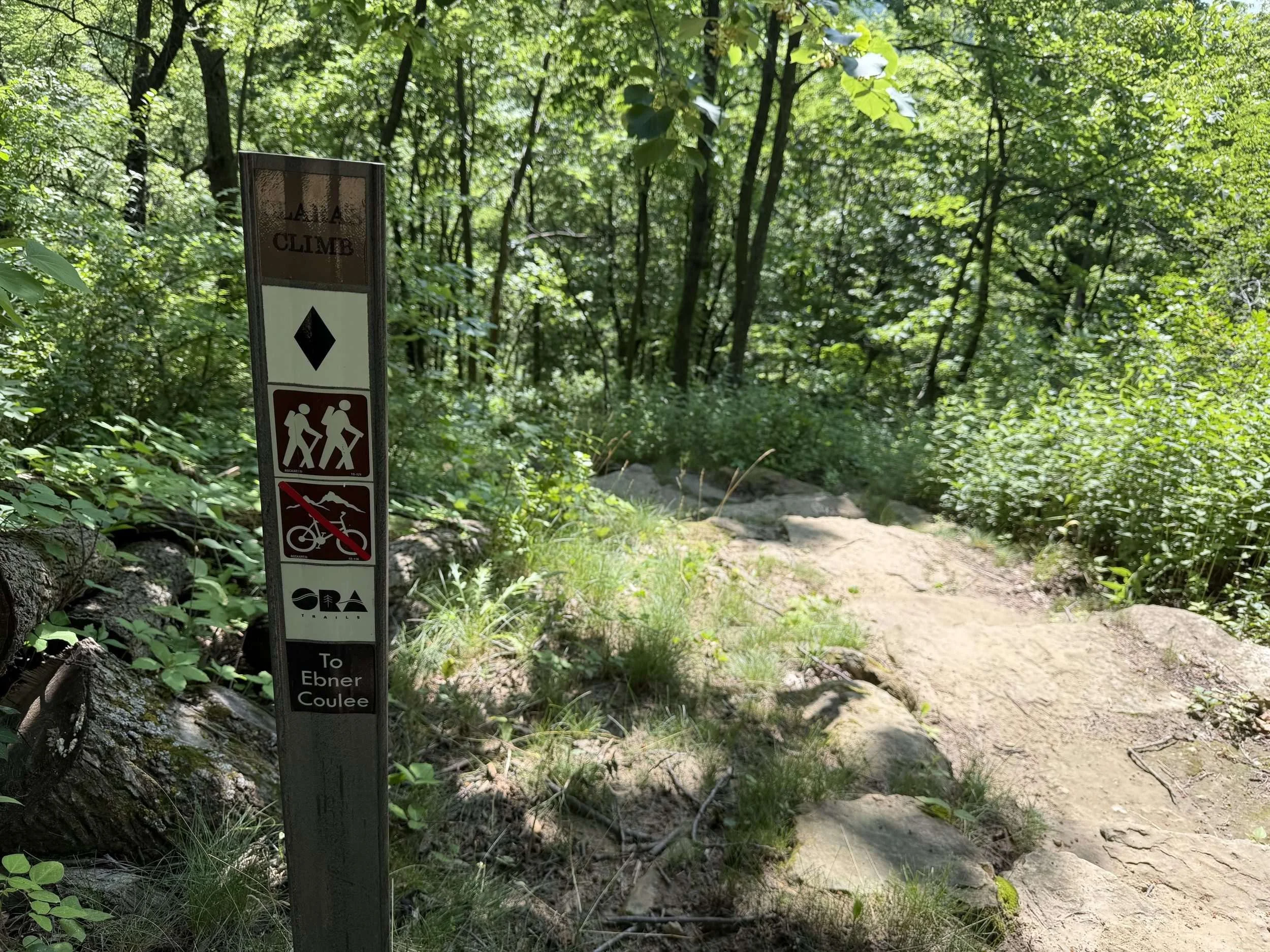
Along the way we passed dramatic sandstone outcroppings carved out over thousands of years and a steep section fittingly named "Clara's Climb." We had to send that picture to my daughter, Clara.
A little history for the trail: Grandad Bluff was very nearly lost. In the early 1900s, it was being quarried away for its limestone used in La Crosse roads and building foudations, until the hill was looking, as one resident put it, "burned over."
In 1909, a prominent local family stepped in: Ellen Hixon and her son Joseph bought the bluff to stop the quarrying, and in 1912 the family donated it to the city as a park. There's a bronze statue of Ellen Hixon near the overlook today honoring the woman who saved the view.
The stone shelter at the top was built in 1938 by the Works Progress Administration during the Great Depression, using stone from the bluff's own former quarry.
There's also a quiet historical marker up top noting that this bluff was the site of the first complete Christian worship service in La Crosse, held by a company of pioneer missionaries who climbed to the summit back in 1850. People have been hauling themselves up this hill for a very long time. We were just the latest.
Before leaving La Crosse, we made charging stop number two at a Kwik Trip with a fast charger. Ten minutes did the trick while we grabbed dinner. While Kwik Trip is well known for its famous offerings, this one had a surprise: Soda on draft. Xavier got himself a Dr. Pepper. Pair that with chicken tenders and potato wedges and you've got a perfectly respectable road-trip dinner.
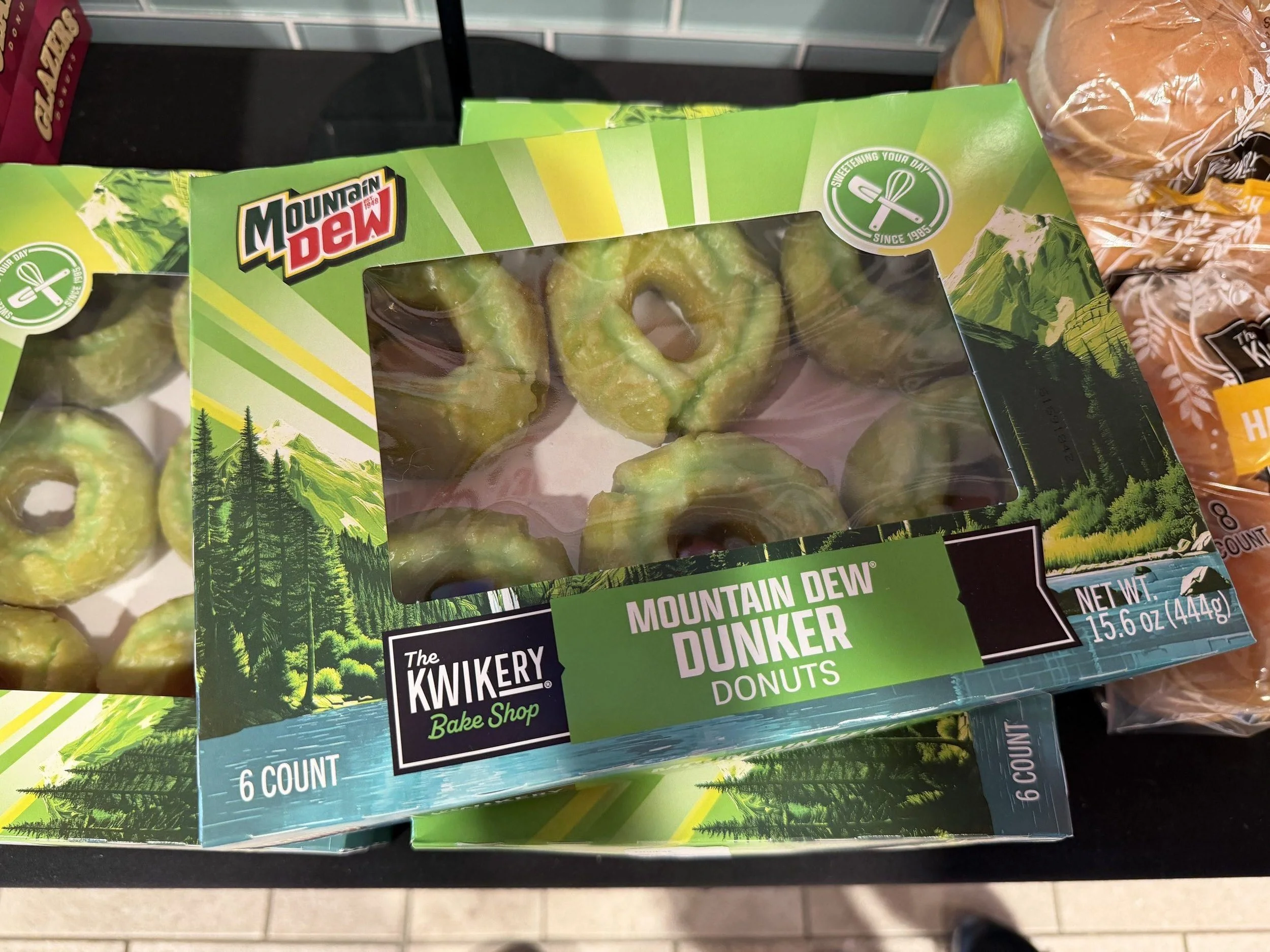
We did show restraint in one area. The bakery case had neon-green Mountain Dew Dunker donuts, glowing like something out of a science lab. Some adventures are best admired from a distance.
Night 1: Small town and a Green Giant
Day one wrapped up across the Minnesota border in the small town of Blue Earth. The town's most famous resident will: a 55-and-a-half-foot-tall statue of the Jolly Green Giant.
The town's giant green mascot stands in a park that doubles as the welcome center — and that welcome center also happens to have the one EV charger in town. So I'm parked right at the foot of the Green Giant, charging up overnight while he keeps watch.
The fun facts on this guy. He's made of fiberglass, weighs 8,000 pounds, wears a size 78 shoe, and his smile alone is four feet wide. He's the tallest statue in Minnesota and ranks among the biggest in the entire country. He was the brainchild of a local radio station owner named Paul Hedberg, who hosted a summer show called "Welcome Travelers," interviewing motorists passing through town and sending them off with cans of Green Giant vegetables from the local cannery.
When Hedberg realized Interstate 90 was about to bypass Blue Earth and dry up his stream of visitors, he figured a giant green man by the highway might lure people back into town. The statue was bolted to its base on July 6, 1979.
At the base of the statue, there is a plaque that thanks all the local businesses that banded together to donate $5,000 to make this statue a reality.
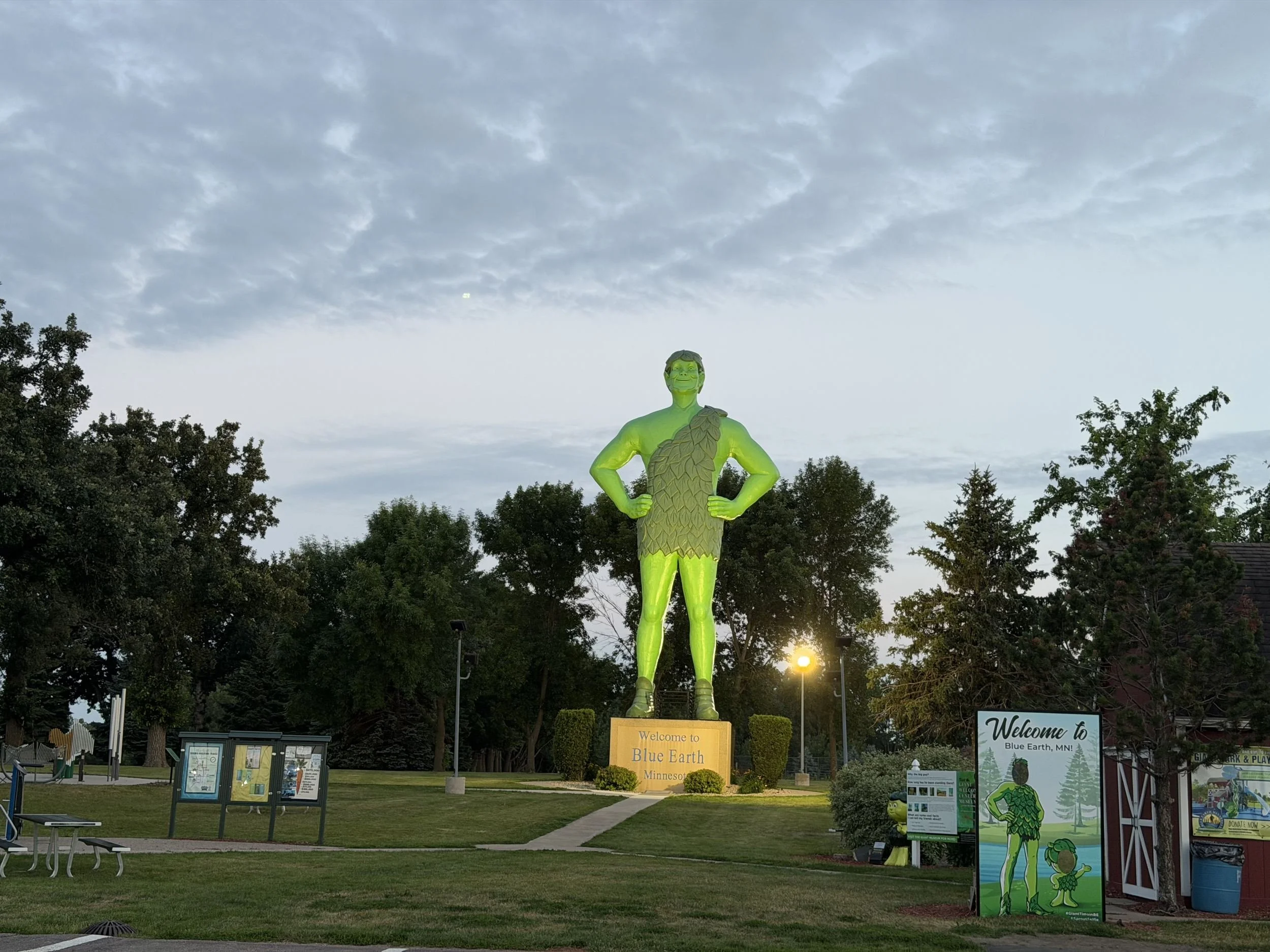
Decades later, here we are, two more travelers stopping to see the Giant on our way to the Hills.
One more thing worth knowing for the trivia round: the Giant arrived just in time to preside over the dedication of I-90's "Golden Stripe" — the spot where the highway's eastern and western construction crews finally met, completing a 3,028-mile route from Boston to Seattle. And every winter, the Blue Earth Fire Department wraps a giant red scarf around his neck to keep him warm.
To be continued...
Two states in, the Badlands and Black Hills ahead.
We'll see you in the morning. More to come.
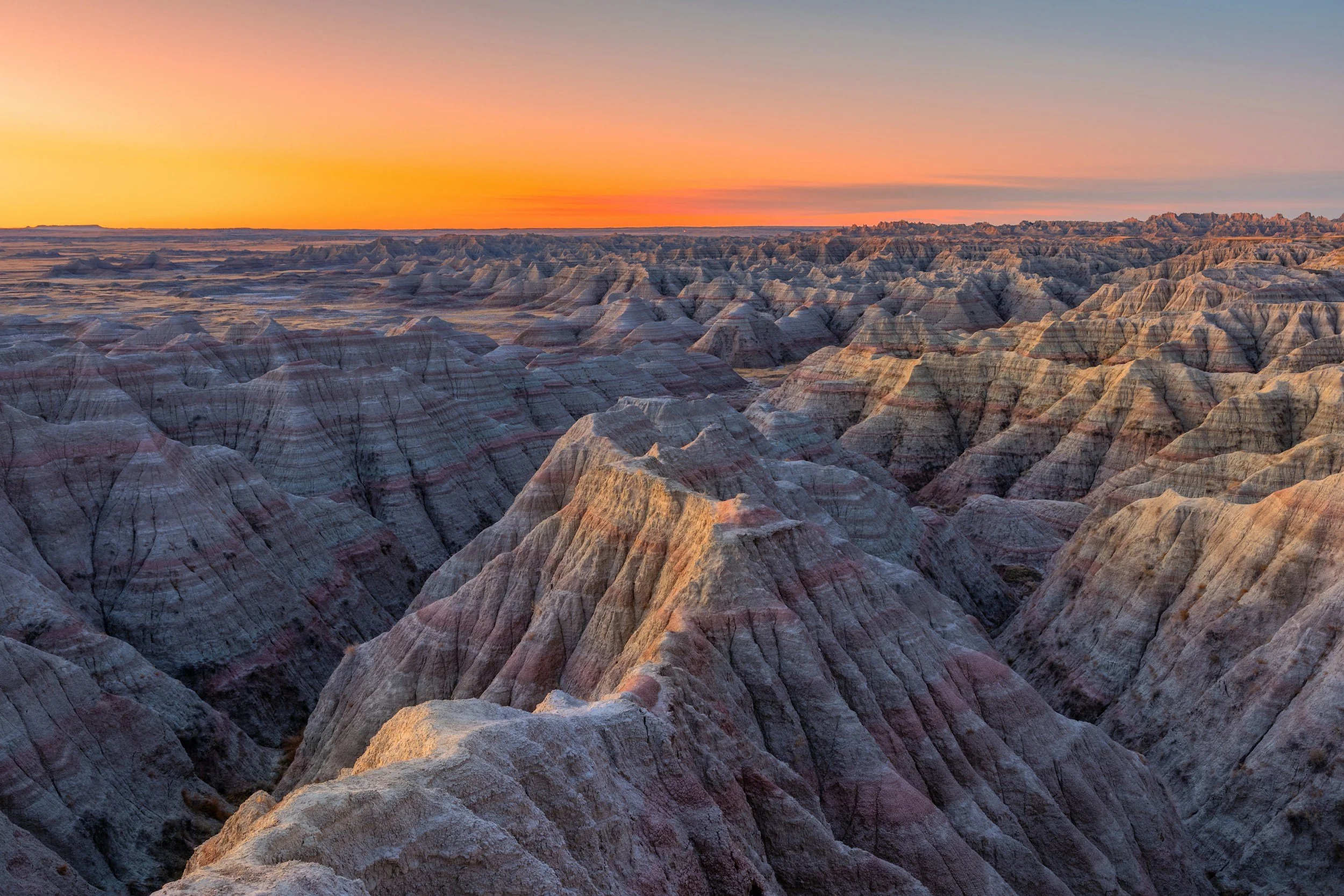
We packed up, hit the road, and set out on a weeklong father-son road trip from Milwaukee to the Badlands and the Black Hills of South Dakota.