

Long View: The Future of Buckley Park’s Lake Michigan Bluff
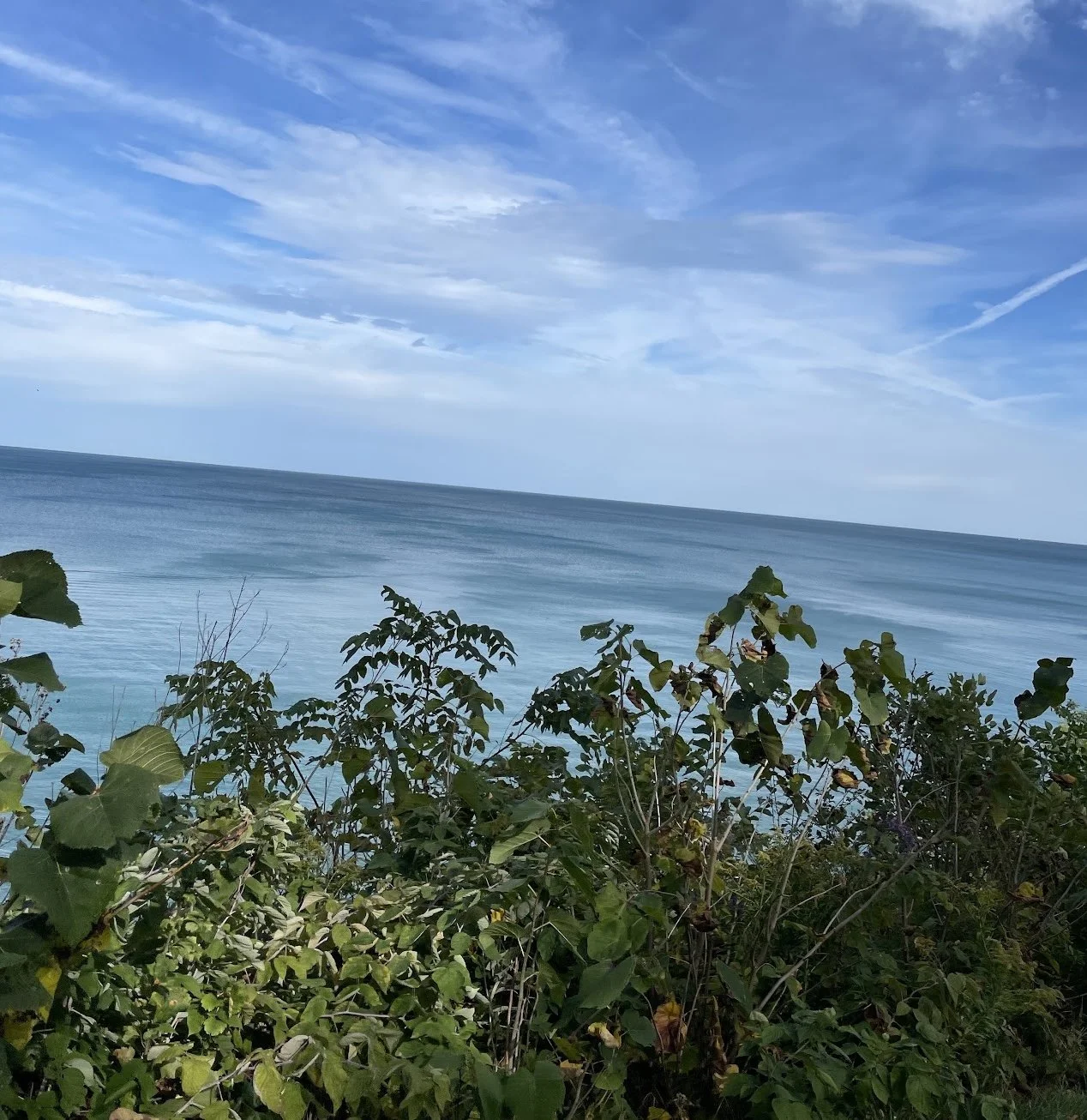
One of Whitefish Bay’s quieter lakefront parks could be the next chapter in a much larger story playing out along Milwaukee’s North Shore: how communities protect steep Lake Michigan bluffs while still keeping them beautiful, accessible and enjoyable for families.
Whitefish Bay is considering a multi-year ecological restoration at Buckley Park that would remove invasive vegetation, reintroduce deep-rooted native plants and improve views of Lake Michigan while protecting the bluff from erosion.
The Village Board is scheduled to consider the first planning phase Monday, September 21.
But Buckley isn’t an isolated project.
Just a few miles south, Shorewood has spent decades restoring the bluff at Atwater Park. Whitefish Bay recently completed a significant ecological and stormwater project at Klode Park. And Shorewood is now beginning another major restoration at the Shorewood Nature Preserve.
Together, the projects illustrate a changing philosophy along the North Shore: instead of treating bluff vegetation simply as landscaping, communities are increasingly managing these slopes as complex natural systems.
The challenge: Views without destabilizing
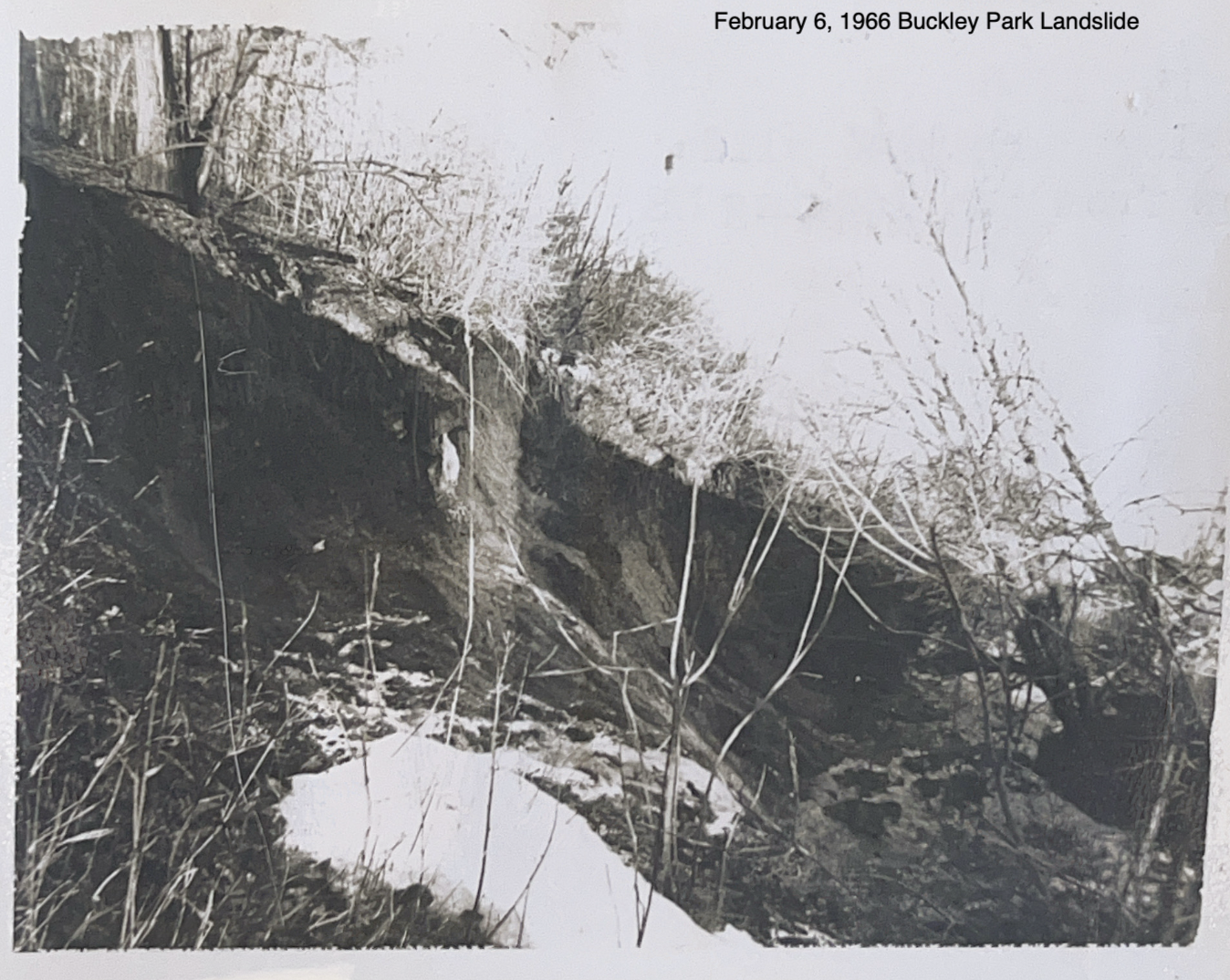
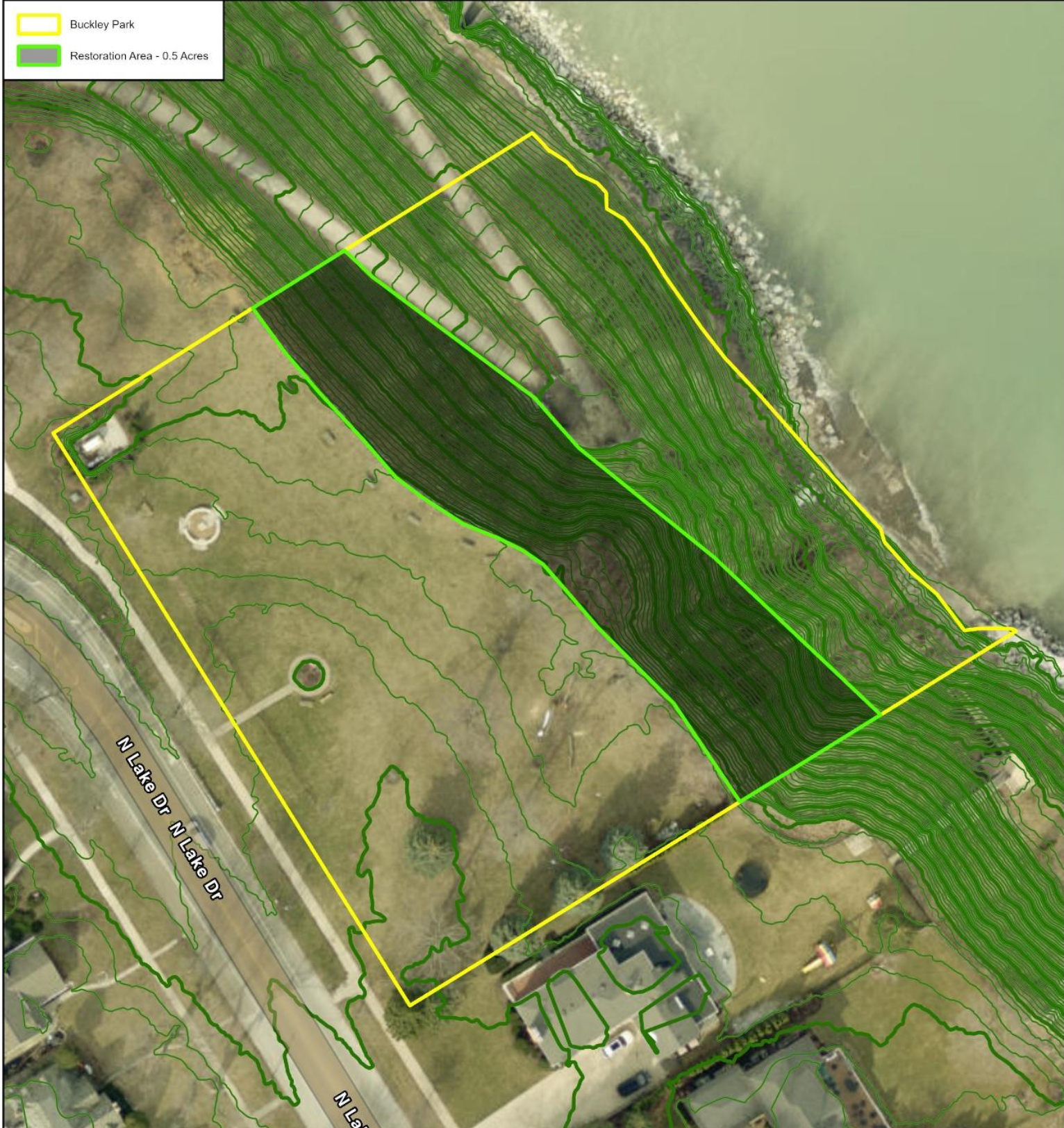
Above: The 1966 landslide, the switchback today an the proposed restoration area
Buckley Park sits at 5000 N. Lake Drive, immediately north of Milwaukee County’s Big Bay Park.
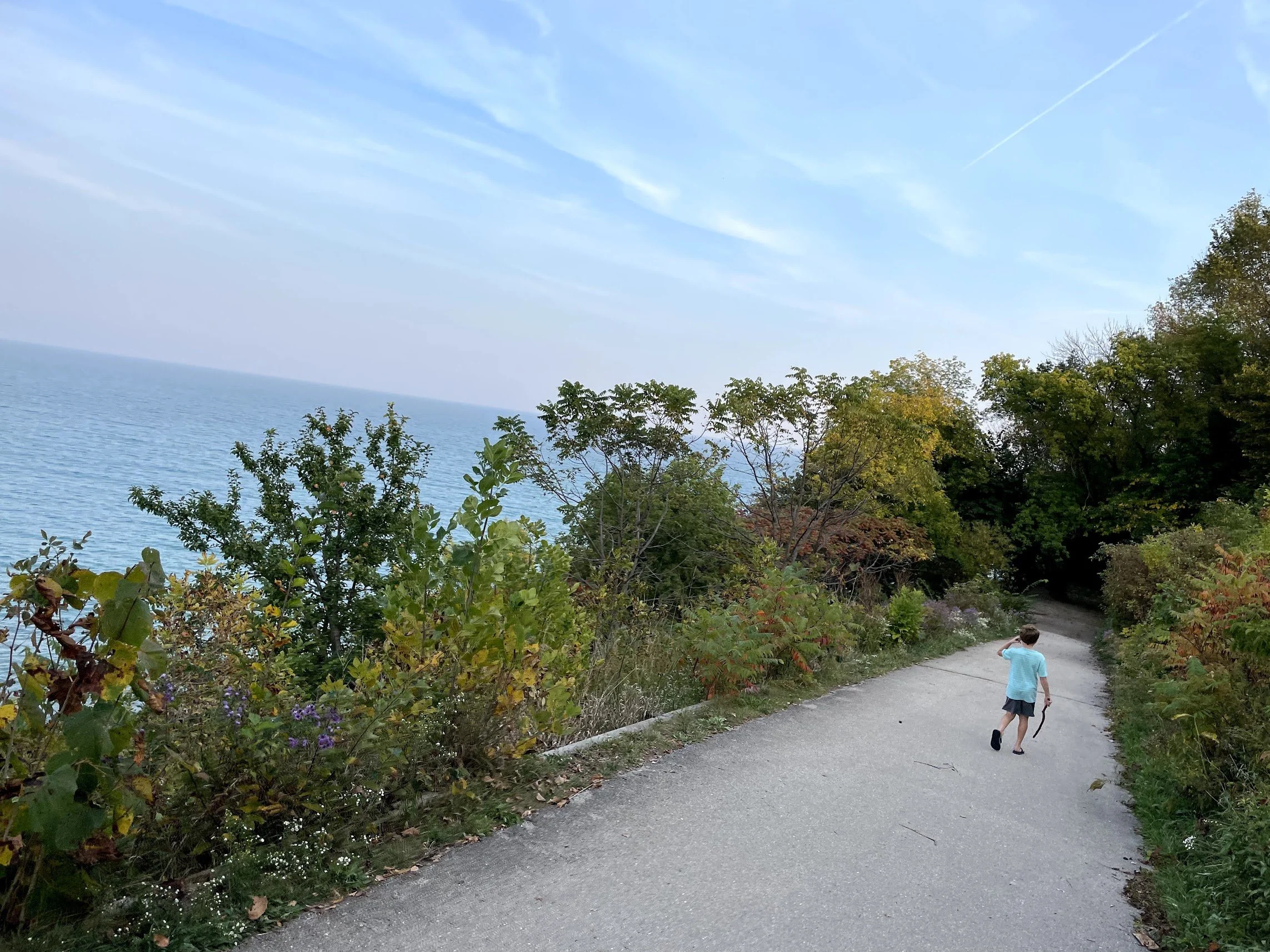
A paved switchback path descends the Lake Michigan bluff toward the beach, making Buckley an appealing — and often much quieter — lakefront stop.
Residents have expressed interest in improving the view of Lake Michigan from the top of the park. The existing vegetation can obstruct that view.
The obvious solution might seem to be simply cutting the vegetation back.
But on a Lake Michigan bluff, it is much more complicated.
Village staff notes that Buckley has a history of bluff erosion, including a significant slide documented in 1966. The Village is therefore hesitant to continue simply removing vegetation every year, both because of worker safety and because doing so could increase erosion risk.
Instead, Whitefish Bay is considering a restoration intended to improve the view while establishing vegetation specifically suited to stabilizing the slope.
What would actually happen at Buckley Park?
The Village has asked Native Range Ecological to develop a restoration plan for approximately half an acre of the upper bluff.
The project area stretches from the crest of the bluff to the first tier of the paved switchback path.
The initial work would include a topographic survey, plant inventory, soil analysis and an evaluation of erosion and structural stability.
The eventual restoration plan would then identify invasive woody plants for removal, recommend native species for installation, create an erosion-control strategy and establish long-term maintenance standards.
The goal is especially interesting: create a more open view toward Lake Michigan while permanently stabilizing the area with deep-rooted perennial native plants.
In other words, Buckley would not simply become a cleared hillside.
It would become a deliberately designed native landscape.
Atwater Park shows what that can look like
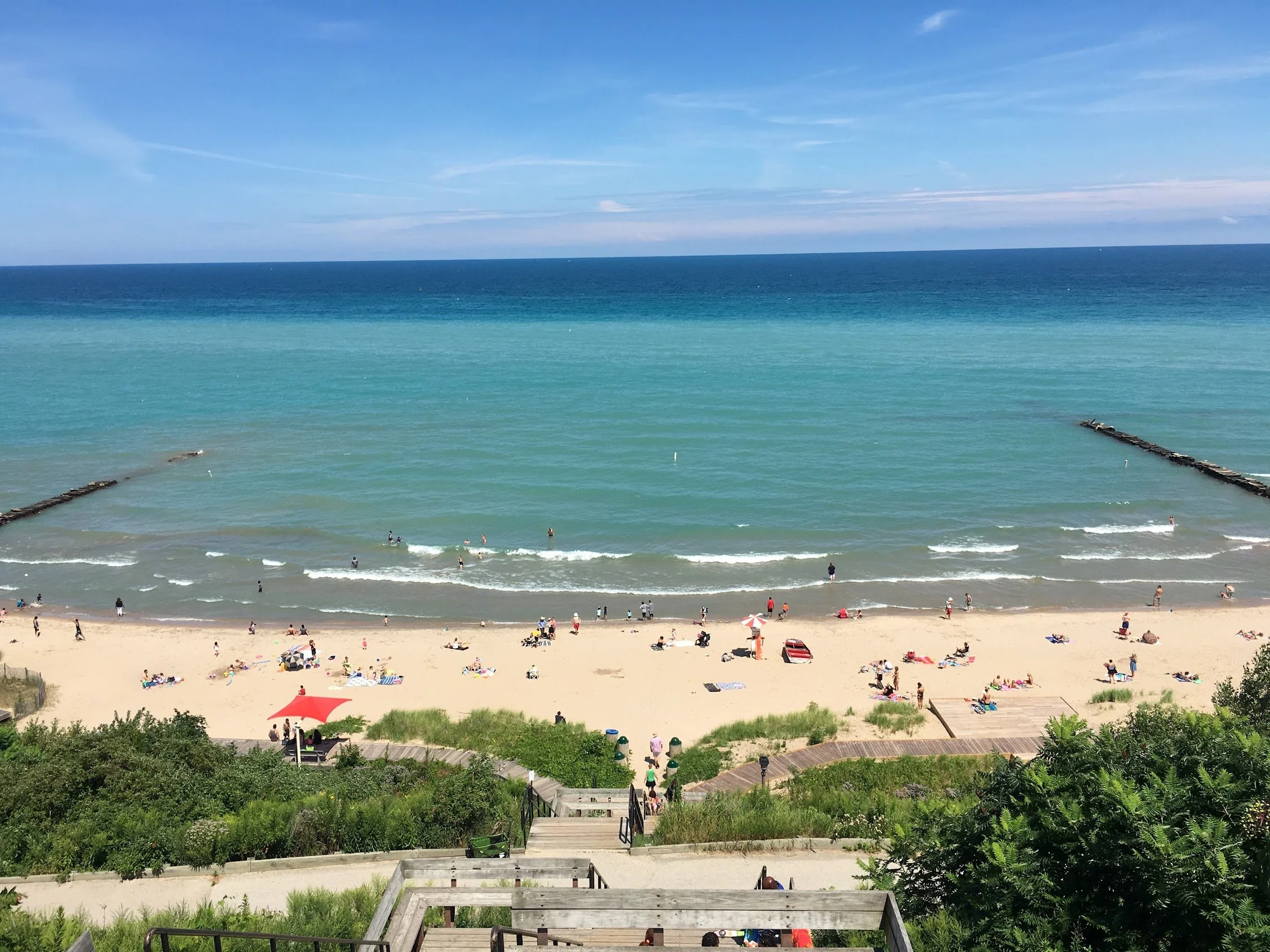
Families who visit Shorewood’s Atwater Park have already seen a version of this approach evolve over more than two decades.
Atwater’s bluff has endured several major erosion events. Heavy rain damaged the bluff and beach-access pathways in 1997, followed by another major failure during intense storms in 2010.
Shorewood responded with increasingly comprehensive restoration work, including structural stabilization and extensive native plantings.
North Shore Family Adventures took a deeper look at that history in our feature on Atwater Park’s bluff restoration and beach stewardship.
A major 2012 project combined engineering work with vegetation designed to help stabilize the slope.
Then Mother Nature tested the system again.
Powerful January 2020 storms damaged portions of the dunes at the bottom of the bluff. Shorewood and its partners subsequently planted approximately 3,000 dune grasses along the shoreline to help stabilize sand and create wildlife habitat. (North Shore Family Adventures)
The work has continued rather than ending with one construction project.
Shorewood approved another two-year restoration phase focused on removing invasive vegetation, installing deep-rooted native plants and maintaining the bluff while the restored plant community becomes established. The project has been supported largely through the Milwaukee Metropolitan Sewerage District’s Green Solutions program. (North Shore Family Adventures)
That long timeline is worth remembering when looking at Buckley.
Bluff restoration is rarely a one-and-done landscaping project.
It is ongoing ecological management.
Klode Park offers an even closer example
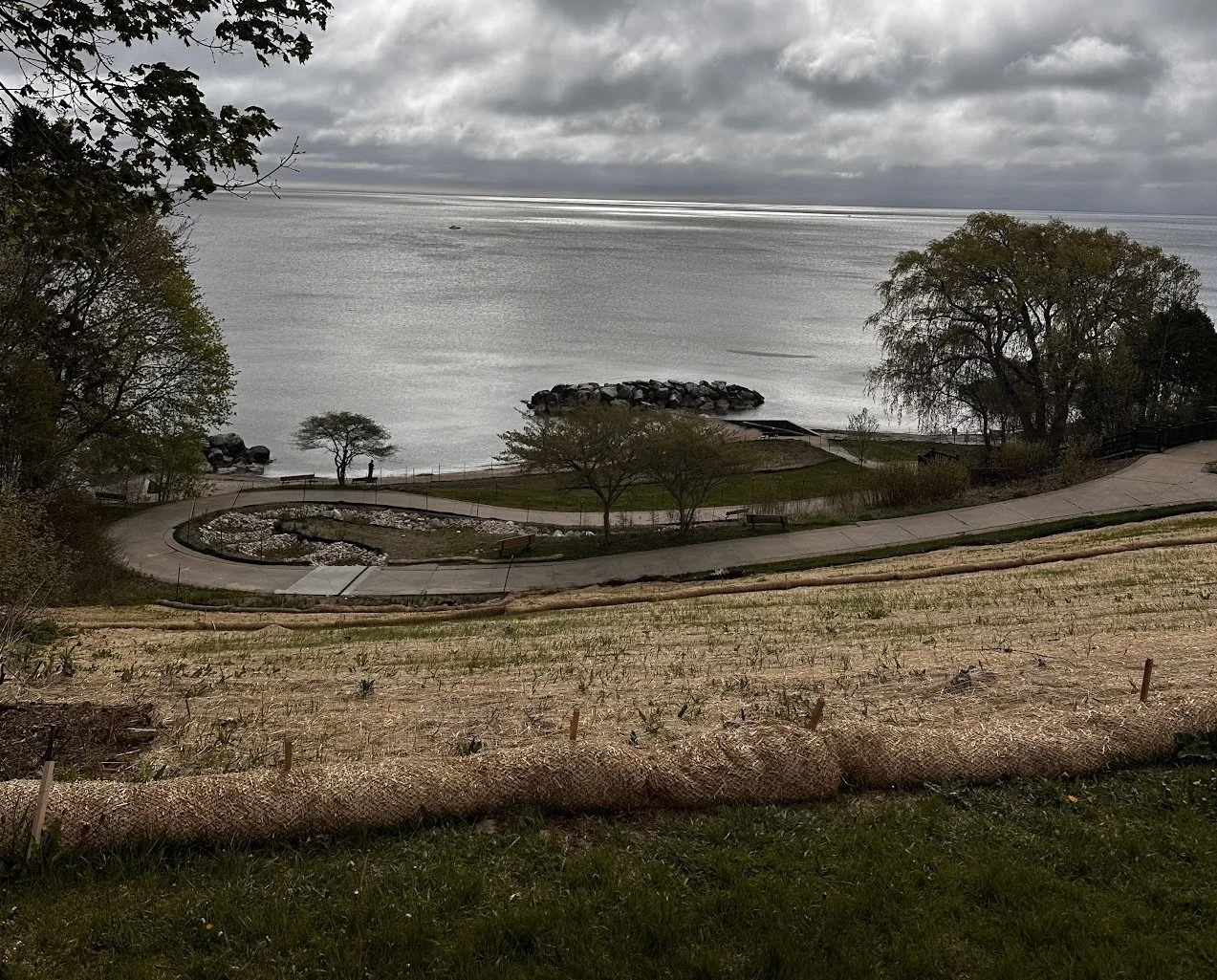
Whitefish Bay itself has already embraced many of the same ideas at nearby Klode Park.
A recent restoration there addressed both stormwater and erosion using green infrastructure, including a regenerative stormwater conveyance system and bioswale.
The project was designed to capture and treat as much as 75,000 gallons of runoff while slowing water before it reaches the bluff and Lake Michigan.
More than 30 native species of flowers, grasses and shrubs were also incorporated into the restoration to help stabilize the landscape while providing habitat for birds, pollinators and other wildlife.
We covered that transformation in Klode Park Restoration Underway.
That makes the proposed Buckley restoration especially interesting.
Within a relatively short stretch of Whitefish Bay’s shoreline, two parks could soon demonstrate slightly different versions of the same idea: using vegetation, drainage improvements and ecological design together rather than treating them as separate issues.
Buckley’s previous infrastructure project
There is another reason this particular bluff deserves attention.
Buckley and neighboring Big Bay recently underwent a massive storm-sewer repair after the failure of a critical outfall beneath the park threatened both drainage infrastructure and the bluff itself.
The emergency response ultimately included underground rehabilitation, structural concrete work, a new drop manhole and restoration of portions of the bluff and park.
We covered that project when Big Bay and Buckley Park partially reopened following the repairs.
So the newly proposed native restoration can be viewed as another layer in the long-term effort to make the park — and the infrastructure beneath it — more resilient.
Why Lake Michigan bluffs are so tricky
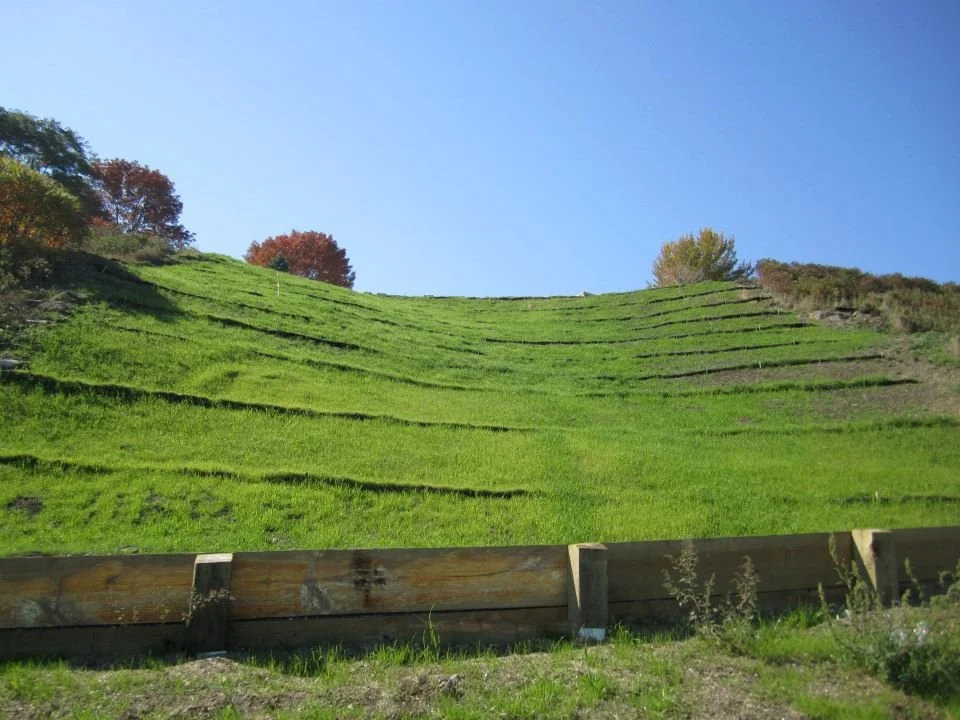
Atwater Park’s bluff restoration
Lake Michigan bluffs may look permanent, but they are naturally dynamic landscapes.
The Wisconsin Department of Natural Resources notes that Great Lakes bluffs can be affected by groundwater, freezing and thawing, the slope of the bluff itself and erosion at its base from waves.
When the bottom of a bluff erodes, the upper portion can eventually slump or fail.
That is why shoreline projects often require much more than planting a few shrubs or installing rocks along the water. Engineers and ecologists may have to consider lake levels, wave energy, stormwater, soil conditions, groundwater and what is happening on neighboring stretches of shoreline. (Wisconsin DNR)
Wisconsin Sea Grant has studied this issue particularly closely along the stretch of Lake Michigan between Shorewood and Port Washington — essentially the coastline that includes much of the North Shore.
Its work has examined how changing Lake Michigan water levels affect beaches and bluff stability and has brought together specialists in coastal engineering, geology, ecology, landscape architecture and land-use planning. (Wisconsin Sea Grant)
That multidisciplinary approach helps explain why modern bluff projects increasingly combine engineering with ecological restoration rather than relying entirely on concrete, stone or retaining structures.
Native plants can function as infrastructure
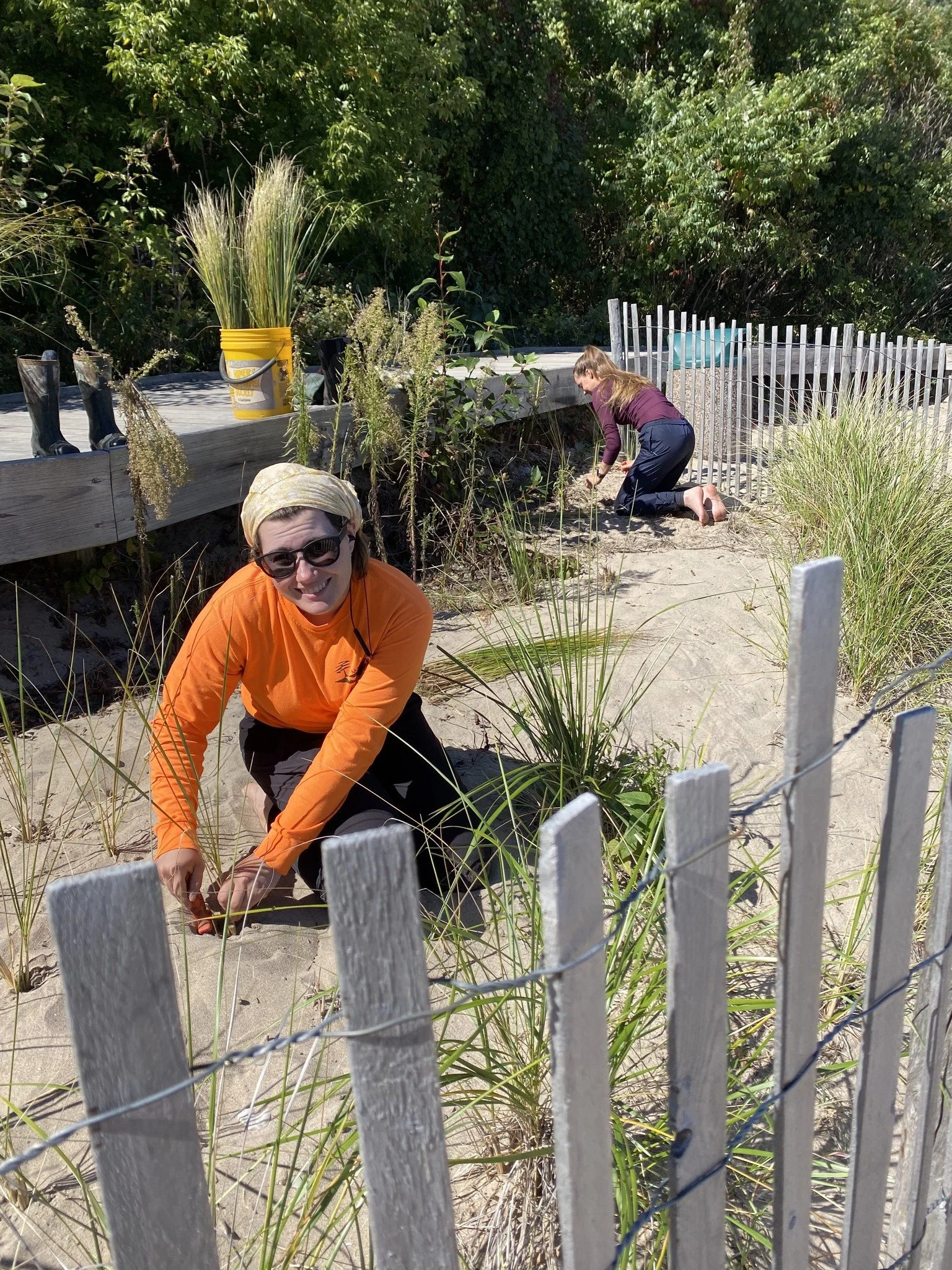
Atwater Beach
One of the most interesting ideas behind these projects is that plants aren't merely decorative.
Deep-rooted native vegetation can help hold soil in place while slowing and absorbing water.
At the bottom of the bluff, dune grasses and other shoreline plants can help stabilize sand.
Higher on the slope, native grasses, flowers, shrubs and trees can create root systems at different depths while providing habitat for insects, birds and other wildlife.
The DNR specifically identifies planted vegetation — including dune grasses and native shoreline trees — as one tool for stabilizing sandy Great Lakes shorelines. (Wisconsin DNR)
You can even see examples of naturally vegetated Lake Michigan bluff systems elsewhere in Milwaukee County. At the DNR-designated Warnimont Bluff Fens, groundwater-fed portions of the bluff support specialized plant communities, and vegetated sections help stabilize what remains an inherently changing coastal landscape. (Wisconsin DNR)
Shorewood is taking the idea even further
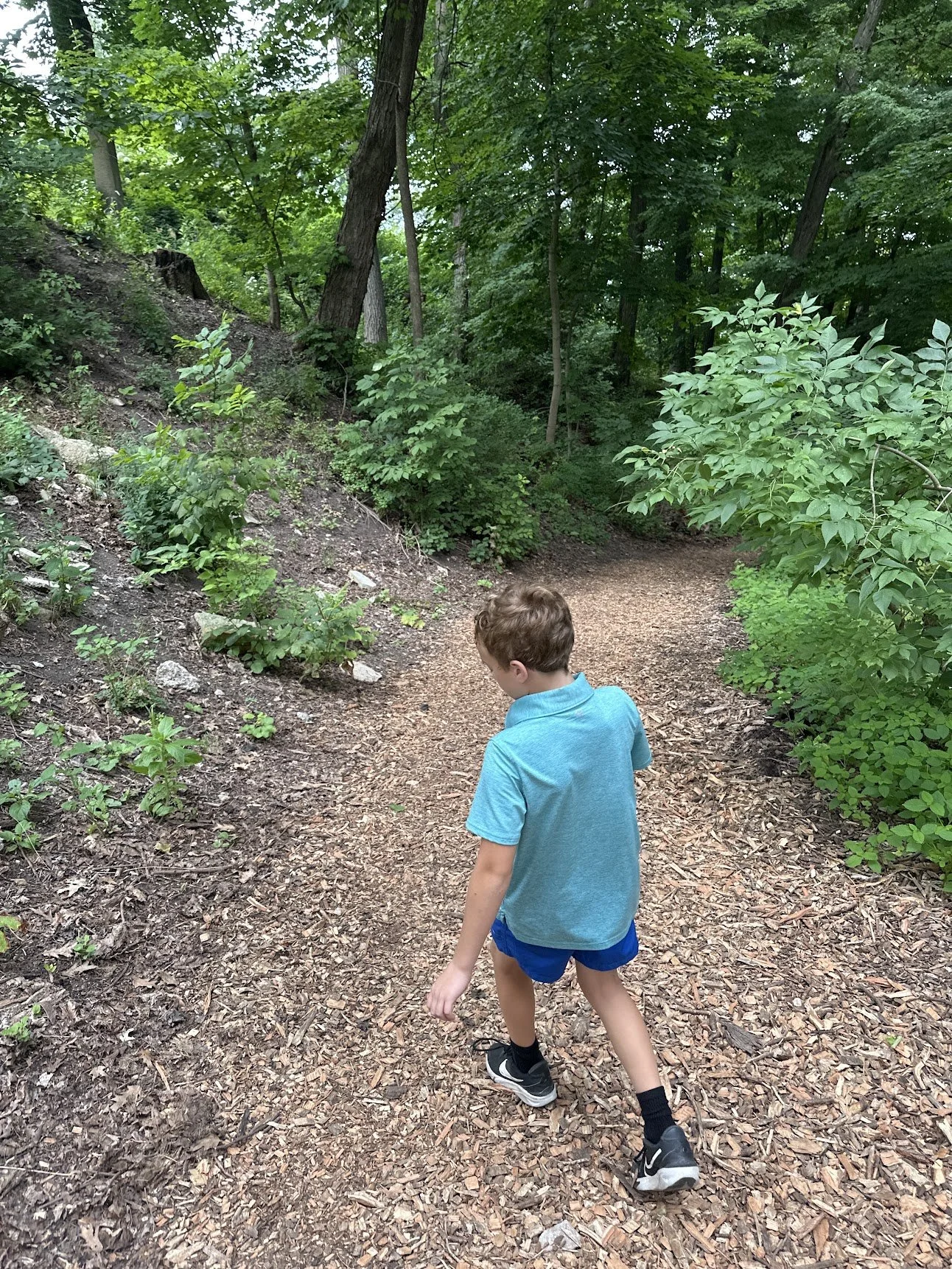
Atwater isn't Shorewood’s only current restoration effort.
The Village and community partners are beginning a major restoration of the eight-acre Shorewood Nature Preserve, supported by a $250,000 grant from Bader Philanthropies.
That project includes invasive-species management, erosion control, trail improvements, hazardous-tree work and a new shoreline-access stairway.
We recently covered the project in Shorewood Nature Preserve Receives $250K for Restoration.
The goal there is not to transform the preserve into a manicured park. Instead, the project is designed to improve access and safety while allowing the forest and shoreline habitat to recover.
That same tension — public access versus protecting a sensitive natural landscape — runs through Atwater, Klode and now Buckley.
What would the Buckley project cost?
The proposed first-phase contract with Native Range Ecological totals $9,230.
Village staff estimates that the larger restoration could ultimately cost approximately $40,000 over three to four years, funded from the Village’s Stormwater Utility reserve.
If approved, planning could begin in 2026 with restoration work potentially beginning in 2027.
Because invasive species need continued control while newly planted native vegetation becomes established, the Village expects the project to require several years of active maintenance rather than a single construction season.
Make Buckley part of a lakefront outing
Buckley remains one of the quieter places to experience the Whitefish Bay shoreline.
Families can pair it with neighboring Big Bay Park, continue north to Klode Park or head south to Atwater Park to see how another community has approached many of these same shoreline challenges.
You can find all three in our Ultimate Guide to Parks in Milwaukee’s North Shore, including more details on Atwater’s bluff-top park, playground and beach access.
For more shoreline exploring, see our guide to family-friendly Whitefish Bay beaches.
A bigger North Shore story
Buckley Park's restoration may ultimately cover only about half an acre.
But it fits into a much bigger transformation happening along the North Shore's Lake Michigan coastline.
Atwater has spent decades evolving from emergency erosion repair toward long-term native restoration. Klode has added green stormwater infrastructure and extensive native plantings. Shorewood Nature Preserve is beginning a new round of habitat and erosion work. And Buckley could now follow a similar path.
These projects look different because every bluff is different.
But they increasingly share the same basic philosophy: work with the natural landscape, manage stormwater before it becomes an erosion problem, replace invasive plants with stronger native communities and preserve public access without treating these steep Lake Michigan bluffs like ordinary landscaped parks.
For families, the result could be more than a stabilized hillside.
It could mean healthier habitat, cleaner runoff, better lake views and more resilient parks along one of the North Shore’s defining natural features.
The Whitefish Bay Village Board is scheduled to consider plans for new trees around the park and a significant rebuild of the Pee Wee baseball field.