

Whitefish Bay School Crossing Improvements Move Ahead
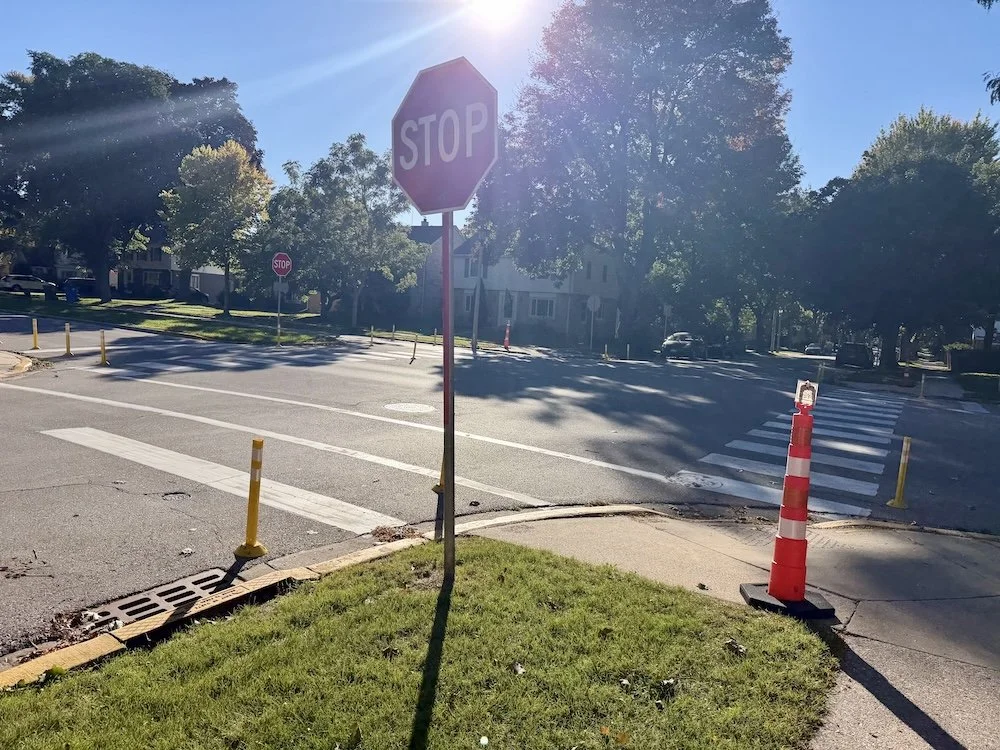
If you’ve seen the upright reflective poles near Whitefish Bay school crossings, those are temporary traffic-calming installations—and a preview of where permanent street changes are planned.
At its October 5 meeting, the Village Board approved a $75,385 construction contract, moving the school crossing project another step toward construction. Work is planned for mid-June through the end of August 2027, while school is out.
The reflective posts let the village test changes to the intersections before building permanent improvements. They narrow the space available to vehicles and help outline proposed curb extensions, giving staff a chance to check turning movements and gather feedback from families and drivers.
The permanent project includes bump-outs at three intersections and other crossing improvements. Bump-outs extend the sidewalk into the street, shortening the crossing distance and improving visibility between pedestrians and drivers.
Public Works Director Matthew Collins said feedback on the temporary installations has been mainly positive. That input is helping shape the final designs, which are approximately 90% complete and expected to be finished by November 1. Residents can continue sharing feedback through the QR codes posted at the temporary crossings.
Which intersections will change?
The village has identified four locations:
Santa Monica Boulevard and Belle Avenue: Bump-outs and intersection improvements near Richards Elementary.
Santa Monica Boulevard and Day Avenue: Bump-outs and intersection improvements near Richards Elementary.
Beaumont Avenue and Santa Monica Boulevard: Intersection improvements near St. Monica School.
Ardmore Avenue and Hampton Road: Bump-outs and intersection improvements near Cumberland Elementary.
The board previously approved these locations. The October 5 vote advances the next phase: preparing for and overseeing construction.
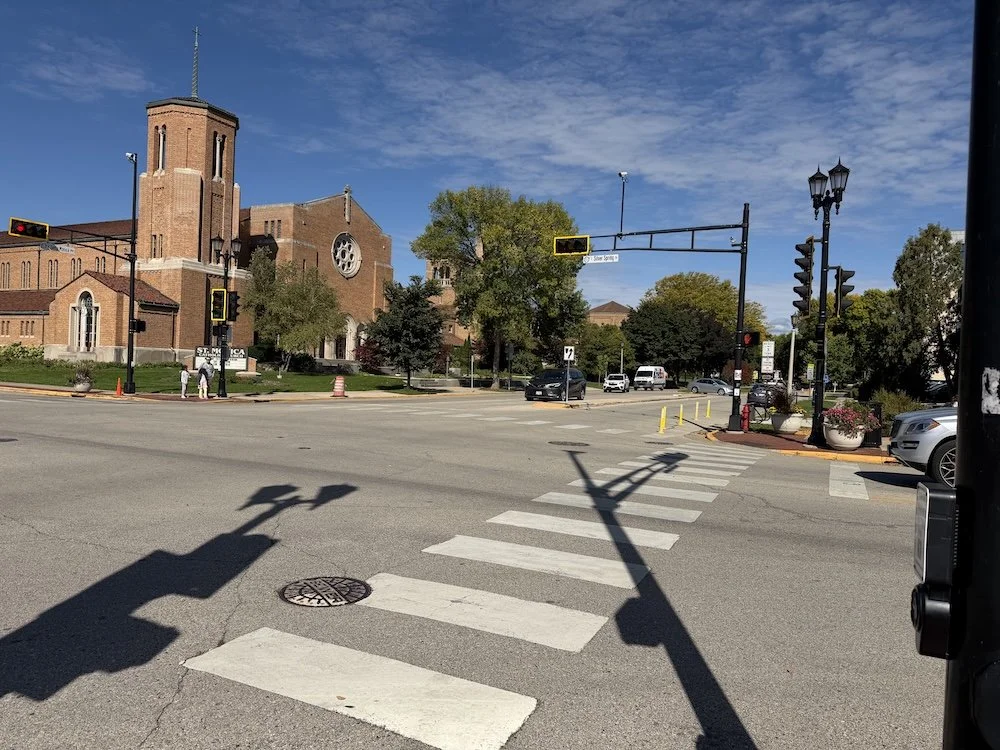
What are temporary traffic-calming measures?
The village began implementing temporary improvements in 2025 following recommendations in its Bicycle and Pedestrian Safety Study. The demonstrations let staff test proposed street layouts and gather resident feedback before committing to permanent construction.
The village described a two-step process: first, staff used tall orange traffic cones to observe pedestrian, bicycle and vehicle movements. After approximately one to two weeks of monitoring, staff determined whether to replace the cones with reflective delineator posts for a longer trial.
The posts narrow the space available to vehicles and help define proposed curb-extension areas. The intention is to encourage slower driving and improve pedestrian safety while allowing staff to evaluate turning movements and access.
The trial offers a chance to experience how a redesigned intersection feels during an actual walk or bike ride to school. For village engineers, it provides an opportunity to adjust the layout before building permanent curbs.
How do bump-outs help?
A bump-out extends the curb and sidewalk into the street at a crossing, shortening the distance pedestrians need to travel across the roadway.
The Federal Highway Administration explains that curb extensions can also improve visibility between drivers and pedestrians.
For children walking to school, that can mean less time in the roadway and a clearer view of approaching traffic. The final layout will vary by intersection.
Collins also explained that this project involves more substantial construction than the simpler concrete “pin-down” installations previously used near Whitefish Bay High School. Permanent intersection work requires more detailed engineering and can involve excavation, grading and stormwater adjustments.
How can residents share feedback?
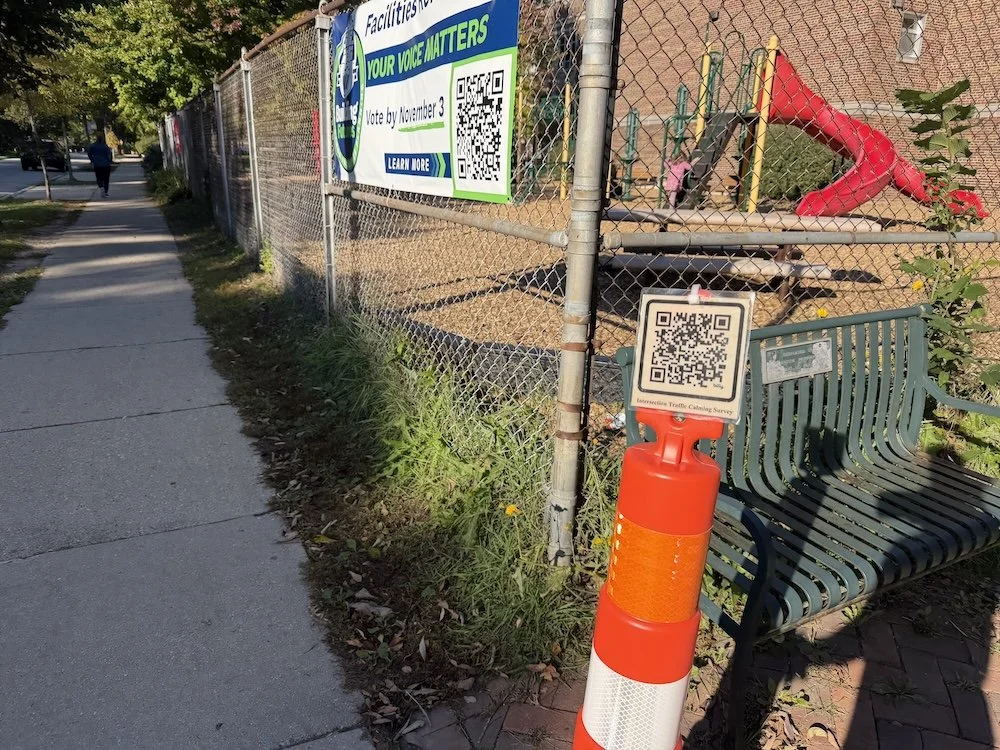
At the October 5 meeting, Public Works Director Matthew Collins said the village is collecting feedback through QR codes posted at the temporary installations.
Residents can also access the Beaumont and Santa Monica intersection survey online. It asks whether the improvements make the intersection safer, whether the yellow posts encourage drivers to slow down, and how safe respondents feel crossing. There is also space for additional comments.
The village’s Traffic Calming Demonstrations page provides links to demonstration surveys. For other school-zone locations, use the QR code posted at the intersection to reach the corresponding form.
Collins described feedback as mainly positive, including reports of improved visibility from school-age families. Some drivers have raised concerns about turning space. He said staff regularly test vehicle movements and would bring a feedback summary to the next Public Works Committee meeting.
When will construction happen?
Design work is approximately 90% complete, with final plans, specifications and estimates anticipated by November 1, 2026.
The planned construction window is mid-June through late August 2027, timed around summer break. Individual intersection schedules and construction access details have not yet been announced.
How is the project funded?
The village identifies $922,600 in available project funding, made up of:
$497,600 from a Wisconsin Department of Transportation Transportation Alternatives Program grant.
$200,000 from Tax Incremental District No. 3.
$225,000 in village funding, which Collins described at the meeting as borrowing.
Construction itself is currently estimated at $642,528. The approved construction administration contract covers the professional services needed to help deliver and oversee that work.
What did the board approve?
Trustees approved a $75,385 contract with The Sigma Group for construction administration services.
That work includes bidding assistance, pre-construction coordination, project management, communications, field oversight and project closeout. Collins explained that the grant requirements call for construction oversight to be handled separately from the project’s design engineer. The additional support will also help the village’s small engineering staff manage the work.
The October 5 Village Board agenda packet includes the project memo and proposed scope of services.
Streets are changing across the North Shore
Whitefish Bay’s school crossings are part of a broader push to make everyday walking and biking more comfortable across the North Shore.
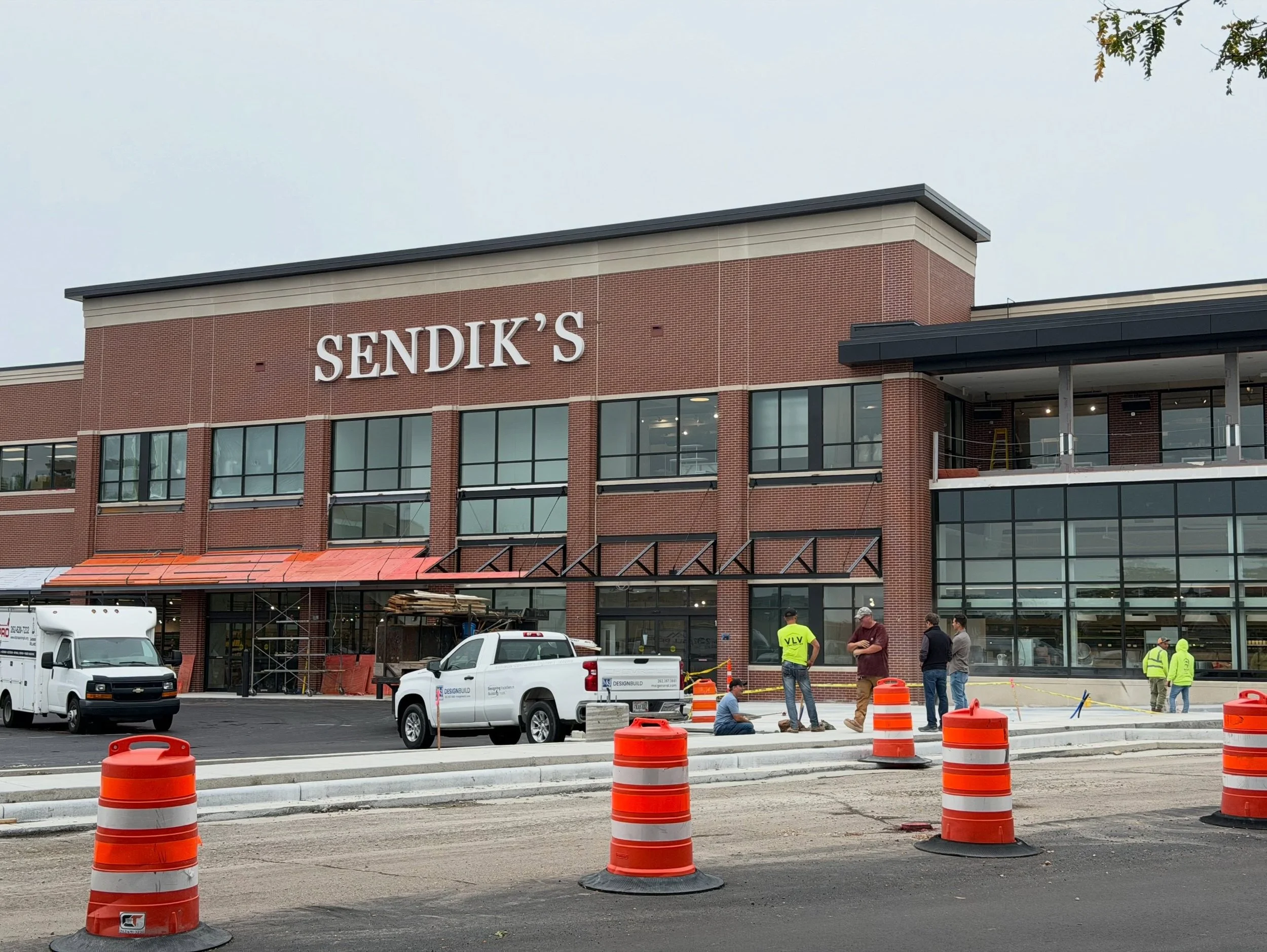
In Whitefish Bay’s business district, pedestrian improvements around Silver Spring Drive and Sendik’s include curb extensions and pedestrian refuge islands, giving people shorter crossings and places to pause between directions of traffic.
Farther west, Glendale’s Silver Spring Drive reconstruction includes narrower vehicle lanes, bike lanes, raised intersections and sidewalk improvements designed to slow traffic and improve conditions for people walking and biking.
Shorewood is also looking at how families move through their neighborhoods. Its Greenway Plan focuses on safer routes for walking, biking and rolling, while the ongoing Oakland Avenue reconstruction is rebuilding a major corridor with roadway, utility and traffic-signal improvements.
These projects have different schedules and scopes, but share a practical family concern: how to make the trip to school, a park, the library or a neighborhood business easier and safer.
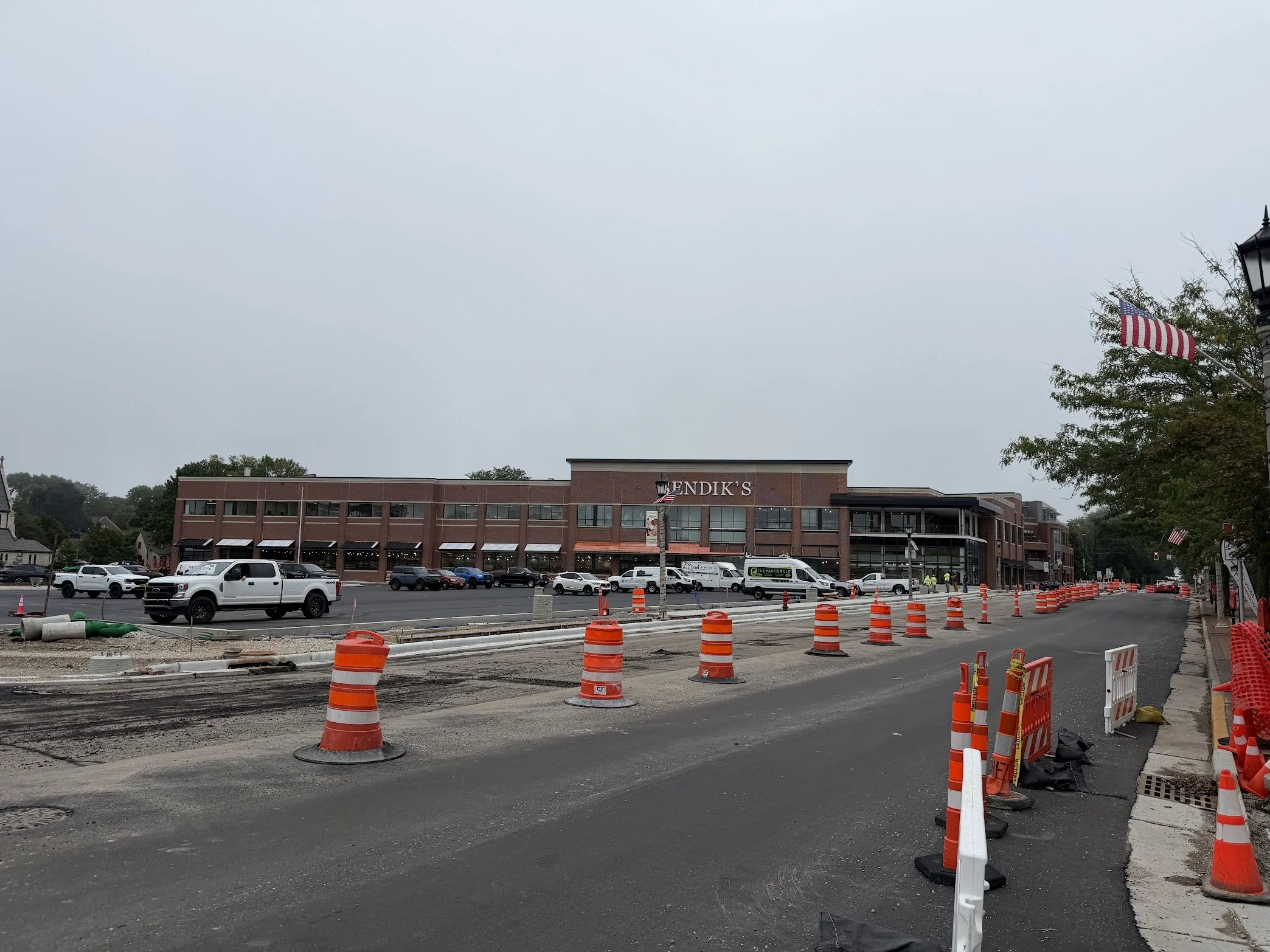
Four intersections near Whitefish Bay schools are moving closer to permanent safety improvements, with construction planned for summer 2027.